BREAKING: Trump’s 48-Hour Hormuz Ultimatum; Iran Threatens U.S.; Israel Hit Tehran | TBN Israel
YouTube · ErmuM9t0Uh0
Quick Read
Summary
Takeaways
- ❖US President Donald Trump issued a 48-hour ultimatum to Iran to reopen the Strait of Hormuz, threatening to destroy its power stations.
- ❖Iran responded by threatening to attack all US energy infrastructures in the region if its power stations are targeted.
- ❖Israel's Air Force is delivering a 'crushing and unimaginable response' in Iran, targeting military R&D and nuclear facilities.
- ❖Iranian missiles struck residential areas in southern Israeli cities Arad and Dimona, causing hundreds of injuries and exposing air defense vulnerabilities.
- ❖Iran launched missiles towards the US base in Diego Garcia (Indian Ocean), demonstrating a 4,000 km range, putting European cities like Rome, Berlin, and Warsaw within reach.
- ❖The US and Israel have attacked over 15,000 targets in Iran, eliminating more than 50 senior figures and damaging 70% of Iran's missile launchers and 80% of air defense systems.
- ❖The Strait of Hormuz, through which one-fifth of the world's oil passes, has become the central arena of the war, with only 3-4 vessels passing daily compared to 130 pre-war.
- ❖The US is deploying thousands of additional soldiers and warships to the Middle East, preparing for possible ground operations on Iranian soil to secure oil terminals and enriched uranium.
- ❖Gulf states are divided: Saudi Arabia and the UAE press for continued war until the IRGC is destroyed, while Qatar seeks a swift end.
- ❖Iran issued an evacuation warning for Doha, Qatar, marking the Al Jazeera channel as a legitimate target, before denying the announcement.
Insights
1Trump's Hormuz Ultimatum and Iran's Counter-Threat
Donald Trump issued a 48-hour ultimatum demanding Iran reopen the Strait of Hormuz, threatening to destroy its power stations if it fails to comply. Iran countered, stating it would attack all US energy infrastructure in the region if its own power stations are targeted.
US President Donald Trump issued an ultimatum to Iran overnight, threatening that if it does not reopen the Strait of Hormuz within 48 hours, he will destroy its power stations. Iran answered Donald Trump saying if our power stations are attacked, we will attack all US energy infrastructures in this region.
2Extended Iranian Missile Range Threatens Europe
Iran launched two ballistic missiles towards the US base in Diego Garcia, Indian Ocean, demonstrating a range of approximately 4,000 kilometers. This significantly exceeds Iran's previously declared 2,000 km range and places major European cities like Rome, Berlin, and Warsaw within striking distance.
Two Iranian ballistic missiles were launched towards the Diego Garcia base in the Indian Ocean. Range about 4,000 kilometers... An Israeli source said that the launch proves Iran has the capability to strike Europe. If this is indeed the range of 4,000 kilometers, cities such as Rome, Berlin, and Waro fall within this range.
3Israeli Air Defense Vulnerabilities in Southern Cities
Iranian ballistic missiles with 450 kg warheads penetrated Israeli air defense systems twice, striking residential areas in Arad and Dimona. These incidents resulted in over 170 wounded, including children, highlighting that defense systems are not 'hermetic' and are less effective in less densely populated or older areas.
An Iranian ballistic missile carrying a 450 kilogram warhead penetrated the defense arrays and struck last night between residential buildings in Arad... At least 115 people were wounded... 2 hours before the strike in Ard, another Iranian missile hit a residential neighborhood in Dima directly... 59 wounded... The defense army confirmed also that the missile defensive systems of Israel are not hermetic, meaning there are holes, there are failures.
4Targeted Destruction of Iranian Military and Nuclear Capabilities
The US and Israel have conducted over 15,000 strikes in Iran, severely damaging 70% of Iran's missile launchers, 80% of its air defense systems, and 120 naval vessels. Strikes specifically targeted strategic R&D sites like Malik Ashta University, involved in nuclear weapon and ballistic missile development, and eliminated key scientists.
Israel and the United States have already attacked more than 15,000 targets in Iran... 70% of Iran's launchers and ballistic missiles have been put out of action... 80% of the air defensive systems have been attacked... a strategic research and development site of the Iranian military industries Malik Ashta University... used for developing components for nuclear weapons and for advancing the ballistic missile array.
5US Prepares for Ground Operations in Iran
The Trump administration is preparing for the possibility of deploying ground troops on Iranian soil. These forces are intended for three objectives: ensuring freedom of navigation in Hormuz, a potential takeover of Karag Island (Iran's strategic oil terminal), and the removal of enriched uranium from Iranian territory.
Sources who spoke with CBS said that the Trump administration is preparing for the possibility of placing troops on Iranian soil... The forces are intended for three areas: ensuring freedom of navigation in Homus, a possible takeover of Karag Island, Iran's strategic oil terminal, and the removal of the enriched uranium formed the Iranian territory.
Bottom Line
Iran's strategy of targeting less-defended, smaller communities in southern Israel, often with older infrastructure, aims to exploit vulnerabilities in air defense systems calibrated for densely populated urban centers.
This tactic suggests a calculated effort to inflict casualties and psychological impact by finding 'holes' in sophisticated defense networks, rather than direct confrontation with heavily protected areas, indicating an adaptive adversary.
This highlights a critical need for dynamic recalibration and expansion of air defense coverage to protect all communities, regardless of population density or infrastructure age, and to educate civilian populations on adherence to security regulations.
The diplomatic landscape in the Arab world is shifting, with Al Jazeera, traditionally critical of Israel and the US, now criticizing Iran's 'propaganda' and Gulf states like Saudi Arabia and the UAE pushing for the complete destruction of the IRGC.
This indicates a significant realignment of regional interests, where direct Iranian aggression has forced former adversaries to reconsider alliances and strategic priorities, potentially isolating Iran further.
This shift presents a strategic opportunity for the US and Israel to solidify a broader regional coalition against Iranian influence, leveraging shared security concerns to foster deeper cooperation and intelligence sharing.
The US and Israel are systematically destroying Iran's military R&D centers, manufacturing facilities, and eliminating key scientific personnel across various weapon technologies (nuclear, ballistic, electromagnetic, satellite).
This 'decapitation' strategy aims to set back Iran's advanced military programs by multiple years, regardless of the war's immediate outcome, crippling its future offensive capabilities.
This long-term strategic damage could significantly alter the regional power balance, reducing future threats from Iran and creating a more stable environment, provided the current regime does not accelerate its programs in response.
Lessons
- Monitor global energy markets for potential volatility and supply chain disruptions, particularly those reliant on the Strait of Hormuz, given the direct threats to Iranian power stations and US energy infrastructure.
- Assess the implications of Iran's demonstrated 4,000 km missile range on European security postures and defense strategies, considering major European capitals are now within striking distance.
- Evaluate the effectiveness and adaptability of air defense systems in protecting diverse civilian populations, especially in less densely populated or older urban areas, against evolving missile attack tactics.
Notable Moments
Iranian missiles strike residential areas in Arad and Dimona, injuring over 170 people.
These strikes exposed vulnerabilities in Israel's air defense systems, particularly in less densely protected southern cities with older infrastructure, despite extensive defense networks.
Iran launches ballistic missiles towards the US base in Diego Garcia, Indian Ocean.
This launch revealed Iran's actual missile range of 4,000 km, significantly exceeding its declared 2,000 km, placing major European cities and large parts of Asia/Africa within threat range.
Iran issues an immediate evacuation warning to residents of Doha, Qatar, highlighting the Al Jazeera channel as a legitimate target.
This unprecedented threat against a Gulf state capital, followed by a denial, signals Iran's willingness to escalate tensions and destabilize regional alliances, even targeting media perceived as critical.
Quotes
"If Iran does not fully open the Strait of Homus, without any threat, within 48 hours, the United States will strike and destroy its power stations, beginning with the largest one."
"If our fuel and energy infrastructure is attacked, all US energy infrastructure in the region will be attacked as well."
"We are ahead of a combat timetable of more weeks to come and the Iranians, they want a deal. I do not."
"This sets back Iranian nuclear programs or Iranian military programs multiple years when this campaign ends."
Q&A
Recent Questions
Related Episodes

Patrick Henningsen: Hezbollah JUST Fired Back at Israel - Iran Vows to “Crush” All Attacks
"Patrick Henningsen argues that the US and Israel initiated an illegal war against Iran, driven by Trump's incompetence and Israeli influence, leading to an inevitable escalation with severe global economic repercussions."
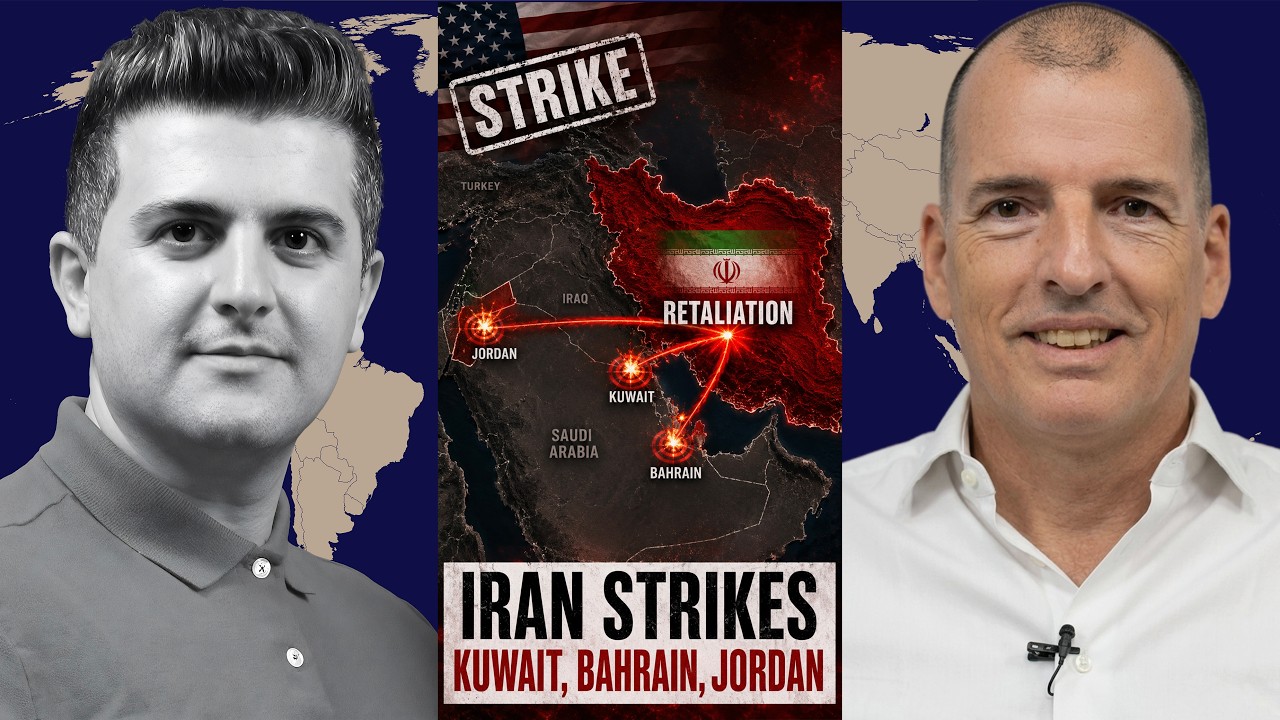
Alex Krainer: US STRIKES Iran – Iran RETALIATES Against Kuwait, Bahrain & Jordan!
"Amidst escalating US-Iran conflict and Iranian retaliation against regional US allies, this episode argues that US foreign policy is deeply controlled by an 'Anglo-Zionist conspiracy' led by the Rothschild banking dynasty, prioritizing Israeli interests over American ones."

🚨 TOTAL F*CKING CHECKMATE 😂😂😂
"The host argues that Trump's 'ceasefire' with Iran was a calculated '5D chess' move to orchestrate a global energy market reshuffle, while simultaneously lambasting 'woke' domestic policies and the 'freefall' of anti-Trump conservative figures."

Col. Jacques Baud: What a US Ground Invasion of Iran Would REALLY Look Like
"Colonel Jacques Baud dissects the strategic futility of a US ground invasion of Iran, arguing that current troop levels are insufficient and such an action would backfire, exposing US allies and potentially leading to Iran's nuclearization."