
Alex Krainer: Middle East ERUPTS: Iran Unleashes Missile Storm on Israel & Gulf States
YouTube · F0adeCgJX58
Quick Read
Summary
Takeaways
- ❖Israel consistently escalates conflicts, relying on US support to unite the West against Iran.
- ❖Former President Trump is criticized for 'owning' the conflict, driven by Netanyahu's 'eschatological ambitions' and Zionist influence, despite intelligence warnings.
- ❖Iran's retaliatory strikes on Saudi Arabia, UAE, and Qatar followed an Israeli-US attack on its South Pars oil facilities.
- ❖The Strait of Hormuz is now effectively controlled by Iran, signifying a shift to multipolar economic warfare.
- ❖US officials are portrayed as incompetent and out of touch, with their intelligence agencies purged of dissenting voices.
- ❖A hidden, powerful network, potentially linked to the British Empire and Zionist billionaires, is asserted to control US foreign policy.
- ❖Europe's leadership is seen as actively conspiring against dissenting member states like Hungary, leading to the EU's inevitable disintegration.
- ❖The 'axis of resistance' (Iran, Hezbollah, Houthis) is gaining strength and reshaping the Middle East, challenging previous assumptions of its weakness.
Insights
1Israel's Escalation Strategy and US Complicity
The guest asserts that Israel consistently escalates conflicts, counting on the US and NATO to support its actions. This strategy aims to unite Western allies against Iran, even if it means worsening regional stability. The guest suggests that the US, under former President Trump, 'owns' the current conflict due to its support for Israeli actions, despite potential risks of a regional or nuclear war.
The host mentions the attack on South Pars oil facilities by Israelis and the United States. The guest states, 'whatever Israel does, they count on the rest of the world, primarily the United States and NATO and Western allies to come to their aid.' He also states, 'Trump owns it now. He owns it now. There's no there's no way around it.'
2Eschatological Ambitions Driving Conflict
The guest suggests that the conflict is not driven by discernible US or Israeli interests but by Benjamin Netanyahu's 'personal political and eschatological ambitions.' This refers to a belief system where initiating a major conflict could hasten a desired religious or prophetic outcome, even if it appears irrational from a conventional geopolitical standpoint.
The guest states, 'I don't see how it serves Israeli interests either other than Benjamin Netanyahu's own personal political and eschatological ambitions, which are now it seems they're a real part of this equation.'
3Iran's Control of Strait of Hormuz and Multipolar Warfare
Iran's retaliatory actions, including missile strikes on Gulf states, are framed as a strategic move to assert control over the Strait of Hormuz. This signifies a shift in global power dynamics, where non-Western powers like Iran and China can use economic and military tools to counter traditional Western financial pressure and sanctions, demonstrating the reality of multipolar economic warfare.
The host quotes a Financial Times article arguing 'Iran's actions in the Strait of Hormuz show the reality of multipolar economic warfare.' The guest agrees, stating, 'Iranians have no incentive, no reason whatsoever to go back to the old status quo.'
4Hidden Control of US Foreign Policy
The guest posits that a small country like Israel cannot control a superpower like the US without a deeper, hidden layer of influence. He suggests this control stems from a network of Zionist billionaires and financial entities, potentially linked to the British Empire and the City of London, who have infiltrated US banking, media, and strategic corporations, effectively hijacking government processes.
The guest questions, 'How can it be that that little country is running a superpower...?' He then links it to 'the British Empire never ended... reincarnated itself by by um attaching itself to the United States like a parasite,' taking 'control of the whole banking industry, and they took control of the of the media.' He mentions 'Zionist billionaires' like Larry Ellison, Paul Singer, and Bill Ackman.
5Western Elites' 'Blind Panic' as Projects Fail
The guest argues that the current aggressive actions are a sign of 'blind panic' among global elites, as their major 'projects'—the pandemic, Net Zero, and the Ukraine conflict—are failing. The war in Western Asia, planned since 2001, is seen as their last major attempt to establish global control, and its failure further exacerbates their desperation.
The guest states, 'I think, Nima, that they are in a in a blind panic because everything is falling apart.' He lists 'the pandemic,' 'net zero,' and 'Ukraine' as failed projects, and the 'taking total control of the Western Asia' as the last project, formulated in 2001.
Bottom Line
The US decision to attack Iran was a 'gamble' based on Israeli intelligence claiming to have 'co-opted' a high-ranking Iranian general (Esmail Qaani), which ultimately failed when the Iranian leadership eliminated him.
This suggests a profound miscalculation by US and Israeli intelligence, indicating a lack of understanding of Iranian internal dynamics and potentially leading to an even more entrenched and aggressive Iranian stance.
For geopolitical analysts, this highlights the critical need for independent, diverse intelligence sources, free from ideological bias, to avoid catastrophic strategic errors.
The 'axis of resistance' (Iran, Hezbollah, Houthis, Iraq) is not only resilient but actively reshaping the Middle East, demonstrating unexpected strength and coordination, contrary to previous Western assessments of its weakening.
This challenges the long-held Western narrative of regional dominance and suggests a significant shift in power balance, potentially leading to further instability for US-allied states and a stronger regional bloc aligned against Western interests.
For regional powers, understanding and adapting to this new reality is crucial, potentially involving re-evaluating alliances and engaging with the emerging power structures in Western Asia.
Lessons
- Critically evaluate official narratives regarding geopolitical conflicts, especially those involving the US and Israel, as they may be influenced by hidden agendas or miscalculations.
- Recognize the potential for a 'radical truth therapy' in international relations, advocating for transparency and accountability from global powers to de-escalate conflicts.
- Support independent research and truth-telling efforts to counter propaganda and expose underlying power structures that influence foreign policy decisions, as 'knowing the truth literally will make us free'.
Quotes
"Whatever happens, Israel will always escalate. This is just how it is. So, you can you can practically take it to the bank that they will escalate no matter what happens."
"I don't see how it serves Israeli interests either other than Benjamin Netanyahu's own personal political and eschatological ambitions, which are now it seems they're a real part of this equation."
"For decades, the United States dominated sanctions and used financial pressure as a strategic weapon. Now, other powers, including Iran and China, can use similar tools to in response to escalation."
"How can it be that a small country of six so many people the size of New Jersey in the Mediterranean who is completely and totally dependent on the United States for their security. How can it be that that little country can control this global superpower?"
"I think, Nima, that they are in a in a blind panic because everything is falling apart."
Q&A
Recent Questions
Related Episodes

Patrick Henningsen: Hezbollah JUST Fired Back at Israel - Iran Vows to “Crush” All Attacks
"Patrick Henningsen argues that the US and Israel initiated an illegal war against Iran, driven by Trump's incompetence and Israeli influence, leading to an inevitable escalation with severe global economic repercussions."
BREAKING: Protests ERUPT In Iran Over IRGC Surrendering To Trump - Infighting Clashes In Tehran
"Iran is experiencing severe internal infighting and protests as hardline IRGC elements clash with government figures over a perceived 'surrender' to the US, while mainstream Western media misrepresents the situation."
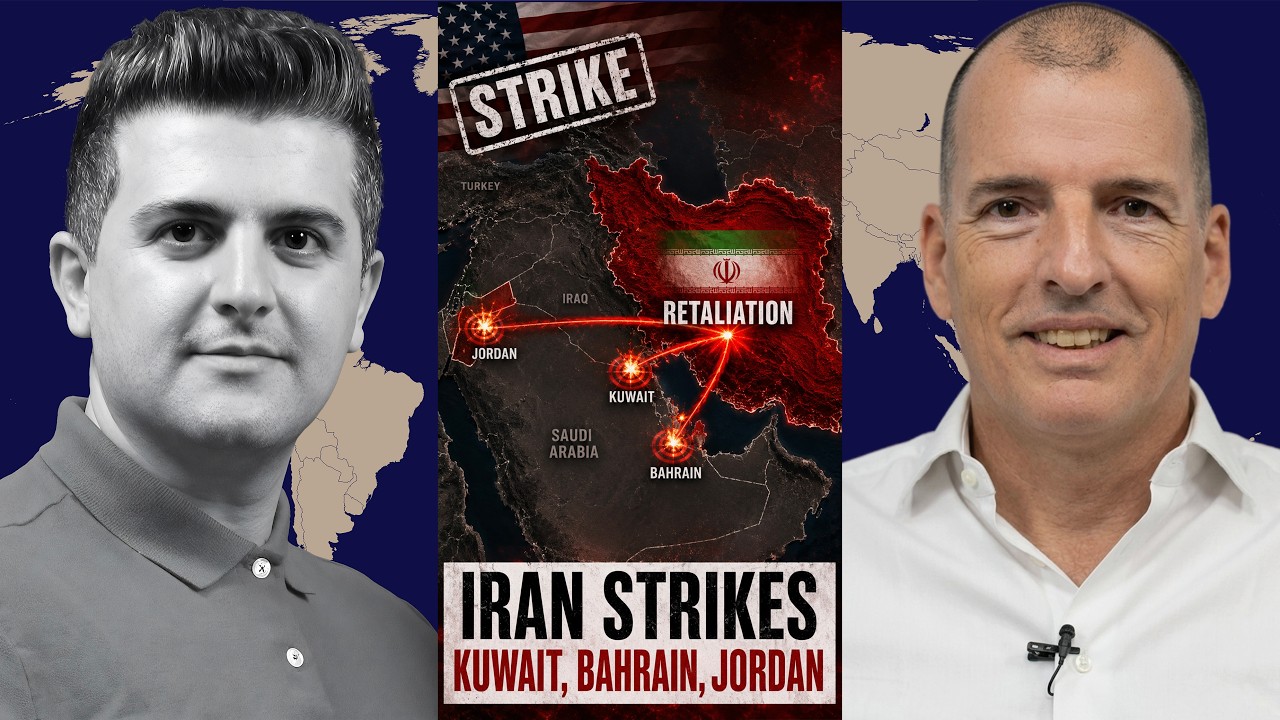
Alex Krainer: US STRIKES Iran – Iran RETALIATES Against Kuwait, Bahrain & Jordan!
"Amidst escalating US-Iran conflict and Iranian retaliation against regional US allies, this episode argues that US foreign policy is deeply controlled by an 'Anglo-Zionist conspiracy' led by the Rothschild banking dynasty, prioritizing Israeli interests over American ones."

Iran Update: Israel’s Newest Bombing Campaign, the Oncoming War With China and How to Avoid It
"Colonel Wilerson reveals how the US and Israel are actively bombing China's strategic infrastructure in Iran, escalating a covert economic war that Beijing intends to win without direct military conflict by dismantling the dollar's global dominance."