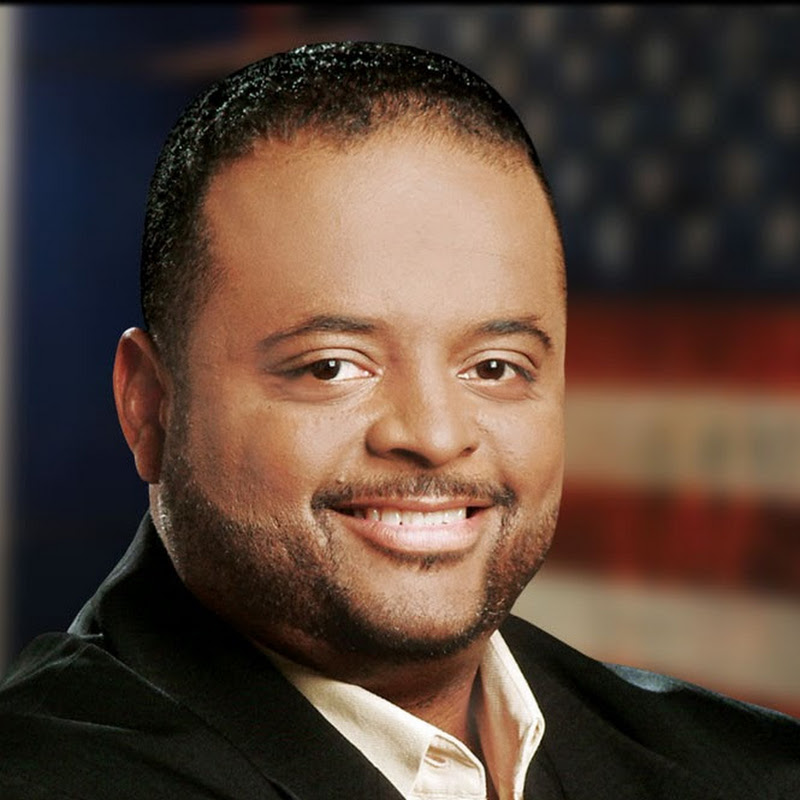
Juneteenth 2026. Self-Determination, Black Liberation & the Freedom We Still Fight For. #RMU
YouTube · FCb5m_90H6o
Quick Read
Summary
Takeaways
- ❖Juneteenth signifies a continuous quest for freedom, not just the end of slavery in Texas.
- ❖The historical narrative of Juneteenth is often oversimplified, omitting the critical role of Black troops and ongoing enslavement in other states.
- ❖Black-owned media is essential for controlling the Juneteenth narrative and preventing its commercial exploitation.
- ❖Juneteenth events should be leveraged for voter registration, data collection, and pushing policy agendas.
- ❖Financial literacy education is a critical, often overlooked, component of Black economic liberation.
- ❖Corporate DEI commitments, while a start, require sustained pressure and collective action to translate into meaningful economic opportunities for Black businesses.
Insights
1Juneteenth's True Meaning: Universal Freedom and Ongoing Struggle
Opal Lee, the 'Grandmother of Juneteenth,' emphasizes that Juneteenth signifies freedom for everyone, not just Black people in Texas. She asserts that true freedom remains elusive due to persistent disparities in areas like joblessness, homelessness, healthcare, and education, urging continued advocacy beyond the holiday's recognition.
Opal Lee states, 'Juneteenth means freedom... for everybody. And we're not free yet. As long as we have the disparities that we have, we're not free.' She lists joblessness, homelessness, and healthcare as ongoing issues. ()
2The Overlooked Role of Black Troops in Juneteenth
Historian Dr. Gerald Horne reveals that General Granger's arrival in Galveston on June 19, 1865, was accompanied by 75,000 'colored troops.' These Black soldiers were crucial not only for enforcing emancipation in Texas but also for countering Confederate plans to resume slavery in Texas and deport Black people to French-ruled Mexico, preventing a potential second Civil War.
Dr. Gerald Horne explains, 'He was accompanied by 75,000 so-called color troops. And why did he need so much backup? He needed so much backup because the settlers in Texas... had this idea of resuming slavery in Texas.' He adds that these troops 'then became a hammer against the French troops in Mexico, against the Confederates in Texas, and helped to save the United States from resuming the US Civil War under a different guise.' ()
3Juneteenth as a Forced National Reckoning with Slavery
Roland Martin argues that despite criticisms, Juneteenth's federal recognition forces America to confront its 'original sin' of slavery annually. Unlike other holidays, it's difficult to strip the core issue of slavery from Juneteenth, providing an opportunity to correct historical narratives and educate the public.
Roland Martin states, 'This is the only holiday that literally even mentions slavery. America has done such a great job totally ignoring slavery and saying, 'Y'all need to get over it.' The benefit of Juneteenth is we don't have to get over it. Now they ARE FORCED TO HAVE to discuss it at least once a year.' ()
4Historical Inaccuracies and the Actual End of Chattel Slavery
Historian Carl Mack challenges the common misconception that Juneteenth marked the end of chattel slavery in the U.S. He clarifies that slavery officially ended on December 6, 1865, with the ratification of the 13th Amendment. He points out that over 225,000 enslaved people in Kentucky and Delaware remained in bondage after Juneteenth, with those states ratifying the 13th Amendment much later (Delaware in 1901, Kentucky in 1976, and Mississippi in 2013).
Carl Mack states, 'Slavery ended in this country on December 6th, 1865, 6 months after Juneteenth.' He adds, 'There were 225,000 of our ancestors still enslaved [in Kentucky and Delaware], and they did not taste freedom until December 6th, 1865.' ()
5General Order No. 3's Contradictory Message
Dr. Peniel Joseph highlights the contradictory nature of General Order No. 3, which, while declaring 'absolute equality,' also advised freedmen to remain on plantations, work for wages, and avoid military posts or 'idleness.' This reveals the immediate backlash and attempts to control newly emancipated Black people, even as freedom was announced.
Dr. Peniel Joseph calls General Order No. 3 'an outrageous order in its totality' because it advised freedmen to 'remain quietly at their present homes and work for wages' and 'not be allowed to collect at military post and that they will not be supported in idleness.' ()
6Financial Literacy as a Key to Economic Freedom
Kevin Cohee, CEO of One United Bank, asserts that a lack of financial literacy is the largest factor suppressing Black economic growth. He advocates for mandatory K-12 financial literacy education, estimating its value at over $127,000 per person over a lifetime, and urges Black Americans to be leading advocates for such legislation.
Kevin Cohee states, 'It's that lack of financial literacy that is probably the largest factor suppressing our economic growth right now.' He adds, 'Passing this legislation has been calculated as worth $127,000 over a person's lifetime.' ()
7The Foundational Role of Texas in Juneteenth's State Holiday Status
Jason Edwards, son of the late Texas State Representative Al Edwards, clarifies his father's pivotal role in making Juneteenth a state holiday in Texas in 1979 (first celebrated in 1980). This groundwork was crucial, as Al Edwards then traveled to other states, leading to 45 states recognizing Juneteenth before it became a federal holiday, underscoring Texas's unique historical significance.
Jason Edwards states, 'Dad started Juneteenth USA in 1979... his process of getting other states to adopt the holiday became evident to me when I was in college.' He confirms that '45 states in the union was celebrating Juneteenth as a state holiday' before the federal recognition. ()
Bottom Line
Juneteenth celebrations are shifting from the official red, white, and blue colors to red, black, and green, symbolizing Black self-determination and cultural identity.
This shift indicates a grassroots reclaiming of the holiday's narrative by the Black community, emphasizing its connection to Pan-Africanism and Black liberation rather than a broader American patriotism.
Black-owned businesses and cultural institutions can lean into these authentic cultural expressions, creating products, events, and educational materials that resonate with this deeper meaning, strengthening community ties and economic self-reliance.
Anti-CRT laws and vague 'anti-black codes' in state legislation are causing teachers to self-censor, hindering the accurate teaching of Black history, including Juneteenth, in classrooms.
This legislative environment actively suppresses historical truth, perpetuating ignorance about systemic racism and Black contributions, making it harder for younger generations to understand the full context of American history.
Black parents, community leaders, and Black-owned educational platforms must proactively fill this gap by providing comprehensive Black history education outside traditional school systems, advocating for curriculum changes, and supporting teachers who bravely teach accurate history despite risks.
The post-George Floyd era saw significant corporate commitments to DEI and Black businesses, but there's a risk of these efforts being diluted or attacked, as seen with the Fearless Fund.
Without sustained pressure and collective action, corporate commitments may become performative or be rolled back, hindering long-term economic progress for Black communities.
Black leaders and organizations must maintain a 'sustained effort for a minimum of 20 years' to hold corporations and government entities accountable, leveraging collective economic power (e.g., pension funds, consumer boycotts) to ensure equitable investment and contract opportunities.
Opportunities
Black-Owned Media Networks
Establish and support independent Black-owned media platforms (like Black Star Network) to control narratives, provide accurate historical context, and foster community empowerment, free from external editorial constraints.
Financial Literacy Curriculum Development & Advocacy
Develop comprehensive K-12 financial literacy curricula tailored for Black communities and advocate for its mandatory inclusion in public school systems, while also offering community-based workshops and resources.
Juneteenth Civic Engagement & Event Services
Offer specialized event planning and support services for Juneteenth celebrations that integrate civic engagement (voter registration, data collection) with cultural festivities, utilizing Black-owned vendors for all aspects (catering, AV, transportation, videography).
Support for Existing Black Cultural & Historical Organizations
Direct funding and resources to long-standing Black cultural centers and historical organizations that have been preserving and telling Black history for decades, ensuring they can continue their work without paternalistic oversight.
Key Concepts
Purpose with a Party
Instead of merely having a 'party with a purpose,' Juneteenth celebrations should prioritize 'purpose with a party,' meaning the primary focus should be on civic engagement, education, and policy advocacy, with celebration as a secondary component.
Freedom as Constant Maintenance
Freedom is not a static achievement but a dynamic state that requires continuous effort and maintenance, exemplified by the ongoing struggle for economic, political, and social equality even after legislative milestones.
Lessons
- Support and invest in Black-owned media platforms to ensure the accurate and empowering telling of Black history and current events, free from external control.
- Actively advocate for mandatory K-12 financial literacy education in your state and local school districts, recognizing its long-term economic impact on Black communities.
- Transform Juneteenth celebrations into 'purpose with a party' events by integrating voter registration drives, data collection for policy advocacy, and educational forums alongside cultural festivities.
- Prioritize supporting long-standing Black cultural and historical organizations in your community, funneling resources to those who have consistently done the work of preserving and interpreting Black history.
- Leverage collective economic power by intentionally directing spending towards Black-owned businesses and demanding that corporations and government entities increase their business and investment with Black enterprises.
Leveraging Juneteenth for Black Empowerment and Policy Change
Control the Narrative: Utilize Black-owned media and community platforms to tell the full, unvarnished history of Juneteenth and its ongoing significance for Black liberation.
Educate and Mobilize: Integrate financial literacy education and civic engagement (e.g., voter registration, policy discussions, data collection) into all Juneteenth celebrations and related events.
Demand Accountability: Use the holiday as an annual opportunity to pressure corporations and government bodies to fulfill DEI commitments, invest in Black businesses, and address systemic inequalities.
Support Black Institutions: Direct financial and volunteer support to long-standing Black cultural, historical, and economic organizations that are actively working towards Black self-determination.
Advocate for Policy: Translate the collective energy and awareness generated by Juneteenth into sustained advocacy for policies that promote economic equity, educational reform, and racial justice.
Notable Moments
Opal Lee's 2.5-mile walk to commemorate the 2.5 years between the Emancipation Proclamation and Juneteenth.
This act symbolizes the long, persistent struggle for freedom and highlights the historical delay in emancipation for many enslaved people, making her a powerful living symbol of the Juneteenth movement.
Coretta Scott King's speech on Juneteenth 1968 at the Solidarity Day rally, closing out Resurrection City.
This historical event demonstrates that Juneteenth's significance as a day of Black self-determination and protest extends back decades, predating its federal holiday status and connecting it to broader civil rights movements.
The 1968 Mexico City Olympics protest by John Carlos and Tommie Smith, raising black-gloved fists.
This moment of athletic protest for human rights is referenced as an example of taking a stand for Black liberation, drawing parallels to the ongoing fight for freedom that Juneteenth represents.
Quotes
"Juneteenth means freedom. And I'm not talking about for black folk in Texas, I'm talking about everybody. And we're not free yet."
"Most African Americans are not waiting for white people to say that they feel guilty for how African Americans have been treated throughout our history... What most African Americans are waiting for is for white people, especially white leaders, to wake up and acknowledge that there are significant structures and barriers remaining in place to African American advancement in our country."
"The mistake that was made is they didn't free the slaves. They just turned us loose."
"If you want to designate a date in which all black folks can celebrate freedom, that date, as far as I'm concerned, as far as history appears to be concerned, is December 6th, because that is the day in which Georgia ratified the 13th Amendment."
"I would rather fast on my feet than eat steak on my knees. So, be careful taking funding that is going to require you to be quiet."
"The freedmen are advised to remain quietly at their present homes and work for wages. They are informed that they will not be allowed to collect at military post and that they will not be supported in idleness either there or elsewhere."
"It's that lack of financial literacy that is probably the largest factor suppressing our economic growth right now."
Q&A
Recent Questions
Related Episodes

The Immortal Jim Crow. 'Goon Squad' Defamation Suit. Google Race Discrimination Case. #TheBreakdown
"This episode exposes the enduring grip of systemic racism through a Mississippi defamation suit, Google's racial discrimination settlement, and a deep dive into how Jim Crow's legacy still shapes Black America today."

Iran Deal Skepticism. Whoopi Vs Vance. Potomac Park Invasion. Racist Hurls Slurs At Black Boy.
"This episode dissects multiple instances of alleged anti-Black policies and racial injustice, from the Trump administration's legal challenges to reparations and the Iran deal, to police brutality and the erasure of Black history."

NC Targets DEI. Trump Blocks Housing Bill. Minority Banks Face New Rules. Kohen Wiley Protests
"This episode exposes how current political actions, from changes in minority bank definitions to attempts to regulate college athlete earnings and block foreign aid, are systematically undermining Black economic power, voting rights, and social justice."
George Floyd 6 Years Later. Redistricting War in The South. Talarico Senate Campaign
"This episode exposes the ongoing legislative battles and strategic resistance against efforts to diminish Black political power, from federal policing reform to state-level gerrymandering and calls for economic boycotts by Black athletes."