
Chas Freeman: If Troops Enter Iran… Israel’s Entire Strategy FALLS APART
YouTube · FnMwyOTXhAU
Quick Read
Summary
Takeaways
- ❖US demands for Iran's unconditional nuclear surrender were unrealistic and contrary to international law.
- ❖Iran has turned the Strait of Hormuz into a 'toll road,' selectively allowing passage to allies while blocking adversaries.
- ❖US and Israeli missile defense systems (Patriots, THAADs) are being rapidly depleted, exceeding annual production rates.
- ❖Former President Trump's public statements and actions regarding the war are driven by motives like market manipulation, domestic politics, and potential corruption.
- ❖The war is inadvertently making Iranian nuclear weapons inevitable, potentially triggering a regional nuclear arms race.
- ❖Israel's objective in Lebanon is to annex southern territories, aligning with a 'Greater Israel' project, rather than solely disarming Hezbollah.
- ❖Iran possesses the capability to destroy Gulf Arab societies by targeting their energy production and desalination plants.
- ❖Iran's deep underground nuclear facilities are invulnerable to conventional bombing, making diplomacy or nuclear attack the only options to 'destroy' them.
- ❖The war has global implications, including nuclear proliferation, a global recession, and a food crisis due to disrupted supply chains.
Bottom Line
Iran possesses 'escalation dominance' over the United States and Israel, meaning it has more options to inflict damage on its adversaries than they have on Iran.
This challenges the conventional perception of US military superiority, suggesting that the US and Israel are in a weaker strategic position than commonly assumed, making any military victory unsustainable.
Policymakers should re-evaluate military intervention strategies in the region, focusing on diplomatic solutions that acknowledge Iran's strategic leverage and avoid further costly, unwinnable conflicts.
The war, intended to prevent Iran from acquiring nuclear weapons, has instead made Iranian nuclear weaponization 'inevitable,' and will likely trigger a proliferation cascade in the Middle East and beyond.
The primary stated goal of the conflict is being directly undermined by the conflict itself, leading to a more dangerous, nuclear-armed region.
International efforts must pivot from military confrontation to urgent, comprehensive diplomatic frameworks that manage proliferation risks, potentially involving new security guarantees or regional non-aggression pacts, rather than relying on failed military pressure.
US military bases in the Gulf Arab states are currently 'completely uninhabitable' due to Iranian attacks, forcing personnel into hotels.
This reveals a significant vulnerability in US forward deployment strategy, demonstrating Iran's effective asymmetric warfare capabilities against fixed targets.
The US military needs to fundamentally rethink its base infrastructure and force projection in contested regions, prioritizing mobile, resilient, and dispersed assets, and re-evaluating the strategic value of large, vulnerable fixed bases.
Lessons
- Challenge narratives that frame military intervention as the only solution to complex geopolitical problems, especially when expert analysis suggests counterproductive outcomes.
- Investigate the financial motives and potential corruption behind political decisions related to military conflicts, particularly in resource-rich regions.
- Advocate for diplomatic solutions and de-escalation in international conflicts, recognizing the long-term costs and unintended consequences of prolonged warfare on global stability and economies.
Quotes
"Iran, not the United States and Israel, have escalation dominance. That is to say, Iran can do lots more things to hurt Israel and the United States and the Gulf Arabs than we can do to them."
"The effect of the war has been to make Iranian nuclear weapons inevitable."
"The United States cannot defend them, clearly. And it doesn't seem to give them priority. Gives Israel priority. Their own public will not allow them to join the fight with Israel because of its its its contempt its, uh, hatred for Israel and what Israel has done to the Palestinians."
"The Iranian nuclear program can be destroyed in only one of two ways. Either with diplomacy... or with a nuclear attack."
"We took down Saddam, who was the strongman against Israel. We then had to go in and take out Assad, who was the strongman against Israel as well. And now this is the third phase. We're going now into Iran to take out that strong government for Israel."
Q&A
Recent Questions
Related Episodes

Patrick Henningsen: Hezbollah JUST Fired Back at Israel - Iran Vows to “Crush” All Attacks
"Patrick Henningsen argues that the US and Israel initiated an illegal war against Iran, driven by Trump's incompetence and Israeli influence, leading to an inevitable escalation with severe global economic repercussions."

Col. Jacques Baud: What a US Ground Invasion of Iran Would REALLY Look Like
"Colonel Jacques Baud dissects the strategic futility of a US ground invasion of Iran, arguing that current troop levels are insufficient and such an action would backfire, exposing US allies and potentially leading to Iran's nuclearization."
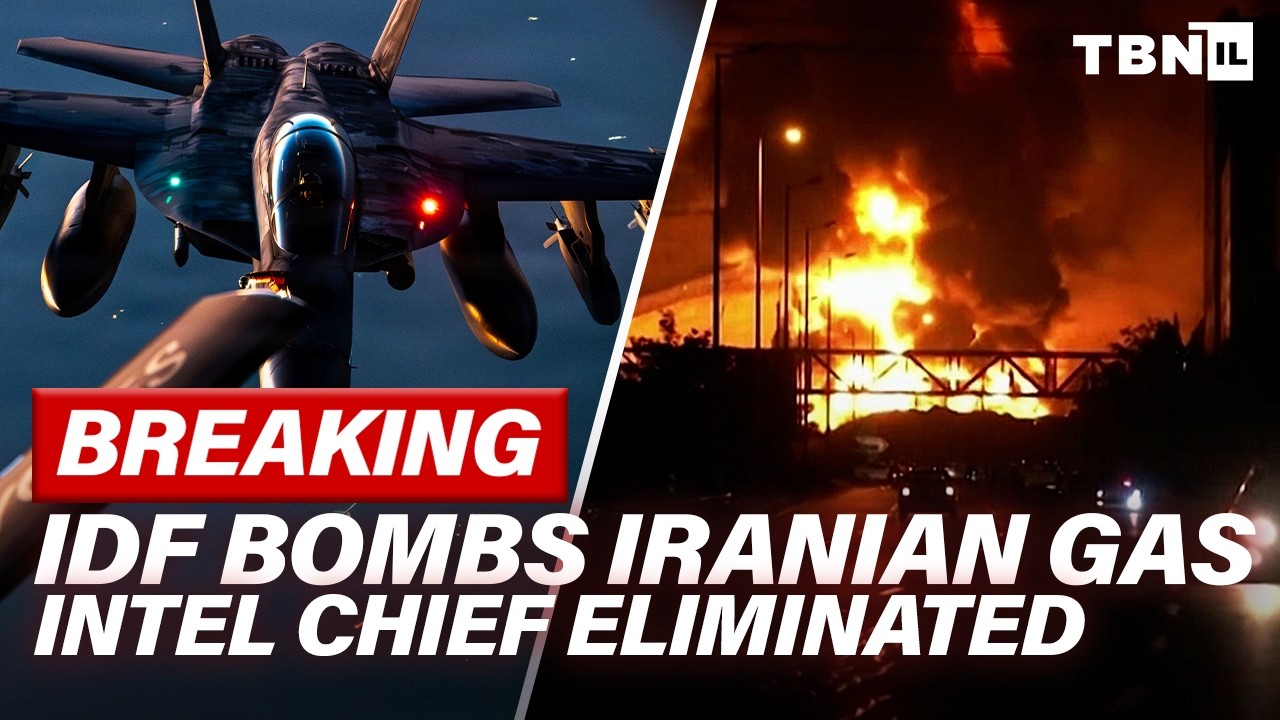
BREAKING: Israel BOMBS Major Iran Gas Site; Top Mullah ELIMINATED; Iran Vows VENGEACE | TBN Israel
"Israel and the United States have escalated their 'Roaring Lion War' against Iran, striking its largest gas facilities, eliminating key intelligence and military figures, and disrupting missile production, while Iran threatens a broader energy war in the Gulf."

Alex Krainer: US STRIKES Iran – Iran RETALIATES Against Kuwait, Bahrain & Jordan!
"Amidst escalating US-Iran conflict and Iranian retaliation against regional US allies, this episode argues that US foreign policy is deeply controlled by an 'Anglo-Zionist conspiracy' led by the Rothschild banking dynasty, prioritizing Israeli interests over American ones."