
SAVANNAH GUTHRIE'S MOM MISSING: DAY 33
YouTube · GH3vqpSNELs
Quick Read
Summary
Takeaways
- ❖Savannah Guthrie, her sister Annie, and brother-in-law Tomaso made a public appearance at a memorial, demonstrating family unity and countering speculation about Tomaso's involvement.
- ❖Digital forensics experts confirm that family members, including the son-in-law, were cleared through analysis of cell phone data, financial records, alibis, and likely polygraph tests.
- ❖A glove with DNA found two miles from Nancy Guthrie's home was traced to a restaurant worker who was subsequently cleared by investigators.
- ❖A surveillance video showing a vehicle speeding near the crime scene 8 minutes after Nancy Guthrie's pacemaker disconnected was initially deemed insignificant but is now a focus of the investigation.
- ❖The United Cajun Navy's offer of a detailed search plan and volunteer resources was declined by Nanos, the lead investigator, despite internal criticism of his department's leadership.
- ❖Perpetrators often return to the scene of a crime due to glorification, stalking intent, financial motives, or paranoia, making continuous surveillance and cell tower pings critical for capture.
Insights
1Family Members Cleared Through Digital Forensics and Interviews
Despite public and online speculation, Savannah Guthrie's son-in-law, Tomaso, and other family members have been cleared of involvement in Nancy Guthrie's disappearance. Digital forensics expert Heather Barnhart explained that law enforcement conducts thorough investigations, including examining cell phone data (communications, searches, location), financial records, and alibis. Brian Fitz Gibbons added that these digital findings are used to drive interview questions, and the lack of deception or indictment indicates their clearance. Nancy Grace believes the family also underwent polygraph tests.
Heather Barnhart details the process: 'Your phone has all the truth. Who do you communicate with? What do you search for? Where are you? What is your alibi?' (). Brian Fitz Gibbons states, 'They're conducting interviews with the family and they're using that data to drive those questions... And obviously that didn't happen here.' ().
2Critical Vehicle Video Initially Dismissed, Now Investigated
A surveillance video from a neighbor's home, located 2.5 miles from Nancy Guthrie's residence, captured a vehicle speeding by just 8 minutes after Nancy Guthrie's pacemaker disconnected from Bluetooth. This video, showing the same vehicle entering and leaving the area, was initially dismissed by Nanos as insignificant but is now being actively investigated as a potentially crucial piece of evidence.
Dave Mack states, 'Absolutely 100% accurate. Nancy started off they said doesn't mean anything. Now they've looked at it. They're going it means everything. You actually can see on this video, Nancy, the same vehicle going towards the Nancy Guthrie area and then another leaving the area at a.m. 8 minutes as you mentioned after the Bluetooth disconnected.' ()
3United Cajun Navy's Assistance Offer Rejected by Law Enforcement
The United Cajun Navy, a volunteer organization with experienced personnel, K9 units, and a detailed 41-page tactical plan, offered to assist in the search for Nancy Guthrie. However, Nanos, the lead investigator, declined their help, stating they were not accepting assistance from external organizations. This rejection is criticized by the panel, who argue that volunteers could act as a 'force multiplier' without interfering with official evidence collection.
Brian Trasher, VP of United Cajun Navy, explains, 'The first time we reached out... we did hear back from the PIO saying that they were not accepting help from external organizations.' (). He later adds, 'This is how far my agency can go. This is where we want the Cinjun Navy to start out here.' ()
4Perpetrators Return to Crime Scene for Various Motives
Perpetrators frequently return to the scene of their crimes, a behavior observed in cases like Brian Kohberger and Scott Peterson. Dr. Bethany Marshall explains that motives can include glorifying the crime, stalking, financial gain (e.g., casing the house for items now that it's unguarded), or paranoia. This behavior provides an opportunity for law enforcement to capture them through continued surveillance and cell tower pings.
Dr. Bethany Marshall states, 'The most common reason... is that they're still glorifying the crime.' (). Brian Fitz Gibbons adds, 'It's very likely that there was additional cameras placed at the property by law enforcement to capture just that.' ()
Bottom Line
Nanos, the lead investigator in the Nancy Guthrie case, faces significant internal criticism and a 'mass exodus' of talented investigators from the Puma County Deputies organization, potentially impacting the effectiveness of the ongoing search.
Leadership issues within the investigating agency can compromise the efficiency and thoroughness of a high-profile missing person case, leading to missed opportunities and prolonged investigations. This internal turmoil could explain some of the perceived missteps, like the initial dismissal of critical video evidence or the rejection of volunteer aid.
External organizations or higher-level authorities could intervene to provide oversight or additional resources, ensuring that the investigation is not hampered by internal departmental issues. Public pressure could also encourage greater transparency and accountability from the lead agency.
Lessons
- Understand that initial public speculation about family involvement in missing person cases is often unfounded; law enforcement conducts extensive digital and physical investigations to clear or implicate individuals.
- Recognize the power of digital forensics (cell phone data, financial records, location tracking) as a primary tool for investigators to establish alibis and track movements, making it difficult for criminals to hide.
- Advocate for better collaboration between official law enforcement agencies and experienced volunteer search organizations, as their combined resources can significantly enhance search efforts and accelerate resolutions in missing person cases.
Quotes
"If she suspected him, Nancy, there would be massive division within the family. This brother-in-law would not even be living with the family. He would be somewhere else. He would be with his own relatives. But it appears that he is united with Savannah and with an Annie Guthrie."
"Your phone has all the truth. Who do you communicate with? What do you search for? Where are you? What is your alibi? In order for someone to be cleared, you have to understand the due diligence that went into play here."
"Noah's Arc was built by amateurs. The Titanic was built by professionals. I'm not sure why we couldn't be a force multiplier for him in this situation."
"The most common reason is we see think of Brian Cobberger and Scott Peterson is that they're still glorifying the crime. They're going back to the glory days when they committed the crime."
Q&A
Recent Questions
Related Episodes

Widow Realizes Cops Know She Poisoned Her Husband
"A seemingly routine burglary unexpectedly unravels a year-old murder, exposing a mother-daughter poisoning plot and a chilling pattern of suspicious deaths."

Hell On Wheels: Mackenzie Shirilla's Double Murder Crash
"A seemingly accidental car crash that killed two young men in Strongsville, Ohio, was meticulously uncovered by investigators to be a deliberate act of double murder by the 17-year-old driver, Mackenzie Shirilla, amidst a tumultuous relationship and a shocking lack of remorse."

The Root Beer Float Murder | Full Episode + Post Mortem
"A seemingly natural death of a husband is unmasked as a calculated poisoning plot by his wife and stepdaughter, revealed only after an unrelated burglary exposes a trail of incriminating text messages."
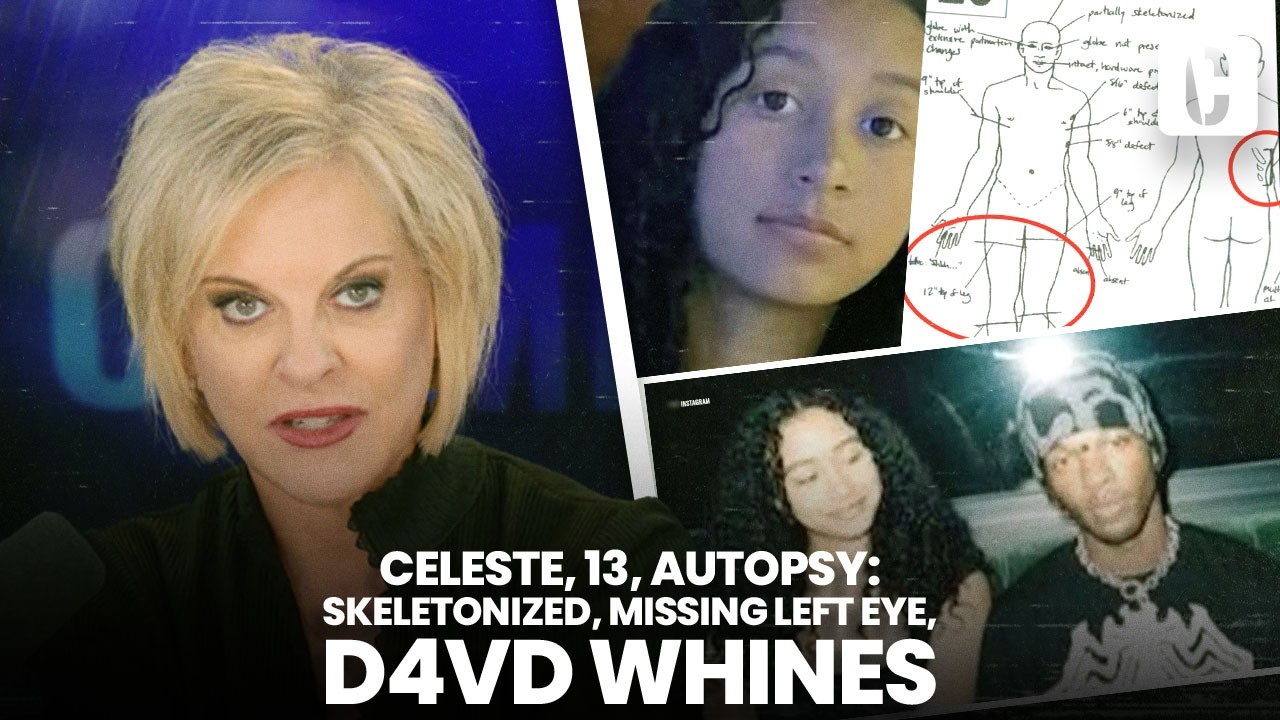
CELESTE, 13, AUTOPSY: SKELETONIZED, MISSING LEFT EYE, D4VD WHINES
"A 13-year-old girl, Celeste Rivas, was found partially skeletonized with a missing left eye, traces of meth and MDMA, and fatal stab wounds, while the accused musician David Anthony Burke (D4VD) complains about jail conditions."