
Matthew Hoh: Why America’s Missile Stockpile Just Hit less than 10%
YouTube · GnDDqjEclCg
Quick Read
Summary
Takeaways
- ❖The US 'Project Freedom' in the Strait of Hormuz failed within 24 hours, demonstrating US inability to force passage without Iranian cooperation.
- ❖US Patriot and THAAD missile defense stockpiles are below 50% of pre-conflict levels after recent engagements, indicating a critical vulnerability.
- ❖Russia and China anticipated a short US war with Iran, providing diplomatic and technological support to Iran while observing US military weaknesses.
- ❖US 20th-century military assets like supercarriers and large overseas bases are 'sponges for missiles and drones' in 21st-century warfare.
- ❖The economic costs of current US conflicts, including inflation and rising interest rates, are immediately felt by American citizens, unlike previous wars.
- ❖Iran has demonstrated precise missile capabilities, hitting intended targets without near misses, indicating advanced targeting systems.
- ❖The US military's culture, attitude, and the structure of its industrial complex prevent it from adapting to modern warfare, prioritizing legacy systems over effective new technologies.
- ❖The US may pivot to a 'frozen conflict' strategy in the Persian Gulf, shifting responsibility to European and Asian allies, while focusing on new 'distractions' like Cuba.
Insights
1US Military Overextension and Ineffectiveness in the Persian Gulf
The US 'Project Freedom' operation to secure shipping in the Strait of Hormuz failed within 24 hours, demonstrating that the US cannot guarantee passage without Iranian consent. Despite deploying multiple aircraft carriers and hypersonic missiles, the US military lacks the capacity to consistently penetrate Iranian airspace or conduct a sustained invasion. This highlights a critical vulnerability where 20th-century US military might is ineffective against 21st-century Iranian missile and drone capabilities.
The rapid conclusion of 'Project Freedom' (), the US not having forces for an invasion (), and the inability to penetrate Iranian airspace ().
2Depleted US Missile Stockpiles and Short War Timelines
Pentagon leaks indicate that US Patriot and THAAD missile defense interceptor stocks are below 50% of their initial levels after only four weeks of conflict. This rapid depletion suggests that the US and Israel can only sustain high-intensity missile defense operations for a few weeks before running out of critical munitions, leading to predictable ceasefires and a cycle of short, inconclusive wars.
Pentagon leaking to CNN that Patriot and THAAD missile stocks are below 50% (), implying a three to four-week combat timeline ().
3Russia and China Capitalize on US Weakness
Russia and China strategically anticipated a short, unsustainable US conflict with Iran. They provided diplomatic and political support to Iran, along with technology transfers and lessons learned from the Ukraine war regarding American military tactics. This allowed them to witness the weakening of their main adversary, the US, and exploit the resulting economic instability (e.g., oil premiums) without direct intervention, while also learning about US vulnerabilities.
Russians and Chinese had a good idea how the war would play out (), understanding US capabilities and capacities (), and witnessing the US being weakened ().
4Immediate Economic Repercussions of US Warfare
Unlike past conflicts, the current US wars have immediate and tangible economic consequences for American citizens, including rising gas prices, increased supermarket costs, and higher mortgage rates. This direct impact on daily life makes the costs of war visible and creates a domestic feedback loop that was absent in previous 'academic' discussions of debt and opportunity costs.
Americans seeing the war's impact at the pump and supermarket (), and mortgage rates going up ().
5Iranian Military Decentralization and Precision
Iranian military assets, including command and control, proved resilient to US and Israeli attacks due to their decentralized structure. Satellite imagery of damaged US bases showed precise Iranian strikes with minimal collateral damage, indicating advanced targeting capabilities. This highlights Iran's preparedness and adaptability in modern warfare, contrasting sharply with the US's reliance on vulnerable, large-scale assets.
Iranians' ability to carry out counter-strikes throughout four weeks of combat (), their decentralized military (), and the precision of Iranian weapons ().
Bottom Line
Iran is likely to establish de facto control over the Strait of Hormuz, imposing tolls on commercial shipping as a form of reparations and revenue generation.
This would fundamentally alter global energy trade routes and supply chain economics, forcing international powers to negotiate directly with Iran for passage, effectively legitimizing Iran's regional influence.
Companies in shipping, insurance, and energy will need to adapt to new geopolitical realities and potential Iranian tariffs. Investment opportunities may arise in alternative shipping routes or energy sources less reliant on the Persian Gulf.
China is actively learning from US military engagements and economic vulnerabilities, not just through observation but potentially through direct training and technology exchange with US adversaries.
This accelerates China's military modernization and strategic planning, enabling it to develop more effective countermeasures against US power projection and potentially shift the global military balance faster than anticipated.
Defense contractors specializing in asymmetric warfare, drone technology, and cyber defense for non-US aligned nations may find new markets. Geopolitical analysts and intelligence agencies should closely monitor these learning and adaptation processes.
Key Concepts
Dying Empire Lashing Out
Empires, in their decline, often resort to military force as their primary mechanism of control, even when ineffective, leading to hubris and eventual downfall. The US is seen as a 'rabid animal' using its military without understanding the consequences.
20th Century vs. 21st Century Warfare
The US military is stuck in a 20th-century paradigm (supercarriers, large bases, conventional air power) while adversaries like Iran employ 21st-century asymmetric tactics (drones, precision missiles, decentralized command), rendering US assets vulnerable and ineffective.
Economic Warfare Feedback Loop
In a globalized economy, military conflicts initiated by a major power like the US now have immediate and direct economic repercussions (inflation, interest rates) on its own population, creating a feedback loop that undermines public support and national stability.
Lessons
- Re-evaluate investment strategies in global energy markets, considering potential Iranian control and tolls in the Strait of Hormuz and its impact on oil prices and shipping costs.
- Assess supply chain vulnerabilities that rely on Middle Eastern shipping lanes, exploring diversification or alternative routes to mitigate geopolitical risks.
- Advocate for a critical review of US defense spending and military doctrine, pushing for adaptation to 21st-century warfare and a reduction in reliance on outdated, vulnerable assets.
- Monitor US foreign policy shifts, particularly any moves towards 'frozen conflicts' or pivots to new regions like Cuba, as these indicate a changing global engagement strategy with significant economic and political implications.
Quotes
"The United States now in the 21st century against a real opponent, they bomb them and their American Airlines go out of business, right? Spirit Airways is gone."
"The Americans themselves are leaking, the Pentagon itself is leaking to, uh, the, you know, to CNN that Patriot and THAAD missile stocks are below 50% of where they were at the start of this."
"This is really is a war between the 20th century and the 21st century that the Americans are not going to give up on this."
"It's better to fight and lose wars to get those experience than not to have any experience at all like those Chinese."
Q&A
Recent Questions
Related Episodes
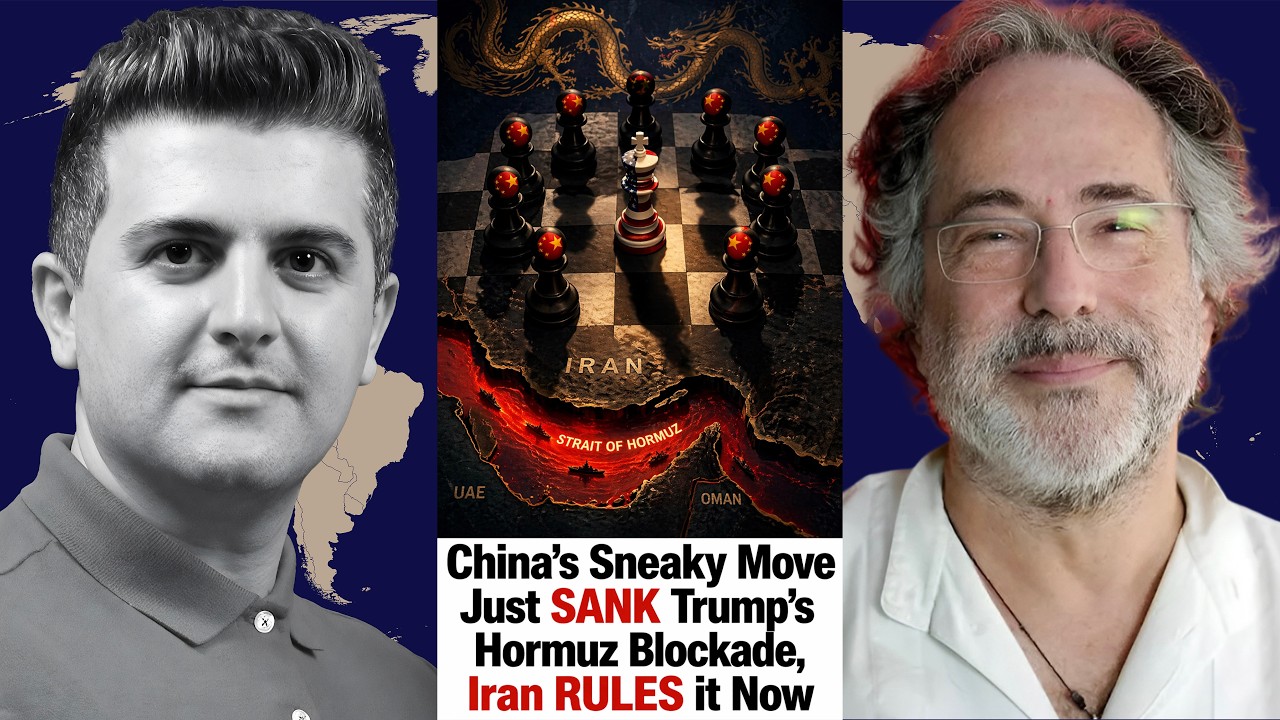
Pepe Escobar: “Total Failure”: Trump’s Blockade Just Backfired Disastrously
"Pepe Escobar argues that the US blockade against Iran, spearheaded by Donald Trump, has utterly failed and backfired, accelerating global economic chaos and challenging US geopolitical dominance."

Patrick Henningsen: Hezbollah JUST Fired Back at Israel - Iran Vows to “Crush” All Attacks
"Patrick Henningsen argues that the US and Israel initiated an illegal war against Iran, driven by Trump's incompetence and Israeli influence, leading to an inevitable escalation with severe global economic repercussions."

Col. Jacques Baud: What a US Ground Invasion of Iran Would REALLY Look Like
"Colonel Jacques Baud dissects the strategic futility of a US ground invasion of Iran, arguing that current troop levels are insufficient and such an action would backfire, exposing US allies and potentially leading to Iran's nuclearization."

Iran Update: Israel’s Newest Bombing Campaign, the Oncoming War With China and How to Avoid It
"Colonel Wilerson reveals how the US and Israel are actively bombing China's strategic infrastructure in Iran, escalating a covert economic war that Beijing intends to win without direct military conflict by dismantling the dollar's global dominance."