Trump Announces the End of Global American Empire. Here’s What Comes Next.
YouTube · GyYy-QmxttU
Quick Read
Summary
Takeaways
- ❖The US's inability to unilaterally open the Strait of Hormuz signifies the end of its global empire.
- ❖True power is defined by the ability to restore order, a capacity the US has demonstrably lost in the Persian Gulf.
- ❖China is positioned to become the dominant global power by leveraging economic relationships to open the Strait of Hormuz and exert influence over Asian allies.
- ❖The US must shift its foreign policy focus from distant conflicts to strengthening its own hemisphere, particularly with resource-rich neighbors like Canada, Mexico, and Brazil.
- ❖American Protestant Christian leadership is 'corrupt' for endorsing war crimes and prioritizing geopolitical alliances over core Christian teachings.
Insights
1The Strait of Hormuz as the Global Chokepoint
The Strait of Hormuz is the single most critical geographic point for the global economy, controlling 20% of the world's energy and 30% of its fertilizer. The nation that can open and secure it effectively runs the world.
Iran's power derives from its geographic control over the Strait, not its military, as it can shut down or gravely damage the global economy by closing this vital waterway.
2US Inability to Restore Order
The US has demonstrated an inability to protect its Gulf allies (UAE, Qatar, Saudi Arabia) from Iranian attacks, indicating a loss of its capacity to restore order and secure global commerce.
The UAE sustained over 2,000 missile and drone attacks in recent months, targeting energy infrastructure, economic sites, and airports, with the United States unable or unwilling to defend them.
3China's Strategic Advantage in the Gulf
China is uniquely positioned to open the Strait of Hormuz, not through military force, but through its extensive economic relationships with Iran and other Gulf states. China benefits from letting the conflict continue, weakening US allies in Asia and solidifying its regional dominance.
China is the largest trading partner with every Gulf country and with Iran, and is highly dependent on Gulf energy. From a 'longitudinal' perspective, allowing the conflict to weaken US allies in Asia strengthens China's sphere of influence.
4US Pivot to the Western Hemisphere
The end of American global empire necessitates a strategic shift for the US to focus on strengthening its own hemisphere, leveraging the abundant resources of Canada, Mexico, and Brazil.
The Western Hemisphere, including North and South America, possesses massive reserves of energy (especially natural gas), fresh water, and the world's best farmland, making it a naturally rich and self-sufficient region.
5Corruption in American Protestant Christianity
Prominent American Protestant Christian leaders are criticized for spiritually corrupting their faith by endorsing war crimes and prioritizing geopolitical alliances (e.g., with Israel) over core Christian teachings of peace and non-violence.
Franklin Graham's prayer at the White House, referencing the Book of Esther (which doesn't mention God) to endorse 'murder of civilians,' while omitting any mention of Jesus or the Gospel's message of non-violence, is cited as an example.
Bottom Line
The US's long-standing policy of providing defense guarantees to European allies (via NATO) and maintaining military presence since WWII has prevented them from developing independent military capabilities, rendering them incapable of assisting in global security challenges like opening the Strait of Hormuz.
This historical dependency now leaves Europe vulnerable and unable to act autonomously in critical situations, exposing the fragility of a security architecture built on US hegemony.
For European nations, this could be a catalyst to invest in genuine, independent defense capabilities and forge new, self-reliant security alliances, rather than relying on a diminishing US guarantee.
The host claims that Canada, a critical US ally and resource-rich neighbor, is 'falling apart as a nation,' becoming a 'police state under the influence of China,' and 'oppressing its own citizens' through state-sponsored killing programs (MAID).
This portrayal suggests a severe deterioration of a key regional partner, potentially creating instability on the US border and jeopardizing access to vital resources. The host even suggests a 'human rights case to invade Canada.'
The US could proactively engage with Canada to address these perceived issues, either through diplomatic pressure, economic incentives, or by fostering closer integration to counter external influence and ensure regional stability.
Key Concepts
Geography as Destiny
A country's power is fundamentally derived from its geographic location and control over vital chokepoints, not solely from military might. Iran's control over the Strait of Hormuz exemplifies this, making it an economic power despite its military limitations.
Power as Order Restoration
True power is not the ability to destroy or create chaos, but the capacity to restore order and ensure stability. The nation that can settle conflicts and maintain global commerce is the one truly in charge.
Resource-Based Prosperity
Long-term national prosperity and power are rooted in control over essential physical resources: food, water, and energy. Countries with abundant domestic resources are inherently more stable and powerful than those dependent on external supplies.
Lessons
- Re-evaluate US foreign policy to prioritize the Western Hemisphere, focusing on economic integration and stability with Canada, Mexico, and Brazil, rather than maintaining costly global military commitments.
- Recognize that military force alone cannot secure vital global chokepoints; diplomatic and economic leverage, particularly with regional powers, is essential for restoring order.
- Critically assess the influence of geopolitical interests on religious leadership and public discourse, particularly concerning justifications for military action.
Quotes
"Power is not the ability to destroy. Destroying is easy. Killing is easy. You can take life very simply. Not hard at all. Dumb people do it all the time. Creating life is impossible."
"The nation that restores order is the nation in charge."
"The president of the United States just said we're not going to be in charge of who runs Iran when this war ends."
"The countries of the world that do receive oil through the Hormone Strait must take care of that passage. They must cherish it. They must grab it and cherish it. They can do it easily. We will be helpful, but they should take the lead in protecting the oil that they so desperately depend on."
"So if you're China, maybe you don't come to the rescue right away. Maybe you let the pain continue for a while just to make it really clear who's in charge."
"Canada is the single most important relationship that we have. It has always been our largest trading partner. But going forward, as American influence recedes to our hemisphere, what happens in Canada matters more than anything else."
"You could make a human rights case to invade Canada. Not that we should, but if ever there was a people that needed liberation from a government that hates them, it's the Canadians, of course."
"What's happening in Iran is the end of American empire as we understand it. And that's sad. Boohoo. Empire's dying. But it's not the end of the United States."
"Because there's no evidence that Jesus was for genocide, killing civilians, murdering the innocent, murder at all."
Q&A
Recent Questions
Related Episodes

Patrick Henningsen: Hezbollah JUST Fired Back at Israel - Iran Vows to “Crush” All Attacks
"Patrick Henningsen argues that the US and Israel initiated an illegal war against Iran, driven by Trump's incompetence and Israeli influence, leading to an inevitable escalation with severe global economic repercussions."
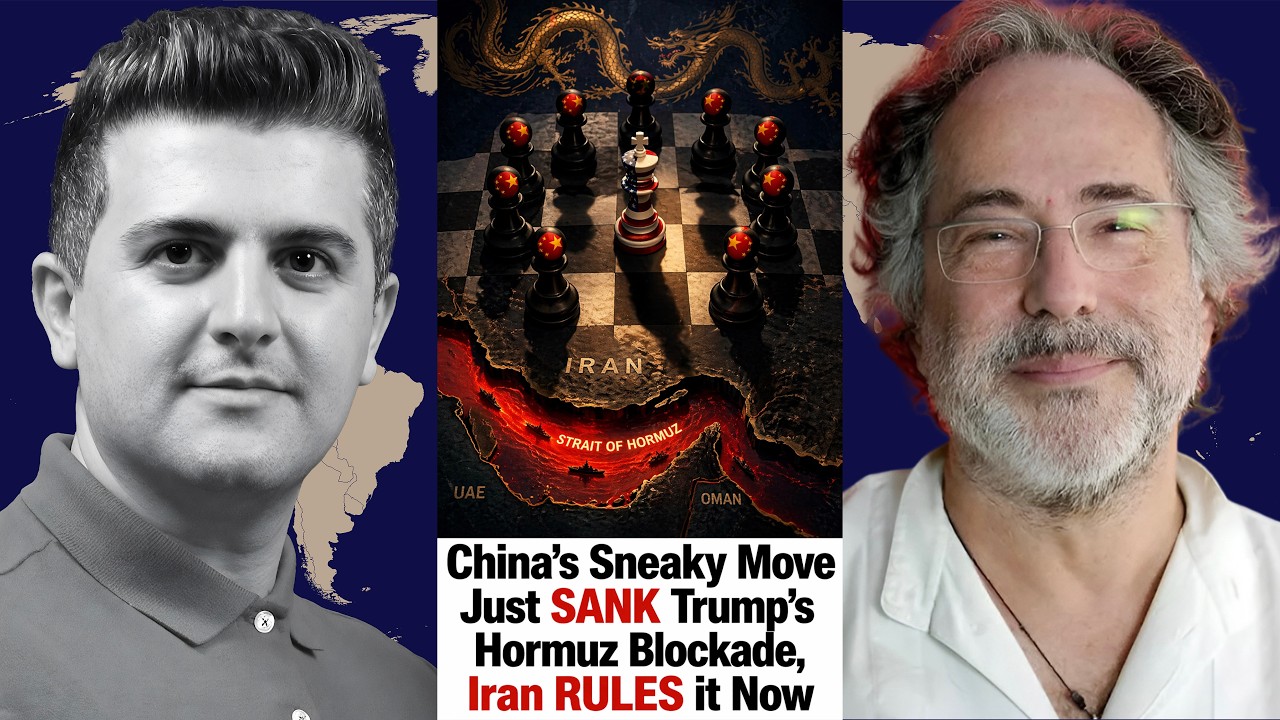
Pepe Escobar: “Total Failure”: Trump’s Blockade Just Backfired Disastrously
"Pepe Escobar argues that the US blockade against Iran, spearheaded by Donald Trump, has utterly failed and backfired, accelerating global economic chaos and challenging US geopolitical dominance."

🚨 TOTAL F*CKING CHECKMATE 😂😂😂
"The host argues that Trump's 'ceasefire' with Iran was a calculated '5D chess' move to orchestrate a global energy market reshuffle, while simultaneously lambasting 'woke' domestic policies and the 'freefall' of anti-Trump conservative figures."

Bibi DEMANDS Ground Troops As Marines Rushed to Iran
"Benjamin Netanyahu is pushing for US ground troops in Iran, framing air strikes as insufficient, while the US rushes Marines to the region and struggles to secure the Strait of Hormuz against surprisingly capable Iranian defenses."