
Martin Luther King Jr. Day Compilation 2026
YouTube · IDWOErx0QMc
Quick Read
Summary
Takeaways
- ❖Martin Luther King Jr.'s vision encompassed economic justice, including reparations and guaranteed income, not just racial equality.
- ❖He argued that privileged classes do not surrender power voluntarily, necessitating aggressive, nonviolent action.
- ❖King viewed the Vietnam War as a direct drain on domestic anti-poverty efforts and a moral betrayal, making America the "greatest purveyor of violence."
- ❖He called for a "radical revolution of values" to prioritize human well-being over profit and military might, warning against the "giant triplets" of racism, materialism, and militarism.
- ❖King emphasized that "time is neutral" and human progress requires tireless effort, not passive waiting.
- ❖He exposed the "bootstrap philosophy" as a cruel jest, given the historical debt owed to formerly enslaved people.
- ❖King's Poor People's Campaign aimed to make the invisible poor visible and demand government action on poverty.
- ❖He asserted that true leadership involves molding consensus based on conscience, not merely seeking popularity or expediency.
Insights
1MLK's Broader Economic Vision: Reparations and Guaranteed Income
Martin Luther King Jr. advocated for concrete economic measures like reparations and a guaranteed income, arguing that the Emancipation Proclamation, while freeing Black people from physical slavery, failed to provide the economic foundation necessary for true freedom. He likened it to releasing an innocent man from jail without any means of support, highlighting the nation's failure to equip freed slaves with land or economic stability, unlike its support for white peasants.
In 1863, the Negro was freed from the bondage of physical slavery... But the Negro was not given any land to make that freedom meaningful. () It was something like keeping a person in prison for a number of years and suddenly discovering that that person is not guilty... And you just go up to him and say, 'Now you're free.' But you don't give him any bus fair to get to town. () It's a speech on reparations. It's a speech on white economic anxiety and guaranteed income. ()
2Critique of Vietnam War as a Moral and Economic Drain
King explicitly connected the Vietnam War to the failure of domestic anti-poverty programs, arguing that the war "eviscerated" hopes for the poor by diverting funds and energy. He condemned the "cruel irony" of sending Black and white youth to die for liberties abroad they were denied at home, and labeled the U.S. government the "greatest purveyor of violence in the world" for its actions in Vietnam.
I watched this program broken and eviscerated as if it was some idle political play thing of a society gone mad on war. And I knew that America would never invest the necessary funds or energies in rehabilitation of its poor so long as adventures like Vietnam continue to draw men and skills and money like some demonic destructive suction to. () I knew that I could never again raise my voice against the violence of the oppressed in the ghettos without having first spoken clearly to the greatest purveyor of violence in the world today. My own government. ()
3Call for a 'Radical Revolution of Values'
King asserted that the Vietnam War was a symptom of a deeper American spiritual malady, characterized by the "giant triplets" of racism, extreme materialism, and militarism. He advocated for a societal shift from "thing-oriented" to "person-oriented," where human needs and dignity take precedence over profits and property rights, proposing this fundamental change as the true defense against communism.
The war in Vietnam is but a symptom of a far deeper malady within the American spirit... We must rapidly begin the shift from a thingoriented society to a person oriented society when machines and computers, profit motives and property rights are considered more important than people. The giant triplets of racism, extreme materialism and militarism are incapable of being conquered. (, ) This kind of positive revolution of values is our best defense against communism. ()
4Aggressive Nonviolence as a Necessary Tactic
King and Judge Waring argued that privileged classes do not voluntarily surrender their advantages, making aggressive, nonviolent direct action essential to achieving civil rights. They viewed the "bitterness" and "ill will" generated by such actions as a temporary, necessary phase in the transition from an unjust old order to a new one of freedom and justice, emphasizing that courts declare rights but people must actively claim them.
privileged classes do not give up their privileges voluntarily. Uh and they do not give them up without strong resistance. And all of the gains that uh have been made... have come about because the negro stood up uh courageously for these rights and he was willing to aggressively press on. () I think that is a necessary phase of the transition. Whenever oppressed people uh stand up for their rights... the initial response uh of the oppressor is bitterness. ()
Key Concepts
Interconnectedness of Injustice
King consistently linked racial injustice, economic inequality, and militarism as intertwined issues stemming from a core "malady within the American spirit," arguing that progress in one area is contingent on addressing the others.
Revolution of Values
King proposed a fundamental societal shift from a "thing-oriented" to a "person-oriented" society, where human dignity and well-being supersede profit, property rights, and military power, as essential for national and global survival.
Conscience over Consensus
King's leadership model prioritized moral rightness and the dictates of conscience over popularity, political expediency, or financial gain, especially when confronting systemic injustices.
Lessons
- Actively challenge narratives that sanitize historical figures like MLK, seeking out their full, often radical, messages on economic and social justice.
- Recognize and address the interconnectedness of social issues (e.g., poverty, racism, militarism) rather than treating them as isolated problems.
- Prioritize human well-being and dignity over economic profit and military expenditures in personal, organizational, and national decision-making.
Notable Moments
MLK's Definition of the 'New Negro'
King defines the 'New Negro' as having a new sense of dignity, destiny, self-respect, lacking fear, willing to stand up courageously for justice, and characterized by a new honesty, no longer using duplicity as a survival technique. This redefines Black identity from acquiescence to assertive truth-telling, marking a pivotal shift in the Civil Rights Movement's approach.
Reinterpretation of the Dives and Lazarus Parable
King uses the parable of Dives and Lazarus to illustrate that Dives went to hell not for being rich, but for allowing Lazarus, the poor man, to become invisible, thus being a 'conscientious objector in the war against poverty.' This reframes wealth as an opportunity and inaction against poverty as a profound moral failing, challenging affluent societies to actively address inequality.
Nina Simone's Raw Performance of 'Why? (The King of Love is Dead)'
Nina Simone's live performance of 'Why? (The King of Love is Dead)' just three days after MLK's assassination captures the immediate, profound grief and anger, questioning the future of the movement and America itself. Her post-song commentary, 'They're shooting us down one by one,' adds a chilling, personal urgency to the loss, reflecting the raw emotion and fear of the time.
Quotes
"The destiny of America is always safer in the hands of the people than in the conference rooms of any elite."
"The problem is, my friends, that we have learned to fly the air like birds, and we have learned to swim the seas like fish, and yet we haven't learned to walk the earth like brothers and sisters."
"Racial injustice is still the black man's burden and the white man's shame."
"Privileged classes do not give up their privileges voluntarily. Uh and they do not give them up without strong resistance."
"A time comes when silence is betrayal. That time has come for us in relation to Vietnam."
"I knew that I could never again raise my voice against the violence of the oppressed in the ghettos without having first spoken clearly to the greatest purveyor of violence in the world today. My own government."
"If America's soul becomes totally poison, part of the autopsy must read Vietnam."
"We must rapidly begin the shift from a thingoriented society to a person oriented society when machines and computers, profit motives and property rights are considered more important than people. The giant triplets of racism, extreme materialism and militarism are incapable of being conquered."
"True compassion is more than flinging a coin to a bear. It comes to see that an editor which produces beggars needs restructuring."
"We must all learn to live together as brothers or we will all perish together as fools."
"Time is neutral. It can be used either constructively or destructively."
"It's all right to tell a man to lift himself by his own bootstraps, but it is a cruel gestless man that he ought to lift himself by his own bootstraps."
"Dives went to hell because he passed by Lazarus every day and he never really saw him. He went to hell because he allowed his brother to become invisible."
"Mankind must put an end to war. A war will put an end to mankind."
"It is no longer the choice, my friends, between violence and nonviolence. It is either nonviolence or non-existence."
"Conscience asks the question is it right? And there comes a time when one must take a position that is neither safe nor politic nor popular, but he must do it because conscience tells him it is right."
"The ark of the moral universe is long, but it bends toward justice."
"It's hard to think this great man is dead. Oh yeah. Well, the murders never cease. Are they men or are they beast? What do they ever hope ever hope to gain? Will my country first stand? Is it too late for us all? And did Martin Luther King just die in vain?"
"They're shooting us down one by one. Don't forget that 'cause they are killing us one by one."
Q&A
Recent Questions
Related Episodes

MAGA Voting Rights Power Grab. Stacey Abrams Dire Warning. Justin Jones Stripped of All Committees.
"Roland Martin and guests expose a coordinated Republican effort to dismantle Black political power across the South through aggressive gerrymandering, voter suppression, and economic attacks, urging a unified, immediate, and sustained counter-mobilization."
George Floyd 6 Years Later. Redistricting War in The South. Talarico Senate Campaign
"This episode exposes the ongoing legislative battles and strategic resistance against efforts to diminish Black political power, from federal policing reform to state-level gerrymandering and calls for economic boycotts by Black athletes."
Black Woman Killed in ICE Pursuit. Newsom “Can’t Read” Remark. Tariff Repayment Push. TPS Fight
"This episode dissects multiple critical events, from the tragic deaths during an ICE pursuit and a police shooting, to debunking a viral controversy around Governor Gavin Newsom's remarks, and honoring Reverend Jesse Jackson's enduring legacy in economic and media justice."
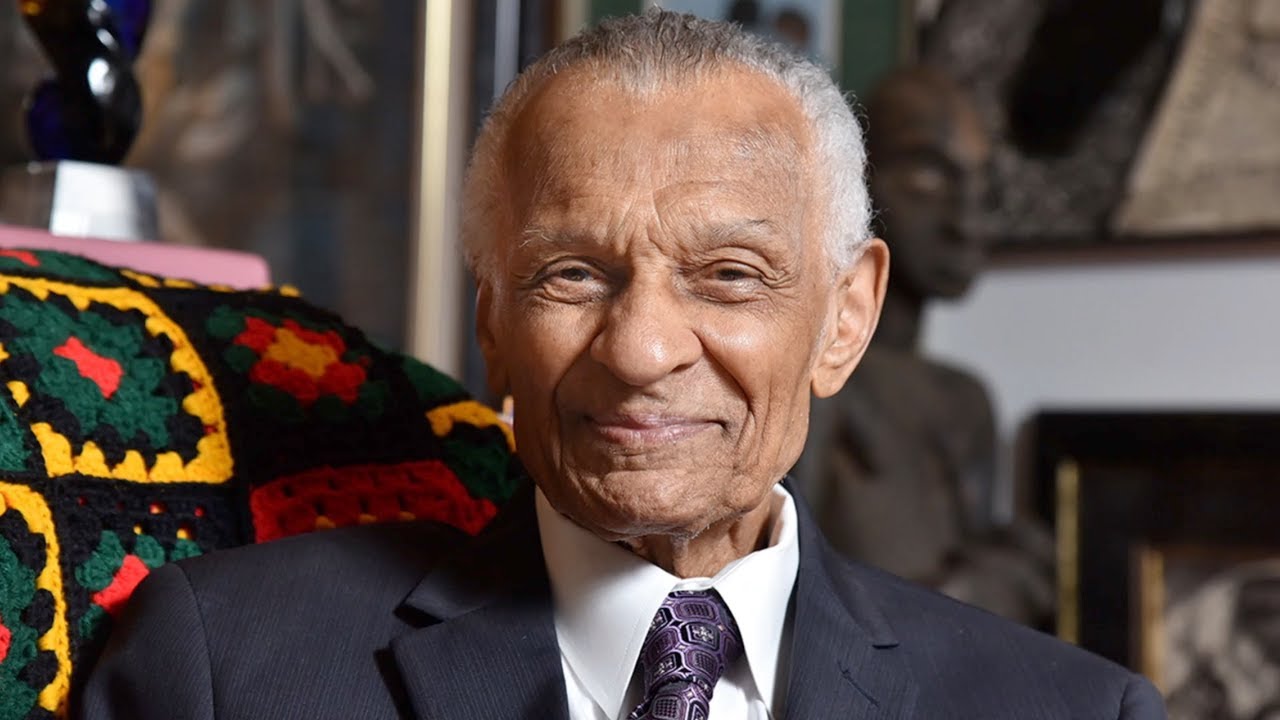
Rev. C.T. Vivian talks MLK and staring death in the face. #MLKDay2026
"Civil Rights icon Rev. C.T. Vivian reflects on a lifetime of struggle, from facing childhood bullies to confronting Jim Clark, and shares his profound insights on the continuous fight for freedom and the true cost of a movement."