
Missile HITS Israel As Interceptors RUN LOW
YouTube · IKA7AvxvoTI
Quick Read
Summary
Takeaways
- ❖Israel is critically low on interceptors, a vulnerability known before the war, with US supplies also finite.
- ❖Iranian missiles and drones are effectively penetrating Israeli air defenses, sometimes requiring multiple interceptors per target.
- ❖Iran possesses significant capacity for manufacturing cheap Shahed drones (under $10,000 each) and has been mass-producing them for years.
- ❖Cluster munitions on Iranian ballistic missiles challenge Israeli air defense by exploding over a wide radius, making interception difficult.
- ❖The US/Israeli 'shock and awe' strategy aimed at a quick collapse of Iran's government, but Iran is prepared for a 'marathon' war.
- ❖Censorship in Israel and GCC states is obscuring the extent of damage from Iranian strikes.
- ❖Iran claims to be using older missiles to drain Israeli defenses, saving more advanced ones for later in the conflict.
- ❖American public support for Israel is at a historical low, particularly among Democrats and younger conservatives.
- ❖Israel is reportedly invading southern Lebanon, displacing hundreds of thousands of civilians, a move with historical precedents for territorial expansion.
- ❖US foreign policy is creating an Israeli regional hegemon, which contradicts the traditional 'offshore balancing' strategy and could create a future competitor to American interests.
Insights
1Critical Interceptor Shortage Exposes Israeli Vulnerability
Israel entered the current conflict with a low supply of expensive, time-consuming-to-produce interceptors. A verified video shows two Israeli interceptors failing to stop an Iranian missile that struck Tel Aviv. The guest notes that the math favors Iran, as multiple interceptors are often needed for a single incoming missile, and the global supply is finite, also needed in Ukraine and for US positions in Asia.
Video of two Israeli interceptors missing an Iranian missile hitting Tel Aviv. Report from Shelby Talcott at Semaphore on Israel's low interceptor supply. Guest states interceptors are 'extremely expensive' and 'very time consuming to produce,' with the US sometimes only producing a dozen a year.
2Iran's Drone and Cluster Munition Strategy Overwhelms Defenses
Despite US/Israeli claims of degrading Iran's capacity, Iran continues to fire missiles and drones. Shahed drones, costing less than $10,000 each, are mass-produced and provide precision strike capacity. Additionally, Iranian ballistic missiles are outfitted with cluster munitions that explode over a wide radius, making them difficult for Israeli air defense systems to intercept and challenging the US narrative of effective degradation.
Guest states Iran entered serial production of drones years ago, some estimates say they cost less than $10,000 each. CNN report on cluster munitions challenging Israeli air defense, carrying up to 11 pounds of explosives and hitting over a multiple-mile radius.
3Iran's 'Marathon' War Strategy vs. US/Israel's 'Sprint'
The US and Israel initially pursued a 'shock and awe' strategy to quickly collapse the Iranian government. However, Iran has prepared for generations, dispersing production facilities underground and in eastern regions, making complete destruction difficult. Iran is reportedly using older missiles to deplete Israeli defenses, saving more advanced ones for later stages of a prolonged conflict, indicating a 'marathon' approach while US/Israeli strike rates decrease due to logistics.
Guest states Iran has been 'preparing for this conflict for literally generations,' dispersing production facilities. Iranian statements claim they are using older missiles and saving advanced ones for later when 'Israeli defenses will be down further.'
4Censorship and Hidden Damage in the Region
The extent of damage from Iranian strikes in Israel and GCC member states is being suppressed. Satellite images showing serious destruction at US military bases were removed, and people are being arrested in the UAE and elsewhere for taking photos of strike aftermath. This makes it difficult to assess the true impact of Iranian operations.
Host mentions 'private satellite companies that have decided to do the bidding of the US and Israel and take down their satellite images.' Guest notes 'reports of people being arrested in very large numbers in the UAE and elsewhere for taking photos of the aftermath of these strikes.'
5Israel's Strategy to Secure Long-Term US Elite Support Amid Declining Public Opinion
Despite historically low American public support for Israel (only 32% positive view overall, 13% among Democrats), Israel is actively working to embed long-term cooperation and security support with the US administration. This involves creating multi-year memorandums of understanding and maintaining strong ties with American elites, aiming to exploit the US political system to insulate itself from public criticism, similar to the US-Saudi Arabia relationship.
NBC News poll showing 'only 32% of Americans... have a positive view of Israel,' and 'Only 13% of Democrats have a positive view.' Guest states Israel is 'trying to embed many more years of cooperation' and 'maintaining ties with the American elites.'
6US Policy Inadvertently Creates an Israeli Hegemon, Undermining American Interests
The guest argues that current US policy, by systematically destroying Israel's regional enemies (like Iran), is creating an Israeli military superpower. This deviates from the traditional US 'offshore balancing' foreign policy, which aims to prevent any single country from becoming a regional hegemon. Creating such a powerful, non-treaty ally could lead to a future competitor that undermines American interests, especially if US public opinion continues to sour.
Guest explains 'offshore balancing' theory and states 'what we're doing in Israel is something totally different that we're creating an Israeli hegemon.' He concludes, 'you've created a potential competitor to America in the future. Someone who could stop American interests.'
Bottom Line
The proliferation of fiber optic drones, as seen in the Ukraine-Russia war, poses a direct and horrifying threat to US military personnel in the Middle East, potentially leading to catastrophic casualties.
This technological diffusion means US forces are now vulnerable to the same devastating, difficult-to-jam drone attacks previously observed in other conflicts, escalating the personal risk for soldiers.
Develop and deploy advanced counter-drone technologies specifically designed to neutralize fiber optic drones, or rethink base defense strategies to mitigate this new threat effectively.
The US strategy of eliminating Israel's regional adversaries is inadvertently creating an Israeli military superpower, a deviation from historical US foreign policy principles.
This policy risks establishing a future regional competitor that could act against American interests, especially given declining US public support for Israel and Israel's non-treaty ally status.
Re-evaluate the long-term geopolitical consequences of current US foreign policy in the Middle East, considering a return to 'offshore balancing' to maintain US influence and prevent the rise of potentially adversarial regional hegemons.
Key Concepts
Offshore Balancing
A foreign policy strategy where a great power prevents the rise of a hegemon in a strategically important region by supporting weaker states against stronger ones, rather than direct military intervention. The guest argues current US policy in the Middle East, by destroying Israel's enemies, is creating an Israeli hegemon, directly contradicting this model and potentially harming long-term US interests.
Asymmetric Warfare (Cost-Exchange Ratio)
A military strategy where a weaker adversary leverages low-cost, high-volume weapons (like drones or older missiles) to overwhelm and deplete the more expensive, limited defenses (like interceptors) of a technologically superior opponent. This dynamic is evident in Iran's use of cheap drones and cluster munitions against Israel's costly air defense systems.
Lessons
- Re-evaluate the effectiveness of traditional air defense systems against modern, low-cost, high-volume drone and cluster munition attacks, considering the cost-exchange ratio.
- Analyze the long-term implications of US foreign policy in the Middle East, particularly how it shapes regional power dynamics and the potential for creating future geopolitical challenges.
- Consider how declining public support for international allies, coupled with strong elite ties, can influence foreign policy decisions and resource allocation over time.
Notable Moments
Video showing two Israeli interceptors failing to shoot down an incoming Iranian missile, which then strikes Tel Aviv.
Visually demonstrates the critical failure of advanced air defense systems and highlights Israel's interceptor shortage and vulnerability.
Discussion of private satellite companies taking down images of strike damage in Israel and GCC states.
Reveals a concerted effort to control information and obscure the true extent of damage, impacting public and analytical understanding of the conflict's impact.
Footage of a fiber optic drone penetrating a US base, honing in on a target.
Illustrates the advanced and difficult-to-counter nature of modern drone warfare, posing a significant threat to US personnel and assets.
Reports of Israel invading southern Lebanon and displacing hundreds of thousands of civilians.
Signifies a major escalation and potential territorial expansion, largely overshadowed by other conflicts, demonstrating Israel's multi-directional military actions.
Quotes
"The math kind of favors the Iranians here. Really, the US's real goal would have to be to suppress Iranian fire before the interceptors run out."
"These cheap drones give Iran precision strike capacity far beyond at a greater scale than people would have understood before."
"The Iranians designed this war to be a marathon, whereas the Israeli US preference is a sprint, and now it seems like we're entering the marathon."
"Creating another rival or potential rival superpower or regional power has never been an American policy before. The right thing to do is to balance Israel against its other neighbors."
Q&A
Recent Questions
Related Episodes

Alex Krainer: US STRIKES Iran – Iran RETALIATES Against Kuwait, Bahrain & Jordan!
"Amidst escalating US-Iran conflict and Iranian retaliation against regional US allies, this episode argues that US foreign policy is deeply controlled by an 'Anglo-Zionist conspiracy' led by the Rothschild banking dynasty, prioritizing Israeli interests over American ones."

Patrick Henningsen: Hezbollah JUST Fired Back at Israel - Iran Vows to “Crush” All Attacks
"Patrick Henningsen argues that the US and Israel initiated an illegal war against Iran, driven by Trump's incompetence and Israeli influence, leading to an inevitable escalation with severe global economic repercussions."
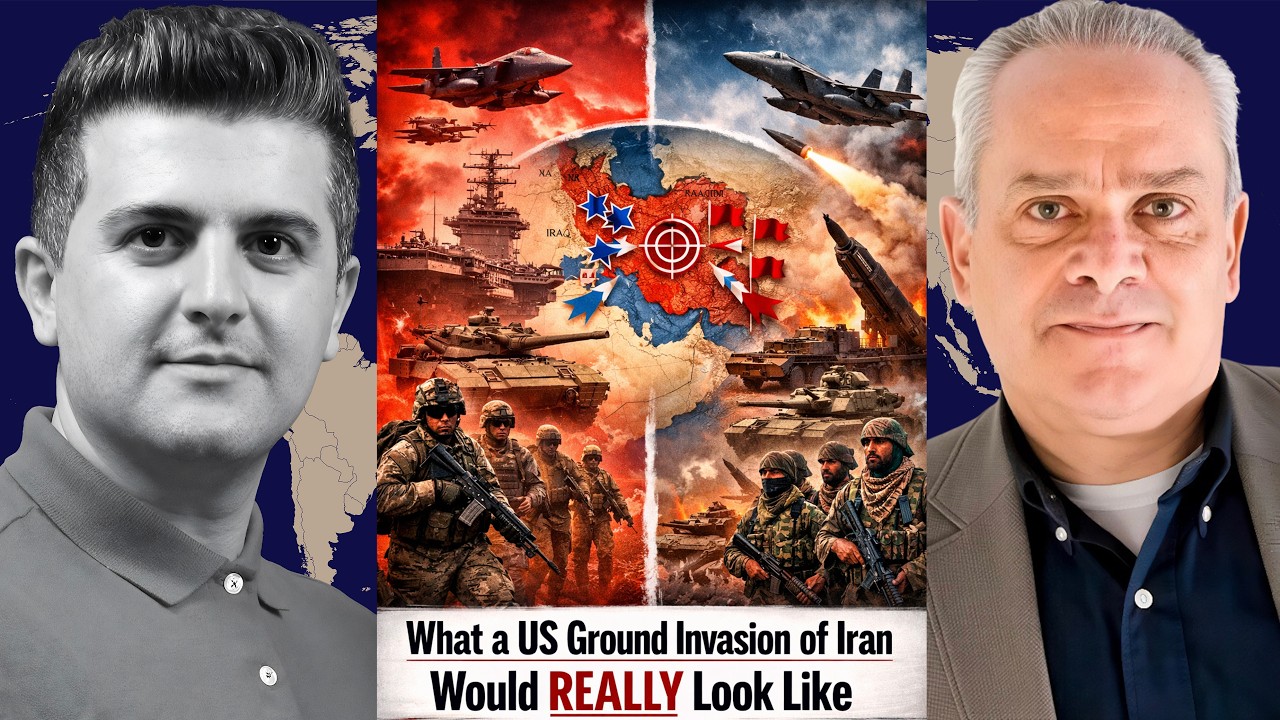
Col. Jacques Baud: What a US Ground Invasion of Iran Would REALLY Look Like
"Colonel Jacques Baud dissects the strategic futility of a US ground invasion of Iran, arguing that current troop levels are insufficient and such an action would backfire, exposing US allies and potentially leading to Iran's nuclearization."

🚨 THEY F*CKED AROUND FOR THE LAST TIME 😭😭😭
"This episode unleashes a torrent of highly opinionated commentary on the US-Iran deal, Israel's role, and a scathing critique of 'leftist' policies and immigration, particularly highlighting the UK grooming gang report as evidence of Western societal decay."