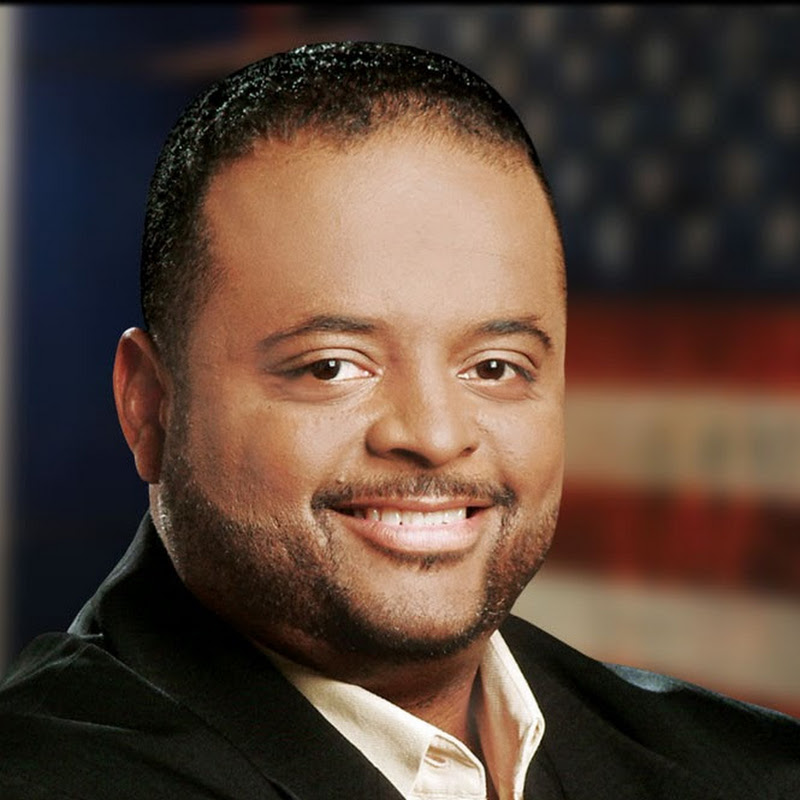
Roland speaks to Northern Va. Baptist Town Hall
YouTube · JZCKnYXCNCc
Quick Read
Summary
Takeaways
- ❖Black America is under a clear and defined plan to be defunded, targeting all institutions.
- ❖The Supreme Court is actively undermining Black political power and civil rights under the guise of "race-neutral" justifications.
- ❖Black-owned media has significantly declined, leaving a void in critical news and analysis for the community.
- ❖Many Black institutions, particularly the church, are failing to mobilize effectively against systemic attacks, prioritizing internal events over strategic political engagement.
- ❖Current boycott efforts often fail due to a lack of strategic planning and data-driven execution.
- ❖Political campaigns and corporations underinvest in Black communities and media, treating Black engagement as "sharecropping."
- ❖Effective change requires a micro-level, data-driven approach to organizing, voter registration, and economic empowerment within local communities.
Insights
1Systematic Attack on Black America
Roland Martin asserts there is a "clear and defined plan to defund Black America," targeting academic, economic, political, social, civil rights, and legal groups, as outlined in "Project 2025." He points to Supreme Court decisions, like wiping out Black congressional districts and justifying discriminatory policies against Haitians, as evidence of this coordinated strategy.
Mentions Project 2025, Supreme Court rulings on congressional districts (Louisiana) and TPS for Haitians/Syrians, citing Justice Kagan's dissent on "overtly racial" statements.
2Decline of Black-Owned Media and Institutional Failure
Martin laments the significant decline of traditional Black-owned media (Ebony, Jet, Essence, BET, TV One) and criticizes the Black church for not adequately addressing the ongoing attacks on Black America. He contrasts this with the highly organized, politically driven "Faith and Freedom Conference" of right-wing groups.
Lists specific media outlets that have declined or lost Black ownership; criticizes Hampton Ministers Conference and National Baptist Conference for lacking substantive political conversations.
3Ineffective Activism and "Sharecropper" Mentality
Martin argues that many Black activist efforts, such as boycotts and political engagement, are failing due to a lack of strategic planning, data, and collective negotiation. He describes a "sharecropper" mentality where Black communities provide labor (votes, volunteers) but receive minimal economic return, while white-owned entities profit.
Critiques the Target boycott for lacking a plan, resulting in a $300,000 check for four Baptist groups from a multi-billion dollar company; discusses political campaigns underpaying Black media and consultants while white agencies get millions.
4The Power of Micro-Level, Data-Driven Organizing
Martin advocates for a shift to highly localized, data-informed organizing, using the example of Reverend James Meeks' voter registration drive in Chicago and Nehemiah's rebuilding of the wall. He emphasizes collecting detailed community data (names, addresses, issues) and assigning specific, small-scale tasks (e.g., organizing by zip code, 0.25-0.5 mile radius around churches) to maximize impact.
Describes Meeks' church-based voter registration training; outlines a strategy for churches to map local residents, identify needs, and mobilize retired educators for tutoring.
Bottom Line
The systemic attacks on Black America are driven by "white fear" of the nation becoming majority people-of-color, leading to a desperate attempt to retain power and wealth.
Understanding this underlying motivation helps frame the opposition's actions and strategy, informing counter-narratives and coalition-building efforts.
This insight can be used to develop messaging that highlights the benefits of a diverse society and challenges the fear-based narratives of the opposition.
Boycotts are a strategic weapon, not a first resort, and require a multi-step process of data, negotiation, and escalating pressure to be effective, as demonstrated by "Operation Breadbasket."
Without this strategic understanding, boycotts are likely to fail and can be easily co-opted or dismissed, wasting valuable activist energy.
Activists can adopt a more sophisticated, multi-stage approach to economic pressure, learning from historical successes to achieve measurable outcomes.
Black institutions are leaving immense economic leverage on the table by not collectively negotiating for a larger share of corporate and political spend, accepting "crumbs" instead of billions.
By demanding a committed percentage of corporate advertising and other spending for Black-owned businesses and media, Black communities could unlock billions in economic power.
Civil rights groups and Black leaders can unite to demand specific, measurable commitments (e.g., 5% of ad spend) from corporations they patronize, transforming economic engagement.
Opportunities
Black-Owned Media Network (Blackar Network Model)
Create and scale independent, daily online news and analysis platforms explicitly centered on African-American interests, funded by community donors to maintain editorial independence. This involves developing an "over-the-top" (OTT) platform featuring multiple news and information shows, accessible on all platforms, prioritizing Black narratives and ownership.
Data-Driven Community Organizing Platform
Develop a tech platform or service that helps local organizations (churches, fraternities) collect, analyze, and act on granular community data (voter registration, demographics, issue priorities) for targeted mobilization. This platform would provide tools for mapping precincts, identifying unregistered voters, tracking engagement, and coordinating volunteers for specific actions (e.g., door-knocking, tutoring programs).
Key Concepts
Micro-to-Macro Organizing
Focusing on small, local, data-driven actions (e.g., zip code-level voter registration, church-based tutoring) to build collective power that scales up to larger impact.
Strategic Boycott Framework
A multi-step process for effective boycotts, starting with data collection and negotiation, escalating pressure, and securing measurable commitments, rather than immediate calls for action.
Capacity Utilization
Leveraging existing community resources (churches, fraternities, retired educators) in new, strategic ways to address pressing issues efficiently and effectively.
Lessons
- Demand specific, measurable economic commitments (e.g., 5% of advertising spend) from corporations and political campaigns for Black-owned businesses and media, instead of accepting token donations.
- Implement micro-level, data-driven organizing strategies within your local community, starting with collecting detailed demographic and issue-priority data from attendees at gatherings.
- Transform local institutions (e.g., churches) into active centers for political education, voter registration training (on-site), and community support (e.g., after-school tutoring using retired members).
Micro-Level Community Mobilization for Black Empowerment
**Gather Data:** At every community gathering, collect comprehensive data (name, address, phone, email, social media, zip code) from all attendees.
**Map & Analyze:** Use collected zip code data to identify key precincts and areas of influence. Access public voter registration data to identify unregistered eligible voters and non-voters.
**Identify Priorities:** Conduct surveys to understand the top 5 issues for community members (e.g., education, economics, health).
**Leverage Existing Capacity:** Identify skilled individuals within your organization (e.g., retired educators in a church) willing to volunteer for specific tasks (e.g., tutoring).
**Targeted Action (Micro-Engagement):** Organize small groups (e.g., 40 people from a specific zip code) to focus on specific precincts or issues within their immediate area, aiming for at least 6 touches with voters.
**Political Education:** Conduct regular "Citizenship Education Training Sessions" (e.g., City Hall 101, School Board 101) to inform community members about local governance and policy.
**Demand Collective Economic Return:** When negotiating with corporations or political campaigns, advocate for collective, substantial investments in Black-owned businesses and media, rather than individual "crumbs."
Notable Moments
Critique of "Convenient Boycotts"
Roland Martin ridicules the idea of a "convenient boycott," emphasizing that true boycotts are inherently inconvenient and require sacrifice, illustrating with an anecdote about a woman complaining about waiting two weeks for a nail appointment. This highlights a fundamental misunderstanding of effective protest tactics and the need for commitment over comfort.
The $300,000 "Crumb" from Target
Martin exposes how four Black Baptist groups accepted a mere $300,000 from Target during a boycott, while the company's market capitalization is billions, illustrating the "sharecropper" mentality and failure to negotiate for substantial economic return. This exemplifies the speaker's core critique of Black institutions settling for minimal gains instead of demanding proportional economic investment.
Reverend James Meeks' Voter Registration Model
Martin praises Reverend James Meeks for conducting a massive voter registration training *during* a church service, qualifying thousands to register voters immediately, as an example of effectively utilizing existing capacity. This provides a concrete, actionable model for how Black churches can become powerful centers for political mobilization.
Quotes
"There is a clear and defined plan to defund black America. They are targeting every institution."
"The problem that we have today is we are seeing significant amounts of gossip and entertainment and comedy... and that's all great. But when things are going crazy then people say well I didn't know this was going on that's because your attention was elsewhere."
"The point of a boycott is it's supposed to be inconvenient."
"What I'm describing is what is a fundamental problem that we are dealing with and that is we are operating in so many areas as sharecroppers."
"We will never solve our problems if we're fixated on who didn't show up. [We] will never solve our problems if we are hoping somebody else is going to create the plan like home girl with the nail salon. Well, where's the plan?"
Q&A
Recent Questions
Related Episodes

NC Targets DEI. Trump Blocks Housing Bill. Minority Banks Face New Rules. Kohen Wiley Protests
"This episode exposes how current political actions, from changes in minority bank definitions to attempts to regulate college athlete earnings and block foreign aid, are systematically undermining Black economic power, voting rights, and social justice."

The Immortal Jim Crow. 'Goon Squad' Defamation Suit. Google Race Discrimination Case. #TheBreakdown
"This episode exposes the enduring grip of systemic racism through a Mississippi defamation suit, Google's racial discrimination settlement, and a deep dive into how Jim Crow's legacy still shapes Black America today."
DeSantis Map Sued in Florida. Tennessee Targets Black District. FBI Raids Louise Lucas
"This episode exposes aggressive Republican gerrymandering efforts in Florida and Tennessee, a politically charged FBI raid on a Virginia Democratic leader, and disproportionate death penalty sentences against Black individuals in Tarrant County, Texas, framing them as a systemic assault on Black political power and civil rights."

Trump RUSHES Election Scheme as Midterms HAUNT HIM
"The hosts and guest expose the SAVE Act as a deceptive voter suppression tactic, drawing a stark contrast between the protection of gun rights and the erosion of voting rights."