BREAKING: Khamenei ELIMINATED; U.S.–Israel Strike DECAPITATES IRGC Command | TBN Israel
YouTube · K3WsqCRO0Jo
Quick Read
Summary
Takeaways
- ❖A joint US-Israel preemptive strike reportedly eliminated Iran's Supreme Leader Ali Khamenei and over 30 senior IRGC officials.
- ❖The operation, 'Roar of the Lion,' involved 200 fighter jets hitting 500 targets, including air defenses and missile sites.
- ❖Extensive deception, including leaked reports of American aircraft at a southern Israeli base and staged diplomacy, misled Iranian intelligence.
- ❖The strike occurred at dawn, a time when Iranians least expected an attack, further enhancing surprise.
- ❖Iran's proxies (Houthis, Hezbollah, Iraqi militias) showed signs of internal cracking and cautious responses, not immediately opening all fronts.
- ❖US intelligence assesses a high probability of massive protests if the leadership change is perceived as illegitimate, but also warns of a potential shift to a harsher military-religious dictatorship.
- ❖Iran launched retaliatory missile attacks against Saudi Arabia, Qatar, Iraq, Bahrain, and Israel, causing damage and casualties.
Insights
1Decapitation Strike on Iranian Leadership
A joint US-Israel preemptive strike, dubbed 'Roar of the Lion,' reportedly eliminated Iran's Supreme Leader Ali Khamenei and over 30 senior Revolutionary Guards Corps (IRGC) officials, including his senior advisor Ali Shamhani, IRGC commander Muhammad Pakpur, Defense Minister Aziz Nashir Zade, and Chief of Staff Abdel Rahim Musavi. The host states Khamenei's body was located in a destroyed compound.
Senior Israeli official confirmation; reports from El Jo; satellite images of heavy damage to Khamenei's compound.
2Sophisticated Deception Operation
Israel and the US executed a multi-layered deception plan. This included leaking false reports of American aircraft at the UVA base in southern Israel, maintaining a routine aircraft schedule, instructing cabinet members to avoid discussing Iran, distributing classified 'red phones,' and staging diplomacy with Oman's foreign minister to create a sense of ongoing negotiations. Officers parked cars differently to avoid surveillance, and the Chief of Staff was reportedly home to project normalcy.
Israeli ministers told to stop talking about Iran; aides kept out of the loop; red phones distributed; F-22s hidden for 'maintenance'; attack timed at dawn during Ramadan.
3Massive Aerial Assault and Infrastructure Damage
The 'Genesis' strike formation involved 200 Israeli Air Force fighter jets dropping hundreds of munitions on approximately 500 targets. The initial phase focused on suppressing Iranian air defense systems, including copies of Russian S300, SA59, SA63, and SA65 systems, to establish air superiority. The second phase targeted missile arrays, including a surface-to-surface missile unit in Tabriz and active launchers in Western Iran, to degrade ballistic and cruise missile capabilities. Iran also experienced severe disruptions in communications, internet access (50% drop), mobile services, and airspace closure.
200 fighter jets, 500 targets; specific air defense systems mentioned (S300, SA59, SA63, SA65); Tabriz missile site struck; 50% internet drop.
4US Involvement and Weaponry
The United States participated in the strike, with President Trump stating, 'We went to war. There will be no nuclear weapons.' American forces reportedly used Tomahawk missiles and, for the first time, low-cost suicide drones against high-value command and control facilities, air defenses, military airfields, launch sites, intelligence assets, and cyber facilities. The American message indicated this was 'only the beginning' of an operation expected to continue for many days.
Trump's statement; use of Tomahawk missiles; first use of low-cost suicide drones; American targets defined.
5Proxy Hesitation and Regional Response
Despite the strike, Iranian proxies like the Houthis and Hezbollah did not immediately open all fronts. The Houthis, while threatening to renew attacks on commercial ships, issued a more cautious statement about 'popular activity and demonstrations' instead of full participation, fearing retaliation in Yemen. Arab countries, including Saudi Arabia, UAE, and Jordan, reportedly sent a 'sharp message' to Iran not to use their territory as a corridor for fire. Iran did launch missile attacks against Gulf states and Israel, with debris falling in Abu Dhabi and a drone exploding in a Dubai hotel.
Houthis canceling ceasefire but speaking cautiously; Arab countries blocking routes; Iranian missile attacks on Gulf states and central Israel.
Bottom Line
The decapitation strike and disruption of command and control systems within Iran significantly impacted its proxies' ability to coordinate and launch immediate retaliatory attacks, leading to a 'cautious waiting' period.
This suggests that directly targeting a state sponsor's central command can temporarily neutralize or disorient its proxy network, buying time for defensive measures and potentially preventing an immediate, overwhelming regional escalation.
Exploit this window of disarray to further degrade proxy capabilities or foster internal dissent within Iran, preventing a consolidated, more aggressive successor regime.
US intelligence warns that a leadership vacuum in Iran could lead to a 'harsher military-religious dictatorship' with fewer restraints, rather than a collapse, as the IRGC may seize full control.
This contradicts the hosts' optimistic view of regime change and implies that the strike, while militarily successful, might inadvertently accelerate a more extreme and aggressive Iranian leadership, complicating future diplomatic efforts.
International efforts should focus on supporting internal Iranian opposition movements or leveraging regional alliances to counter a potentially more hardline IRGC-dominated regime, rather than solely relying on the effects of the military strike.
Lessons
- Monitor Iranian internal dynamics closely for signs of leadership succession struggles or widespread protests, as these could signal opportunities for external influence or a shift in regional stability.
- Assess the immediate and long-term responses of Iranian proxies (Hezbollah, Houthis, Iraqi militias) to determine if their operational capabilities or willingness to engage have been permanently altered.
- Support organizations like Magen David Adom (Manda Vidad) in Israel, which provide emergency medical response during ongoing conflicts, by visiting savelifeisrael.org.
Deception Playbook for a Preemptive Strike
Implement a strict information lockdown: Ministers and aides are kept out of the loop, classified 'red phones' are distributed, and public statements are controlled to project normalcy or misdirection.
Stage diplomatic efforts: Engage in 'negotiations' or public statements about peace being 'within reach' to create a false sense of de-escalation and distract the target.
Execute physical misdirection: Leak false intelligence (e.g., American aircraft at a specific base) to draw attention away from real preparations, and maintain unusual routines (e.g., officers parking differently, chief of staff at home) to avoid surveillance.
Time the strike unexpectedly: Launch the attack at a time when the enemy is least prepared (e.g., dawn instead of night, during a religious holiday like Ramadan) to maximize surprise and impact.
Coordinate multi-domain assault: Combine air superiority strikes (suppressing air defenses) with missile array targeting, electronic warfare (disrupting communications), and precision strikes on command centers to paralyze leadership and prevent organized response.
Notable Moments
Reported elimination of Ali Khamenei and senior IRGC officials in the opening strike.
This represents a significant decapitation of Iran's top leadership, potentially creating a power vacuum and disrupting its command and control capabilities.
The 'Genesis' strike formation involving 200 fighter jets and 500 targets.
This highlights the unprecedented scale and coordination of the joint US-Israel preemptive strike, demonstrating a massive show of force and advanced military planning.
Iranian proxies like the Houthis show hesitation and internal cracks, not fully engaging in retaliation.
This suggests the strike successfully disrupted Iran's ability to coordinate its 'axis of resistance,' potentially altering regional power dynamics and preventing a wider, immediate conflict.
US intelligence warns of a potential shift to a harsher military-religious dictatorship in Iran.
This offers a contrarian perspective to the hosts' hopes for regime collapse, indicating that the strike might inadvertently lead to a more extreme and less compromising Iranian government.
Quotes
"This is the largest strike formation in the history of the Israeli Air Force. 200 fighter jets struck about 500 targets."
"We went to war. There will be no nuclear weapons."
"The head of the circle of evil, the head of the machine of evil in the Middle East and almost globally, the supreme leader of Iran is no longer with us."
Q&A
Recent Questions
Related Episodes
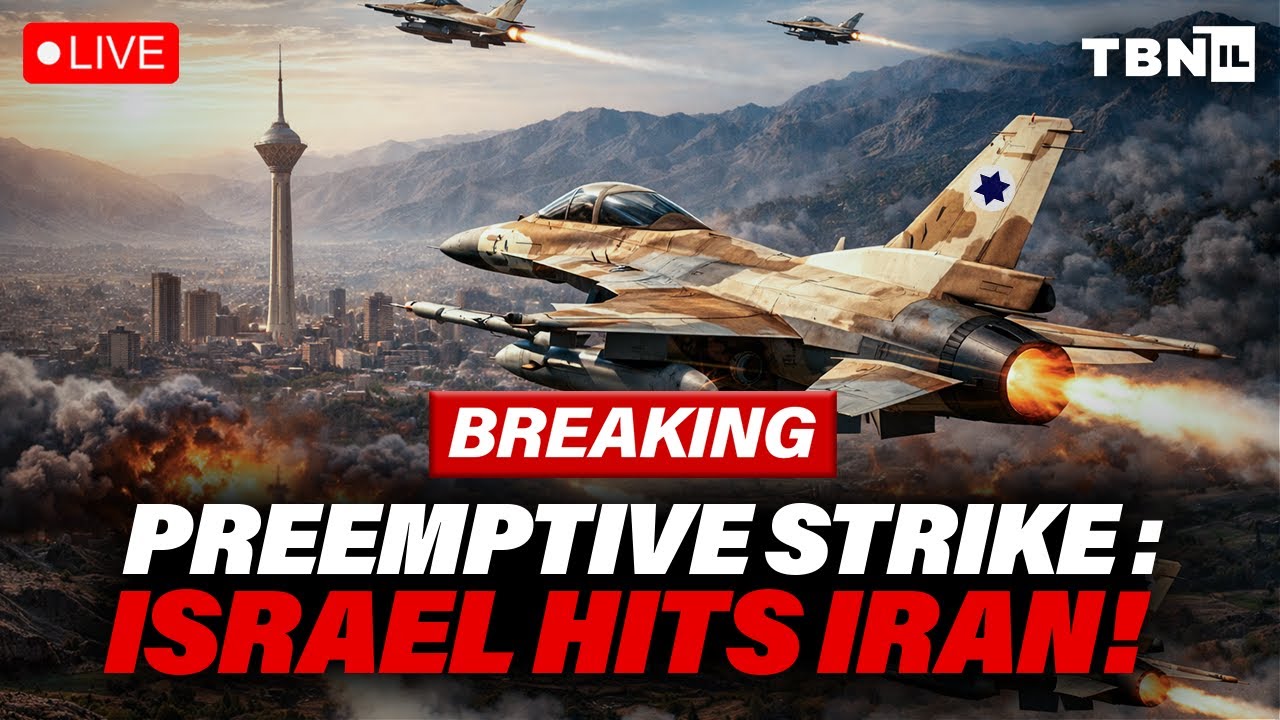
BREAKING: Israel Preemptive Strike on Iran - Explosions in Tehran LIVE! | | TBN Israel
"Israel and the United States launched a coordinated preemptive strike against Iran, targeting regime and military assets, triggering immediate Iranian missile retaliation against Israel and US bases in the region."
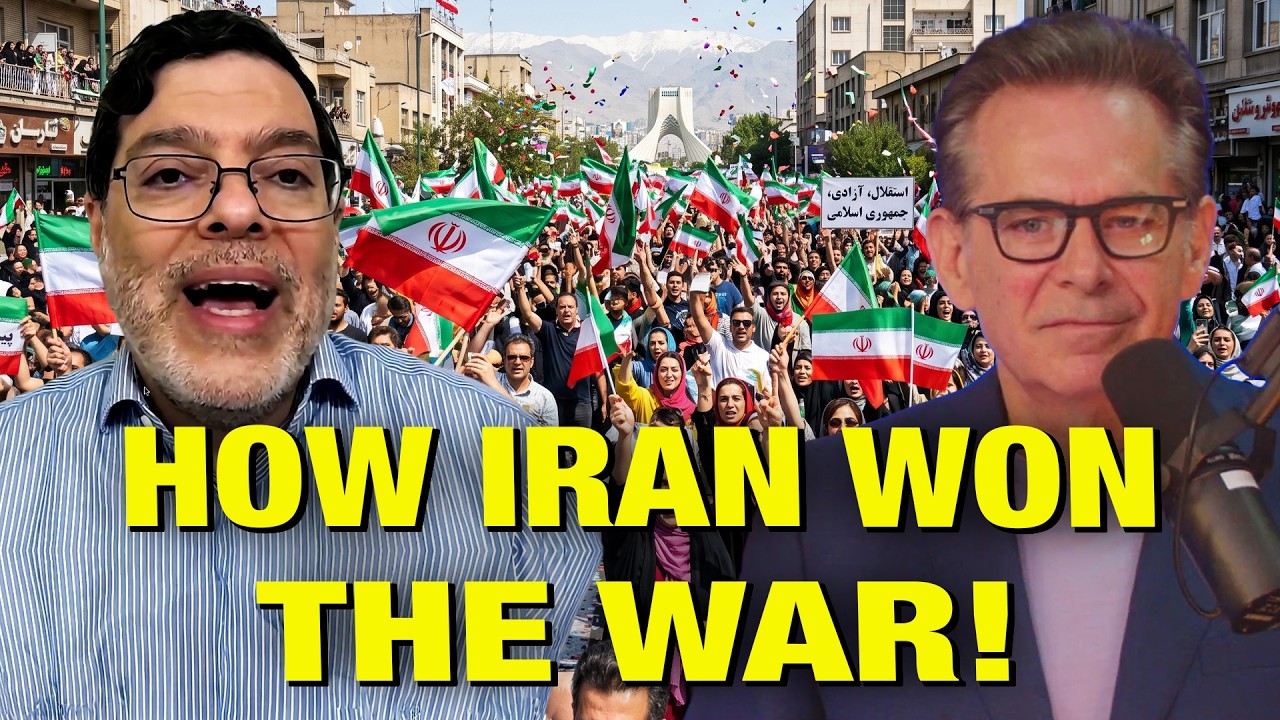
The REAL Story About The War From INSIDE IRAN! – Jimmy Interviews Prof. Marandi
"Professor Marandi, an Iranian academic, details how Iran emerged stronger from recent conflicts, now controlling the Strait of Hormuz and possessing a credible deterrent against its adversaries, despite facing economic siege and Western-backed regional proxies."

BREAKING: Iran Nuclear Stockpile DISAPPEARS; Hezbollah Strikes Troops, REJECTS Ceasefire| TBN Israel
"Iran's nuclear material status is uncertain post-strikes, its economy is collapsing under sanctions, and Hezbollah rejects a ceasefire, while the US and Israel pursue differing strategic goals in the region."

Larry Johnson & Col. Wilkerson: 4 US Warships Tried to Enter Strait of Hormuz – Then Iran Launched
"A critical analysis reveals escalating US-Iran military confrontations in the Strait of Hormuz, a stark disconnect in diplomatic rhetoric, and a significant geopolitical realignment in the Middle East away from US influence."