BREAKING: Iran Faces War Scenario—U.S. Surge Continues; Geneva Talks Begin Under Fire | TBN Israel
YouTube · KCSMbkEfT1U
Quick Read
Summary
Takeaways
- ❖The US is deploying significant military forces, including two aircraft carriers (Lincoln, Gerald Ford) and advanced missile defense systems (THAAD, Patriot), to encircle Iran and enhance strike capabilities.
- ❖President Trump set a one-month deadline for negotiations with Iran, emphasizing a 'bargaining under fire' model involving potential surgical strikes if talks fail.
- ❖Israel, led by PM Netanyahu, supports maximum pressure on Iran but is skeptical of any deal's longevity and insists it must include ballistic missiles and regional proxies.
- ❖Iran's regime faces internal unrest, with ongoing mourning for January's massacre victims and a crackdown on protesters, including coerced confessions from the Baháʼí minority.
- ❖Hamas is violating ceasefire agreements in Gaza, refusing to disarm, and attempting to integrate its operatives into any new technocratic government.
- ❖Hezbollah is actively rehabilitating its terrorist infrastructure in southern Lebanon, prompting Israeli Air Force strikes and a 'zero containment' policy.
- ❖The Radwan forces, Hezbollah's elite unit, have shifted from offensive invasion plans to a defensive posture, pushed north towards the Lebanon-Syria border.
Insights
1US "Bargaining Under Fire" Strategy Against Iran
The US is implementing a strategy combining rapid military buildup and economic pressure with a strict diplomatic deadline. This involves deploying major assets like the Gerald Ford aircraft carrier and advanced missile defense systems to the region, creating a credible threat of surgical strikes against Iranian regime and security targets, rather than a full-scale invasion, to force Iran to negotiate on US terms.
The aircraft carrier Gerald Ford has been ordered to this region and will be here in 4 weeks or less. (), The plan taking shape appears to include the decapitation of the Islamic Revolutionary Guards Corps and the regime's apparatus, but not the physical invasion or occupation of Iranian soil. (), The emerging solution is a model of bargaining under fire. A surgical strike against the regime targets that is intended to force the Ayatollah regime to return to negotiating. (), Trump is saying plainly, there's a month to reach understandings and if not, we move to the second stage and that stage will be very hard for Iran. ()
2Israel's Red Lines and Skepticism Regarding Iran Deal
Israel supports maximum pressure on Iran but maintains skepticism about Iran honoring any agreement and insists that any deal must address ballistic missiles and regional proxies, not just the nuclear program, viewing these as existential threats.
Netanyahu warned Trump, 'Even if you sign a deal with Iran, they will not honor it.' (), From Jerusalem's perspective, the missile threat is a strategic and existential, no less than the nuclear issue. (), Israel wants the deal to cover more than the nuclear file. From Jerusalem's perspective, it must include ballistic missiles and Iran's regional proxies because that's where the direct threat to Israel sits. ()
3Hamas's Resistance to Disarmament and Governance in Gaza
Despite ceasefire outlines, Hamas continues to violate agreements, use force from cleared areas, and actively resists disarmament by demanding integration of its operatives into any new technocratic government, complicating post-conflict stability.
Hamas operatives are moving out of the Nessa hospital in Kanunes and are violating the ceasefire agreement. They are armed, some of them masks, and they are operating in different parts of the hospital, threatening to carry out arrests of patients and transfer weapons. (), Hamas demands to integrate its people into the new government, especially those who belong to its police apparatus. (), The technocrats committee opposes this and Israel and the United States also reject this demand. ()
4Hezbollah's Rehabilitation and IDF's Zero-Containment Policy in Lebanon
Hezbollah is attempting to rebuild its terrorist infrastructure in southern Lebanon, including weapon depots and tunnels, prompting continuous Israeli Air Force strikes and a policy of 'zero containment' to prevent any re-establishment of threats to Israeli residents.
Over the weekend, the IDF destroyed weapons depots and launchers in southern Lebanon after attempts to rehabilitate the terrorist infrastructures that were identified, which constitute a violation of the agreement and a risk of the residents of the state of Israel. (), Hisbala is much weaker than what it was before the ceasefire. But they are trying to get back to work. (), The Radwan forces, which was an elite unit planned for an invasion of Israel, underwent a professional conversion to defense. What remains of it was pushed north to the Lebanon Syria border area near Beirut. ()
Notable Moments
US Military Encirclement of Iran
The detailed description of US naval and air assets, including two aircraft carriers (Lincoln, Gerald Ford), F-18s, F-35s, destroyers with cruise missiles, submarines, and THAAD/Patriot systems, forming a 'ring of fire' around Iran, illustrates the significant military leverage the US is deploying, transforming the military option from theoretical to an active component of diplomatic pressure, underpinning the 'bargaining under fire' strategy.
Iranian Internal Crackdown on Protesters
The regime's manhunt for January massacre protesters using drones, surveillance, and facial recognition, culminating in coerced confessions from Baháʼí minority members shown on state television, reveals the internal fragility and repressive nature of the Iranian regime, suggesting that domestic unrest could be a factor influencing its external actions and potentially exploited by external pressure.
Hamas's Use of Hospitals for Military Operations
The NGO Medicine Sans Frontières pulling non-essential medical teams from Nessa hospital in Khan Yunis due to the presence of armed Hamas terrorists provides concrete evidence of Hamas's tactics and refusal to adhere to ceasefire terms, complicating humanitarian efforts and demonstrating its intent to maintain control and operational capability even in civilian infrastructure.
Quotes
"Even if you sign a deal with Iran, they will not honor it."
"The plan taking shape appears to include the decapitation of the Islamic Revolutionary Guards Corps and the regime's apparatus, but not the physical invasion or occupation of Iranian soil."
"How do you negotiate with leaders who still chant death to America? The answer isn't the slogan, it's interest."
Q&A
Recent Questions
Related Episodes

Col. Jacques Baud: Middle East on Fire — Is This the Start of Something Bigger?
"Colonel Jacques Baud dissects the escalating conflict between the US, Israel, and Iran, arguing that Western misunderstanding of Iranian culture and strategic duplicity have forced Iran into a position of necessary escalation, ultimately degrading the West's own strategic posture."

Pentagon Prepares For EXTENDED War With Iran
"This episode dissects the geopolitical maneuvers surrounding potential US-Iran conflict, revealing strategic leaks, Netanyahu's diplomatic sabotage playbook, and the true intent behind economic sanctions."
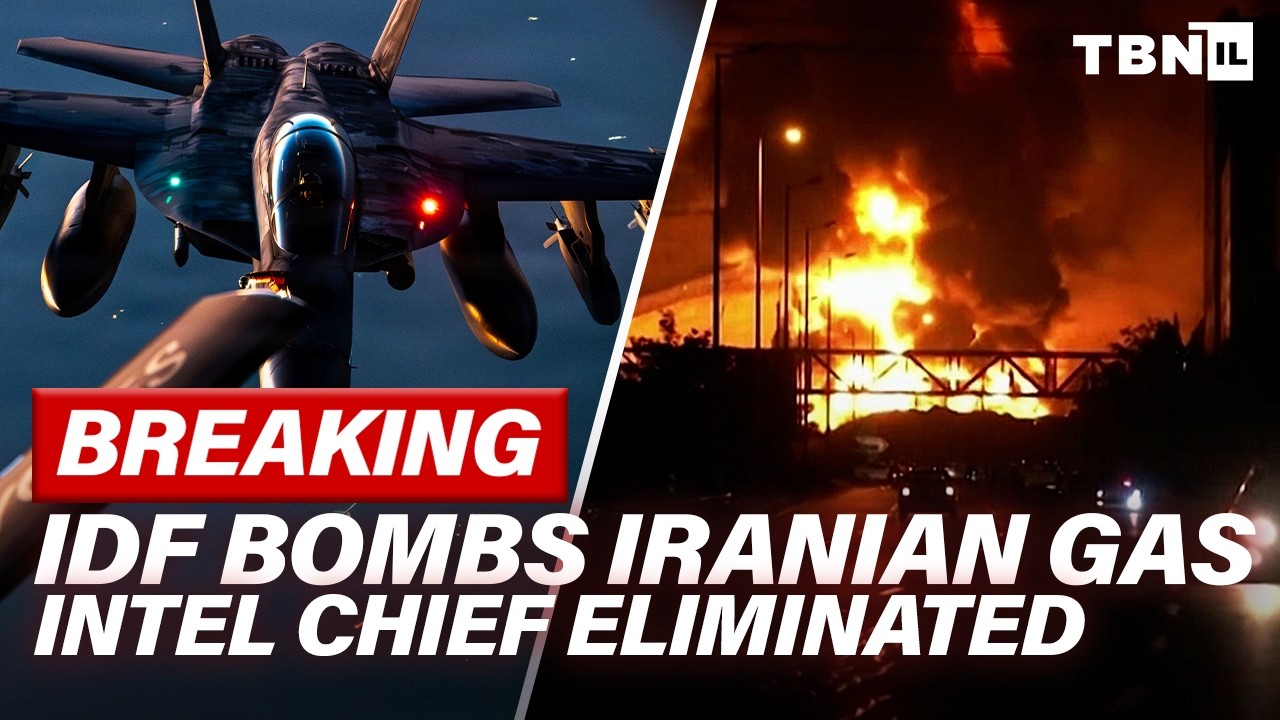
BREAKING: Israel BOMBS Major Iran Gas Site; Top Mullah ELIMINATED; Iran Vows VENGEACE | TBN Israel
"Israel and the United States have escalated their 'Roaring Lion War' against Iran, striking its largest gas facilities, eliminating key intelligence and military figures, and disrupting missile production, while Iran threatens a broader energy war in the Gulf."
PBS News Hour full episode, Feb. 20, 2026
"The Supreme Court struck down President Trump's sweeping global tariffs, prompting an immediate presidential counter-move with new tariffs and escalating tensions with Iran, while the EPA rolled back critical environmental protections."