
By Attacking Iran, U.S. & Israel Seek Unchallenged Supremacy in Middle East
YouTube · KGthHD9hjb4
Quick Read
Summary
Takeaways
- ❖US and Israeli military actions in the Middle East are driven by a long-term strategy for regional supremacy and control.
- ❖Israel's expansionist policies, supported by the US and UK, have led to annexation, colonization, and ethnic cleansing.
- ❖Iranians and Palestinians have been consistently denied their right to self-determination by Western powers and Israel.
- ❖Arab states largely lack true sovereignty, requiring external approval for major decisions, rendering them and their populations powerless.
- ❖The perceived hypocrisy of Western democracies in supporting Israel's actions undermines their global credibility and values.
- ❖The killing of Ayatollah Hamani carries significant religious and ideological weight across the Shia Muslim world, impacting regional sentiment.
Insights
1Four Converging Factors Driving Middle East Conflict
The current escalation stems from four intertwined issues: 1) Decades of US militaristic overkill across the Middle East. 2) Israel's continuous expansionist drive for hegemonic control, tolerating no regional challengers. 3) The persistent denial of self-determination rights to Iranians and Palestinians by the US, UK, and Israel. 4) The inability of Arab countries to form a cohesive diplomatic or military response to external threats.
Kuri details these points as fundamental, constant factors shaping the region's instability, dating back to the 1940s for Israel and the 15th century for Western colonialism.
2Western Democracy as a 'Hoax' Due to Israel Support
The unwavering support from Western democracies for Israel's actions—including military aggression, annexation, colonization, and ethnic cleansing—leads people globally to view the idea of Western culture and liberal democratic tradition as a 'hoax.' This support is seen as undermining the credibility and sincerity of these values.
Kuri states, 'it's astounding that the western democracies have done virtually nothing other than mostly support or parrot Israel and this is causing people across the world to look at the idea of western culture and western liberal democratic tradition as a hoax.'
3Powerlessness of Arab Governments and Populations
Arab countries largely lack true sovereignty, requiring external permission for their decisions. This powerlessness, combined with the inability of their populations to influence strategic decisions (as seen in the suppression of Arab uprisings), fosters non-state armed movements and drives out skilled youth.
Kuri explains that 'none of the countries in the Arab region... has practiced true sovereignty... they have to get permission from Israel or the US or Turkey or Iran or Saudi Arabia.' This leads to 'powerless people and powerless governments' and the rise of groups like Hamas and Ansar Allah.
4Israel's Renewed Lebanon War and Heightened Resistance
Israel's expected renewal of war in Lebanon, including calling up 100,000 reservists, is a recurring pattern of occupation, destruction, and retreat that ultimately only heightens the determination of indigenous people to resist. Lebanon's delicate internal ethnic and religious balance makes it particularly vulnerable to foreign influence and potential civil conflict.
Kuri notes, 'Every time they've done it, they've occupied land. They've killed a lot of people... All this does is heighten the determination of indigenous people to find out how they can resist.' He also highlights Lebanon's 'very delicate' internal structure.
Bottom Line
The killing of Ayatollah Hamani is not merely a political event but a profound religious and ideological blow, as he served as a model of resistance for Shia Muslims and others globally, a nuance often missed by the US government.
Misunderstanding the religious and ideological significance of figures like Hamani leads to strategic blunders and further alienates populations, fueling deeper resentment and resistance against US and Israeli actions.
Policymakers should integrate deep cultural and religious understanding into geopolitical analysis to anticipate reactions and avoid exacerbating conflicts, rather than relying solely on secular political interpretations.
The failure of the Arab uprisings (2010-2020) to achieve basic dignity, good governance, and essential services was due to being ignored and suppressed by their own leaders, not a lack of popular will for peaceful change.
This suppression demonstrates that the core issues in the region are not just external intervention but also internal autocratic systems that deny citizens a voice, pushing populations towards more radical forms of resistance when peaceful avenues are blocked.
International efforts to promote stability in the region must address the internal governance deficits and empower civil society, rather than solely focusing on state-level diplomacy or military solutions that often prop up autocratic regimes.
Key Concepts
Non-State States
Many Arab countries function as 'non-state states' because they lack the authority, capability, or will to act as truly sovereign entities. Their decisions require approval from external powers like Israel, the US, Turkey, Iran, or Saudi Arabia, leading to systemic powerlessness for both governments and their populations.
Colonial Imperialistic Militarism (Digital Reconfiguration)
The current geopolitical dynamics in the Middle East, spearheaded by Israel with US support, represent a modern, 'digital reconfiguration' of Western colonial and imperialistic militarism that has persisted since the 15th century, marked by conquests, holocausts, and genocides.
Lessons
- Critically evaluate official narratives regarding Middle East conflicts by considering historical patterns of intervention and regional power dynamics.
- Recognize the long-term consequences of denying self-determination, as it consistently fuels resistance and instability, rather than achieving lasting peace.
- Understand that the perceived hypocrisy of Western democracies in supporting certain regimes or actions can erode global trust and legitimacy, impacting international relations beyond the immediate conflict zone.
Quotes
"This has gone on now for decades and decades and it's astounding that there's very little done about this. The region can't do very much but it's astounding that the western democracies have done virtually nothing other than mostly support or parrot Israel and this is causing people across the world to look at the idea of western culture and western liberal democratic tradition as a hoax."
"The big force that is asserting itself now via Israel and the US and some other western countries like the UK, Germany is the continuation and the rejuvenation and the digital reconfiguration of western colonial imperialistic militarism."
"None of the countries in the Arab region not not a single one in the Arab region has practiced true sovereignty, credible sovereignty. In other words, they can make decisions for their own well-being on their own. They have to get permission from Israel or the US or Turkey or Iran or Saudi Arabia or somebody outside their country has to approve what they want to do and therefore they're powerless."
Q&A
Recent Questions
Related Episodes
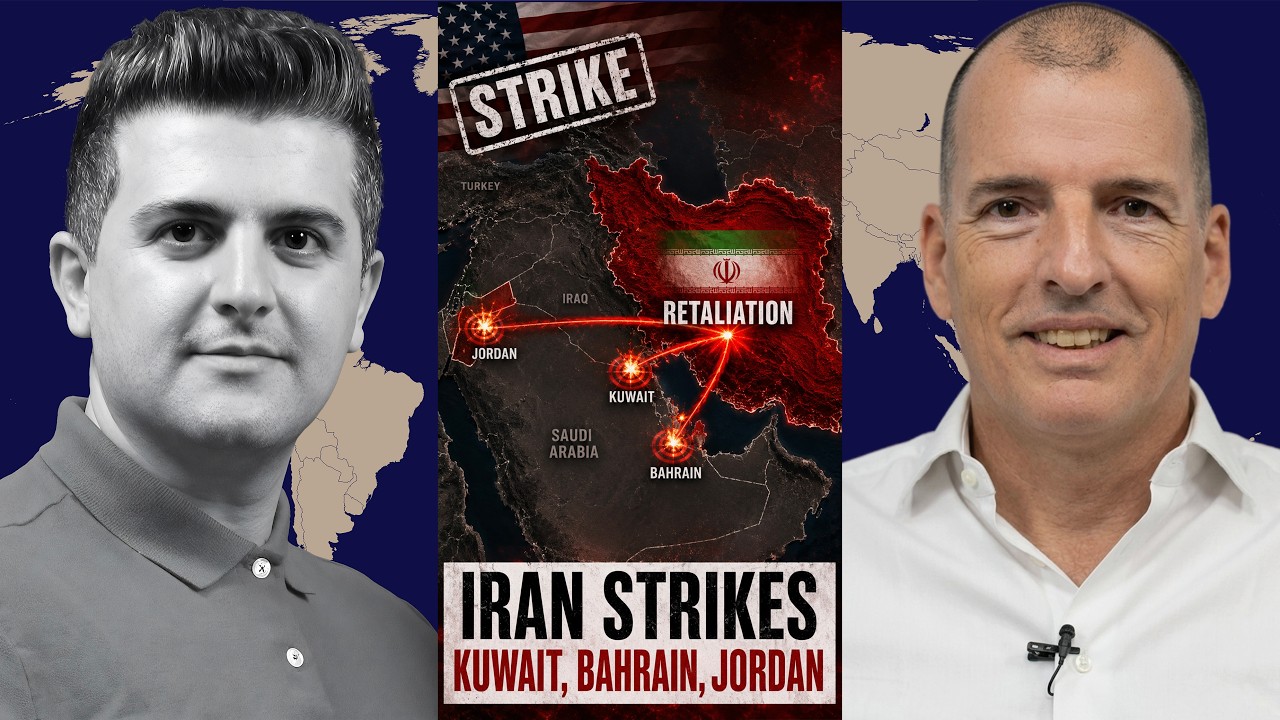
Alex Krainer: US STRIKES Iran – Iran RETALIATES Against Kuwait, Bahrain & Jordan!
"Amidst escalating US-Iran conflict and Iranian retaliation against regional US allies, this episode argues that US foreign policy is deeply controlled by an 'Anglo-Zionist conspiracy' led by the Rothschild banking dynasty, prioritizing Israeli interests over American ones."
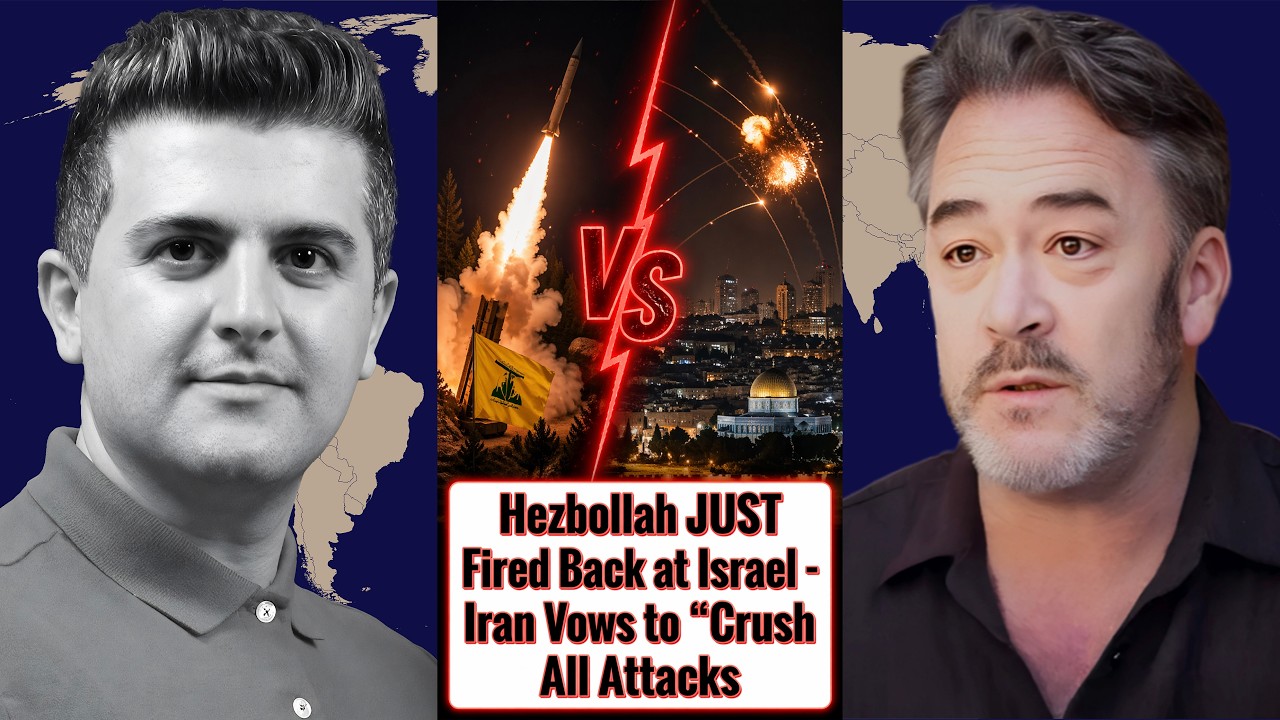
Patrick Henningsen: Hezbollah JUST Fired Back at Israel - Iran Vows to “Crush” All Attacks
"Patrick Henningsen argues that the US and Israel initiated an illegal war against Iran, driven by Trump's incompetence and Israeli influence, leading to an inevitable escalation with severe global economic repercussions."
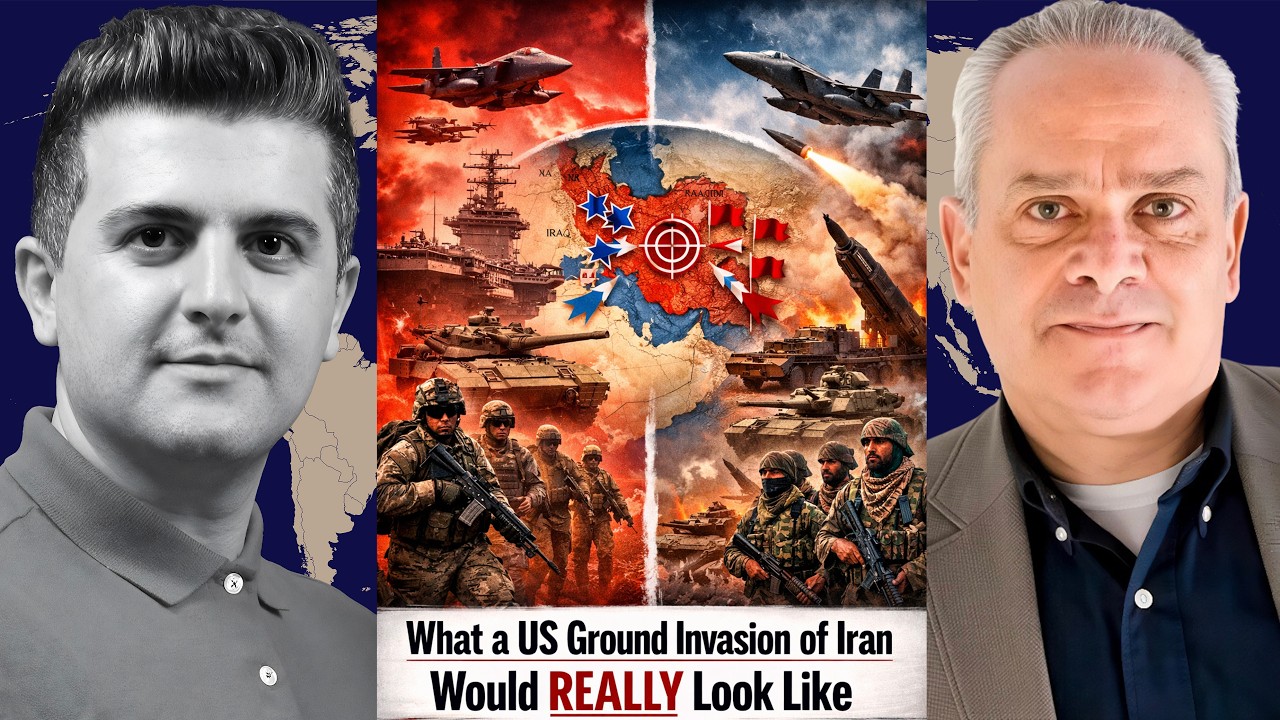
Col. Jacques Baud: What a US Ground Invasion of Iran Would REALLY Look Like
"Colonel Jacques Baud dissects the strategic futility of a US ground invasion of Iran, arguing that current troop levels are insufficient and such an action would backfire, exposing US allies and potentially leading to Iran's nuclearization."

🚨 THEY F*CKED AROUND FOR THE LAST TIME 😭😭😭
"This episode unleashes a torrent of highly opinionated commentary on the US-Iran deal, Israel's role, and a scathing critique of 'leftist' policies and immigration, particularly highlighting the UK grooming gang report as evidence of Western societal decay."