
Lt. Col. Anthony Aguilar: Iranian Drone Takes Down US Apache Helicopter - War imminent?
YouTube · KJzmnJqWbX8
Quick Read
Summary
Takeaways
- ❖An Iranian Shahed 136 drone successfully engaged and downed a US Apache helicopter over the Gulf of Oman.
- ❖The Apache helicopter was conducting armed reconnaissance, and its pilots were rescued by a US sea drone.
- ❖Lt. Col. Aguilar advises Donald Trump against escalatory strikes, recommending only tactical responses to avoid a wider war.
- ❖Israel's military is described as a defense force, not an expeditionary one, and lacks the capability to withstand an Iranian onslaught without direct US backing.
- ❖Israel's objective in Lebanon is to occupy the entire southern region up to the Latani River and establish buffer zones, not merely to counter Hezbollah.
- ❖Section 224 of the NDAA, the US-Israeli Defense Technology Cooperation Initiative, is embedded within the defense budget, making it nearly impossible to remove without killing the entire NDAA.
- ❖The US Pentagon has characterized Israel's presence in the US as the 'highest risk to intelligence,' yet Section 224 integrates US and Israeli defense technology.
Insights
1Iranian Drone Downs US Apache, Signaling New Asymmetric Warfare Dynamics
An Iranian Shahed 136 one-way drone successfully shot down a highly sophisticated US Apache helicopter during armed reconnaissance over the Gulf of Oman. This event highlights a significant shift in military capabilities, where a relatively inexpensive drone (around $30,000) can destroy a $100 million advanced military aircraft. The precision of the attack, rather than a random lob, demonstrates an advanced level of drone warfare introduced by Iran.
Donald Trump's announcement of the incident and later CNN reports confirming the use of a Shahed 136 drone. Lt. Col. Aguilar's analysis of the Apache's capabilities and the implications of a precise drone hit.
2US Political Predicament and the Search for a 'Victory' in Iran
Donald Trump faces a political dilemma: ending the war in the Middle East could alienate his hardline base, while continuing it risks domestic political damage. Lt. Col. Aguilar speculates Trump might plan a highly coordinated, temporary military operation in Iran to 'seize' some form of uranium, creating a perceived 'win' for his base and a narrative of neutralizing Iran's nuclear potential, regardless of actual success or truth, as a political exit strategy.
Trump's public statements about 'surrender' and 'winning,' combined with his need to satisfy his base and avoid impeachment threats. Aguilar's hypothetical scenario of a staged 'uranium seizure' and temporary Strait of Hormuz control.
3Israel's Strategic Goals in Lebanon and Military Limitations
Israel's incursions into southern Lebanon are not merely defensive but aim to occupy the entire region up to the Latani River, establishing permanent buffer zones and displacing the population. However, Israel's military is primarily a defense force, not equipped for long-duration expeditionary campaigns or sustained asymmetric warfare against groups like Hezbollah. Without direct, active US military support, Israel would be unable to withstand the reciprocal attacks from Iran and its allies.
Israel's historical pattern of expanding buffer zones in occupied territories (West Bank, Gaza, Syria). Aguilar's assessment of Israel's military capabilities, comparing them to US experiences in Iraq and Afghanistan against insurgent forces.
4Section 224 of NDAA: A 'Parasitic' Threat to US Sovereignty
Section 224, the US-Israeli Defense Technology Cooperation Initiative, is embedded within the House version of the National Defense Authorization Act (NDAA). This legislative maneuver makes it impossible to remove the initiative without killing the entire NDAA, which is legally required to pass. This section mandates the merging of US and Israeli defense technology, effectively giving Israel, a nation identified by the US Pentagon as the 'highest risk to intelligence,' keys to critical US military and security vaults, compromising national security from within.
Ro Khanna and Thomas Massie's failed attempt to amend the House version of the NDAA to remove Section 224. Lt. Gen. James Adams' (Director of the Defense Intelligence Agency) characterization of Israel as the highest intelligence risk. The financial contributions of APAC to key Congressional figures.
Lessons
- Monitor legislative developments regarding the NDAA, specifically Section 224, to understand the implications of US-Israeli defense technology integration on national security.
- Evaluate investment and geopolitical risk strategies in the Middle East, considering the increased likelihood of escalation between the US, Iran, and Israel, and the shift in asymmetric warfare capabilities.
- Critically assess mainstream media narratives on Middle Eastern conflicts, recognizing potential biases and the influence of political and lobbying interests on reported information and policy decisions.
Quotes
"If Donald Trump wants to give the impression that there is this uh fragile life of a ceasefire, uh then this should not be responded to with hostility or strikes."
"If Israel wants to go in and swing hard on their own without US backing against Iran, uh they do not have the capability or the means on their own to withstand the Iranian onslaught of of of of reciprocal attacks and strikes."
"Donald Trump needs something to put on the front page of the New York Times or whatever of Fox News plastered all over news to say, 'We did it. We got it. Donald Trump sent in the very best. We got the uranium.'"
"Now you're talking about a a $30,000 drone taking out a hund00 million aircraft."
"The problem with the United States being able to reign in Israel is not the lack of ability. It's the lack of will."
"Our own Pentagon identified them as the most as the most critical threat literally by the word critical the most critical threat to our security and sovereignty as a nation. And yet we're questioning if we're still going to back them in this war..."
Q&A
Recent Questions
Related Episodes
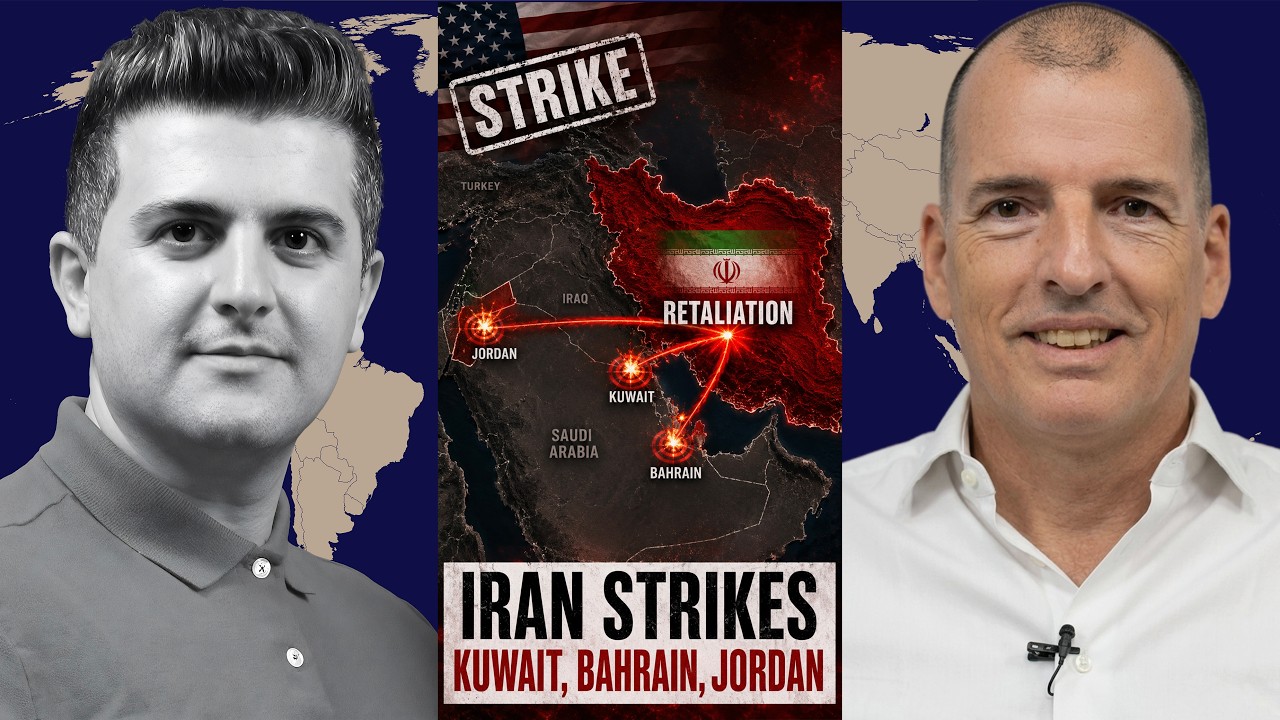
Alex Krainer: US STRIKES Iran – Iran RETALIATES Against Kuwait, Bahrain & Jordan!
"Amidst escalating US-Iran conflict and Iranian retaliation against regional US allies, this episode argues that US foreign policy is deeply controlled by an 'Anglo-Zionist conspiracy' led by the Rothschild banking dynasty, prioritizing Israeli interests over American ones."

Iran Update: Israel’s Newest Bombing Campaign, the Oncoming War With China and How to Avoid It
"Colonel Wilerson reveals how the US and Israel are actively bombing China's strategic infrastructure in Iran, escalating a covert economic war that Beijing intends to win without direct military conflict by dismantling the dollar's global dominance."
Patrick Henningsen: Hezbollah JUST Fired Back at Israel - Iran Vows to “Crush” All Attacks
"Patrick Henningsen argues that the US and Israel initiated an illegal war against Iran, driven by Trump's incompetence and Israeli influence, leading to an inevitable escalation with severe global economic repercussions."
Col. Jacques Baud: What a US Ground Invasion of Iran Would REALLY Look Like
"Colonel Jacques Baud dissects the strategic futility of a US ground invasion of Iran, arguing that current troop levels are insufficient and such an action would backfire, exposing US allies and potentially leading to Iran's nuclearization."