BREAKING: U.S. Moves To BLOCKADE Iran; IDF SURROUNDS Hezbollah In Bint Jbeil | TBN Israel
YouTube · KPdZGCMt50c
Quick Read
Summary
Takeaways
- ❖The U.S. Central Command began enforcing a naval blockade on Iranian ports, targeting all maritime traffic, effective April 13th at 5 PM Israel time.
- ❖President Trump declared the blockade aims to deny Iran its oil cash flow and strategic achievements, threatening severe retaliation for any aggression against U.S. forces or civilian ships.
- ❖Oil prices surged above $100 a barrel immediately following Trump's statements and the collapse of U.S.-Iran negotiations in Pakistan.
- ❖The IDF launched a ground operation in Bint Jbeil, Lebanon, encircling Hezbollah terrorists in a symbolic stronghold, using slow, careful advances with massive air support.
- ❖Hezbollah was exposed for using the government hospital in Bint Jbeil for military purposes, including storing weapons and as an observation post.
- ❖Iranian officials, including the Navy commander and parliamentary spokesmen, dismissed the U.S. blockade as 'ridiculous' but warned it would be considered an 'act of war' if implemented.
- ❖An Israeli assessment suggests Iran's leadership operates with a distorted view of reality, fed falsified war reports by the Revolutionary Guards to maintain a hardline stance.
- ❖The host argues Trump's blockade message is primarily directed at allies and global financial entities (India, Turkey, Pakistan, China, Wall Street) who engaged in 'side deals' with Iran during previous sanctions.
Insights
1U.S. Imposes Naval Blockade on Iran's Ports
The United States Central Command initiated a naval blockade on all vessels entering and leaving Iranian ports in the Persian Gulf and Gulf of Oman. This measure is intended to choke off the Revolutionary Guard's oxygen supply by targeting Iran's cash reserves and denying it strategic achievements. Freedom of navigation in the Strait of Hormuz will be preserved for non-Iranian destinations.
The United States is preparing to impose a naval blockade on Iran... The blockade will be enforced on all vessels entering and also leaving the country's ports in the Persian Gulf and the Gulf of Oman. The United States made clear that freedom of navigation in the Strait of Ramuz will be preserved for nonranian destinations.
2IDF Intensifies Operations in Hezbollah's Symbolic Stronghold of Bint Jbeil
The Israeli Air Force and IDF ground forces encircled and entered Bint Jbeil, Lebanon, considered Hezbollah's 'terror capital' and a significant symbolic location. The operation aims to weaken the terrorist organization ahead of negotiations between Israel and Lebanon, systematically pushing terrorists out of hiding for air strikes and dismantling infrastructure, including military use of a government hospital.
The Israeli air force and the IDF ground forces are surrounding terrorists in Lebanon's terror capital, the Shiite village of Binbell. The IDF is currently attacking with dozens of heavy munitions... The place is considered a symbol of hisbala... The IDF revealed that had been running a military infrastructure out of the government hospital in the city where weapons were found, observation positions were exposed...
3Collapse of U.S.-Iran Negotiations and Surging Oil Prices
Twenty-one hours of talks between the U.S. and Iran in Islamabad failed due to 'true substantial differences,' including Iran's refusal to stop uranium enrichment and funding proxies. Following the collapse and Trump's declaration of the naval blockade, oil prices immediately surged above $100 a barrel, reflecting market fear and uncertainty.
President Trump gave a glimpse into a 21-hour marathon of talks with Iran... a senior American official told the Reuters news agency that Iran refused additional demands in the negotiations such as stopping uranium enrichment and funding its proxies... with the opening of weekly trading, oil prices are surging following the American president's statements after the collapse of the negotiations with Iran in the talks in Pakistan.
4Iranian Leadership's Distorted Reality and Internal Disunity
An assessment from Israel suggests that elements within Iran's Revolutionary Guards are presenting falsified descriptions of the war to the leadership, creating a distorted picture of reality where Iran has 'won' against Israel and the U.S. This internal dynamic, coupled with public disagreements within the Iranian delegation, indicates a lack of unified authority capable of making binding agreements.
One of the unusual assessments raised in recent days is that within the Iranian leadership itself, there is a very distorted picture of reality... elements from the revolutionary guards are presenting much and closed circles in the leadership with falsified descriptions of the war... revolutionary guards commander Ahmed Vahidi publicly accused Galibbah of betrayal because of the very fact that he had shaken hands with the vice president of the United States.
Bottom Line
Trump's aggressive rhetoric and the naval blockade are not solely aimed at Iran, but also serve as a direct message to international actors (India, Turkey, Pakistan, China, Wall Street) who engaged in 'side deals' with Iran, bypassing U.S. sanctions for profit.
This reframes the U.S. strategy as a broader doctrine of sanctions enforcement, signaling that such 'dirty tricks' and secret funding of adversaries will no longer be tolerated from ostensible allies or financial institutions. It aims to restore the integrity and effectiveness of U.S.-led sanctions regimes.
Businesses and governments need to re-evaluate their compliance strategies and supply chains to ensure they are not inadvertently supporting sanctioned entities or undermining international pressure campaigns, as the U.S. is signaling a zero-tolerance approach to such circumvention.
The IDF is leveraging the temporary ceasefire in the Iranian arena to intensify its ground operations in southern Lebanon, specifically targeting Hezbollah's symbolic strongholds like Bint Jbeil, to create new operational realities before diplomatic talks can redraw lines.
This indicates a strategic use of 'breathing space' to gain military advantage and weaken an adversary's proxy, demonstrating that military actions can preempt or influence diplomatic outcomes rather than merely reacting to them. It highlights the interconnectedness of different conflict theaters.
Analysts should monitor how military gains are translated into diplomatic leverage and how ceasefires in one area enable escalations in another. This pattern suggests a need for integrated geopolitical risk assessments that consider simultaneous, interconnected conflicts.
Key Concepts
The Rope Analogy
Iran is attempting to hold both ends of a single 'rope' – maintaining its nuclear program, supporting Hezbollah, profiting from the crisis, and engaging in diplomacy. The question is how long this can be sustained before the rope snaps or is cut by external forces, representing the limits of its multi-faceted strategy.
Who Blinks First?
The current geopolitical standoff is framed as a test of wills, where both Iran and the U.S./Israel are exerting pressure, and the outcome depends on which side yields or makes a critical miscalculation first. Iran believes it holds a strategic card, while the U.S. aims to turn that into a burden.
Lessons
- Monitor global oil markets closely for continued volatility and price surges, as the U.S. naval blockade on Iran and potential Iranian responses will directly impact energy costs.
- Businesses involved in international shipping and trade, particularly through the Persian Gulf and Gulf of Oman, should assess heightened risks, potential disruptions, and increased insurance rates due to the U.S. blockade and Iranian threats.
- Review compliance with international sanctions, especially regarding Iran, as the U.S. is signaling a more aggressive enforcement posture against entities engaging in 'side deals' or bypassing official channels.
IDF's Systematic Pressure Tactic in Urban Warfare (Bint Jbeil)
**Encirclement & Softening:** Surround the target area for several days, softening it with sustained fire (air strikes, heavy munitions).
**Slow Ground Advance:** Ground forces move slowly and carefully, pushing terrorists out of their hiding places rather than a blind charge.
**Air Chokehold & Exposure:** Maintain constant air superiority with fighter jets and UAVs overhead, immediately targeting any enemy movement exposed by ground forces.
**Targeting Infrastructure:** Identify and dismantle military infrastructure, including those hidden within civilian buildings like hospitals, and eliminate terrorists operating from such locations.
Notable Moments
President Trump's direct threat to Iran: 'I can eliminate Iran in an hour.'
This quote highlights the extreme level of U.S. resolve and the potential for rapid, devastating military action, signaling a significant departure from previous diplomatic approaches.
Trump's attack on Pope Leo, stating he doesn't want a Pope who accepts Iran having nuclear weapons or condemns U.S. action in Venezuela.
This demonstrates the intertwining of domestic politics, religion, and foreign policy in Trump's rhetoric, indicating that geopolitical conflicts are being framed within a broader ideological and moral context, even challenging traditional religious authority.
The host's assertion that Trump's blockade message is primarily aimed at other nations and Wall Street, not just Iran.
This offers a contrarian interpretation of the U.S. strategy, suggesting a deeper objective of deterring international circumvention of sanctions and reasserting American dominance in global financial and trade enforcement.
Quotes
"If they do not return, that is fine by me."
"The personnel of Iran's Navy are monitoring and overseeing all movements of the American military in this region. I only want to ask what reality is this guy living in and whether he has seen the differences in the size between the Iranian toys that are sailing at the sea and the American warships."
"If Trump implements his blockade, it will be considered warfare and we will respond. We may reveal other cars that we have still not used in this game."
Q&A
Recent Questions
Related Episodes
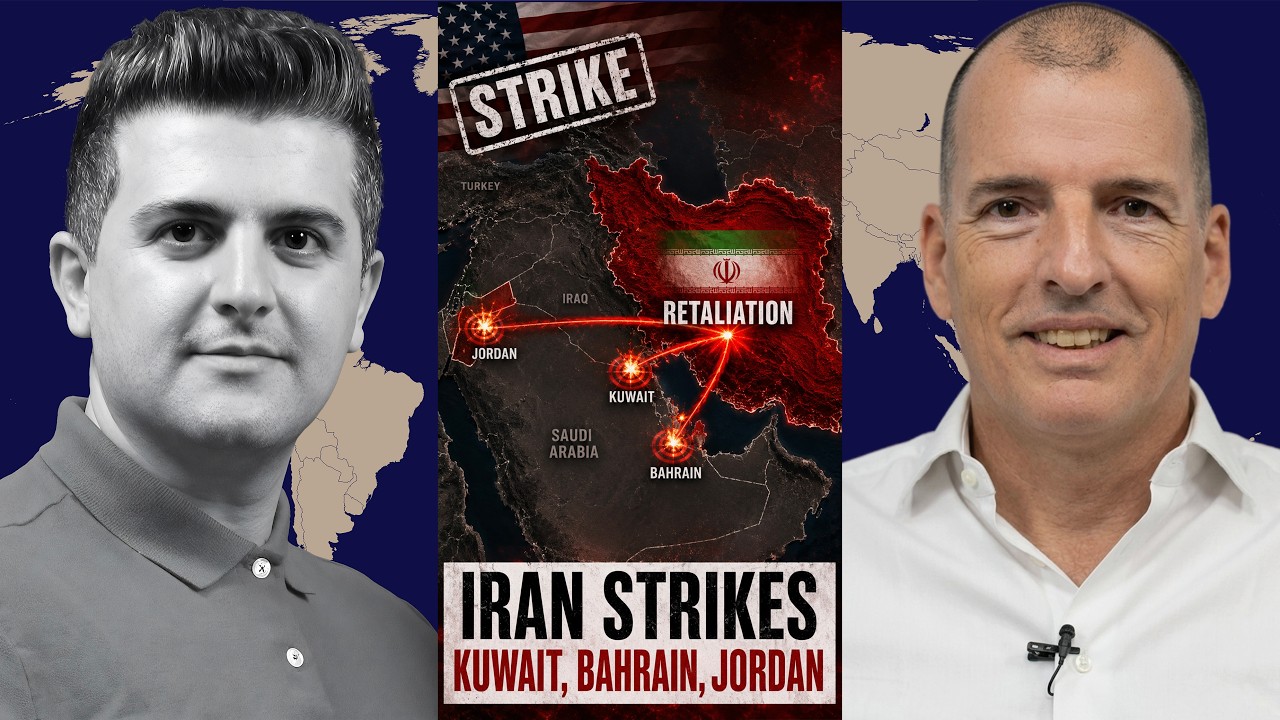
Alex Krainer: US STRIKES Iran – Iran RETALIATES Against Kuwait, Bahrain & Jordan!
"Amidst escalating US-Iran conflict and Iranian retaliation against regional US allies, this episode argues that US foreign policy is deeply controlled by an 'Anglo-Zionist conspiracy' led by the Rothschild banking dynasty, prioritizing Israeli interests over American ones."

Patrick Henningsen: Hezbollah JUST Fired Back at Israel - Iran Vows to “Crush” All Attacks
"Patrick Henningsen argues that the US and Israel initiated an illegal war against Iran, driven by Trump's incompetence and Israeli influence, leading to an inevitable escalation with severe global economic repercussions."
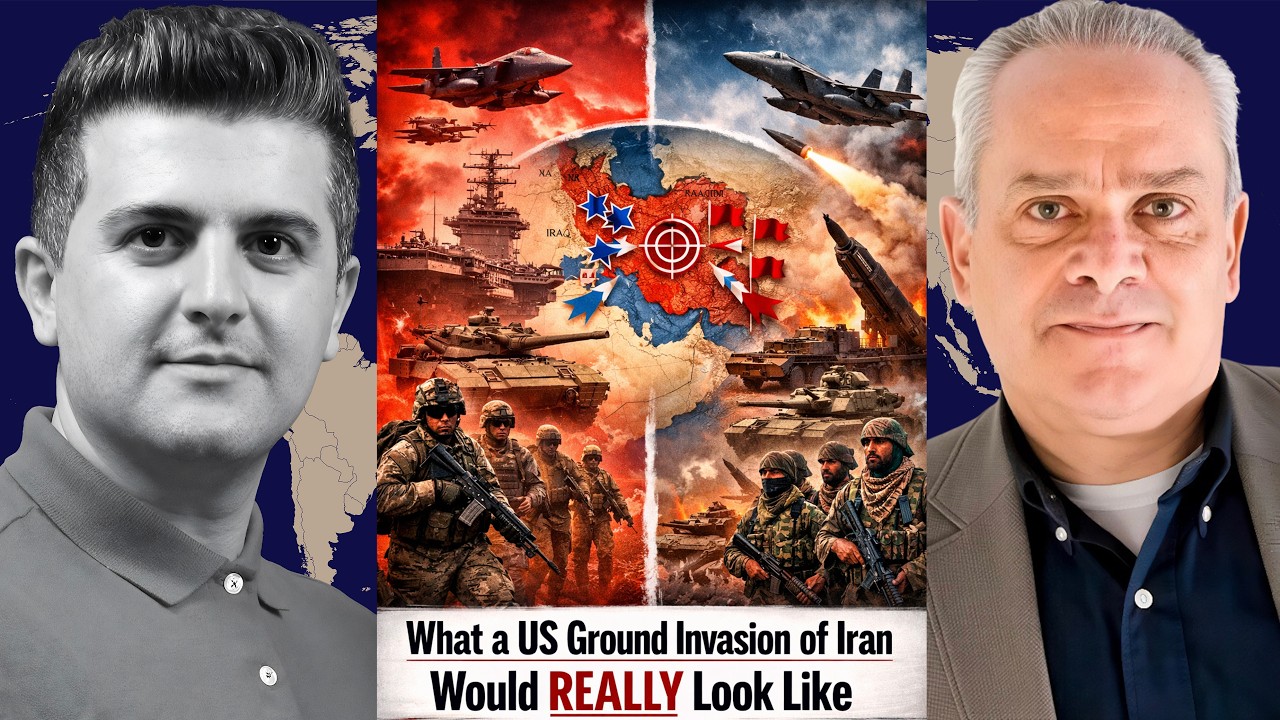
Col. Jacques Baud: What a US Ground Invasion of Iran Would REALLY Look Like
"Colonel Jacques Baud dissects the strategic futility of a US ground invasion of Iran, arguing that current troop levels are insufficient and such an action would backfire, exposing US allies and potentially leading to Iran's nuclearization."

🚨 THEY F*CKED AROUND FOR THE LAST TIME 😭😭😭
"This episode unleashes a torrent of highly opinionated commentary on the US-Iran deal, Israel's role, and a scathing critique of 'leftist' policies and immigration, particularly highlighting the UK grooming gang report as evidence of Western societal decay."