Venezuela Guerillas MOBILIZE After Maduro Kidnapping
YouTube · KUIjEXFgb0o
Quick Read
Summary
Takeaways
- ❖Colombia deployed 30,000 troops to its border with Venezuela immediately following Maduro's apprehension, citing concerns about US aggression spillover and ELN guerrilla movements.
- ❖The ELN guerrilla group, active across the Colombia-Venezuela border, mobilized into Colombia and issued a statement condemning "gringo aggression."
- ❖In Venezuela, the apprehension of Maduro led to the open display and increased activity of pro-government "collectivos" and ELN guerrillas, openly carrying weapons and controlling neighborhoods.
- ❖Approximately 2.8 million Venezuelans reside in Colombia, part of the 8 million who have left Venezuela since 2014 due to economic collapse and political repression.
Insights
1Colombia's Immediate Border Militarization
Following Maduro's apprehension, Colombia's President Petro and the Ministry of Defense immediately deployed 30,000 troops to the Venezuelan border. This was a preemptive measure against potential US aggression spilling over and to monitor the movements of the ELN guerrilla group.
immediately when the attack happened on Saturday at 2 am Venezuela time... they sent 30,000 troops to the border. Now, part of this was just because of the threat or what they saw as a threat of any US aggression that could spill over.
2ELN Guerrilla Mobilization and Anti-US Stance
The ELN, a 5,000-strong guerrilla group operating across the Colombia-Venezuela border and implicated in indictments against Maduro, immediately moved back into Colombia after the apprehension. They subsequently issued a statement condemning "gringo aggression."
immediately following the attacks they noted a lot of these gerillas moving right over back into Colombia... the guerilla group has now issued a statement saying you know we need to respond to gringo aggression.
3Rise of Armed Groups and "Lebanonization" in Venezuela
Post-Maduro's apprehension, armed groups like the ELN and pro-government "collectivos" became more openly active in Venezuela, carrying Kalashnikovs and asserting control in neighborhoods. This raised concerns among Venezuelan colleagues about a potential "Lebanonization" of the streets due to a power vacuum.
you've got a lot of these armed groups emerging and coming out more... the ELN... are working with Venezuelan authorities. You also have this group called people say called the collectivos... we've seen them come out a lot more... a big march... where a lot of these collectivos came out openly holding guns openly carrying clashnikovs.
4Trump's Threats to Colombian President Petro
Donald Trump publicly threatened Colombian President Gustavo Petro, accusing him of running "cocaine mills and cocaine factories" and stating he "won't be doing it very long." This rhetoric suggests potential US intervention against Colombia, similar to the action against Maduro.
Columbia is very sick, too. Run by a sick man who likes making cocaine and selling it to the United States. And he's not going to be doing it very long, let me tell you.
5Distinction Between Petro and Maduro's Political Legitimacy
Unlike Maduro, who faced credible claims of election theft and multiple indictments for narco-terrorism, Gustavo Petro was democratically elected, has no known indictments, and is scheduled to leave power this year. The Colombian military is also largely right-wing and anti-leftist, making a US-Colombia armed confrontation less likely than with Venezuela, though Trump's unpredictability remains a concern.
Pedro is a very very different uh thing from Maduro... Maduro was indicted twice... we don't know about any indictments of Gustavo Petro... no real serious claims that Gustavo Petro stole the election... my sense is the military uh in Colombia actually quite rightwing... very different than Venezuelan military.
6Continued Repression and Opposition Weakness in Venezuela
Despite Maduro's apprehension, the Venezuelan regime's apparatus (political police, pro-government militias, ELN) remains intact and has become even more repressive. The opposition, often from an elite background, lacks broad working-class support, contributing to the regime's continued hold on power and making public celebration of Maduro's removal dangerous.
the regime is still in power... people can't go out and start celebrating on the streets in Venezuela. They've got these progovernment militias in their neighborhoods... political police known as Sevine... the grillers around there working with the government... the Venez often are from quite an elite upper class Venezuelan background and and most Venezuelan people are are poor.
Lessons
- Analysts should differentiate between the political legitimacy and military structures of countries like Colombia and Venezuela when assessing US intervention threats, despite similar rhetoric from US leaders.
- Policymakers must recognize that removing a leader does not automatically dismantle an authoritarian regime or prevent the rise of armed non-state actors, potentially leading to greater instability.
- International bodies and humanitarian organizations should prepare for increased refugee flows and internal displacement in regions experiencing heightened political instability and the empowerment of armed groups.
Quotes
"Immediately following the attacks they noted a lot of these gerillas moving right over back into Colombia... the guerilla group has now issued a statement saying you know we need to respond to gringo aggression."
"Columbia is very sick, too. Run by a sick man who likes making cocaine and selling it to the United States. And he's not going to be doing it very long, let me tell you."
"There's a kind of a worry about with a certain vacuum of power with the Venezuelan government being weakened from above by the United States than from below these kind of armed groups taking more power."
"You have to take him seriously. You know, he can say this stuff and you think, 'Oh, it's not serious.' And then, you know, now he's shown with this, you know, a very brazen high-risk operation to take out Maduro. You have to take this stuff seriously."
Q&A
Recent Questions
Related Episodes

Will Venezuela Be Trump's Vietnam?
"An expert breaks down three perilous pathways for Venezuela under potential US intervention, from a 'Panamanian model' to a 'Libyan-style civil war,' and the broader geopolitical fallout for Latin America."
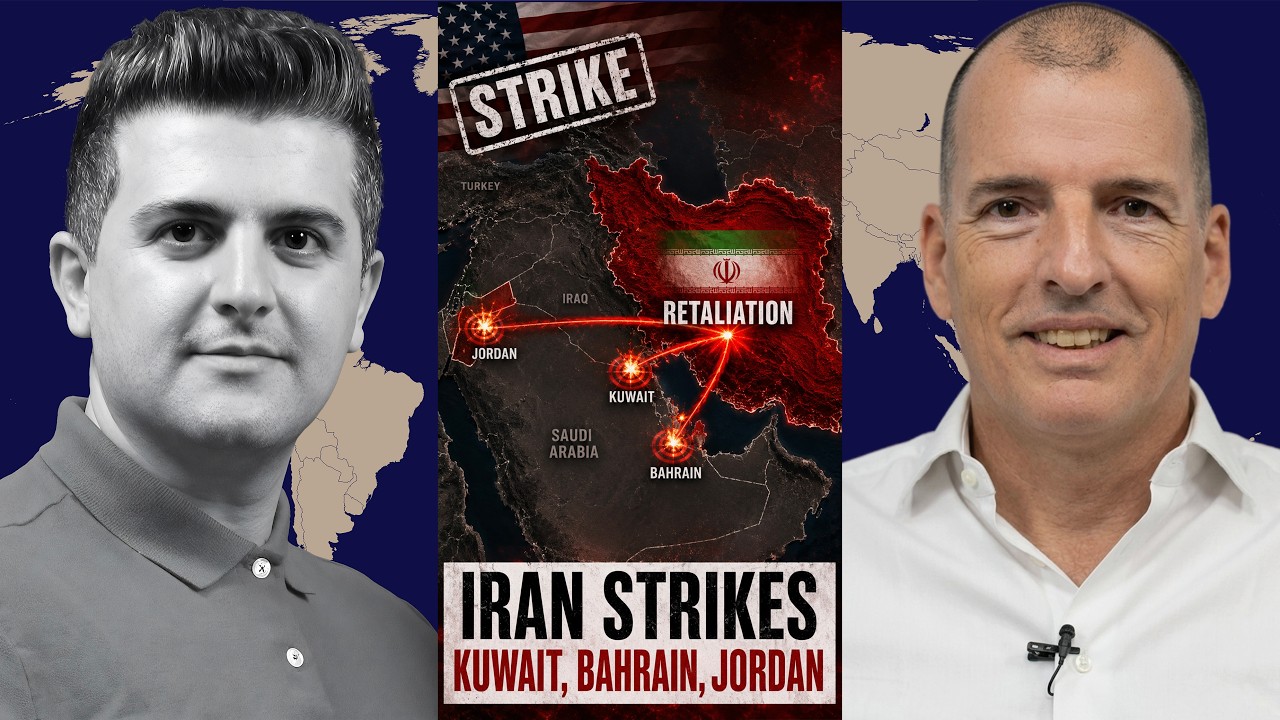
Alex Krainer: US STRIKES Iran – Iran RETALIATES Against Kuwait, Bahrain & Jordan!
"Amidst escalating US-Iran conflict and Iranian retaliation against regional US allies, this episode argues that US foreign policy is deeply controlled by an 'Anglo-Zionist conspiracy' led by the Rothschild banking dynasty, prioritizing Israeli interests over American ones."

Iran Update: Israel’s Newest Bombing Campaign, the Oncoming War With China and How to Avoid It
"Colonel Wilerson reveals how the US and Israel are actively bombing China's strategic infrastructure in Iran, escalating a covert economic war that Beijing intends to win without direct military conflict by dismantling the dollar's global dominance."

Patrick Henningsen: Hezbollah JUST Fired Back at Israel - Iran Vows to “Crush” All Attacks
"Patrick Henningsen argues that the US and Israel initiated an illegal war against Iran, driven by Trump's incompetence and Israeli influence, leading to an inevitable escalation with severe global economic repercussions."