
Daniel Davis Gives GRAVE WARNING About Iran Military
YouTube · KjKrIL_Etm8
Quick Read
Summary
Takeaways
- ❖Iran has restored operational access to 30 of 33 missile sites along the Strait of Hormuz and retains 70% of its pre-war missile stockpile.
- ❖US strikes on Iran's underground facilities, even with bunker-busting munitions, were largely ineffective, with sites resuming operations within hours.
- ❖The US burned through 30-45% of its crucial offensive and defensive missile systems (JASMs, Tomahawks, THAAD, PAC 3) against Iran, severely weakening its arsenal.
- ❖Secretary of War Pete Hexith falsely claimed military means exist to reopen the Strait of Hormuz, despite previous US efforts failing.
- ❖Russian media and military figures are openly discussing escalating the Ukraine war by striking European cities and potentially using tactical nuclear weapons.
- ❖The narrative of Russia aiming to 'rebuild the Soviet Union' is dismissed as Western fiction; the war is presented as a reaction to NATO expansion towards Russia's borders.
- ❖The 2014 annexation of Crimea is framed as a direct response to a US-orchestrated coup in Ukraine that overthrew a legally elected, Moscow-leaning government.
- ❖Ethnic Russians in Ukraine faced severe discrimination, including the outlawing of their language and religion, and violent attacks like the Odessa building fire.
Insights
1Iran's Impervious Underground Military Infrastructure
Iran has spent decades building extensive underground missile cities and facilities, capable of housing jet fighters, boats, and missile launchers. These sites are designed to be nearly impervious to conventional attacks, as evidenced by one facility near Esfahan reportedly resuming operations within hours after being struck 20 times by bunker-busting munitions from B2 bombers.
Iran has restored operational access to 30 of 33 missile sites along the Strait of Hormuz and retains 70% of its pre-war missile stockpile. One underground facility near Esfahan was struck 20 times in 40 days by B2s with bunker-busting munitions, yet resumed operations within hours each time.
2Severe Depletion of US Missile Stockpiles Against Iran
The US military expended a significant portion of its most important missile systems—including JASMs, Tomahawk cruise missiles, THAAD, and PAC 3 air defense missiles—during strikes against Iran. This massive expenditure resulted in only superficial damage to Iran's capabilities, leaving the US with a critically diminished arsenal.
The US used 30-45% of its remaining stockpiles of key missile systems (JASMs, Tomahawk, THAAD, PAC 3) in strikes against Iran, causing only a 30% degradation on some missile sites.
3Secretary Hexith's Misleading Testimony on Strait of Hormuz
Secretary of War Pete Hexith falsely asserted that military means exist to reopen the Strait of Hormuz, despite previous extensive US military efforts failing to achieve this. This claim contradicts the reality that Iran possesses numerous methods to keep the strait closed and that a military solution is not viable.
Secretary Hexith claimed there are military means to open the Strait of Hormuz, but Colonel Davis states, 'There's nothing we can do to force it open, which is because we tried everything under God's sun to get it done the first time. Nothing has succeeded.'
4NATO Expansion as the Root Cause of the Ukraine War
The Ukraine war is presented not as a Russian ambition to rebuild the Soviet empire, but as a direct reaction to NATO's eastward expansion, particularly the prospect of Ukraine joining the alliance. Russia consistently warned that NATO's military presence on its border, historically a path for invasions, would lead to war.
In 2007, Putin questioned NATO expansion. In 2008, NATO announced plans to expand into Georgia and Ukraine. Russia explicitly warned that putting NATO into Ukraine would lead to war, a warning dismissed by then-NATO Secretary General Jen Stoltenberg.
5Crimea Annexation as a Reaction to US-Backed Coup
The 2014 annexation of Crimea by Russia is framed as a defensive reaction to a US-orchestrated coup in Ukraine. After the overthrow of a legally elected, Moscow-leaning government, Russia acted to secure its Black Sea Fleet base in Sevastopol and protect the predominantly ethnic Russian population in Crimea.
In late 2013/early 2014, the US helped orchestrate a coup that overthrew Ukraine's legally elected government. In response, Putin annexed Crimea, which was 95% ethnic Russian and housed Russia's Black Sea Fleet.
6Escalating Russian Pressure and Potential for European Strikes
Growing internal pressure within Russia, including from military figures and media, is pushing President Putin to escalate the war in Ukraine. This includes proposals to strike military facilities and cities in European nations that are supporting Ukraine, and even the potential use of tactical nuclear weapons.
Russian figures like K. Karanov are advocating for firing missiles into European cities and military facilities supporting Ukraine, and escalating to tactical nuclear weapons if deterrence fails. This pressure is growing due to the war's prolonged nature and perceived Western threats.
Bottom Line
The US military's current industrial capacity is insufficient to replace depleted missile stockpiles, leaving it vulnerable in potential conflicts with major powers.
A prolonged conflict or an unexpected war against a formidable adversary like China or Russia could quickly exhaust remaining US defensive and offensive capabilities, leading to a significant strategic disadvantage.
Investing heavily in domestic defense industrial base expansion and accelerating missile production is critical to restore deterrence and readiness.
Internal pressure within Russia could force Putin to take greater risks, including direct military action against European nations supporting Ukraine.
This could trigger an Article 5 response from NATO, potentially escalating the conflict into a direct kinetic war between Russia and European powers, with a non-trivial risk of tactical nuclear weapon use.
Western leaders must accurately assess Russian internal dynamics and public sentiment, and consider de-escalation strategies that address Russia's stated security concerns to prevent catastrophic escalation.
Key Concepts
Listen to Both Sides
To gain accurate analysis in major conflicts, one must consider reports and statements from all involved parties, not just one's own government or favored media, and validate claims with ground truth.
Strategic Misinformation
Governments and media can deliberately or inadvertently misrepresent military capabilities and conflict outcomes to shape public opinion, justify actions, or maintain political narratives, leading to flawed strategic decisions.
Lessons
- Question official government and media narratives on military conflicts, seeking out diverse sources, including those from opposing sides, to form a more complete understanding.
- Advocate for a thorough audit and public disclosure of US military stockpiles and industrial production capacity to understand the true state of national defense readiness.
- Demand diplomatic solutions and de-escalation strategies in international conflicts, particularly in Ukraine, to prevent further military escalation and the potential use of nuclear weapons.
Notable Moments
Larry Kudlow expresses shock and disbelief at waning American support for Israel and the war against Iran, comparing the situation to 9/11 and calling Iran 'worse, bigger than al Qaeda'.
This highlights a significant disconnect between some political figures and evolving public opinion on foreign policy, revealing a potential echo chamber where critical information about public sentiment is not reaching decision-makers.
Colonel Davis recounts the 2014 Odessa building fire where pro-Ukrainian neo-Nazis allegedly burned ethnic Russians alive, and the broader suppression of Russian language and religion in Ukraine.
This provides a stark, often unreported, historical context to the treatment of ethnic Russians in Ukraine, challenging the simplistic 'innocent Ukraine' narrative and highlighting the complex, often brutal, internal dynamics that preceded the full-scale invasion.
Quotes
"We've destroyed 80% of their missiles. We've destroyed all of this and they hardly have anything left in it. It was never true. All this stuff they kept telling us over and over, Anna, was never true. And they knew it wasn't true."
"There most certainly are military means by which we could open the straight, both on targets on land and also with what we do with our naval capabilities, not to mention our naval blockade."
"How can a political party possibly oppose this? It is beyond I know they do. The Democrats do. I don't understand. This is Look, this is worse than 9/11 in a sense."
"This stuff that they're trying to rebuild the Soviet Union and trying to get ready to advance on the ground towards the the the West is complete fiction that we created."
"If you put NATO into Ukraine, there will be war. But if you just take that off the table, there won't be any war."
Q&A
Recent Questions
Related Episodes

Patrick Henningsen: Hezbollah JUST Fired Back at Israel - Iran Vows to “Crush” All Attacks
"Patrick Henningsen argues that the US and Israel initiated an illegal war against Iran, driven by Trump's incompetence and Israeli influence, leading to an inevitable escalation with severe global economic repercussions."

Bibi DEMANDS Ground Troops As Marines Rushed to Iran
"Benjamin Netanyahu is pushing for US ground troops in Iran, framing air strikes as insufficient, while the US rushes Marines to the region and struggles to secure the Strait of Hormuz against surprisingly capable Iranian defenses."
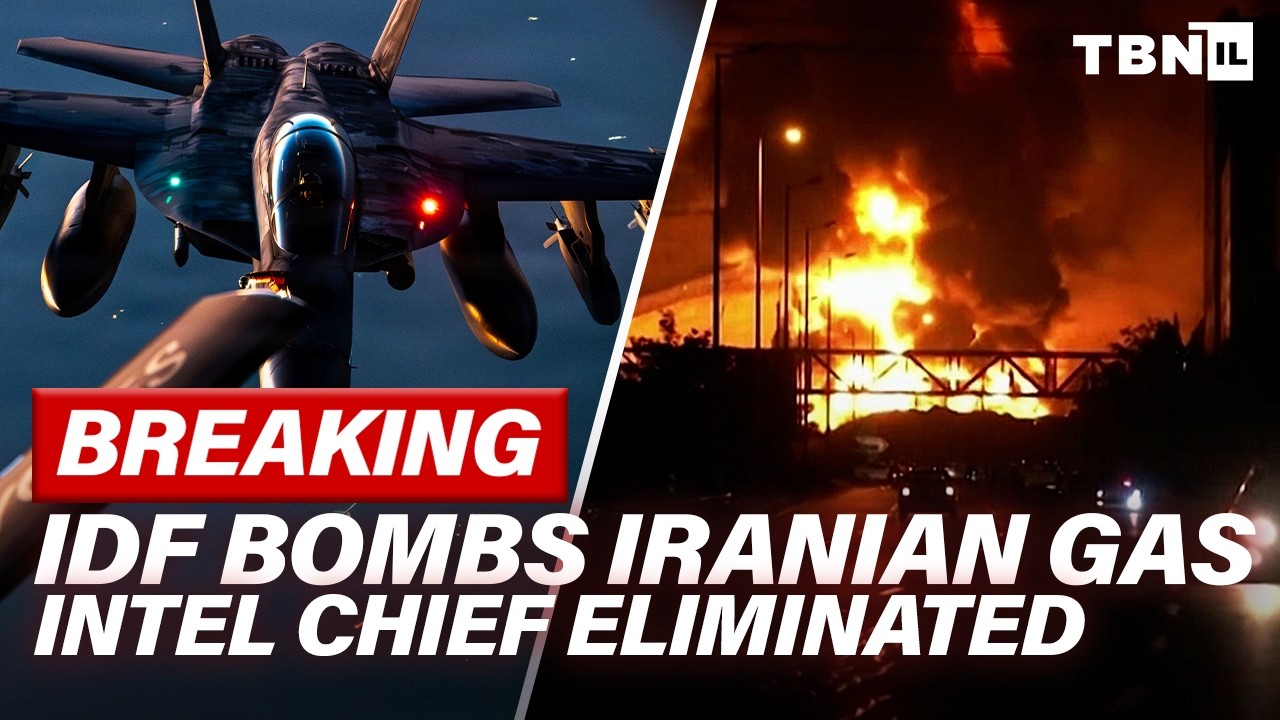
BREAKING: Israel BOMBS Major Iran Gas Site; Top Mullah ELIMINATED; Iran Vows VENGEACE | TBN Israel
"Israel and the United States have escalated their 'Roaring Lion War' against Iran, striking its largest gas facilities, eliminating key intelligence and military figures, and disrupting missile production, while Iran threatens a broader energy war in the Gulf."

🚨 TOTAL F*CKING CHECKMATE 😂😂😂
"The host argues that Trump's 'ceasefire' with Iran was a calculated '5D chess' move to orchestrate a global energy market reshuffle, while simultaneously lambasting 'woke' domestic policies and the 'freefall' of anti-Trump conservative figures."