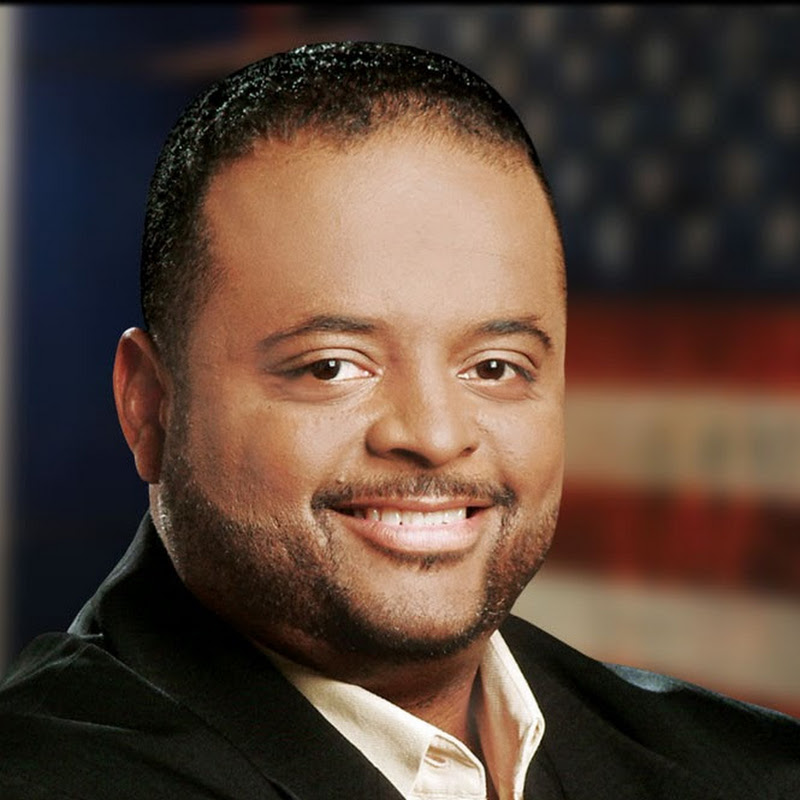
Hey Nick Cannon! Here is the rest of the story on Dem, GOP parties and Blacks
YouTube · Ks6s9eqJCmw
Quick Read
Summary
Takeaways
- ❖Celebrity political endorsements often lack historical depth and context, leading to misinformation.
- ❖The Democratic Party was founded in 1792, predating the Republican Party, which was created to oppose slavery.
- ❖The Emancipation Proclamation did not free all slaves, only those in rebellious territories, and radical Republicans led the push for the 13th, 14th, and 15th Amendments.
- ❖Southern Democrats formed the KKK, but the Republican 'Lily White movement' also aligned with Southern Democrats to oppose Black advancement.
- ❖Racism has been present across both Republican (e.g., Herbert Hoover) and Democratic (e.g., Woodrow Wilson, FDR) presidencies.
- ❖The 'Great Switch' saw Black support shift to Democrats in the 1960s due to civil rights legislation, while many Southern Democrats flipped to the Republican Party.
- ❖American history's racial dynamics are fundamentally driven by 'whiteness,' not inherent party goodness or badness.
- ❖Current policies and candidate positions in 2026 are more relevant for Black advancement than historical party stances from 1865 or 1964.
- ❖Donald Trump's administration actively rolled back policies beneficial to Black communities, including environmental justice settlements and housing discrimination lawsuits.
- ❖Voters must demand specific policy details from candidates and avoid quick, easily digestible, but often inaccurate, historical lessons from social media.
Insights
1Debunking Simplified Party History for Black Americans
Roland Martin refutes the claims that Democrats are solely the party of the KKK and Republicans solely freed slaves. He clarifies that while Southern Democrats formed the KKK due to their opposition to the end of slavery, there were also Northern Democrats against slavery. Furthermore, the Republican Party, while created to oppose slavery, later saw the rise of movements like the 'Lily White movement,' where Southern Republicans aligned with Southern Democrats to oppose Black advancement. This demonstrates that neither party has a monolithic, consistently pro-Black history.
The KKK was formed by Southern Democrats (). The 'Lily White movement' within the Republican Party, led by figures like Herbert Hoover, opposed Black advancement (). The Emancipation Proclamation only freed slaves in rebellious territories; the 13th, 14th, and 15th Amendments were pushed by 'radical Republicans' ().
2The 'Great Switch' and Party Realignment
The political alignment of Black voters shifted significantly in the mid-20th century. Initially, Black voters leaned Republican due to Abraham Lincoln. However, the Democratic Party began to incorporate civil rights planks, notably in 1948 with Hubert Humphrey's speech. The passage of the 1964 Civil Rights Act, 1965 Voting Rights Act, and 1968 Fair Housing Act under Democratic President LBJ, despite his earlier actions, caused a major realignment. This led to many pro-segregation Southern Democrats flipping to the Republican Party, while Black voters largely moved to the Democratic Party.
Hubert Humphrey's 1948 DNC speech for a civil rights plank (). LBJ's passage of the 1964 Civil Rights Act, 1965 Voting Rights Act, and 1968 Fair Housing Act (). Senator Barry Goldwater, a Republican, opposed the 1964 Civil Rights Act (). Strom Thurmond and Jesse Helms, former Democrats, flipped to the Republican Party ().
3Whiteness as the Consistent Driver in American History
Roland Martin asserts that the fundamental issue in American racial history is not the inherent nature of either political party, but rather 'whiteness' itself. He argues that both Republican and Democratic parties, at different times and through different factions, have been anti-Black, and conversely, some individuals from both parties have been supportive. This framework suggests that the struggle for Black liberation is against a pervasive system of white supremacy that transcends party lines.
Martin states, 'American history is about whiteness. This ain't about Republicans are great, Democrats are awful... It's called whiteness. Whiteness is what has driven this entire thing' (). He cites examples like Ronald Reagan's anti-housing and anti-apartheid stances () and the filibustering of the 1968 Fair Housing Act by 'Northern Republicans and Southern Democrats' ().
4Critique of Trump-Era Policies Affecting Black Communities
Martin directly challenges supporters of Donald Trump to justify their stance by detailing specific policies and actions from the Trump administration that negatively impacted Black communities. He highlights instances where the Trump administration rolled back civil rights protections and environmental justice initiatives, demonstrating a pattern of policies detrimental to Black Americans.
Trump's administration got rid of a settlement for Black people in Lowndes County, Alabama, regarding sewage issues, labeling it a 'DEI settlement' (). They pulled out of the 'Cancer Alley' lawsuit in Louisiana affecting Black communities near petrochemical plants (). Trump's HUD pulled out of a lawsuit in Dallas concerning housing discrimination against low-income Black people (). Trump pardoned two cops convicted in DC for chasing a Black man who was killed () and his DOJ refused to indict officers in the death of Breonna Taylor ().
Bottom Line
The historical narrative of Texas Independence Day is often whitewashed, omitting its core motivation: the preservation of slavery by white settlers against the Mexican army.
This specific example reveals how foundational American historical events are often presented in a way that obscures their racial origins, contributing to a broader misunderstanding of systemic racism. It challenges Black Texans to critically re-evaluate symbols of state pride.
Educators and community leaders can use this specific historical re-contextualization to illustrate the deeper, often hidden, racial underpinnings of American history, fostering a more complete and critical understanding among the public.
Judicial nominees under the Trump administration frequently refused to publicly affirm the Brown v. Board of Education decision during confirmation hearings, echoing the sentiment of the 1956 Southern Manifesto.
This demonstrates a direct, contemporary link between historical segregationist ideologies and modern political appointments, indicating that the fight for racial equality is ongoing and faces challenges from within the judicial system. It signals a potential erosion of established civil rights precedents.
Advocacy groups and voters should scrutinize judicial nominees' stances on landmark civil rights cases, connecting their responses to historical resistance movements like the Southern Manifesto, to prevent the appointment of judges who may undermine racial justice.
Key Concepts
The 'Whiteness' Framework
This model posits that the underlying force driving American racial politics and policies, across different eras and party affiliations, has consistently been the preservation and advancement of 'whiteness' and white supremacy. It suggests that focusing solely on party labels (Democrat vs. Republican) obscures this deeper, more persistent systemic issue, as both parties have, at various times, acted to maintain racial hierarchies.
Historical Nuance vs. Soundbites
This model highlights the danger of reducing complex historical events and political evolutions into simplistic, decontextualized soundbites (e.g., 'Democrats are the KKK party'). It argues that true understanding requires examining the full context, motivations, and contradictory actions of historical figures and political movements, rather than relying on easily digestible but often misleading fragments of information, especially from uninformed sources.
Lessons
- Prioritize deep historical reading and critical analysis over easily digestible social media soundbites when forming political opinions.
- Challenge politicians and public figures to articulate specific, current policies that benefit or harm Black communities, rather than relying on vague historical claims or party loyalty.
- Support and engage with platforms and educators that provide nuanced, contextualized historical information to counter misinformation, especially during election cycles.
Notable Moments
Roland Martin's detailed historical breakdown, referencing numerous academic books and specific events to counter celebrity claims.
This segment serves as a masterclass in historical literacy, demonstrating the depth of knowledge required to understand complex racial politics and directly contrasting it with the superficiality of celebrity commentary.
The panel's critique of celebrities like Nick Cannon and Amber Rose for speaking on complex political history without adequate knowledge or context, urging the Black community to stop granting them unearned credibility as leaders.
This highlights a significant issue of public discourse where fame is conflated with expertise, potentially leading to widespread misinformation and misdirection within communities seeking informed leadership.
Quotes
"Democrats don't care about black people and they don't care about people of color and the Republicans do and that's the misconception."
"People don't know that the Democrats is the party of the KKK. People don't know that the Republicans are the party that freed the slaves."
"American history is about whiteness. This ain't about Republicans are great, Democrats are awful, Democrats are amazing, Republicans are pathetic. It's called whiteness. Whiteness is what has driven this entire thing."
"The real question is where does the Republican party stand in 2026 and where does the Democratic party stand in 2026? And even when we talk about Republican Democratic party where they stand, the issue is where do individual candidates stand in 2026?"
"We need to stop looking at these guys as the people to trust because they are entertainers, because they are multi-millionaires, because they've been on television forever. We give them a certain type of credibility that they do not deserve."
"The problem we have today, we got folk who don't read, who don't study, and they choose to go to YouTube University and Tik Tok College and Instagram uh uh ent."
Q&A
Recent Questions
Related Episodes

All Roads Lead To the South: Nat’l Day Of Action For Voting Rights | Mass Rally | Montgomery, AL
"A mass rally in Montgomery, Alabama, ignites 'Freedom Summer 2026' to combat the Supreme Court's decimation of Black political power and demand unprecedented voter mobilization across the South."

Warnock UNLOADS on Trump SAVE Act. Calls It a Power Grab to Block Voters
"Senator Raphael Warnock vehemently opposes the 'SAVE Act,' framing it as a politically motivated voter suppression tactic that disproportionately disenfranchises eligible citizens under the false pretense of preventing non-existent voter fraud."
Roland speaks at Columbus Educ. Assoc. MLK Dinner
"Roland Martin challenges the audience at an MLK dinner to move beyond passive celebration and engage in active, sustained political and economic struggle, emphasizing that 'rest time is over' for those seeking real societal change."

Contested Primary Elections. Facebook Marketplace Shooting. Hey Black Girl Affirmations#TheBreakdown
"This episode explores a Georgia lawsuit challenging a new election law, highlights a community-driven real estate project building Black wealth, and features initiatives empowering Black women and girls."