
Breaking: Masked Prowler Caught on Video BEFORE Nancy Guthrie Vanished?
YouTube · LEgqq5dO22k
Quick Read
Summary
Takeaways
- ❖FBI-released images of the suspect were taken on at least two different dates, with one image predating Nancy Guthrie's abduction.
- ❖Law enforcement sources across multiple media outlets confirm this, while the Pima County Sheriff's Department denies it as 'speculative.'
- ❖The prior image suggests the suspect engaged in casing behavior, indicating a planned, not spontaneous, abduction.
- ❖This revelation necessitates a complete re-evaluation of the investigation's timeline, offender profiling, and search strategies.
- ❖Communication breakdowns between the FBI and local sheriff's office are evident, potentially impacting public trust and cooperation.
Insights
1Pre-Abduction Casing Confirmed
Multiple law enforcement sources confirm that one of the FBI-released images of the masked suspect, showing them without a backpack or gun, was taken on a date prior to Nancy Guthrie's suspected abduction. This indicates the suspect was casing the residence.
Law enforcement sources confirming yes, that it is in fact from another date. The backpack missing, the gun missing, that image, that single image is from a date prior to the date of the suspected abduction of Nancy Guthrie. Ashleigh Banfield cites reports from Fox Digital, NewsNation, CNN, ABC, CBS, and her own sources.
2Sheriff's Department Contradicts Reports
The Pima County Sheriff's Department publicly stated that reports of images being from different days are 'purely speculative,' claiming no date or timestamp is associated with the images.
Pima County Sheriff's Department says reports that the Guthrie Nest camera shows the same person on different days is quote purely speculative... 'There is no date or timestamp associated with these images. Therefore, any suggestion that the photographs were taken on different days is purely speculative.'
3Impact on Investigation Strategy
The confirmed prior casing fundamentally changes the investigative approach, requiring a complete re-evaluation of the timeline, offender psychology, and potential motives (need, greed, profit, revenge). It suggests the need to re-canvass, re-interview, and re-check alibis based on new temporal data.
Spencer Corson states, 'If investigators were working off the assumption that the video was from one night when really it was two, that really changes the timeline of this investigation... it's going to inform the questions they ask when they are trying to rule out a suspect's alibi.' He adds, 'If this person was at this location at least one time before, it is very likely that they were there times before that.'
4Potential for Undiscovered Evidence
The new timeline could explain why authorities initially asked neighbors for video from January 11th, suggesting that date might correspond to a prior casing event. It also opens the possibility that the suspect cased other homes, with potential video evidence remaining undiscovered due to unconnected cameras or public reluctance to come forward.
Authorities have alternately asked for neighbors to check their home security systems for the entire month of January from the night of January 11th. We all wondered why that date. Is it possible? This is the date of this other image. Spencer Corson notes, 'the number of cameras which are present but not connected is frightening. More than 50%.'
Bottom Line
The 'old 1980s horror movie' style balaclava worn by the suspect, combined with a non-functional holster, suggests the perpetrator may have acquired items from thrift stores or Army Navy stores rather than specialized retailers, making traditional purchase tracking difficult.
This shifts the focus of evidence gathering from modern retail transaction data (like mail-order purchases) to physical searches of less traceable, second-hand markets.
Investigators should prioritize canvassing thrift stores, Army Navy stores, and similar cash-based outlets in the region, potentially using composite sketches or descriptions of the suspect's attire to jog memories of staff.
Despite the advanced 'scratching' technology used by the FBI and Google to recover deleted video, the metadata (exact time and date) for the recovered images is not being released, or is being denied by the Sheriff, creating ambiguity.
This lack of transparency or internal disagreement on crucial metadata hinders public assistance, as potential witnesses might dismiss their observations if they don't align with the officially stated timeline.
Law enforcement agencies should prioritize clear, unified communication of all verifiable facts, including precise dates and times for recovered evidence, to maximize public engagement and tip generation, even if it means acknowledging internal investigative complexities.
Key Concepts
Predatory Behavior
Violence announces itself through research, planning, and probing defenses, suggesting an offender will often visit a target multiple times before an attack.
Timeline as Backbone
In missing person cases, the timeline is the critical framework for the investigation; any inaccuracies can derail assumptions and lines of questioning.
Soft Eyes
The practice of bringing in unbiased, unaffected investigators to review a case with fresh perspective, free from prior assumptions or biases, often used in cold cases.
Lessons
- For Investigators: Re-evaluate all existing evidence and witness statements against a revised timeline that includes pre-abduction casing, particularly focusing on the period around January 11th.
- For Law Enforcement Leadership: Establish clear, unified communication channels regarding verified facts to the public and internal teams, addressing discrepancies proactively to maintain trust and encourage tip submissions.
- For the Public (in similar cases): Review personal security camera footage for a wider timeframe than initially requested, and report any suspicious activity, even if seemingly minor or from an earlier date, as it could be crucial casing evidence.
Notable Moments
Ashleigh Banfield announces that law enforcement sources confirm one of the FBI-released suspect images was taken on a date prior to the abduction.
This is the core 'bombshell' that redefines the case as planned rather than spontaneous.
The Pima County Sheriff's Department publicly dismisses the reports of multiple dates as 'purely speculative.'
This highlights a significant communication breakdown and potential friction between investigative agencies, which could undermine public confidence.
Spencer Corson explains how prior casing changes the psychological profile of the offender and the entire investigative strategy.
This provides professional context for the significance of the new information, moving beyond mere speculation to concrete implications for solving the crime.
Quotes
"If investigators were working off the assumption that the video was from one night when really it was two, that really changes the timeline of this investigation."
"Violence always announces itself and it announces and it announces itself through predatory behavior. Predatory behavior such as research and planning, predatory behaviors such as probing defenses..."
"The single most influential factor of target selection is likelihood of success."
"That is a old 1980s horror movie, you know, disguise baklava that is maybe intended for the fear factor, but really serves no functional purpose."
"We do not expect law enforcement to be perfect, but we do expect them to communicate with clarity."
Q&A
Recent Questions
Related Episodes
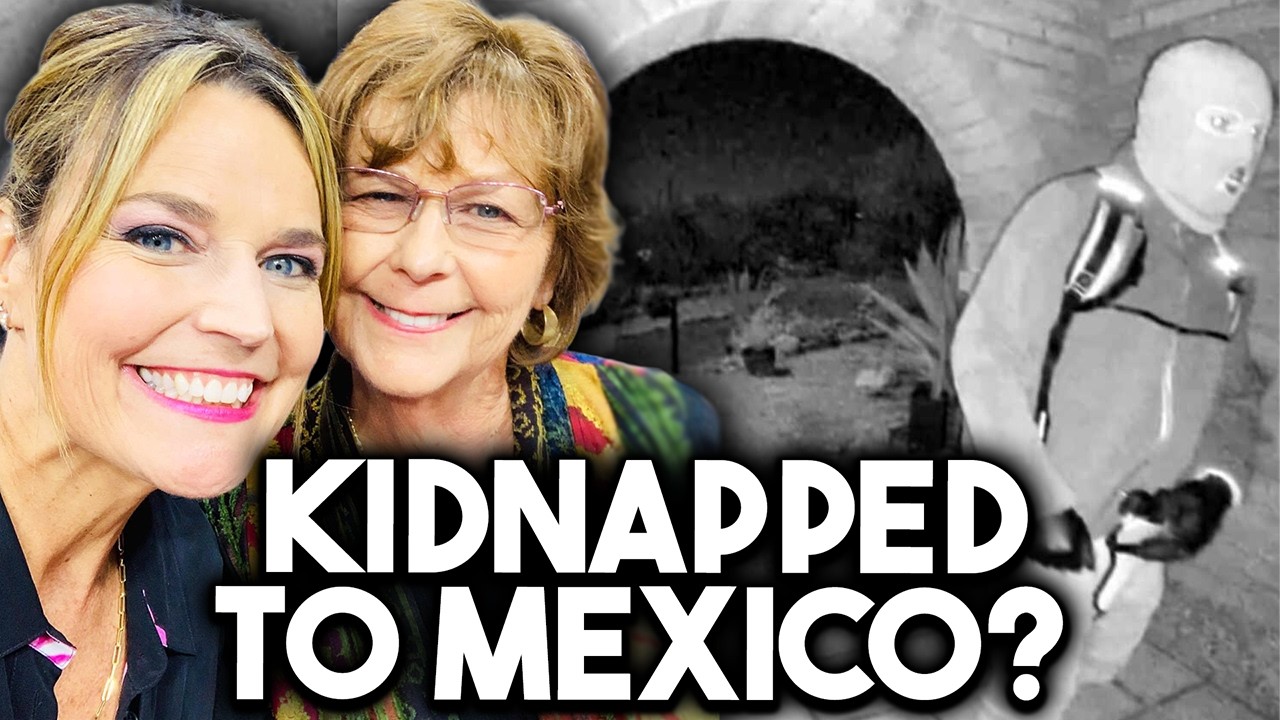
Nancy Guthrie Mystery: Kidnapped to Mexico? The Truth About Eerie Google Searches
"Federal authorities are now engaging with Mexican officials in the Nancy Guthrie kidnapping case, contradicting earlier statements from the local sheriff, while new investigative leads emerge from a gun holster purchase and Google search data is clarified."

Widow Realizes Cops Know She Poisoned Her Husband
"A seemingly routine burglary unexpectedly unravels a year-old murder, exposing a mother-daughter poisoning plot and a chilling pattern of suspicious deaths."

Hell On Wheels: Mackenzie Shirilla's Double Murder Crash
"A seemingly accidental car crash that killed two young men in Strongsville, Ohio, was meticulously uncovered by investigators to be a deliberate act of double murder by the 17-year-old driver, Mackenzie Shirilla, amidst a tumultuous relationship and a shocking lack of remorse."

The Root Beer Float Murder | Full Episode + Post Mortem
"A seemingly natural death of a husband is unmasked as a calculated poisoning plot by his wife and stepdaughter, revealed only after an unrelated burglary exposes a trail of incriminating text messages."