America Looks Weak Right Now (w/ Bill Kristol) | The Bulwark Podcast
YouTube · LKDQSns0Mgw
Quick Read
Summary
Takeaways
- ❖The White House Correspondents' Dinner incident was a genuine security breach, not a 'false flag' operation, driven by mental health issues and gun access.
- ❖The press corps is criticized for participating in the White House Correspondents' Dinner, thereby legitimizing a president who actively attacks and sues them.
- ❖Trump's proposal for a White House ballroom reveals an authoritarian desire to control events and the press.
- ❖The Iran War is viewed as a 'humiliating defeat' for the US, with Iran gaining significant leverage and demanding concessions.
- ❖The closure of the Strait of Hormuz is inflicting continuous economic damage globally, contradicting Trump's 'patience' strategy.
- ❖Ukraine, under President Zelenskyy, has emerged as a strong liberal democracy and a significant military power, contrasting with perceived US global leadership decline.
- ❖Trump's political approval ratings are declining, particularly among his 'strong approve' base, due to the economic consequences of the Iran War and a perceived betrayal of 'America First' principles.
- ❖The shift in Trump's base, influenced by figures like Tucker Carlson and Candace Owens, indicates a growing disillusionment with his foreign policy actions.
- ❖The upcoming Senate races are highly competitive, with Trump's declining popularity potentially creating opportunities for Democrats in traditionally red states.
Insights
1Critique of the White House Correspondents' Dinner and 'False Flag' Discourse
The hosts strongly criticize the press for attending the White House Correspondents' Dinner, arguing it legitimizes a president who actively sues and insults journalists. They dismiss 'false flag' theories surrounding the security incident, emphasizing that such events are typically due to mental health issues and easy access to firearms, not elaborate government conspiracies. Trump's immediate use of the incident to promote his 'ballroom' project is seen as revealing his authoritarian desire to control the press.
Tim Miller highlights Trump's immediate social media reaction and press conference promoting his ballroom after the incident. He also points to the shooter's extensive internet history as evidence against a 'false flag' scenario, attributing the event to mental health and gun access. Bill Kristol notes Trump's assumption that any dinner he attends should be 'his dinner,' controlling the guest list and agenda.
2Iran War as a Strategic Failure for the US
The Iran War is framed as a 'humiliating defeat' for the US, with Iran demonstrating increased leverage by demanding terms for reopening the Strait of Hormuz and delaying nuclear talks. Trump's strategy of 'patience' is criticized as economically damaging, as the continued closure of the strait negatively impacts global oil and petrochemical markets. The US's credibility in the region and globally is seen as severely tarnished.
Iran's offer to open the strait on its terms, with no further nuclear talks, is cited as evidence of their upper hand. Trump's Fox News comments about hoping the oil blockade will make Iran 'cave' are presented as an inadequate strategy. The hosts mention the potential for Iran and Oman to establish a 'toll booth' on the strait, creating a new funding source for Iran. The 60-day congressional authorization for military action expiring is also noted.
3Ukraine's Emergence as a Strong Liberal Democracy and Military Power
In stark contrast to perceived US weakness, Ukraine is highlighted as a positive story. Under President Zelenskyy, Ukraine has not only repelled Russian aggression but has also built an impressive military apparatus, developed its own arms industry, and forged defense deals with Gulf States. This demonstrates that liberalism does not have to be weak and that new leadership for 21st-century liberalism may come from Central and Eastern Europe, where the memory of repression is fresh.
David French's New York Times column, 'Meet the New Leader of the Free World, Vladimir Zelenskyy,' is cited. Ukraine's large standing military, expertise, arms industry development, and defense deals with Gulf States are given as examples of its bolstered standing.
4Trump's Declining Political Standing and Midterm Implications
Trump's political standing is in decline, with approval ratings in the low 30s and a significant drop in 'strongly approve' numbers. This decline is attributed to the economic impact of the Iran War (especially gas prices) and a perceived betrayal of his 'America First' base, who opposed new Middle East conflicts. This shift in support, particularly among alternative media consumers influenced by figures like Tucker Carlson, is seen as crucial for the upcoming Senate races.
Trump's approval ratings are noted as 'around the W line' (low 30s), losing 'almost a point a month.' The '50% strongly disapprove and like 20% strongly approve' figures are highlighted. The hosts discuss how 'America First' media figures like Tucker Carlson and Candace Owens turning on Trump impacts a segment of his base that genuinely opposed Middle East wars.
5Competitive Senate Landscape Driven by Trump's Unpopularity
The upcoming Senate elections are highly competitive, with Democrats aiming to defend incumbent seats and target pickups in states like North Carolina and Maine. More significantly, Trump's declining popularity is creating potential opportunities for Democrats in traditionally red states such as Ohio, Alaska, Iowa, Kansas, and Mississippi. The economic impact of the Iran War on sectors like the farm economy could further sway voters in these states.
Specific states are named: Michigan, Georgia (defending); North Carolina, Maine (pickups); Ohio, Alaska, Texas, Florida, Iowa, Nebraska, Montana, Mississippi (red states where Democrats might compete). The Ohio poll showing Sherrod Brown down three points is mentioned. The potential impact of the Strait of Hormuz closure on the farm economy (e.g., fertilizer costs) is linked to voter sentiment in states like Iowa and Kansas.
Lessons
- Critically evaluate political rhetoric: Distinguish between harsh criticism and calls for violence, recognizing that 'words are not violence' and focusing on underlying issues like mental health and gun access for violent acts.
- Demand accountability from media: Question the role of the press in legitimizing political figures who actively undermine journalistic integrity and free speech.
- Monitor foreign policy costs: Pay attention to the economic and strategic costs of military engagements, especially those initiated without broad consensus, and their impact on domestic issues like gas prices and the farm economy.
- Engage with political data: Follow shifts in public opinion and approval ratings, particularly for key political figures, to understand potential impacts on upcoming elections and policy directions.
- Support pro-democracy movements: Recognize and support nonviolent resistance efforts and leaders who champion liberal democratic values, even if they emerge from unexpected regions.
Quotes
"Words are not violence. Like you can use words to call for violence, but criticisms are not violence."
"He assumes that any dinner he's at is about him and that he would therefore if he had the ballroom... it would be his dinner. It would be at the White House. He would control the White House would control the guest list."
"The whole point of the White House correspondent dinner is it's not that. But it's so revealing that Trump assumes that it should be that, right? And he assumes any dinner he goes to... that they should be at that ballroom because he thinks it's not just that he thinks it's about him... but he thinks that he it should be he should run it."
"The longer this is not a you know it's not like once it's closed it's closed and so that's sort of that's part of the cost of the war like blowing up someplace or something. No, each day it's closed increases the cost you know."
"This is a war. People have been following it. It's been in the news a lot for two months and they kind of know that this is not the outcome that he said we were going to get to."
Q&A
Recent Questions
Related Episodes

🚨 TOTAL F*CKING CHECKMATE 😂😂😂
"The host argues that Trump's 'ceasefire' with Iran was a calculated '5D chess' move to orchestrate a global energy market reshuffle, while simultaneously lambasting 'woke' domestic policies and the 'freefall' of anti-Trump conservative figures."

Patrick Henningsen: Hezbollah JUST Fired Back at Israel - Iran Vows to “Crush” All Attacks
"Patrick Henningsen argues that the US and Israel initiated an illegal war against Iran, driven by Trump's incompetence and Israeli influence, leading to an inevitable escalation with severe global economic repercussions."
What happens to Trump voters when Trump is gone?
"The David Pakman Show explores the contentious path forward for Trump voters after his political era, exposing alleged corruption, economic misrepresentation, and the necessity of media literacy."
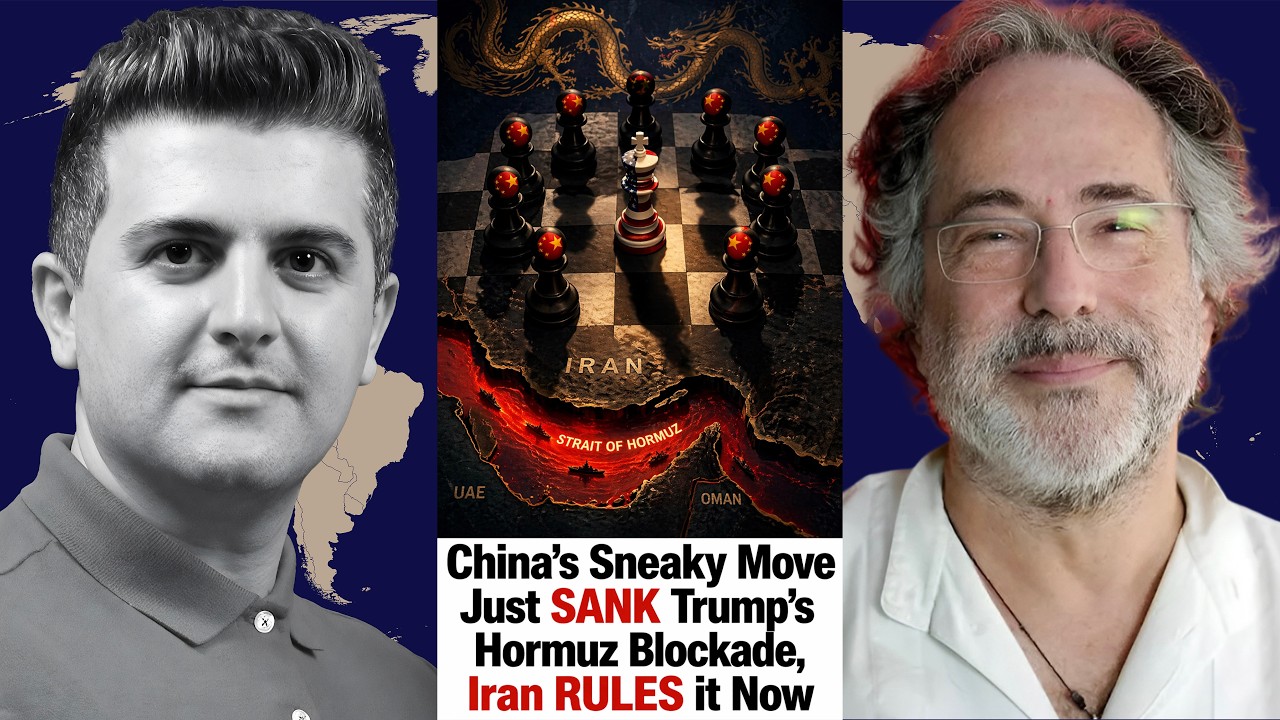
Pepe Escobar: “Total Failure”: Trump’s Blockade Just Backfired Disastrously
"Pepe Escobar argues that the US blockade against Iran, spearheaded by Donald Trump, has utterly failed and backfired, accelerating global economic chaos and challenging US geopolitical dominance."