
🚨 ITS ACTUALLY F*CKING OURS?? 😂😂
YouTube · L_htWgwyRp8
Quick Read
Summary
Takeaways
- ❖Greenland is a US national security priority due to rare minerals and its strategic location near Chinese and Russian waters.
- ❖The US has the power to acquire Greenland, either through negotiation or force, as international law is deemed irrelevant.
- ❖The capture of Venezuelan leader Maduro is framed as a 'colossal W' for the US, stopping drug flow and seizing $17 trillion in oil.
- ❖US control over Venezuelan oil is presented as a direct blow to China's energy supply, potentially preventing a Taiwan invasion.
- ❖Public opinion polls cited show overwhelming Republican support for aggressive US military actions like the Venezuela intervention.
- ❖The host advocates for the 'Trump doctrine' and 'Nux doctrine,' emphasizing unapologetic assertion of US interests and military power in the Western Hemisphere.
- ❖European and Canadian condemnations of US unilateralism are dismissed as ineffective, given their military dependence on the US.
Insights
1Greenland Acquisition as a US National Security Imperative
The host asserts that Greenland is essential for the US due to its rare mineral resources and critical geopolitical position near Chinese and Russian waters. He argues that the US 'needs' Greenland for national security and that its acquisition is inevitable, regardless of Denmark's or Greenland's wishes.
The host states three major reasons for needing Greenland: rare minerals, geopolitical importance near Chinese and Russian waters for national security, and the 'cool factor' of expanding the 'America Imperium.' (-). He later quotes Trump emphasizing Greenland's strategic importance due to Russian and Chinese ships (-, -).
2Venezuela Intervention as a 'Colossal W' Against Adversaries
The capture of Venezuelan leader Maduro is celebrated as a significant victory, framed as a multi-faceted success: removing an illegitimate dictator, stopping drug and terrorist flows into the US, and crucially, seizing control of Venezuela's oil. This oil control is presented as a strategic move to cut off a major supply to China, thereby hindering its ability to invade Taiwan.
The host describes the Venezuela action as a 'colossal W' () that 'liberated Venezuela,' captured a 'wanted terrorist,' stopped illegal drugs/terrorists, and 'took control of 17 trillion dollars of oil' (-). He explicitly states this stopped 50% of China's oil, preventing them from invading Taiwan and neutering both China and Putin (-, -).
3Dismissal of International Law and Unilateral Superpower Action
A central theme is the outright rejection of international law and national sovereignty as meaningful constraints on US power. The host argues that 'international law is fake and gay' and that the US, as the most powerful nation, should act solely based on its national interest, without apology or concern for global condemnation, because other nations lack the military capacity to resist.
The host repeatedly states 'International law is fake and gay' (, , , , , , ). He asks, 'What are they going to do?' in response to potential international criticism (, , , , , ). He also cites Stephen Miller's argument that the US, as a superpower, should act as one (-, -).
Bottom Line
The US intervention in Venezuela, specifically the capture of Maduro and control of its oil, is presented as a direct and effective geopolitical maneuver to cripple China's military ambitions, particularly regarding a Taiwan invasion.
This perspective suggests that resource control in one region can have profound, cascading effects on global power dynamics and the strategic capabilities of major adversaries, potentially averting larger conflicts.
Analysts and strategists should consider the interconnectedness of seemingly disparate geopolitical actions and their potential for indirect, long-range impacts on rival powers' strategic capabilities, especially concerning critical resources like oil.
Key Concepts
Tiered Global Power Structure
The world is divided into three tiers of countries: Tier 1 (USA, Russia, China) are superpowers that can defend their national interests and cannot be easily invaded. Tier 2 countries (e.g., Saudi Arabia, India) cannot defend themselves but can choose which Tier 1 country to align with for protection. Tier 3 countries (e.g., Venezuela) are 'shitholes' with no real choice or sovereignty, vulnerable to intervention by Tier 1 powers.
International Law as 'Fake and Gay'
This model posits that international law, treaties, and global consensus are artificial constructs designed to 'cuck' powerful nations. It argues that these laws are only enforced against weaker states and are irrelevant when a superpower decides to act in its own interest, as military might is the ultimate arbiter of global affairs.
Lessons
- Analyze geopolitical events through a power-centric lens, considering how military and economic might can override traditional international norms.
- Evaluate the strategic importance of resource control (e.g., oil) in shaping global power balances and influencing potential conflicts.
- Recognize and critically assess arguments that dismiss international law, sovereignty, and multilateral cooperation in favor of unilateral superpower action.
Notable Moments
The host's aggressive dismissal of a CNN reporter's questions about the legality and purpose of US actions in Venezuela, repeatedly asserting US power and national interest over international law.
This exchange exemplifies the podcast's core argument: that traditional media and international legal frameworks are irrelevant when confronted with a superpower's will, highlighting a confrontational approach to foreign policy discourse.
The inclusion of an Andrew Tate clip advocating for the forceful takeover of Greenland, echoing the host's 'might makes right' philosophy.
This moment reinforces the extreme nature of the 'international law is fake and gay' argument and demonstrates how such provocative views are amplified across different platforms, even by controversial figures.
Quotes
"We need Greenland from a national security situation. It's so strategic right now. Greenland is covered with Russian and Chinese ships all over the place. We need Greenland from the standpoint of national security. And Denmark is not going to be able to do it."
"This move, all right, this 88-minute war, all right, straight up absolutely neutered China, neutered Putin, gave us trillions of dollars, liberated Venezuela, uh, captured a terrorist, stopped our people from dying. Um, it's literally just a colossal W."
"The United States is using its military to secure our interests unapologetically in our hemisphere. That's right. We're a superpower and under President Trump, we are going to conduct ourselves as a superpower."
"If China doesn't have 50% of their oil, they A will lose the AI war and B will not be able to invade Taiwan."
"USA, Russia, and China. Tier one. Those are real countries that America interchangeably. They can't just invade the other one. USA can't kidnap Putin or Xi."
Q&A
Recent Questions
Related Episodes

Will Venezuela Be Trump's Vietnam?
"An expert breaks down three perilous pathways for Venezuela under potential US intervention, from a 'Panamanian model' to a 'Libyan-style civil war,' and the broader geopolitical fallout for Latin America."

Iran Update: Israel’s Newest Bombing Campaign, the Oncoming War With China and How to Avoid It
"Colonel Wilerson reveals how the US and Israel are actively bombing China's strategic infrastructure in Iran, escalating a covert economic war that Beijing intends to win without direct military conflict by dismantling the dollar's global dominance."

Patrick Henningsen: Hezbollah JUST Fired Back at Israel - Iran Vows to “Crush” All Attacks
"Patrick Henningsen argues that the US and Israel initiated an illegal war against Iran, driven by Trump's incompetence and Israeli influence, leading to an inevitable escalation with severe global economic repercussions."
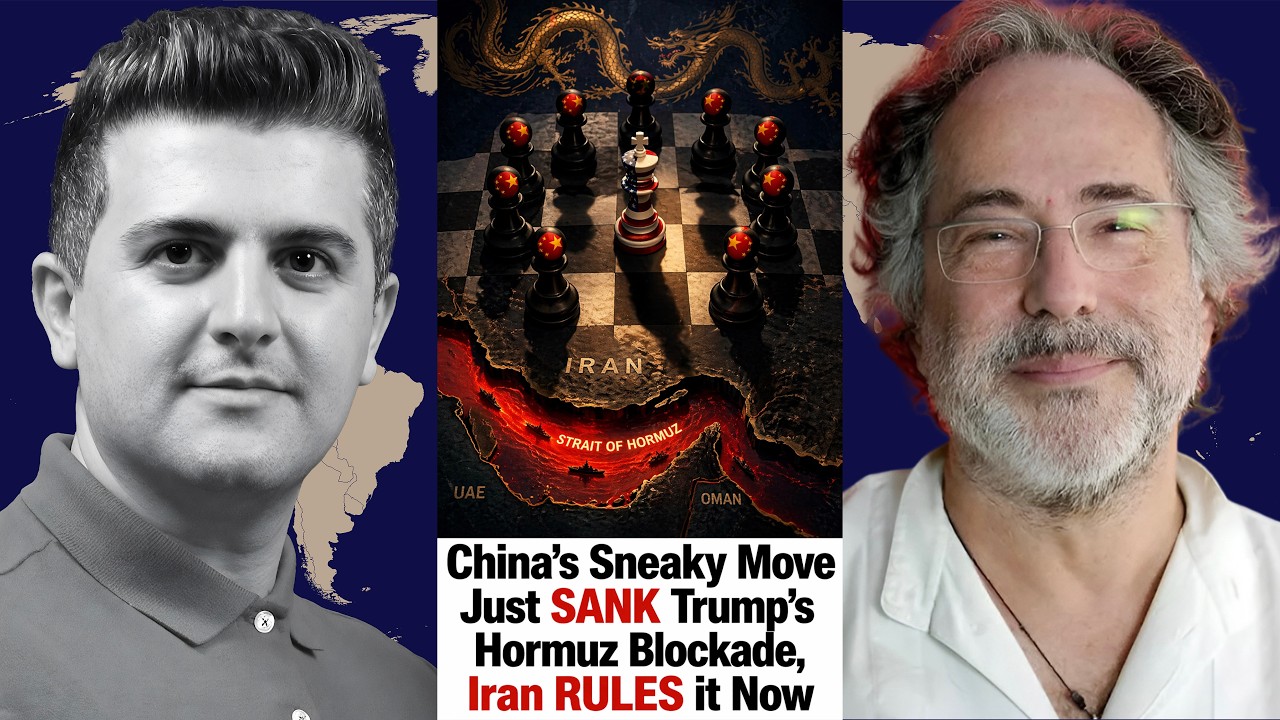
Pepe Escobar: “Total Failure”: Trump’s Blockade Just Backfired Disastrously
"Pepe Escobar argues that the US blockade against Iran, spearheaded by Donald Trump, has utterly failed and backfired, accelerating global economic chaos and challenging US geopolitical dominance."