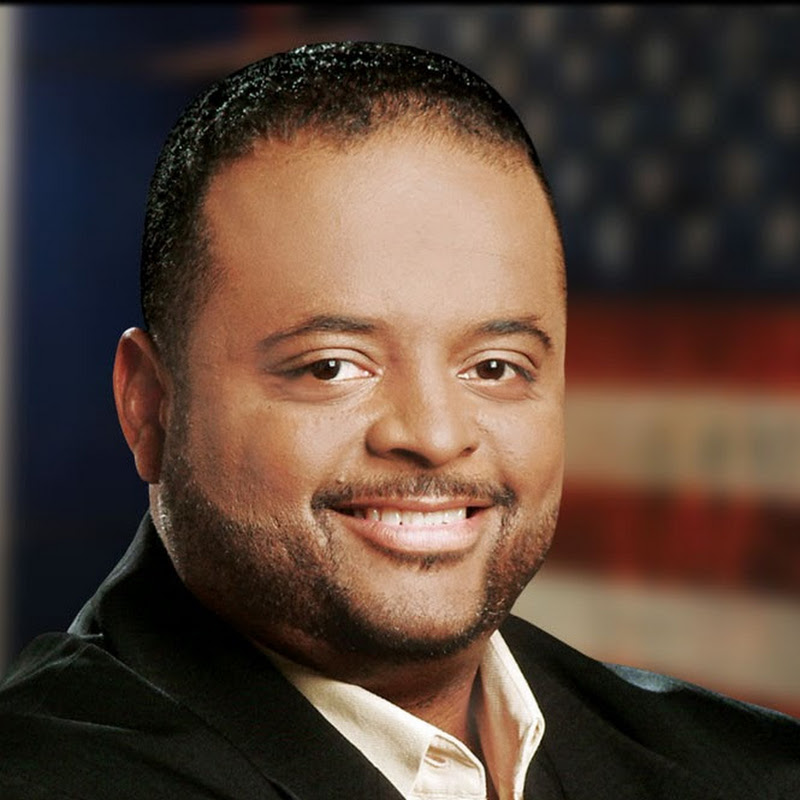
Roland And A. Scott Bolden Clash Over Who Funds The Black Fight. Corporate Checks Come With A Price
YouTube · Lf-NJnfsEh8
Quick Read
Summary
Takeaways
- ❖Black organizations must demand active support for voting rights from corporate sponsors, not just financial contributions.
- ❖The Congressional Black Caucus should pressure its corporate partners to take a public stance on racial gerrymandering and voting rights.
- ❖Organizations heavily reliant on corporate funding, especially those tied to DEI initiatives, face significant vulnerabilities during political shifts.
- ❖Self-funded Black institutions, like the Divine Nine, possess greater freedom to advocate without external influence.
- ❖Individual financial contributions, even small ones, are crucial for sustaining independent Black media and advocacy groups.
- ❖Fear of political retribution (e.g., from the IRS) complicates corporate and non-profit engagement in politically charged issues.
Insights
1Corporate Funding Compromises Advocacy
Roland Martin argues that Black organizations and elected officials who accept corporate funding are often constrained from demanding strong advocacy on critical issues like voting rights. He asserts that if corporations are unwilling to stand with the Black community during existential threats, their financial contributions are insufficient and compromise the organization's independence.
Martin lists numerous major corporations on the National Urban League's board (MasterCard, JP Morgan Chase, Verizon, Walmart, Google, etc.) and questions when these relationships will be leveraged for advocacy. He challenges the idea of accepting money without demanding action, stating, 'If you are saying corporate America needs to step up, well, what corporate America are you talking about if you don't start with the folk who are cutting you checks?'
2Complexity of Corporate Engagement
A. Scott Bolden contends that the issue is more complicated than simply demanding corporate action. He highlights that corporations give to both Democrats and Republicans, have shareholders to consider, and face potential political retribution (e.g., from the White House or FCC) if they take strong stances on controversial issues. He suggests that Black organizations are often unwilling to reject corporate money, even if it means compromising their demands.
Bolden states, 'It's very complicated. Just pump your brakes a little bit now. Hold on because it's a two-way street between our elected officials and these corporations... They're taking on a lot of smoke from the White House, from their Republican friends. You know, they give money to Democrats and Republicans. They got shareholders, too. It gets real complicated.' He also challenges Roland, 'You won't find one black organization or elected official that'll will 'Okay, I'm not going to take your money and get off my board.' It's just not happening, man.'
3The Power of Self-Funded Organizations
Martin champions self-funded Black organizations, such as the Divine Nine fraternities and sororities, as models for independent advocacy. He argues that their member-funded structure grants them the freedom to speak truth to power without being beholden to external corporate interests.
Martin states, 'When I look at in black America, what groups exist that don't depend on corporate funding? It's those 13 organizations... those groups are member-funded... then you have the ability to say more and speak more with a level of independence other groups cannot.' He cites the Black Church's historical power as being rooted in members paying the preacher.
4Individual Responsibility in Funding the Fight
Martin extends the call for self-sufficiency to individual Black people, urging them to financially support independent Black media and civil rights groups. He criticizes those who demand advocacy but are unwilling to contribute financially, especially in a moment of existential threat and declining corporate DEI dollars.
Martin asks, 'You black folks have got to stop demanding that black folks speak truth to power if power is funding your speech... But you ain't even sending a dollar.' He emphasizes that his own network is sustained by small, individual donations and that Black people must make 'hard choices' about what they spend their money on versus funding the fight.
Bottom Line
The 'anti-DEI moment' has significantly impacted the financial stability of many Black organizations, exposing their over-reliance on corporate Diversity, Equity, and Inclusion dollars.
This shift necessitates a re-evaluation of funding strategies for Black organizations, pushing them towards more resilient, community-based models to avoid financial shortfalls and maintain operational capacity.
There is a clear opportunity for self-funded Black organizations and independent Black media to gain prominence and influence, as they are less susceptible to external political and corporate pressures.
Corporations often know the collective power of the Black community better than the community itself, enabling them to offer 'crumbs' (minimal support) without facing significant consequences.
This dynamic perpetuates a cycle where Black organizations accept limited corporate engagement, hindering their ability to demand substantive action on critical issues.
Mobilizing collective Black consumer and political power to demand more from corporations, including boycotts or redirection of funds, could force companies to take stronger stances and provide more meaningful support.
Opportunities
Community-Funded Independent Black Media Network
Establish and scale a national network of independent Black-owned media outlets (TV, radio, digital) primarily funded by small, recurring individual donations from the Black community, rather than corporate sponsorships. This model ensures editorial independence and the ability to 'speak truth to power' without fear of losing corporate advertisers.
Black Advocacy & Legal Defense Fund (Community-Backed)
Create a robust legal and advocacy fund, supported predominantly by individual and Black organizational contributions, to defend civil rights groups and HBCUs against political retribution (e.g., IRS audits, FCC targeting) when they take strong political stances. This fund would provide the financial 'smoke' needed to counter government pressure.
Key Concepts
He Who Pays the Piper Calls the Tune
The principle that whoever provides financial support ultimately dictates the actions or policies of the recipient. In this context, corporate funding can limit the independence and advocacy of Black organizations.
Return on Investment (ROI) in Advocacy
The idea that if African-Americans are significant consumers of products, companies benefiting from their patronage should reciprocate by supporting their fundamental rights and advocacy efforts.
Lessons
- Individuals should assess their financial contributions to independent Black media and civil rights organizations, prioritizing support for groups that are self-funded or actively challenging corporate silence.
- Black organizations should critically evaluate their reliance on corporate funding, developing strategies to diversify revenue streams, including increased member dues and individual donations, to enhance independence.
- Black elected officials and civil rights leaders must directly challenge corporate sponsors on their commitment to voting rights and other critical issues, being prepared to withdraw support or publicly call out non-compliant companies.
Leveraging Corporate Relationships for Black Advocacy
Identify top corporations operating in states facing critical civil rights issues (e.g., racial gerrymandering in the South).
Directly engage the CEOs of these corporations, specifically asking if they will publicly stand against threats to voting rights and equal representation.
If corporations refuse to take a strong public stance, Black organizations and elected officials must be prepared to refuse their financial contributions and remove them from boards/sponsorships.
Simultaneously, mobilize the Black community to redirect consumer spending and financial support away from non-compliant corporations and towards self-funded Black initiatives.
Notable Moments
Roland Martin lists numerous corporate sponsors of the National Urban League, challenging their silence on voting rights.
This moment directly illustrates the perceived hypocrisy of corporations benefiting from 'proximity to blackness' without active advocacy, setting the stage for the core debate on leverage and accountability.
Yolanda confirms that AKA conventions are primarily funded by member registrations, not corporate sponsorships.
This provides concrete evidence for Roland's argument that self-funded Black organizations possess greater independence, contrasting with the corporate-dependent models.
Roland Martin directly challenges the audience and Black celebrities/organizations about their financial contributions to independent Black media.
This shifts the focus from external corporate accountability to internal community responsibility, highlighting the often-overlooked role of individual and organizational financial support in sustaining independent advocacy.
Quotes
"If we're saying that what is happening right now in the south poses an existential threat to the future of black America, then this is where we say you either are standing with us or you are standing against us."
"You want me to take on more politics and and you want me I'm giving you money. You wouldn't have the ALC Foundation weekend. You wouldn't have any of these without the corporations."
"If you really want to leverage it? Then say, 'We ain't going to take your money.' You won't find one black organization or elected official that'll will 'Okay, I'm not going to take your money and get off my board.' It's just not happening, man."
"We have self-funded entities. And when you have self-funded entities, then you have the ability to say more and speak more with a level of independence other groups cannot."
"The corporations know our power better than we do. And they know that if we really got together to organize, they would have to be able to step up, and they would have to speak out."
"You black folks have got to stop demanding that black folks speak truth to power if power is funding your speech."
"Those that fund you control you. Those that pay your bills can tell you what to say and what not to say."
"The only way that they will respect you really is if you crazy enough that you're not afraid to lose."
"Whoever funds you runs you. And that's what it comes down to."
Q&A
Recent Questions
Related Episodes
George Floyd 6 Years Later. Redistricting War in The South. Talarico Senate Campaign
"This episode exposes the ongoing legislative battles and strategic resistance against efforts to diminish Black political power, from federal policing reform to state-level gerrymandering and calls for economic boycotts by Black athletes."

The Immortal Jim Crow. 'Goon Squad' Defamation Suit. Google Race Discrimination Case. #TheBreakdown
"This episode exposes the enduring grip of systemic racism through a Mississippi defamation suit, Google's racial discrimination settlement, and a deep dive into how Jim Crow's legacy still shapes Black America today."
DeSantis Map Sued in Florida. Tennessee Targets Black District. FBI Raids Louise Lucas
"This episode exposes aggressive Republican gerrymandering efforts in Florida and Tennessee, a politically charged FBI raid on a Virginia Democratic leader, and disproportionate death penalty sentences against Black individuals in Tarrant County, Texas, framing them as a systemic assault on Black political power and civil rights."

Trump RUSHES Election Scheme as Midterms HAUNT HIM
"The hosts and guest expose the SAVE Act as a deceptive voter suppression tactic, drawing a stark contrast between the protection of gun rights and the erosion of voting rights."