
BREAKING: U.S. Fighter Jet DOWNED In Iran, CREW MISSING
YouTube · LyPVTlBQhdw
Quick Read
Summary
Takeaways
- ❖A US F-15E fighter jet was shot down over southern Iran, with two pilots missing, confirmed by US officials.
- ❖Iran has extensively prepared for a defensive war for nearly 50 years, developing deeply buried missile cities and resilient capabilities.
- ❖Despite weeks of US and Israeli strikes, over half of Iran's missile launchers and thousands of one-way attack drones remain intact.
- ❖The incident highlights the 'escalation trap,' where initial limited strikes can lead to unintended ground operations and broader conflict.
- ❖Former President Trump's public statements following the incident focused on economic opportunities rather than the missing service members, drawing criticism for perceived insensitivity.
Insights
1US F-15E Shot Down Over Southern Iran, Crew Missing
An Iranian official informed journalist Jeremy Scill that a US F-15E fighter jet was shot down over southern Iran, leading to an ongoing search and rescue operation for its two pilots. This was later confirmed by Israeli and US media, including the New York Times.
An Iranian official told Jeremy Scill that an F-15E was shot down over southern Iran and a search and rescue operation was underway (). The Israeli press has confirmed it, and American media is following (). US officials confirmed it to the New York Times ().
2Iran's Extensive Defensive Preparedness Undermines US Air Superiority Claims
Iran has spent nearly 50 years preparing for a defensive war, building 'missile cities' deep under mountainous terrain designed to be resilient against even tactical nuclear weapons. This long-term strategy and fortified infrastructure challenge the US's assumption of complete air superiority, as evidenced by the downed jet and the intact missile arsenal.
Ryan explains Iran has spent 50 years preparing for defensive war, building missile cities deep under mountainous terrain to withstand tactical nuclear weapons (). Pete Hegseth's repeated claims of US complete air superiority are contradicted ().
3Iranian Missile and Drone Capabilities Remain Largely Intact Despite US/Israeli Strikes
A CNN report, citing US intelligence assessments, indicates that roughly half of Iran's missile launchers and thousands of one-way attack drones remain operational, despite five weeks of daily US and Israeli strikes. This suggests the strikes are not effectively degrading Iran's strategic offensive capabilities.
CNN reported that over half of Iran's missile launchers and thousands of one-way attack drones remain intact despite 5 weeks of US and Israeli strikes ().
4Trump's Response to Downed Jet Prioritizes Economic Gain Over Missing Personnel
Hours after being briefed on the downed F-15E and missing pilots, former President Trump posted on Truth Social, stating, 'With a little more time we can easily open the hormuz straight take the oil and make a fortune. It would be a gusher for the world.' This statement drew criticism for its perceived insensitivity and focus on economic exploitation during a crisis involving American lives.
Trump posted on Truth Social at AM, hours after being briefed, about opening the Strait of Hormuz to 'make a fortune' (). Jeremy Scill's report on the downed jet was at AM ().
5Civilian Infrastructure Targeted in US Strikes, Raising War Crime Concerns
US strikes have targeted civilian infrastructure, including a Kuwaiti power desalination plant and a highway bridge near Tehran, which President Trump celebrated. The attack on the B1 bridge reportedly killed eight people and wounded 95, with unconfirmed reports of a 'double tap' strike hitting rescue crews, raising concerns about potential war crimes and further escalation.
More infrastructure sites in Gulf countries came under attack, including a Kuwaiti power desalination plant (). The highway bridge near Tehran was damaged in a US strike, killing 8 and wounding 95 (). Ryan mentions unconfirmed reports of a 'double tap' hitting rescue crews ().
Bottom Line
Misinformation is rampant from all sides (US, Israel, Iran) regarding the downed jet and ongoing conflict, making it difficult to ascertain the true status of the pilots or the effectiveness of military operations.
This pervasive misinformation environment complicates accurate public understanding, fuels propaganda, and can be used to manipulate public opinion or lure adversaries into traps, such as the reported Iranian tactic of posting a pilot's chair to draw in US rescue operations.
Develop independent, verifiable intelligence gathering and analysis platforms specifically for real-time conflict zones, focusing on open-source intelligence (OSINT) to cut through state-sponsored narratives and provide clearer situational awareness.
Iran's defensive strategy is fundamentally different from the insurgent groups the US has primarily fought for the last two decades, making conventional 'bombing back to the stone age' tactics ineffective and dangerous.
The US military and political leadership may be operating with an outdated mental model of warfare, underestimating a prepared state adversary's resilience and capacity for retaliation, leading to miscalculations and unintended escalations.
Invest in advanced strategic analysis and wargaming that specifically models conflicts against highly fortified, state-level adversaries with long-term defensive strategies, rather than solely focusing on counter-insurgency or peer-to-peer conventional warfare.
Key Concepts
Escalation Trap
The concept that even well-intentioned, limited military actions, such as air strikes, can lead to unforeseen events (like a downed jet) that compel further, unintended escalation, potentially drawing a nation into a larger conflict against its initial objectives.
Fortress Iran Doctrine
Iran's long-term national defense strategy, developed over five decades, focusing on geographically fortified positions (mountains), deeply buried 'missile cities,' and resilient military infrastructure to withstand conventional and even tactical nuclear attacks, ensuring continued operational capacity despite air superiority challenges.
Lessons
- Policymakers must critically re-evaluate the 'limited strike' doctrine, recognizing the high risk of rapid escalation into broader conflicts, especially against prepared state actors.
- Citizens should exercise extreme skepticism when consuming news from official sources (US, Israeli, Iranian) during conflict, as misinformation is intentionally deployed by all parties.
- Military strategists need to update their understanding of adversaries like Iran, acknowledging their decades-long defensive preparations and fortified infrastructure, which render traditional air superiority assumptions insufficient.
Notable Moments
The hosts discuss Jeremy Scill's early reporting on the downed F-15E, potentially making him the first in Western media to confirm the incident.
This highlights the role of independent journalism in breaking critical news ahead of mainstream outlets and challenging official narratives.
The discussion of the 'escalation trap' and how a 'two-week bombing run' can quickly lead to ground operations and increased casualties.
This frames the current events within a well-known geopolitical risk, emphasizing the unpredictable nature of military engagements.
Ryan explains Iran's long-term strategy of building deeply buried 'missile cities' to withstand attacks, even tactical nuclear weapons.
This provides crucial context for why US/Israeli strikes are not effectively degrading Iran's capabilities and why the conflict is so challenging.
Quotes
"This is how you end up getting trapped in escalation against your intentions."
"With a little more time we can easily open the hormuz straight take the oil and make a fortune. It would be a gusher for the world."
"They are still very much poised to wreak absolute havoc throughout the entire region."
"We are at war with a real country... a government that has spent nearly 50 years kind of preparing for a defensive war."
Q&A
Recent Questions
Related Episodes

Patrick Henningsen: Hezbollah JUST Fired Back at Israel - Iran Vows to “Crush” All Attacks
"Patrick Henningsen argues that the US and Israel initiated an illegal war against Iran, driven by Trump's incompetence and Israeli influence, leading to an inevitable escalation with severe global economic repercussions."
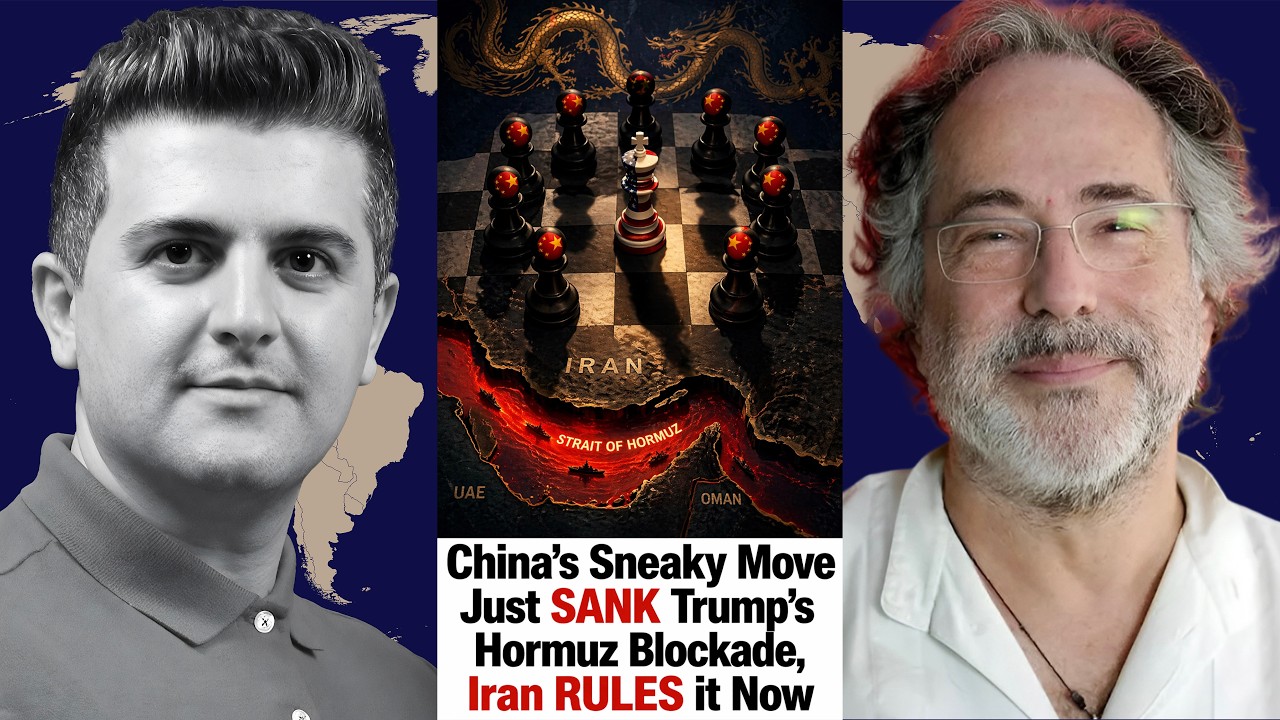
Pepe Escobar: “Total Failure”: Trump’s Blockade Just Backfired Disastrously
"Pepe Escobar argues that the US blockade against Iran, spearheaded by Donald Trump, has utterly failed and backfired, accelerating global economic chaos and challenging US geopolitical dominance."

Col. Jacques Baud: What a US Ground Invasion of Iran Would REALLY Look Like
"Colonel Jacques Baud dissects the strategic futility of a US ground invasion of Iran, arguing that current troop levels are insufficient and such an action would backfire, exposing US allies and potentially leading to Iran's nuclearization."

Alex Krainer: US STRIKES Iran – Iran RETALIATES Against Kuwait, Bahrain & Jordan!
"Amidst escalating US-Iran conflict and Iranian retaliation against regional US allies, this episode argues that US foreign policy is deeply controlled by an 'Anglo-Zionist conspiracy' led by the Rothschild banking dynasty, prioritizing Israeli interests over American ones."