
PBS News Hour full episode, March 9, 2026
YouTube · M04fJq2lmV0
Quick Read
Summary
Takeaways
- ❖The U.S.-Israel war with Iran has entered its 10th day, causing oil prices to surge to nearly $120/barrel and prompting U.S. State Department warnings for Americans to leave Saudi Arabia.
- ❖Iran's appointment of Mojtaba Khamenei as Supreme Leader signals a continuation of hardline policies and a rejection of U.S. influence, despite President Trump's disapproval.
- ❖The war's economic fallout, particularly rising gas prices, is a major concern for U.S. voters and complicates the Republican midterm strategy, shifting focus from an 'affordability agenda'.
- ❖Social media algorithms actively promote misinformation and 'ragebait' due to their business model, creating a significant challenge for public understanding and requiring a cultural shift towards trusted news sources.
Insights
1Escalating Conflict & Economic Impact
The U.S.-Israel war with Iran, now in its 10th day, has led to significant Israeli airstrikes on Iranian oil depots and residential areas, Iranian retaliatory strikes, and U.S.-Israeli attacks on Iranian naval assets. This has caused extreme volatility in global oil markets, with prices briefly spiking to $120/barrel, driven by fears of Strait of Hormuz closure and infrastructure damage.
U.S. and Israel's war with Iran is now in its 10th day, with weekend attacks on oil infrastructure spiking prices globally. Israeli airstrikes targeted a crucial oil depot in Tehran and two other depots, sending burning oil into residential neighborhoods. Iran announced a new wave of military operations, showcasing a missile launch, and the U.S. and Israel struck three Iranian ships. The price of oil briefly reached almost $120 per barrel. Daniel Yergin notes that the shutting of the Strait of Hormuz and fear of attacks on Gulf infrastructure drove prices up.
2Iran's New Hardline Leadership & Defiance
Following the killing of Ayatollah Ali Khamenei, his son Mojtaba Khamenei was appointed as the new Supreme Leader, a choice seen as a message of continuity and defiance against the U.S. and Israel. Iran's Foreign Minister stated that negotiations with the U.S. are off the table due to past 'bitter experiences' of U.S. attacks during talks, and asserted that Iran's actions are self-defense.
OJTABA KHAMENEI was named Supreme Leader ten days after the killing of his father, Ayatollah Ali Khamenei. This choice echoes hereditary rule and is expected to continue his father's hard-line approach. Iranian Foreign Minister Abbas Aragchi confirmed this selection signifies continuity and stability. Aragchi stated that talking or negotiating with Americans 'wouldn't be on our agenda anymore,' citing 'bitter experience' of U.S. attacks during previous negotiations. He emphasized Iran is 'only defending ourselves' against 'illegal aggression'.
3U.S. Political & Economic Fallout
President Trump declared the war 'very complete' and dismissed oil price concerns as 'short term,' but the rising gas prices are undermining the Republican 'affordability agenda' for the midterms. Energy experts warn of a 'nightmare scenario' if the Strait of Hormuz remains closed, potentially pushing the world into recession, with Russia benefiting from higher oil prices. Trump also issued a new threat to target Iran's electricity production.
President Donald Trump insisted the war is 'very complete' and posted that 'short term oil prices... is a very small price to pay'. Daniel Yergin warned of a 'nightmare scenario' with extended Strait of Hormuz closure and infrastructure damage, potentially leading to recession and noting that 'the biggest beneficiary of high prices is Vladimir Putin'. Tamara Keith and Amy Walter discussed how rising gas prices undercut the Republican 'affordability agenda' for midterms. Nick Schifrin reported Trump's new threat to hit 'electricity production' targets in Iran.
4Challenges in Childcare for Children with Disabilities
Over a quarter of parents with children with disabilities struggle to find appropriate childcare. Barriers include requirements like potty-training by age three, leading to long waitlists. Providers often lack the necessary training, staff, and funding for accommodations, highlighting a systemic gap in support for families with special needs children.
Judy Woodruff reports that more than a quarter of all parents of children with disabilities struggle to find appropriate childcare. Jasmine Watkins, a single working mom, found it 'incredibly difficult' to find care for her son Caine, who has autism and is not potty-trained. A U.S. Government Accountability Office report showed many childcare centers put up barriers like potty-training requirements and that providers need training, additional staff, and funding for accommodations.
5Social Media's Role in Disinformation
Social media algorithms are designed to prioritize user engagement, inadvertently promoting misinformation, 'ragebait,' and 'clickbait' because these types of content generate more clicks and ad revenue. Experts argue that lies spread faster than truth online, necessitating a cultural shift towards trusted information sources and increased regulatory pressure on social media companies.
Pioneering digital forensic expert Hany Farid explains that social media algorithms 'prefer' the spread of misinformation because it leads to 'user engagement'. He states, 'the lies spread much, much faster than the truth.' Farid notes that the business model of platforms like X, Facebook, and TikTok is user engagement, leading algorithms to promote 'ragebait' and 'clickbait'. He advocates for a cultural shift back to trusted sources and warns that social media 'is not designed as a reliable source of information'.
Lessons
- Critically evaluate information from social media, understanding that algorithms prioritize engagement over accuracy, and actively seek out trusted news sources for complex global events.
- Recognize the interconnectedness of geopolitical conflicts and global economics, particularly how regional wars can directly impact personal finances through energy prices.
- Advocate for increased support and funding for inclusive childcare programs and specialized training for educators to better serve children with disabilities.
Quotes
"THIS IS A WAR IMPOSED ON US AND WHAT WE ARE DOING IS ONLY DEFENDING OURSELVES."
"IF YOU CAN HANDLE A BARREL OF OIL OVER $200, KEEP PLAYING THIS GAME."
"I DON'T THINK, YOU KNOW, TALKING WITH AMERICANS ANYMORE WOULD BE ON OUR AGENDA ANYMORE."
"WHAT WE WOULD REALLY LIKE AS REPUBLICANS IS TO SEE THE PRESIDENT DECLARE WAR ON THE PRICE OF GROCERIES."
"SOCIAL MEDIA IS NOT DESIGNED AS A RELIABLE SOURCE OF INFORMATION. IT'S NOT, IT NEVER HAS AND IT NEVER WILL."
Q&A
Recent Questions
Related Episodes

Patrick Henningsen: Hezbollah JUST Fired Back at Israel - Iran Vows to “Crush” All Attacks
"Patrick Henningsen argues that the US and Israel initiated an illegal war against Iran, driven by Trump's incompetence and Israeli influence, leading to an inevitable escalation with severe global economic repercussions."
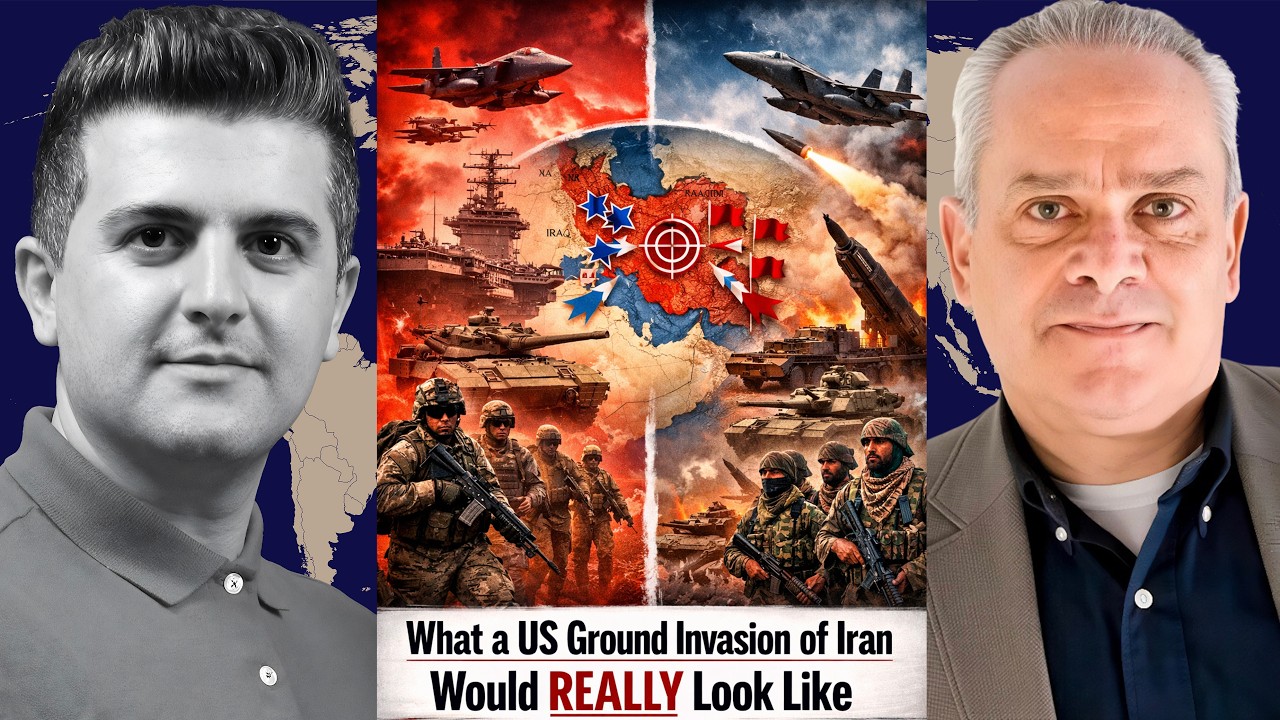
Col. Jacques Baud: What a US Ground Invasion of Iran Would REALLY Look Like
"Colonel Jacques Baud dissects the strategic futility of a US ground invasion of Iran, arguing that current troop levels are insufficient and such an action would backfire, exposing US allies and potentially leading to Iran's nuclearization."
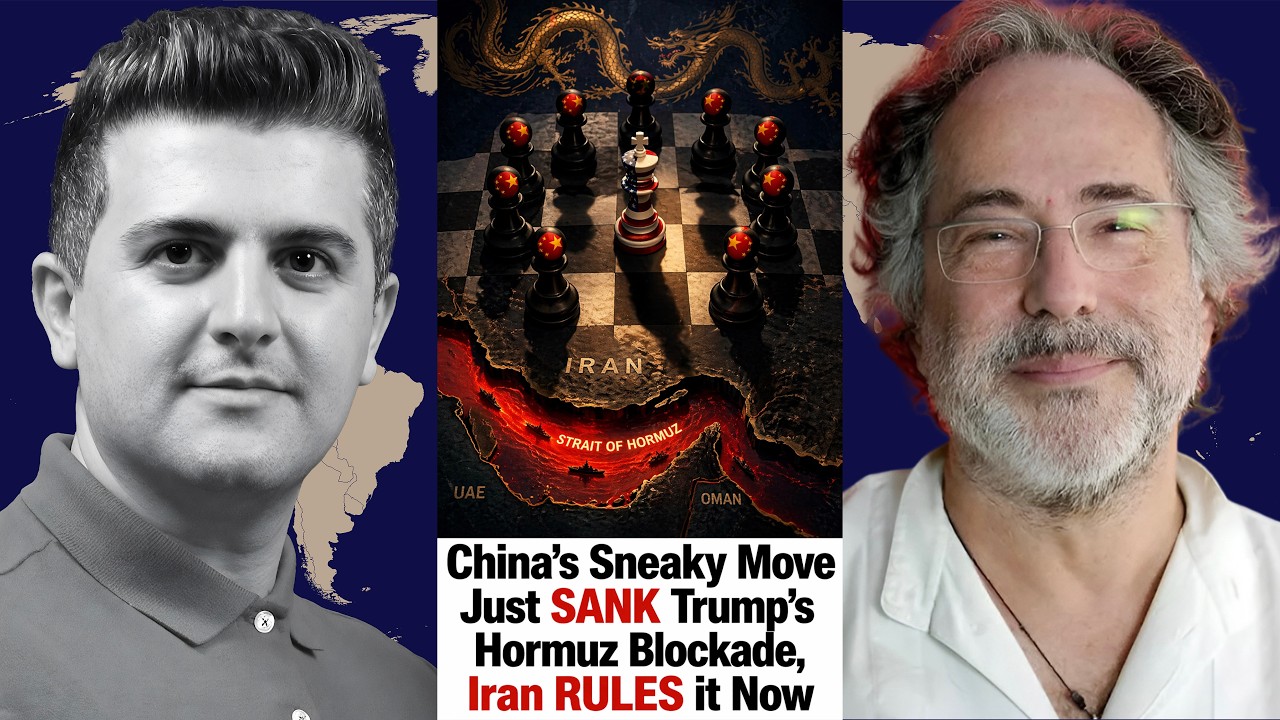
Pepe Escobar: “Total Failure”: Trump’s Blockade Just Backfired Disastrously
"Pepe Escobar argues that the US blockade against Iran, spearheaded by Donald Trump, has utterly failed and backfired, accelerating global economic chaos and challenging US geopolitical dominance."

🚨 THEY F*CKED AROUND FOR THE LAST TIME 😭😭😭
"This episode unleashes a torrent of highly opinionated commentary on the US-Iran deal, Israel's role, and a scathing critique of 'leftist' policies and immigration, particularly highlighting the UK grooming gang report as evidence of Western societal decay."