
Andrew Weissmann: Trump Built a Kingdom of Lies | Illegal News
YouTube · MnWerquxmVI
Quick Read
Summary
Takeaways
- ❖Andrew Weissmann's book, 'Liars Kingdom,' addresses the systemic problem of political lies in the US.
- ❖Unlike corporate executives or individuals in civil cases, politicians face no legal accountability for lying to the public.
- ❖Donald Trump's administration alone accumulated over 30,000 documented lies in its first term, averaging 20.9 lies per day.
- ❖Other countries, such as Brazil, England, and France, have laws that can disqualify politicians for lying, especially about elections.
- ❖The US First Amendment protects opinions but not intentional, material statements of fact that are false, providing a legal basis for new accountability laws.
- ❖The failure of political norms necessitates statutory fixes to rebuild and protect democratic institutions from persistent disinformation.
Insights
1The Unchecked Scourge of Political Lies
The US political landscape is awash in lies, with politicians facing no legal repercussions for widespread disinformation. Andrew Weissmann cites the Washington Post's documentation of over 30,000 lies by Donald Trump in his first term, averaging nearly 21 lies per day. This stands in stark contrast to the severe penalties for lying in other contexts, such as corporate fraud (e.g., Enron executives), perjury, or defamation.
Donald Trump's first term included 30,000 documented lies by the Washington Post, averaging 20.9 lies per day. ()
2International Models for Political Accountability
Other 'first-world' countries have implemented legal mechanisms to hold politicians accountable for lies. Brazil, for instance, disqualified former President Bolsonaro from running for office for lying about an election. Similar laws exist in England and France. These models demonstrate that it is possible to create legal frameworks that address political disinformation without undermining democratic processes.
Brazil's former President Bolsonaro was barred from running for office for lying about the election. Similar laws exist in England and France. ()
3US Free Speech Laws Do Not Protect All Lies
While the US has robust First Amendment protections, these do not extend to intentional, material statements of fact that are false. Weissmann argues that existing legal precedents in defamation and securities law, which distinguish between protected opinions and unprotected factual lies, provide a basis for new statutes. This means a politician's claim like 'I won the election because there was fraud' is a statement of fact that could be subject to legal scrutiny, unlike a mere opinion.
The US First Amendment does not stop prosecuting individuals for lying about Enron or holding Rudy Giuliani accountable for defamation. The line is drawn between statements of fact and statements of opinion. ()
4The Failure of Norms and the Need for Laws
The past decade has revealed that relying on political norms to maintain institutional integrity is insufficient. Weissmann points to the Department of Justice's norm of separation from the White House, which was historically honored by both parties but eroded recently. He contends that structural changes and new laws are essential to rebuild institutions, as norms alone cannot withstand determined challenges. Courts, in this context, serve as critical institutions for separating truth from fiction.
Things that were once norms, like the separation of the Department of Justice from the White House, no longer work. ()
Lessons
- Pre-order Andrew Weissmann's book, 'Liars Kingdom,' to support the author and engage with the proposed solutions to political disinformation.
- Engage in conversations about structural changes needed to hold politicians accountable, moving beyond reliance on traditional norms.
- Support publishers and media organizations that bravely publish critical content, even in the face of political threats, as Little Brown did for Weissmann's book.
Notable Moments
Andrew Weissmann's original publisher dropped his book due to fear of being targeted by Donald Trump.
This incident highlights the chilling effect of political intimidation on institutions, including publishing houses, which are meant to defend free speech. It underscores the urgency of the book's message about institutional fragility.
Quotes
"We cannot just hope to win the next election and think everything can go back to normal. There are systems that are not working and we we just have to focus on that."
"Why is it that political lies in America are absolved from that kind of accountability when other countries have figured out how to deal with this space the scourge of political lies?"
"If journalists have to do it, why shouldn't politicians have to do it?"
"I think what we've been living through makes it clear that norms don't work."
"When it when it when it's like the media companies, the law firms, publishing houses, the places that are the defenses, the the purveyors, the people who live within the First Amendment who won't do it. Those are the real chilling effects."
Q&A
Recent Questions
Related Episodes
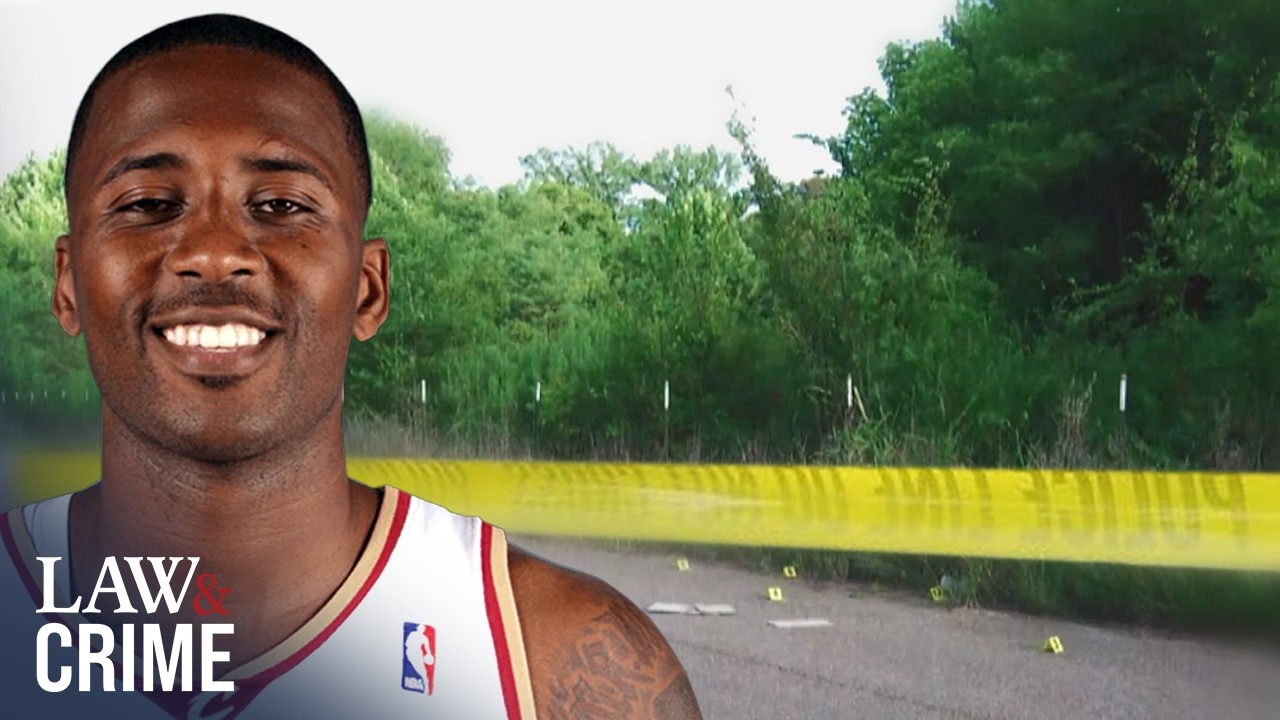
Killer Cases: NBA Star Lured to Execution In Rural Tennessee
"The decade-long cold case of NBA star Lorenzen Wright's murder was cracked through a persistent mother, a jailed informant, and a covert police operation that recovered the murder weapon from a lake and exposed a conspiracy driven by greed."

M&M's Employee Steals $26 MILLION (How He Did It)
"This episode details a series of white-collar crimes, from an M&M's sugar expert embezzling $26 million to a fake immigration attorney scamming undocumented immigrants, highlighting vulnerabilities in various systems and the surprising leniency of some sentences."

The Lindbergh Conspiracies | Post Mortem
"Explore the enduring mystery of the 1932 Lindbergh kidnapping, from the compromised investigation and Bruno Hauptmann's unfair trial to Charles Lindbergh's controversial character and the modern resurgence of conspiracy theories."

Trump DOJ REACHES NEW LOW Trying to SAVE Trump
"Professor Aziz Huck dissects the foundational principles of the rule of law, revealing how modern political partisanship and the Justice Department's 'weaponization fund' challenge core constitutional mechanisms and legal predictability."