BREAKING: U.S. Hits Iran’s Key Bridge; Trump Vows More; Hezbollah And Iran Coordinate Attacks
YouTube · Mrk5kQwYSzs
Quick Read
Summary
Takeaways
- ❖The United States executed a precision strike destroying a strategic bridge (B1) connecting Tehran to a key district, aiming to disrupt Iranian logistics.
- ❖Israel conducted extensive preemptive strikes, deploying over 140 munitions on 50 targets in central and western Iran to degrade missile capabilities.
- ❖Jamshed Ishaki, commander of the Revolutionary Guard's oil headquarters and a major financier of Hezbollah and Houthis, was eliminated in Tehran.
- ❖An exposed 33-page Iranian document details the regime's policy of integrating civilian infrastructure (garages, hospitals, forests) as legitimate missile launch positions.
- ❖Former President Trump threatened to send Iran 'back to the stone age' within 2-3 weeks and warned of striking all Iranian electricity generation stations.
- ❖The UAE has initiated an economic and civil offensive against Iran, banning Iranians and closing institutions, while considering military action to open the Strait of Hormuz.
- ❖American intelligence estimates Iran's missile stockpiles are depleting, with current firing rates sustainable for only a few more days, though strategic reserves may exist.
- ❖An Israeli F-35I Adir reportedly shot down an Iranian Yak-130 fighter jet over Tehran, demonstrating Israeli air superiority deep within Iranian airspace.
- ❖The Pentagon is examining complex military options, including a ground operation, to physically seize Iran's enriched uranium stockpile.
- ❖Internally, Iran is experiencing severe upheaval, with the Revolutionary Guards gaining direct control and a reported surge in executions under the guise of war.
Insights
1US Destroys Strategic Iranian Bridge and Threatens Energy Infrastructure
The United States conducted a significant military strike, destroying the B1 bridge, a strategic roadway connecting Tehran to another district just 40 kilometers from the capital. This action is framed as an attempt to cut off Iran from a major Middle Eastern transport link. Former President Trump further escalated rhetoric, threatening to send Iran 'back to the stone age' within weeks and warning that if no deal is reached, the US could strike every electricity generation station in Iran, potentially including oil facilities.
The United States struck a bridge that connects Tehran to another location in Iran. It was completely destroyed. () American fighter jets struck B1, a bridge used as a roadway connecting an area in Tehran and considered one of the highest in the Middle East. () Trump presented the campaign against Iran as a historic decision, threatened to strike electricity infrastructure as well if no deal is reached, and made clear that the fighting will continue for another two to three weeks until the objectives are completed. ()
2Israel Targets Iran's Financial and Military Leadership
Israel has focused on dismantling Iran's war machine by targeting its financial and military leadership. A precise strike in Tehran eliminated Jamshed Ishaki, the commander of the Revolutionary Guard's oil headquarters, who managed the funding arm for ballistic missile buildup and the flow of funds to Hezbollah and the Houthis. This strike aims to disrupt Iran's ability to finance its terror proxies. Additionally, Israel carried out preemptive air strikes, dropping over 140 munitions on 50 targets in central and western Iran to disrupt firing capabilities and destroy missile infrastructure, including underground launchers and manufacturing facilities.
The IDF eliminated Jamshed Ishaki, the commander of the oil headquarters of the revolutionary guards regime in Iran. Ishaki managed the financing arm that enabled the buildup of ballistic missiles and the flow of funds to Hezbollah and to the Houthis. () The Israeli air force launched a broad preemptive wave of strikes just hours before the Seder night meant to disrupt Iran's launch capabilities. And in that wave, more than 140 munitions were dropped on around 40-50 different targets in central and western Iran. ()
3Iran's Civilian Infrastructure Used for Military Launches Exposed
A top-secret, 33-page Iranian intelligence document has been exposed, revealing a deliberate policy to integrate civilian infrastructure—such as garages, service centers, hospitals, restaurants, forests, and mountain zones—into the Revolutionary Guard's missile launch array. This strategy aims to provide cover and dispersion for military assets, effectively sacrificing Iran's civilian sphere for the survival of its missile program and ideological struggle. This explains why launchers are frequently found near civilian areas, making these civilian facilities potential military targets.
A 33-page top secret document from the Iranian intelligence branch... showed how to use civilian infrastructure, garages, and service centers so that they would also serve as legitimate missile launch positions in Iran. () The document explains how to integrate civilian infrastructure, public facilities, natural spaces, garages, service centers, hospitals, restaurants, warehouses, hangers, forests, and mountain zones into the launch array of the revolutionary guards. Not as accidental cover, as an ordered policy. ()
4UAE Opens Economic and Civil Front Against Iran, Considers Military Action in Hormuz
The United Arab Emirates is escalating its stance against Iran, moving towards a more open front. It is actively pushing for military intervention to open the Strait of Hormuz by force, examining participation in a US-led military effort. Concurrently, the UAE has launched an economic and civil offensive, banning Iranians from entering its territory, arresting dozens, canceling visas, and shutting down Iranian-linked institutions. This directly impacts the Revolutionary Guard's finances, as Emirati territory has historically served as a crucial trade route and economic depth for Iran.
The United Arab Emirates intends to join a United States military campaign to open the strait that is vital to its economy... In the meantime, it has banned Iranians from entering its territory. The United Arab Emirates is opening an economic and civil front against Iran. Dozens have arrested, visas have been cancelled, and institutions have been shut down amidst the regional escalation. () The United Arab Emirates continues moving towards a more open front against Iran. It is pushing for an option of opening the straight of Hormuz by force, examining participation in a military effort led by the United States and in parallel opening an economic and a civilian front as well. ()
5US Considers Complex Ground Operation to Seize Iranian Uranium
With Iran's enriched uranium still within its borders, the United States is exploring several alternatives beyond simple bombing missions. These include tactical burial of facilities using bunker-busting bombs, chemical or technological disruption to prevent safe access, and strategic pressure via Karaj Island. Critically, the Pentagon is also examining the possibility of a complex ground operation to physically seize the enriched uranium stockpile. Such an operation would require hundreds to thousands of troops, heavy equipment, deep security within Iran, and the extraction of radioactive materials, representing a significant escalation.
The United States is struggling to remove the Iranian uranium and is formulating a series of alternatives from tactical burial by bombs to heavy economic pressure. In the background, the Pentagon is preparing for the possibility of a complex military operation deep inside Iran. () The Pentagon is also examining the possibility of a complex operation to physically seize the enriched uranium stockpile. This is no longer a simple bombing mission. It is an operation that would require hundreds and perhaps thousands of troops, heavy equipment, security deep inside Iran, and extraction of radioactive materials. ()
Bottom Line
Iran's strategic use of civilian infrastructure for missile launches creates a 'human shield' doctrine, complicating targeting and increasing the risk of civilian casualties, which could be exploited for propaganda.
This policy forces adversaries to choose between targeting military assets embedded in civilian areas or allowing Iran to maintain its offensive capabilities, leading to difficult ethical and strategic dilemmas.
International bodies and intelligence agencies could leverage this exposed document to build a stronger case against Iran's military practices, potentially isolating the regime further and justifying more aggressive targeting strategies that minimize civilian harm through precision.
The UAE's aggressive economic and civil measures against Iran, coupled with its willingness to join military efforts, signals a significant shift in regional alliances and a more unified front against Iranian influence.
This coordinated pressure could severely cripple Iran's financial networks and logistical support for proxies, accelerating the regime's internal and external weakening. It also sets a precedent for other Gulf states to adopt similar policies.
Businesses and governments should monitor the evolving UAE-Iran dynamic for new trade routes, investment opportunities in Gulf states, and potential shifts in regional supply chains as Iran's economic influence wanes.
The reported F-35I Adir shootdown of an Iranian Yak-130 fighter jet over Tehran demonstrates an unprecedented level of Israeli air superiority deep within Iranian airspace, extending beyond ground attacks to air-to-air combat.
This event fundamentally alters the air defense calculus for Iran, indicating that its air force cannot effectively counter advanced stealth fighters even over its capital. It provides Israel with significant operational freedom.
Defense contractors and military strategists should analyze this engagement for insights into F-35 capabilities and potential vulnerabilities of Russian-made aircraft, informing future air combat doctrine and technology development.
Lessons
- Monitor the Strait of Hormuz for increased Iranian control measures (e.g., specific flags, payment methods in crypto/Chinese currency) as these indicate escalating attempts to leverage energy markets.
- Track the financial flows and economic sanctions targeting Iran, particularly those involving the UAE, as these directly impact the Revolutionary Guard's ability to fund regional proxies.
- Analyze intelligence reports regarding Iran's integration of civilian infrastructure for military purposes to understand evolving conflict dynamics and potential risks to non-military assets in the region.
Notable Moments
US strike destroys strategic B1 bridge near Tehran, a major transport link.
This marks a significant escalation by the US, directly targeting Iran's strategic infrastructure and aiming to disrupt its logistical capabilities, signaling a move beyond proxy conflicts.
Elimination of Jamshed Ishaki, commander of the Revolutionary Guard's oil headquarters and key financier of terror groups.
This strike directly targets Iran's financial lifeline for its terror network, aiming to cripple its ability to fund proxies like Hezbollah and the Houthis, impacting regional stability.
Exposure of a 33-page Iranian document detailing the use of civilian infrastructure for missile launch positions.
This revelation confirms Iran's deliberate policy of embedding military assets within civilian areas, raising ethical concerns and complicating targeting for adversaries, while increasing risks for Iranian civilians.
Reported shootdown of an Iranian Yak-130 fighter jet by an Israeli F-35I Adir over Tehran.
If confirmed, this is a world-first for the F-35 in air-to-air combat and demonstrates unprecedented Israeli air superiority deep inside Iranian airspace, fundamentally shifting the regional air power balance.
The Pentagon is examining a complex ground operation to physically seize Iran's enriched uranium stockpile.
This indicates a potential shift towards an extremely high-stakes, direct military intervention by the US to prevent Iran from acquiring nuclear weapons, with massive geopolitical implications.
Quotes
"We will send Iran back to the stone age within 2 to 3 weeks."
"Everything but everything was enslaved for one goal. Hatred for Israel."
"The United States and Israel are slowly but steadily going after all of those things. It started with the manpower, the leadership of the IRGC and the Ayatollah regime. It continued right after that with a more substantial blow to the regular army, the submarines, the ships, you know, the the armories, the the storage depots, etc."
"The regime in practice sacrificed Iran's civilian sphere for one goal, the survival of the missile array and the continuation of the ideological struggle against Islam and against the West."
Q&A
Recent Questions
Related Episodes
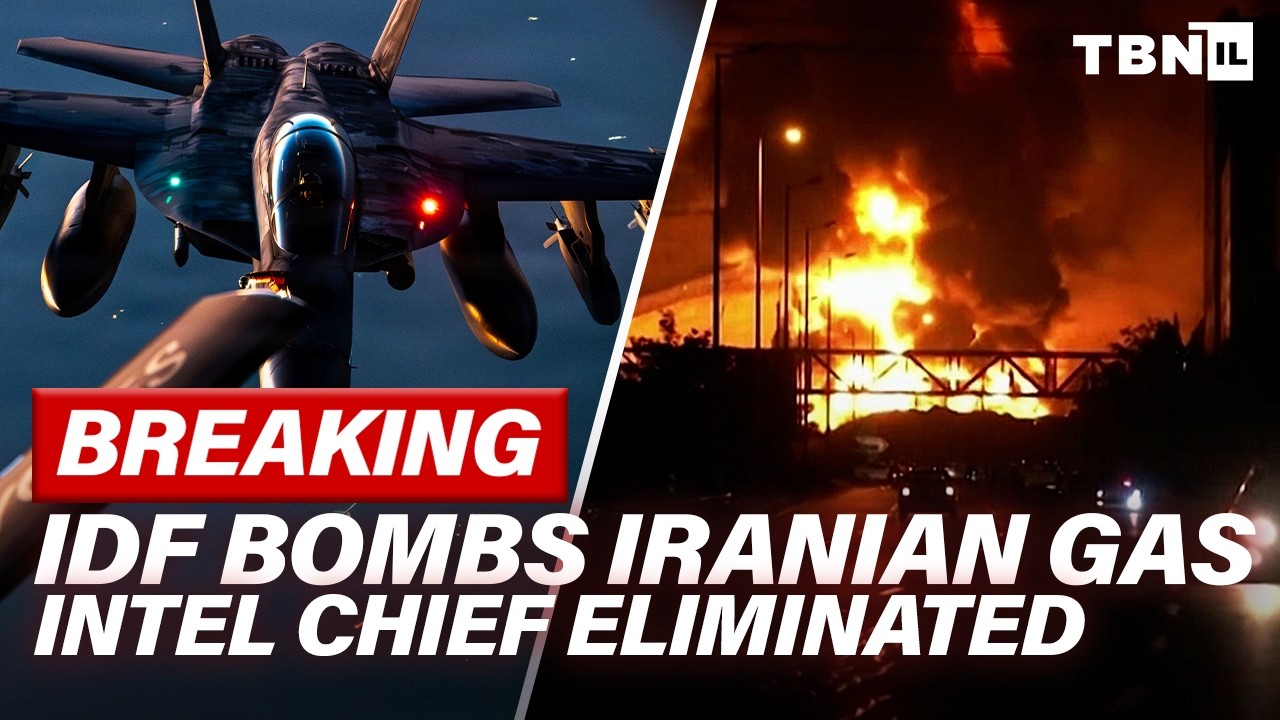
BREAKING: Israel BOMBS Major Iran Gas Site; Top Mullah ELIMINATED; Iran Vows VENGEACE | TBN Israel
"Israel and the United States have escalated their 'Roaring Lion War' against Iran, striking its largest gas facilities, eliminating key intelligence and military figures, and disrupting missile production, while Iran threatens a broader energy war in the Gulf."
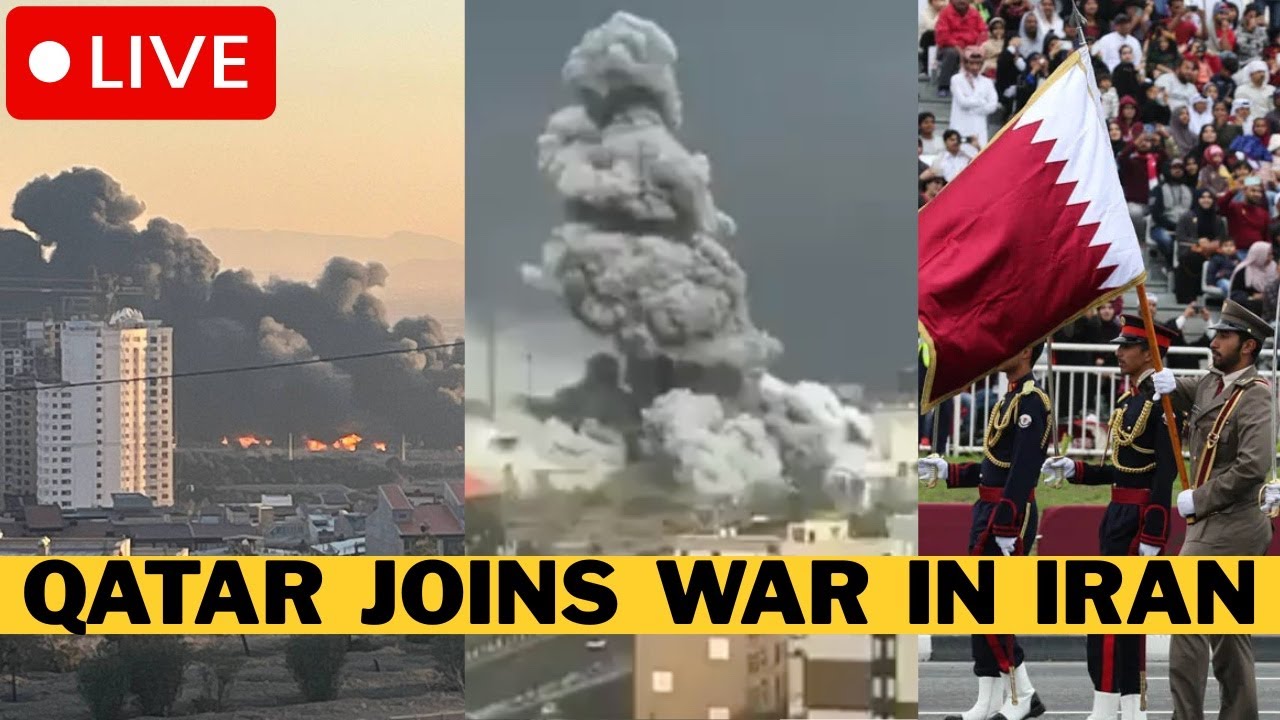
🚨 BREAKING: Qatar Launch WAR In Iran - IRGC Running Out Of Missile Launchers - LIVE Coverage
"Amidst escalating conflict, Qatar and Pakistan have aligned with Saudi Arabia against Iran, while the US and Israel execute 'Operation Epic Fury' to dismantle the IRGC's military and leadership, leading to widespread destruction of Iranian strategic sites."

BREAKING: U.S. SINKS Iranian Boats; Iran Talks Stall; Israel Hits Beirut | TBN Israel
"The U.S. and Israel escalate military actions against Iran and its proxies, while diplomatic talks stall over Iran's nuclear program, Strait of Hormuz fees, and the future of Hezbollah."
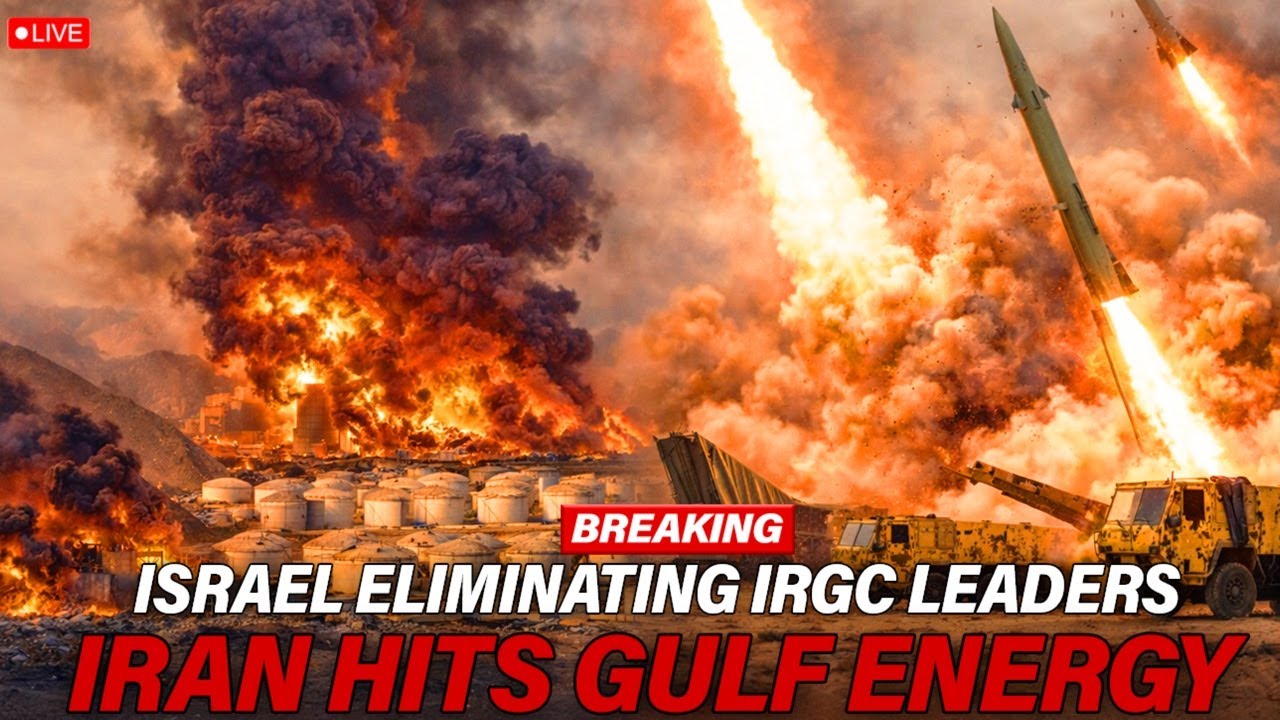
BREAKING: U.S. Weighs INVADING Iran Oil Island; Gulf Energy Crisis Grows | TBN Israel
"As the US and Israel systematically dismantle Iran's military and leadership, the conflict escalates into an energy war, with the US considering ground invasion of Iran's critical Karag oil island to secure global oil routes."