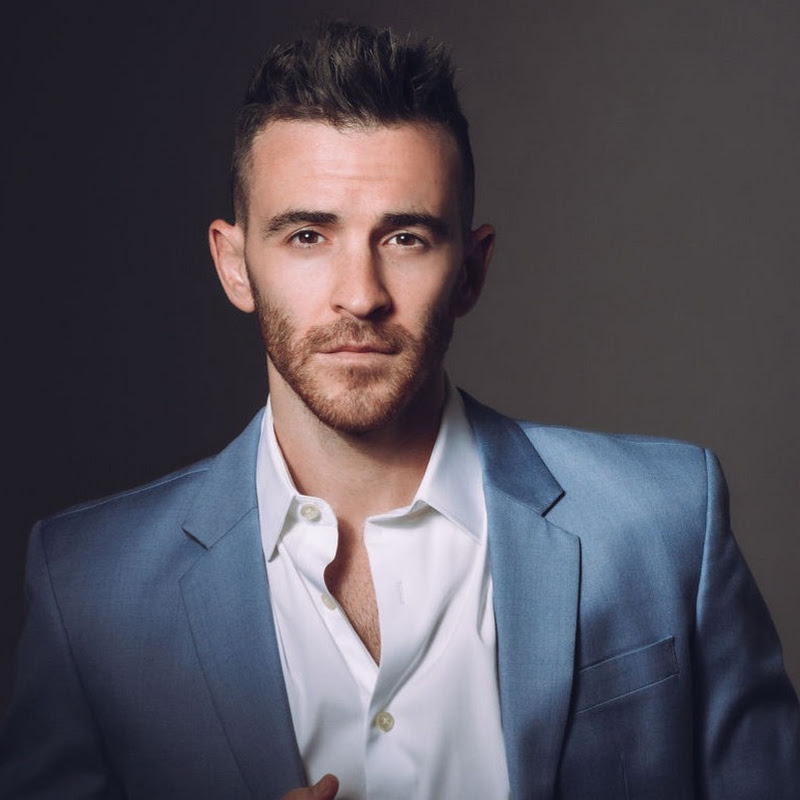
Governor Wes Moore drops major redistricting update
YouTube · N-Oy8KpeMO0
Quick Read
Summary
Takeaways
- ❖70% of Marylanders support redrawing state congressional maps before November.
- ❖State Senate President Bill Ferguson is identified as the sole impediment to the redistricting process moving forward.
- ❖Governor Moore connects redistricting to broader issues like federal agency actions, healthcare, and food assistance.
- ❖California and Virginia successfully redrew maps under similar time constraints, disproving claims of impossibility.
- ❖Constitutional lawyer Jamie Raskin has publicly refuted arguments that redistricting would violate Maryland law.
- ❖The Maryland House of Delegates passed emergency legislation for new maps in 2026, with an option to revert in 2028.
- ❖Deadlines for redistricting are arbitrary and can be adjusted by politicians.
- ❖Governor Moore criticizes a 'party of no and slow' mentality within the Democratic party, advocating for decisive action.
Insights
1Overwhelming Public Support for Redistricting
Recent polling indicates that 70% of Marylanders support the state legislature redrawing congressional maps before the November election. This strong public sentiment is a key driver for Governor Moore's advocacy.
Polling data showing 70% support for redrawing maps.
2State Senate President as the Primary Obstacle
Governor Moore explicitly identifies Bill Ferguson, the State Senate President, as the 'sole impediment' preventing the redistricting process from moving forward, despite the House of Delegates having already acted.
Governor Moore's direct statement: 'Bill Ferguson, who is the state senate president... is the sole impediment of this whole process moving forward.'
3Redistricting Linked to Broader Societal Issues
Moore argues that redistricting is not an isolated issue but is intrinsically linked to the ability to address critical concerns like federal agents' actions in communities, healthcare access, and food assistance, framing it as a check on 'unchecked executive' power.
Moore states: 'You can't separate federal agents who are invading communities and you cannot separate people watching their health care being pulled away and people who are watching food assistance being clawed away and somehow think that that is now separate from the redistricting conversation. It is not.'
4Precedent from Other States and Legal Validity
The host and Governor Moore point to California and Virginia as examples where redistricting was successfully implemented under tight timelines, refuting arguments of impossibility. Furthermore, constitutional lawyer Jamie Raskin has provided a legal analysis that 'obliterates' claims of illegality or potential backfire under Maryland law.
Host: 'We've seen it work in California. We've seen the process work in Virginia.' Moore: 'Representative Rascin Jamie Rascin who is a constitutional lawyer by the way put together a brilliant piece a few days ago... anyone who is claiming that this would be a violation of Maryland law. He in a most in a in a beautiful way obliterates that argument.'
5Arbitrary Nature of Redistricting Deadlines
The Governor refutes the argument that it's 'too late' to redraw maps, explaining that the deadlines are 'arbitrary dates that were put together by politicians' and can therefore be adjusted by politicians, potentially through decoupling primary dates.
Moore: 'these dates that have been put out, they've been put out by politicians, which means they can be changed by politicians.'
Lessons
- Maryland residents should contact their state representatives and senators to voice their support for debating and voting on redistricting legislation.
- Voters should pay attention to how their elected officials, particularly state senators, handle the redistricting issue, especially in an election year.
- Consult resources from constitutional lawyers like Jamie Raskin to understand the legal arguments supporting the feasibility and legality of immediate redistricting in Maryland.
Quotes
"Not taking a vote is the most undemocratic thing that you can do. And so you can't claim you're you're trying to save democracy by doing something that is the antithesis of democracy."
"We need to stop being this party of no and slow and start being a party of yes and now."
"I do not have a problem speaking truth to power. And I do not have a problem standing up and and and defending my people on every single hill on platform that I have."
Q&A
Recent Questions
Related Episodes

PBS News Hour full episode, May 8, 2026
"This episode unpacks escalating US-Iran military actions in the Strait of Hormuz, a resilient yet divergent US jobs market, the ongoing political battle over congressional redistricting, and the controversial new US counterterrorism strategy."

LIVE: Ex-TOP Prosecutor BREAKS SILENCE On Trump Election Scheme | The Weekend Show
"Former Assistant Attorney General for Civil Rights, Kristen Clark, details how a recent Supreme Court ruling delivered a 'death nail' to the Voting Rights Act, exposing a coordinated agenda to dismantle civil rights and consolidate white political power."
BREAKING: CUT THE CAMERA FEED, Trump is NOT OKAY!
"The host dissects the escalating 'dark woke' political rhetoric from Democrats, the perceived hypocrisy of Trump allies, and the concerning mental state of Donald Trump, arguing these dynamics distract from critical issues."

Trump DOJ REACHES NEW LOW Trying to SAVE Trump
"Professor Aziz Huck dissects the foundational principles of the rule of law, revealing how modern political partisanship and the Justice Department's 'weaponization fund' challenge core constitutional mechanisms and legal predictability."