BREAKING: U.S. Bombers, Assets Arriving To Mideast; ISIS Fighters ESCAPE Syria Prison | TBN Israel
YouTube · NK9l40ur0UE
Quick Read
Summary
Takeaways
- ❖The U.S. is deploying significant military assets to the Middle East, indicating preparation for a major military move against Iran, with two potential goals: weakening the regime or breaking the rule of the Ayatollahs.
- ❖Israeli intelligence assesses Iran is seeking an 'alternative arena' to direct war, but Israel's Prime Minister Netanyahu vows an unprecedented response if attacked.
- ❖Iran faces severe internal pressure from widespread protests (5,000-16,000 fatalities, 24,000 detained), an internet shutdown, and the flight of wealthy individuals and Revolutionary Guard figures.
- ❖Hamas has violated ceasefire agreements in Gaza, rebuilding its forces to 20,000-25,000 armed men and maintaining control through fear and illicit funding, leading Israel to prepare for a full-scale conquest if demilitarization fails.
- ❖Hezbollah remains a dominant force in Lebanon, dictating rules and threatening civil war, despite a new Lebanese president, prompting IDF pre-emptive strikes on its infrastructure.
- ❖In Syria, 120 ISIS terrorists escaped a prison, with the Al-Julani regime allegedly facilitating releases and consolidating power, a development seen as a strategic setback for Israel and regional stability.
- ❖A U.S. confrontation with Iran would likely expose the limits of Russia and China's support, which is expected to remain rhetorical rather than military.
Insights
1U.S. Military Buildup Signals Major Action Against Iran
The United States is deploying a substantial military presence to the Middle East, including aircraft carriers, heavy transport planes, and strategic and tactical bomber squadrons. This convergence of forces is interpreted as preparation for a 'very big move' against Iran. The potential objectives range from a targeted strike to weaken the regime and force new arrangements (e.g., handing over enriched material, reducing ballistic missiles, restraining proxies) to an attempt to dismantle the rule of the Ayatollahs entirely.
American aircraft carriers, heavy transport planes, strike squadrons of strategic bombers, and tactical fighter squadrons are making their way to U.S. bases in the region. The host states, 'The type of forces and the pace tell you one thing. This is preparation for a very big move.'
2Iran's Internal Instability and External Strategy
Iran is under immense internal pressure, marked by a bloody crackdown on protests that resulted in thousands of fatalities and detentions, a prolonged internet shutdown, and the flight of wealthy tycoons and senior Revolutionary Guards. Despite this, Israeli intelligence assesses Iran is seeking an 'alternative arena' to direct war, possibly to avoid a direct confrontation while still projecting power. However, Iran's President issued a warning that any harm to Supreme Leader Khamenei would be considered a declaration of 'total war,' which the host interprets as an admission of fear within the regime.
Between 5,000 and 16,000 fatalities and 24,000 detentions reported from protests (). Internet shutdown for 12 days (). Iranian tycoons and senior Revolutionary Guards are fleeing to Turkey (). Iran's President warned that harm to Supreme Leader Khamenei would be 'total war' (). Israeli intelligence assesses Iran is 'looking for an alternative arena instead of direct war' ().
3Israel's Multi-Front Preparedness and Red Lines
Israel is on high alert, with Prime Minister Netanyahu declaring that any Iranian attack will be met with unprecedented force. The IDF is training and deploying divisions across its borders (Lebanon, Golan Heights, eastern area) in anticipation of a multi-front response if the U.S. strikes Iran. This includes potential attacks from Hezbollah in the north, Houthis in the south, and Iraqi militias from the east, using Syria and Jordan as springboards. The IDF is also conducting pre-emptive strikes against Hezbollah infrastructure in southern Lebanon due to unusual military activity.
Netanyahu declared 'if Iran makes a mistake and attacks us, Israel will act with a force that Iran has never known' (). IDF Chief of Staff on high alert to unleash 'unprecedented firepower' (). IDF divisions 91, Basan, and 96 are deployed (). IDF struck Hezbollah infrastructure in southern Lebanon due to 'unusual military activity' (, ).
4Hamas Rebuilding in Gaza and IDF's Demilitarization Plan
Hamas continues to violate ceasefire agreements, rebuilding its operational strength to 20,000-25,000 armed men (plus 8,000-10,000 from Palestinian Islamic Jihad), largely untrained but capable of holding territory and harassing attacks. It achieves this by maintaining command and control, smuggling weapons, selling humanitarian aid, and controlling civilians through fear. Israeli security strongly opposes the involvement of Qatar and Turkey in Gaza's 'Phase B' rehabilitation, fearing they will funnel money to rebuild Hamas's control. Consequently, Israel has an alternative plan for a broad military operation to conquer Gaza and achieve 'real demilitarization' by force, requiring 4-5 reserve divisions, as an international stabilization force is deemed unrealistic for such a task.
Hamas violates ceasefire, monitors aid, collects taxes, controls by force (). Hamas returned to strength of 20,000-25,000 armed men, PIJ 8,000-10,000 (). Rebuilding through money, control, smuggling, selling aid, using unexploded ordnance (). Israeli security opposes Qatar/Turkey involvement (). Alternative plan for a new operation: conquest of all areas outside yellow line, change of control, real demilitarization by force, requiring 4-5 reserve divisions ().
5ISIS Resurgence and Al-Julani Regime's Power Play in Syria
In northern Syria, 120 ISIS terrorists escaped from a prison in El Shadadi, with Kurdish sources suggesting even higher numbers. This event is framed as a new source of instability. Forces loyal to the Al-Julani regime are accused of deliberately releasing ISIS terrorists while simultaneously tightening their grip in Kurdish areas and consolidating power, notably in Daqa and oil/gas facilities. The Kurdish-dominated SDF is surrendering territories and integrating into state institutions following a ceasefire agreement. This shift is seen as a victory for the Al-Julani regime and Turkey, but a strategic setback for Israel, as it creates a new reality of force and routes in a weapon-dominated country, coinciding with ISIS's re-emergence.
120 ISIS terrorists escaped prison in El Shadadi (, ). Forces loyal to Al-Julani regime 'deliberately releasing ISIS terrorists' (). Al-Julani forces tighten grip in north/east (). Kurds (SDF) withdraw from areas like Aleppo (). Turkey's President Erdogan, an ally of Al-Julani, presses for quick agreement implementation (). This creates a 'new reality of force, bases, and routes' for Israel ().
Bottom Line
The U.S. military's current deployment might be a 'fake out' operation to gather intelligence on Iran's defensive procedures and bunker locations, setting the stage for a more effective 'real strike' later.
This suggests that the immediate U.S. military posturing is not necessarily the full extent of their planned action, indicating a deeper, more calculated strategy to maximize impact and minimize Iranian counter-response capabilities.
Analysts should monitor Iranian defensive maneuvers and leadership movements in response to current U.S. deployments to gauge the effectiveness of this potential 'fake out' strategy and predict future U.S. military actions.
The flight of Iranian tycoons and senior Revolutionary Guards to Turkey, coupled with the internet shutdown and protest crackdowns, signals a significant internal collapse of confidence and economic stability within Iran.
This internal brain drain and capital flight will exacerbate Iran's economic problems, potentially fueling further unrest and weakening the regime's long-term resilience against external pressure.
Monitor Turkish border cities like Van for continued influx of Iranian elites as an indicator of escalating internal instability. Businesses involved in wealth management or relocation services might see an opportunity, though with significant geopolitical risk.
The Al-Julani regime in Syria is deliberately releasing ISIS terrorists while consolidating power and integrating Kurdish forces, creating a complex and dangerous new power dynamic.
This strategy simultaneously strengthens the Al-Julani regime, weakens the Kurds, and reintroduces a potent destabilizing force (ISIS) into the region, potentially diverting international attention and resources while serving the regime's and Turkey's interests.
Track the movements and activities of the re-emerging ISIS cells in Syria to understand their operational capabilities and potential targets. This situation presents a heightened security risk for all actors in the region, including Israel.
Lessons
- Monitor U.S. military deployments and rhetoric regarding Iran to anticipate potential escalation or de-escalation in the Middle East.
- Track Hamas's rebuilding efforts in Gaza, including its funding sources and control mechanisms, to understand the challenges to regional stability and the likelihood of further Israeli military action.
- Observe the evolving power dynamics in Syria, particularly the actions of the Al-Julani regime, the fate of Kurdish forces, and the re-emergence of ISIS, as these shifts will directly impact regional security, including Israel.
Notable Moments
U.S. military assets, including aircraft carriers and strategic bombers, are arriving in the Middle East, signaling a significant military move against Iran.
This deployment indicates a high probability of direct U.S. military action or a strong show of force against Iran, with potential regional and global implications.
120 ISIS terrorists escaped from a prison in northern Syria, with the Al-Julani regime accused of deliberately facilitating their release.
This event reintroduces a significant source of instability and terror into the region, potentially leading to a resurgence of ISIS activity and complicating existing conflicts.
Iranian tycoons and senior Revolutionary Guards are reportedly fleeing the country, with many heading to the Turkish city of Van.
This indicates a severe lack of confidence in the Iranian regime's stability and future, suggesting deep internal economic and political pressure.
Quotes
"If Iran attacks, Israel will respond with a force it has never known."
"Any harm to the Supreme Leader Ali Khamenei will be considered to them as a declaration of total war and the response will be harsh and regret indicating."
"The first year was a year of preparation without touching the real power."
Q&A
Recent Questions
Related Episodes
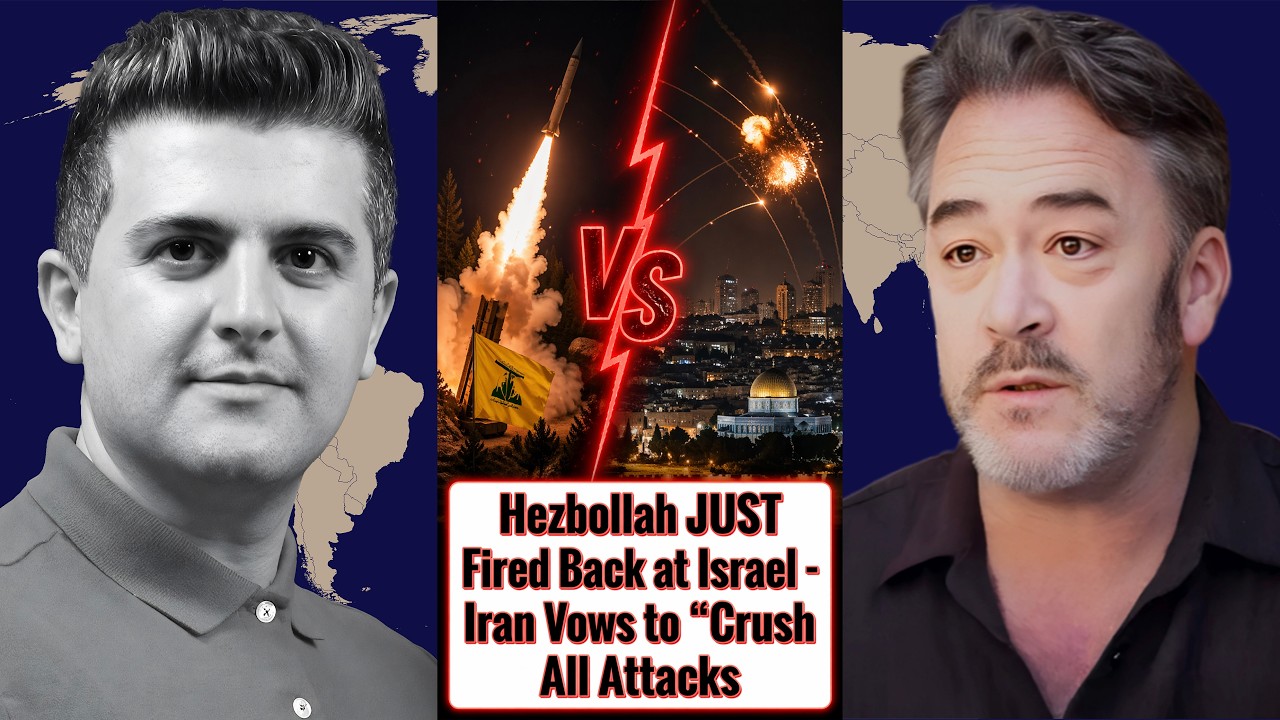
Patrick Henningsen: Hezbollah JUST Fired Back at Israel - Iran Vows to “Crush” All Attacks
"Patrick Henningsen argues that the US and Israel initiated an illegal war against Iran, driven by Trump's incompetence and Israeli influence, leading to an inevitable escalation with severe global economic repercussions."
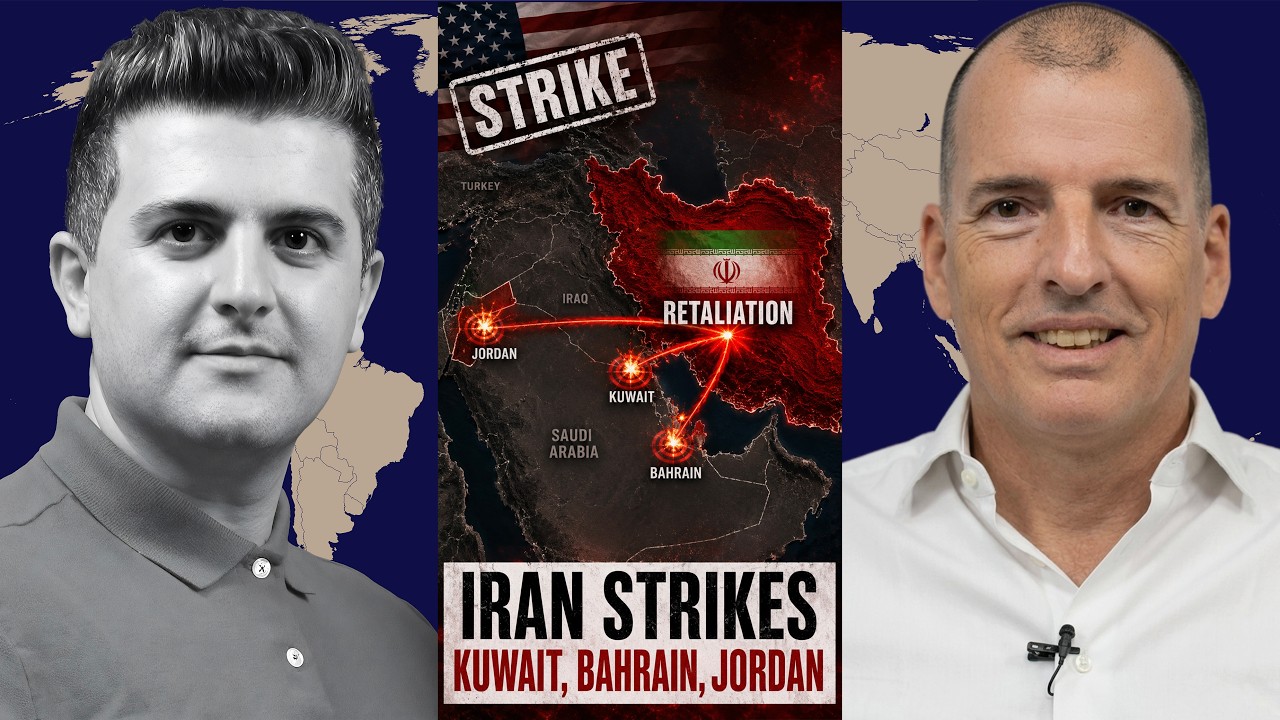
Alex Krainer: US STRIKES Iran – Iran RETALIATES Against Kuwait, Bahrain & Jordan!
"Amidst escalating US-Iran conflict and Iranian retaliation against regional US allies, this episode argues that US foreign policy is deeply controlled by an 'Anglo-Zionist conspiracy' led by the Rothschild banking dynasty, prioritizing Israeli interests over American ones."
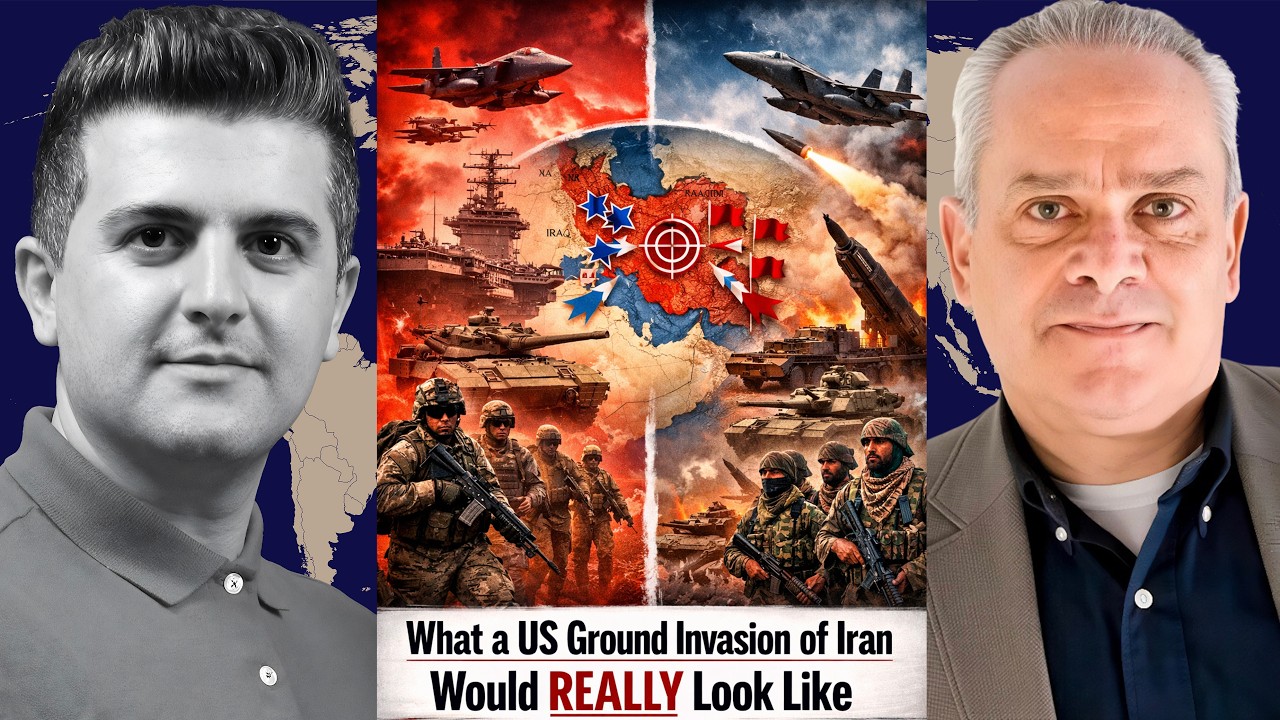
Col. Jacques Baud: What a US Ground Invasion of Iran Would REALLY Look Like
"Colonel Jacques Baud dissects the strategic futility of a US ground invasion of Iran, arguing that current troop levels are insufficient and such an action would backfire, exposing US allies and potentially leading to Iran's nuclearization."
BREAKING: Israel BOMBS Major Iran Gas Site; Top Mullah ELIMINATED; Iran Vows VENGEACE | TBN Israel
"Israel and the United States have escalated their 'Roaring Lion War' against Iran, striking its largest gas facilities, eliminating key intelligence and military figures, and disrupting missile production, while Iran threatens a broader energy war in the Gulf."