
Trump FURIOUS After Republicans Say MAGA IS DYING
YouTube · NL1adojgZos
Quick Read
Summary
Takeaways
- ❖Trump's claims of 'great progress' in Iran negotiations are contradicted by threats of war crimes and lack of external confirmation, serving as a short-term market calming tactic.
- ❖The ongoing Iran conflict is projected to cause a multi-year global economic crisis, affecting not just oil but also critical commodities like helium and fertilizer, with experts calling current market optimism 'irrational'.
- ❖Republicans are considering cutting Medicare, Medicaid, and Obamacare to fund the Iran war and ICE, a move expected to be highly unpopular in an election year.
- ❖The DHS remains shut down due to infighting between House and Senate Republicans, exacerbated by Congress taking a two-week recess.
- ❖Younger MAGA supporters and prominent conservatives are expressing disillusionment with Trump's war policies, highlighting a generational divide within the movement.
- ❖Trump's personal focus on building a massive, aesthetically questionable 'ballroom' near the White House is criticized as a vanity project amidst national crises.
- ❖Iowa Senate candidate Josh Turk emphasizes his working-class background and experience as a disabled Paralympian, advocating for economic populism and addressing issues like rising cancer rates and farm foreclosures in Iowa.
Insights
1Trump's Contradictory Iran Strategy
President Trump is simultaneously claiming 'great progress' in direct negotiations with Iran while threatening to commit war crimes by destroying the country's electricity and water access. This contradictory rhetoric is interpreted as a tactic to calm markets and increase leverage for potential escalation, rather than a genuine diplomatic effort.
Trump's statements on Air Force One (), host analysis of signaling to markets and increasing leverage (, ).
2Impending Global Economic Disaster from Iran War
Experts widely believe the world is underestimating the severity of the economic fallout from the Iran conflict. Beyond oil shocks, critical commodities like helium (essential for semiconductors and MRIs), fertilizer ingredients, and liquid natural gas are severely impacted, with recovery expected to take years, not months. This 'irrational optimism' in markets is compared to the public's initial underestimation of COVID-19's impact.
Bloomberg report on experts' consensus (), European Central Bank President Christine Lagard's interview (), S&P energy adviser's 'irrational optimism' quote (), detailed impact on helium, fertilizer, LNG, and aluminum ().
3Republican Plan to Fund War with Healthcare Cuts
House Republicans are reportedly considering a budget bill to fund the Iran war and ICE by cutting Medicare, Medicaid, and Obamacare. This strategy is seen as politically disastrous, opening the GOP to election-year attacks for cutting essential healthcare to pay for an unpopular war.
Axios headline 'GOP weighs healthcare cuts to pay for Iran war' (), host discussion of the political unpopularity and difficulty of passing such a bill ().
4Dissent and Disillusionment within the MAGA Movement
Prominent MAGA figures like Ann Coulter and Marjorie Taylor Green, along with younger CPAC attendees, are openly criticizing Trump's war in Iran. This indicates a growing generational and ideological rift within the conservative base, with younger supporters being less interventionist and more willing to challenge party lines, contrasting with older, more traditional Fox News viewers.
Ann Coulter and Marjorie Taylor Green Twitter exchange (), CPAC attendee interviews expressing disillusionment (), Politico analysis of age-based differences in war support ().
5The DHS Shutdown and Congressional Recess
The Department of Homeland Security remains shut down for nearly 50 days due to infighting between House and Senate Republicans, despite the Senate unanimously passing a bipartisan funding bill. House Republicans rejected this deal and then left for a two-week recess, drawing criticism for prioritizing political maneuvering over government function.
DHS shutdown duration (), Senate's unanimous bill (), House rejection and recess (), Trump's executive order for TSA workers (), Robert Garcia's comments on recess ().
6Trump's White House Ballroom Vanity Project
Amidst global conflicts and domestic crises, Trump is prioritizing the construction of a massive, 'drone-proof' ballroom near the White House. The project is criticized for its scale (three times the size of the White House residence), questionable design, and perceived vandalism of the historic area, symbolizing the administration's misplaced priorities and ego-driven decisions.
Trump's presentation of ballroom plans on Air Force One (), New York Times piece 'Trump's ballroom design has barely been scrutinized' (), host critique of its size and aesthetics ().
7Iowa Senate Candidate Josh Turk's Platform
Josh Turk, a Democratic Iowa Senate candidate, highlights his background as a Paralympian with a disability linked to Agent Orange exposure, emphasizing the generational costs of war. He advocates for economic populism, addressing issues like farm foreclosures, declining economic growth, and rising cancer rates in Iowa, which he attributes to lack of regulation and corporate influence.
Turk's personal story of spina bifida and Agent Orange (), his views on unnecessary conflicts and Iowa's economic struggles (), discussion of farm crisis and fertilizer issues (), Iowa's growing cancer rate and Roundup ties ().
Key Concepts
Short-Term Rational Actor
Trump is characterized as an actor who prioritizes immediate political and market reactions, discounting long-term costs like loss of credibility. His actions, such as simultaneously claiming negotiation progress and threatening war crimes, are explained as attempts to manage market volatility and increase leverage in the short term, even if it means being perceived as a liar later.
Strategic Ambiguity
Trump's approach to foreign policy is described as relying on strategic ambiguity, where unclear intentions are meant to create leverage. However, the hosts argue that this eventually fails when concrete demands and a clear endgame are not presented, leading to prolonged conflict and a lack of resolution.
Lagging Indicator (Polls)
Polls are identified as lagging indicators, reflecting public opinion from weeks prior rather than real-time sentiment. This model explains why shifts in public opinion, especially among specific demographics like younger voters, might not immediately appear in overall approval ratings but signal future trends.
Lessons
- Recognize that official statements from political leaders, especially during conflicts, may serve short-term political or market manipulation goals rather than reflect actual diplomatic progress.
- Pay attention to expert warnings about long-term economic impacts, as market optimism can be 'irrational' and fail to account for the full scope of global supply chain disruptions.
- Engage with local and state politics, as demonstrated by Josh Turk's campaign, to address specific community issues like healthcare access, environmental quality, and economic decline, which can often be overlooked in national narratives.
Quotes
"We are now entering the second month of Donald Trump's brief excursion in Iran. 50,000 Americans are now deployed in the Middle East. More than 8,700 people have died. Tens of thousands are wounded. Millions have been displaced. Iran still controls the straight of Hormuz which has led to the worst oil shock in history and a global economic crisis that's getting worse by the day."
"I did something today. I uh we just got these in from the architects. A lot of people are talking about how beautiful the ball for. Here's another view. This is coming from right opposite the Treasury building. Beautiful capital, beautiful building. One of the I think it'll be the finest ballroom of its kind anywhere in the world."
"We are facing a real uh shock that is probably beyond what we can imagine at the moment. Do you think there is just a sort of blind optimism that somehow this is going to be over and the world will go back to normal? Well, maybe they are overly optimistic and determined to stay optimistic. Too much has already been damaged and there is no way that it can be restored in a matter of months. Most people are actually talking about years."
"Fox News is now the fake news brainwashing boomers to support what we voted against."
"It's gross. It's not the first time he's done it either. I mean, unfortunately, I've dealt with bullies my whole life, and we've got a bully in the Oval Office, and I think my message would be to any disabled person out there, any disabled kids, is don't let what anyone says to you, including the president of the United States, prevent you from living your best life or being able to live your dream."
Q&A
Recent Questions
Related Episodes

Iran Update: Israel’s Newest Bombing Campaign, the Oncoming War With China and How to Avoid It
"Colonel Wilerson reveals how the US and Israel are actively bombing China's strategic infrastructure in Iran, escalating a covert economic war that Beijing intends to win without direct military conflict by dismantling the dollar's global dominance."
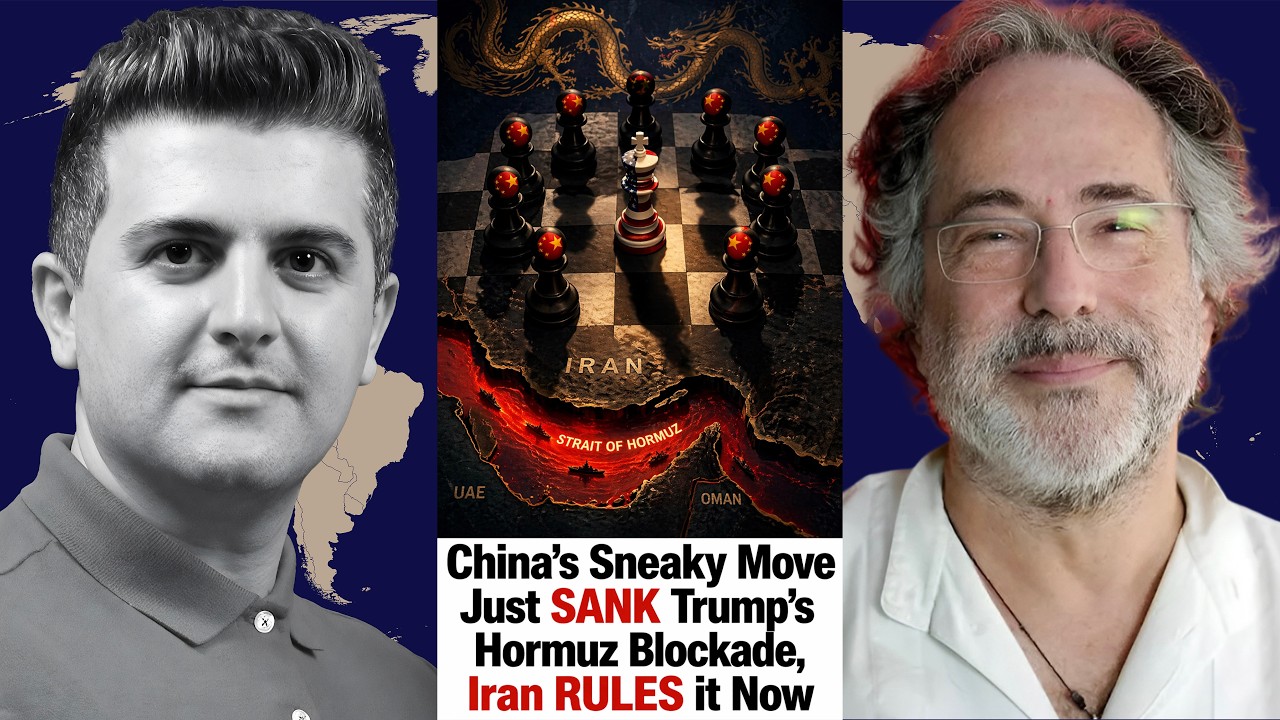
Pepe Escobar: “Total Failure”: Trump’s Blockade Just Backfired Disastrously
"Pepe Escobar argues that the US blockade against Iran, spearheaded by Donald Trump, has utterly failed and backfired, accelerating global economic chaos and challenging US geopolitical dominance."

Bibi DEMANDS Ground Troops As Marines Rushed to Iran
"Benjamin Netanyahu is pushing for US ground troops in Iran, framing air strikes as insufficient, while the US rushes Marines to the region and struggles to secure the Strait of Hormuz against surprisingly capable Iranian defenses."

Mohammad Marandi & Larry C. Johnson: U.S. & Iran on the Brink as Critical Negotiations Unfold LIVE
"Two geopolitical analysts argue that the US and Israel are on the brink of a catastrophic war with Iran, driven by irrationality and miscalculation, which would lead to global economic collapse and US instability."