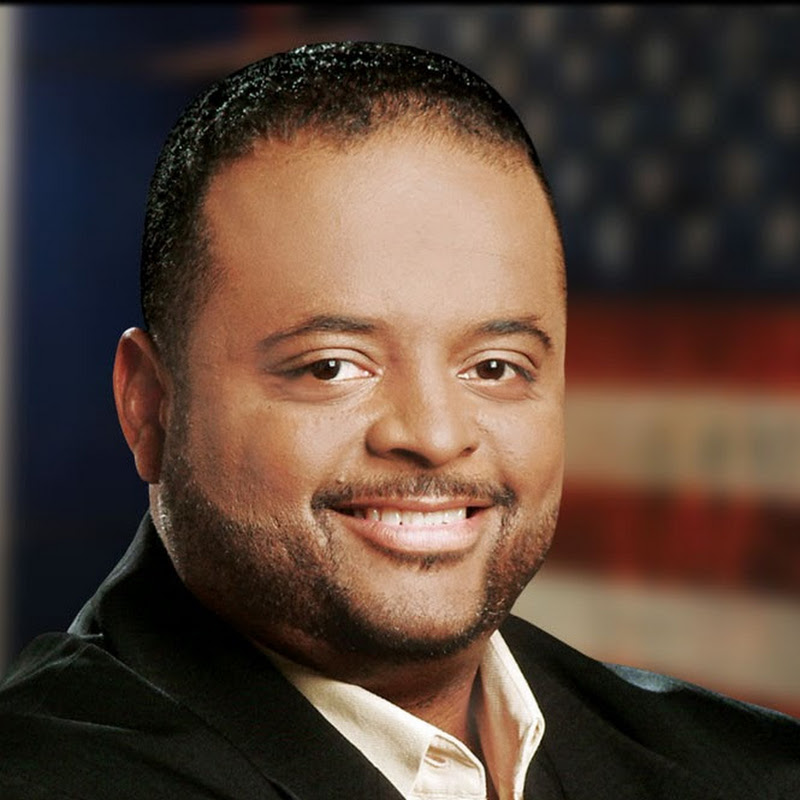
Celebrating the Life and Legacy of Rev. Jesse Jackson Sr.
YouTube · Np-hf4J1mdI
Quick Read
Summary
Takeaways
- ❖Reverend Jesse Jackson Sr. passed away on February 17, 2026, at the age of 84, leaving a profound legacy.
- ❖His 1984 and 1988 presidential campaigns were pivotal in reforming the Democratic Party's delegate rules, making it more inclusive.
- ❖Jackson's economic initiatives, like Operation Breadbasket, successfully pressured corporations into diversifying hiring, contracting, and investing in Black banks.
- ❖He was a global figure, undertaking diplomatic missions to rescue hostages and advocate for human rights in various countries.
- ❖Jackson was renowned for his ability to connect with people from all walks of life, from public housing residents to world leaders, embodying the 'I Am Somebody' mantra.
- ❖He was a brilliant political tactician and policy advocate, often decades ahead of his time on issues like environmental justice and universal healthcare.
- ❖The importance of voting and funding Black-led movements is highlighted as crucial to continuing his legacy, contrasting with the current reliance on corporate and foundational funding that can stifle independent advocacy.
- ❖Jackson consistently championed women's rights and placed women in positions of power within his organizations, a progressive stance for his era.
Insights
1Transformative Impact on Democratic Party Structure
Reverend Jackson's 1984 and 1988 presidential campaigns were instrumental in changing the Democratic Party's internal rules, shifting from winner-take-all primaries to proportional representation and altering the role of superdelegates. This reform created a more inclusive pathway for minority candidates, directly impacting future elections, including Barack Obama's 2008 victory.
Congresswoman Maxine Waters notes Jackson finished third in 1984 with 18% of primary votes and won nearly 7 million votes in 11 contests in 1988, sweeping Southern states (, , ). Michael Brown details how Jackson's efforts, alongside his father Ron Brown and Dr. Ron Walters, changed rules regarding superdelegates and proportional representation, which were critical for Obama's nomination (, , ).
2Pioneering Economic Justice and Corporate Accountability
Jackson extended the civil rights movement into the economic sphere through Operation Breadbasket and the Rainbow Push Coalition. He used consumer power and shareholder activism to compel major corporations (e.g., Texaco, Silicon Valley tech giants like Facebook, Apple, Microsoft) to diversify their boards, hiring practices, and invest in Black-owned businesses and banks. This created a Black middle and upper class.
Congresswoman Waters mentions Jackson's work with big businesses 'long before diversity, equity, and inclusion' to force contracts and hiring (). Jackson himself describes buying stock in 25 companies to gain access to shareholder meetings and pressure for Black board members, citing Ken Chenault on Facebook's board and John Thompson as Microsoft's chairman (, ). Randy Bryant highlights Jackson's challenge to Silicon Valley on EEO1 reports and non-STEM jobs ().
3Unparalleled International Diplomacy and Hostage Rescue
Beyond national politics, Jackson engaged in high-stakes international diplomacy, often without official government sanction, to secure the release of American hostages and advocate for human rights. His ability to navigate complex geopolitical landscapes and connect with diverse world leaders demonstrated a unique global influence.
Congresswoman Waters recalls Jackson going to Syria in 1985 to rescue Lieutenant Goodman (, ) and bringing back people from Cuba (). Michael Neighbors lists Jackson's negotiations with Hezbollah for TWA hijacking hostages and Serbians for American service members (). Cliff Albright notes seeing Jackson rescue hostages on the world stage as a defining moment ().
4The Power of Grassroots Mobilization and Voter Registration
Jackson's campaigns were built on a robust grassroots strategy, directly registering millions of new voters, particularly in underserved communities. He viewed the vote as a 'currency' that translated into political power and influence, demonstrating how organized electoral participation could force political parties and corporations to address Black interests.
Robert Patillo explains Jackson 'essentially created the modern get out the vote methodology' by registering voters in churches and community centers, bringing 'two million of his own voters' to the DNC (, ). Barbara Arwine states that Jackson was deeply hurt by unregistered or non-voting Black citizens, seeing it as a 'sin' ().
5Mentorship and Development of Black Leadership
Jackson actively mentored and empowered a generation of Black leaders, including politicians, activists, and journalists. Many individuals who later achieved prominence in various fields credit his campaigns and organizations for providing them with invaluable experience, strategy, and a platform for leadership.
Congresswoman Waters states she learned 'a lot about strategy' and was 'inspired, motivated, and taught' by Jackson during her six weeks on the road with him in 1984, using his strategies in her own campaigns (). Julianne Malveaux mentions how Jackson would bump others off programs to give children opportunities to speak (). Melanie Campbell notes many elected officials came through Jackson's campaigns ().
Bottom Line
The Democratic Party's creation of the Democratic Leadership Council (DLC) in the mid-1980s was a direct, fearful response by white Democratic forces to Reverend Jackson's rising influence and populist agenda, aiming to prevent the party from being 'captured' by Black, poor white, and migrant worker interests.
This historical reaction reveals a deep-seated resistance within established political structures to truly inclusive, progressive movements, even at the cost of internal party division and electoral losses. It highlights how powerful interests will actively work to dilute movements that challenge their control.
Contemporary progressive movements must recognize and counter similar 'dilution' tactics, understanding that establishment resistance is a predictable response to genuine power shifts. Building independent funding and media infrastructure, as Jackson advocated, is crucial to maintaining autonomy.
Reverend Jackson's unique ability to operate independently of traditional funding sources (like large corporate or foundational grants) allowed him unparalleled freedom to 'speak truth to power' and challenge corporate and political elites without fear of financial reprisal.
Today's Black-led non-profits and media often find themselves 'silenced' or constrained by the agendas of their funders, limiting their ability to advocate boldly. This creates a vacuum for truly independent voices and actions.
There is a critical need and opportunity to cultivate grassroots funding models and direct community investment in Black-owned media and advocacy organizations. This would empower them to pursue radical agendas and hold power accountable without external influence, mirroring Jackson's operational freedom.
Jackson's consistent focus on poverty and multi-racial 'rainbow coalitions' to address economic inequality stands in stark contrast to the current political discourse, where both major parties largely avoid direct discussions of poverty.
The neglect of poverty as a central political issue leaves a significant segment of the population unrepresented and perpetuates systemic economic disparities. It also misses opportunities for broad-based coalition building.
Re-centering poverty as a core issue and actively building multi-racial coalitions around economic justice could unlock new political power and policy solutions. This requires leaders willing to challenge the prevailing political narratives and unite diverse groups around shared economic struggles, as Jackson did with farmers and coal miners.
Opportunities
Grassroots Funding Platform for Black Advocacy
Develop a digital platform specifically for Black communities to collectively fund civil rights organizations, Black-owned media, and advocacy groups through small, recurring donations. This would reduce reliance on corporate or foundational grants, ensuring financial independence and freedom to pursue bold agendas.
DEI Accountability & Consulting Firm
Establish a firm that specializes in auditing corporate diversity, equity, and inclusion (DEI) metrics, going beyond surface-level reporting to analyze hiring, promotion, compensation, and investment in minority-owned businesses. The firm would use shareholder activism tactics (buying small stakes) to gain access and pressure for change, similar to Jackson's approach with Silicon Valley.
Black Political & Economic Strategy Think Tank
Create a think tank dedicated to developing and disseminating comprehensive political and economic strategies for Black empowerment, drawing lessons from Jesse Jackson's 'Ballot, Book, and Buck' model. This would include research on voter mobilization, economic withdrawal tactics, and policy advocacy for Black institutions.
Key Concepts
Ballot, Book, and Buck
This model, taught to Jackson by his grandfather, emphasizes the interconnected power of political participation (ballot), education (book), and economic leverage (buck) as essential tools for Black empowerment and social change. Jackson applied this by mobilizing voters, advocating for educational opportunities, and using boycotts and corporate pressure to secure economic gains.
Keep Hope Alive / I Am Somebody
More than slogans, these phrases represent a philosophy of unwavering self-worth, resilience, and collective aspiration. Jackson used them to instill dignity and motivation in marginalized communities, encouraging them to believe in their potential and persist in the struggle for justice despite adversity. They served as rallying cries for political and economic action.
Economic Withdrawal / Redistribution of Pain
Building on Dr. Martin Luther King Jr.'s strategy, Jackson championed economic boycotts and targeted corporate pressure. The 'redistribution of pain' meant shifting the economic burden from the oppressed (e.g., sanitation workers) to corporations and power structures that perpetuated inequality, forcing them to address discriminatory practices through financial impact.
Lessons
- Actively register and mobilize voters, recognizing the ballot as a crucial currency for political and economic power, and hold elected officials accountable for addressing Black community needs.
- Consciously support and invest in Black-owned businesses, Black banks, and Black-owned media to build independent economic infrastructure and ensure that freedom fighters have the resources to operate without external constraints.
- Challenge corporations and institutions on their diversity, equity, and inclusion (DEI) practices, demanding transparency in hiring, promotion, and investment, and using collective power (e.g., consumer boycotts, shareholder activism) to drive change.
The Jesse Jackson Playbook for Systemic Change
**Mobilize the Base:** Relentlessly register voters and engage communities at the grassroots level, transforming electoral participation into a powerful 'currency' for political leverage.
**Apply Economic Pressure:** Utilize consumer boycotts, targeted corporate campaigns, and shareholder activism to compel businesses to adopt equitable hiring, contracting, and investment practices that benefit Black communities.
**Build Coalitions Across Divides:** Forge 'Rainbow Coalitions' that unite diverse groups (Black, white, Latino, Asian, poor, labor, etc.) around shared economic and social justice issues to amplify collective power.
**Engage in Bold Diplomacy:** Operate on national and international stages to advocate for human rights, negotiate on behalf of the marginalized, and challenge global injustices, even without official government backing.
**Invest in Black Institutions & Leadership:** Support Black-owned businesses, banks, media, and educational institutions, and actively mentor new generations of Black leaders to ensure the continuity and independence of the movement.
Notable Moments
Jesse Jackson's unexpected recovery in November 2025.
Despite doctors stating his organs were shutting down due to Parkinson's, Jackson rallied, demonstrating his indomitable spirit and continued focus on activism, even from a hospital bed, where he was planning meetings and discussing elections.
Jackson's 1988 DNC speech, particularly the 'I have a story' closing.
This powerful and deeply personal segment, where Jackson shared his humble beginnings, resonated profoundly with millions, crystallizing the Black experience of overcoming adversity and inspiring hope. It is considered one of the greatest political speeches in American history.
Jackson's intervention in the 2021 Howard University student takeover.
Despite his declining health, Jackson personally entered the occupied student center to sit with students and then negotiated with the administration, demonstrating his lifelong commitment to youth activism and his willingness to put his physical safety at risk for justice.
Jackson's unannounced appearances at major events (e.g., Super Bowl, boxing matches).
These instances highlight his audacious self-belief and the universal respect he commanded, allowing him access to spaces without formal credentials. It symbolized his 'I am somebody' philosophy and his ability to transcend traditional barriers.
Quotes
"You don't drown because the water is deep. You drown because you stop kicking."
"We didn't know how good baseball could be until we let everybody play. We don't know how good America can be until we get everybody a seat at the table."
"If you spend more than you have and vote less than you have, that's the formula for suicide. You must spend less than you make and vote all you can."
"America will get better and better. Keep hope alive. Keep hope alive. Keep hope alive."
"I was born in the slum, but the slum was not born in me. And it wasn't born in you, and you can make it."
"The only justification we have for looking down on someone is that we're going to stop and pick them up."
"We wish to please our own cause, for too long others have spoken for us."
Q&A
Recent Questions
Related Episodes
Moral Monday at BLM Plaza. Cleo Fields Sounds Alarm on Louisiana & Gary Chambers Pushes Turnout
"Activists and faith leaders gathered at Moral Monday to denounce 'policy violence' in various forms, from war and budget cuts to voter suppression and healthcare denial, urging sustained mobilization against a 'hijacked' democracy."

George Floyd 6 Years Later. Redistricting War in The South. Talarico Senate Campaign
"This episode exposes the ongoing legislative battles and strategic resistance against efforts to diminish Black political power, from federal policing reform to state-level gerrymandering and calls for economic boycotts by Black athletes."

All Roads Lead To the South: Nat’l Day Of Action For Voting Rights | Mass Rally | Montgomery, AL
"A mass rally in Montgomery, Alabama, ignites 'Freedom Summer 2026' to combat the Supreme Court's decimation of Black political power and demand unprecedented voter mobilization across the South."

Woman arrested for death of 2 Black girls. Explosives thrown at Mamdani. Growin' Good In The Hood.
"This episode unpacks critical news affecting the Black community, from a mother's arrest in a tragic child death and threats against a NYC mayor to the enduring legacy of Jesse Jackson Sr. and innovative community-led initiatives in food security and entrepreneurship."