
Global Economy STRANGLED By Strait Of Hormuz! LEAK: U.S. Responsible For Girls’ School Strike
YouTube · Nv1w9pVJoY4
Quick Read
Summary
Takeaways
- ❖The US-Israel conflict with Iran is a 'war of choice' with no clear benefit to American national security.
- ❖Israel's objective is regime change in Iran, or to destabilize it, differing from stated US goals.
- ❖The Strait of Hormuz closure by Iran is causing rising gas prices and threatens a global fertilizer and food shortage.
- ❖US military capabilities are insufficient to compel Iran's compliance without a costly ground invasion, which is domestically unpopular.
- ❖An ongoing US military investigation confirms a Tomahawk missile strike on an Iranian elementary school, likely due to outdated intelligence.
- ❖US leadership, particularly President Trump, is criticized for refusing to take accountability for the school strike and for inconsistent messaging.
- ❖Israel is implementing significant media censorship regarding the war's impact on its territory, contrasting with public posts on 'Hebrew Twitter'.
- ❖Conservative media figures like Sean Hannity are accused of propagating misleading narratives about Iran's nuclear ambitions and negotiation willingness.
- ❖Iran views the war as an 'existential fight' and is unwilling to accept a ceasefire, having been 'sucker punched' by US negotiation tactics twice.
Insights
1US-Israeli Objectives Diverge in Iran Conflict
The White House's stated objective in Iran is to weaken military capability, while Israel's goal is regime change or destabilization. This divergence creates a problem for the US, as Israel's insistence on continuing the conflict keeps the US engaged in a war that does not align with its core interests.
Wall Street Journal reporting titled 'Trump says the Iran war is nearly won, but Israel has other ideas.' () Host Anna Casparian states, 'Israel is purportedly an ally of the United States, but has only gotten us into endless wars, endless trouble.' ()
2Economic Fallout from Strait of Hormuz Closure
Iran's actions in the Strait of Hormuz, including striking oil tankers, have effectively shut down the crucial waterway for shipping. This has led to an average increase of 56 cents per gallon of gas in the US and poses a significant threat to the global food supply due to disrupted fertilizer exports from the Gulf region.
Gas prices rose 56 cents per gallon since the war began (). Five primary fertilizer exporters (Iran, Saudi Arabia, Qatar, UAE, Bahrain) rely on the Strait, collectively supplying over one-third of global urea trade and nearly one-fourth of ammonia. ()
3US Military Limitations Against Iran
Despite claims of overwhelming military power, the US lacks the ground forces necessary to compel compliance from Iran, a country four times larger than Iraq with 90 million people and challenging terrain. Air and missile strikes alone are deemed inconsequential for achieving regime change, leaving the US in a strategic trap.
Colonel Daniel Davis states, 'We don't have the military power to compel compliance from Iran, country four times bigger than Iraq that's got 90 million people... You can't bring them to heal without a ground component.' () He also notes the US has depleted interceptor missiles due to foreign entanglements. ()
4US Responsible for Iranian School Strike
An ongoing US military investigation has found the United States responsible for a Tomahawk missile strike against an Iranian elementary school, killing 168 children and 14 teachers. The strike was likely due to outdated intelligence, as the school was on a block previously part of an IRGC Navy base, but had been separate since at least 2016.
Host Anna Casparian reports on the military investigation's findings (). The target coordinates were created using outdated data from the Defense Intelligence Agency, and the school building was no longer part of the base as early as 2016. ()
5Israel's Media Censorship Amidst Conflict
Israel has implemented a media blackout, banning live broadcasts of its skyline during alarms and requiring US media approval for reporting. This censorship aims to control the narrative and conceal the extent of damage and casualties from Iranian and Hezbollah attacks, contradicting claims of a free and open democratic society.
The Israeli army banned live broadcasts of the Israeli skyline when alarms sounded (). An investigation by 972 magazine found Israel banned 1,635 articles and redacted 6,265 in 2024. ()
Bottom Line
Iran's strategy in the conflict is not to defeat the US militarily, but to survive and remain viable politically and militarily, imposing costs until the US withdraws.
This 'survival' strategy makes traditional military objectives of 'conquest' or 'unconditional surrender' unattainable for the US, leading to a prolonged, costly, and unwinnable conflict.
Understanding this asymmetrical objective could inform a more realistic US foreign policy that prioritizes de-escalation and diplomatic solutions over military coercion, potentially saving lives and resources.
The US decision to attack Iran was influenced by non-military advisors like Jared Kushner and Steve Whit, rather than experienced military or intelligence officials.
This indicates a severe breakdown in the decision-making process for war, prioritizing political or personal influence over expert strategic assessment, leading to ill-conceived military actions.
Advocacy for stricter protocols requiring consultation with military and intelligence experts for war decisions could prevent future costly and strategically unsound conflicts.
The US's use of outdated data and potentially AI models for targeting in the Iranian school strike highlights a dangerous over-reliance on technology without sufficient human oversight or verification.
This practice risks perpetuating 'devastating mistakes' and war crimes, eroding international trust and fueling anti-American sentiment, while undermining the credibility of US military operations.
Push for rigorous human-in-the-loop verification processes for all targeting decisions, especially when using AI or historical data, and demand transparency and accountability for civilian casualties.
Lessons
- Critically evaluate official government and mainstream media narratives regarding foreign conflicts, especially those involving US allies, and seek out diverse sources of information.
- Understand the potential for economic impacts, such as inflation and supply chain disruptions, to directly affect daily life as a consequence of geopolitical conflicts.
- Advocate for greater accountability from political leaders and military command for civilian casualties and strategic missteps in foreign policy decisions.
- Support political candidates who prioritize diplomatic solutions and non-interventionist foreign policies, and who commit to transparency regarding military actions and alliances.
- Recognize the influence of foreign lobbies on US policy and demand that elected officials prioritize American national interests over those of other nations.
Notable Moments
Retired Colonel Daniel Davis was sabotaged from a DNI position under Tulsi Gabbard by Senator Ted Cruz for not being 'sufficiently pro-Israeli enough'.
This reveals the alleged outsized influence of pro-Israel lobbying in US government appointments, potentially sidelining experienced military analysts who offer critical perspectives on foreign policy.
President Trump made war and peace decisions based on advice from his son-in-law (Jared Kushner) and a real estate guy (Steve Whit) instead of military and intelligence chiefs.
This highlights a critical failure in strategic decision-making at the highest level, prioritizing unqualified advisors over expert military and intelligence counsel, leading to potentially disastrous outcomes.
Energy Secretary Chris Wright falsely claimed the US Navy successfully escorted an oil tanker through the Strait of Hormuz, a post he later deleted.
This incident exposes a severe lack of transparency and credibility within the Trump administration regarding military operations and their economic impacts, further eroding public trust.
Host Anna Casparian was fired from a publication for her stance on Israel, despite her reporting being domestic and unrelated to foreign policy.
This personal anecdote underscores the professional risks and censorship faced by journalists who express critical views on Israel, even outside of direct foreign policy reporting, highlighting the pervasive nature of this influence.
Quotes
"Israel is purportedly an ally of the United States, but has only gotten us into endless wars, endless trouble. So, we should focus on what's good for America."
"He personally sabotaged me and got me out of there because I was not sufficiently pro-Israeli enough. Not that they wanted somebody who had good foreign policy chops, not somebody who had combat experience, who definitely definitely was a an America first person. I was not sufficiently pro-Israel."
"You're making a war and peace decision based on a real estate guy and your son-in-law and not say the chairman of the joint chiefs of staff, not the central sitcom commander, not not your CIA director, not not Tulsi Gabbard. I mean, those are the people that you should be talking to."
"This is 100%. You see, you don't want to talk about the Israelis, but we have to. They're the only ones that benefit from this. And even them, it's more Benjamin Netanyahu than it is Israel."
"War is a tool of diplomacy, and we use diplomacy as a tool of war."
"It was terrible. We made a mistake. Other countries do that sort of thing intentionally like Russia. We would never do that intentionally... I'm sorry. I'm just so sorry it happened. It was a mistake."
Q&A
Recent Questions
Related Episodes

Bibi DEMANDS Ground Troops As Marines Rushed to Iran
"Benjamin Netanyahu is pushing for US ground troops in Iran, framing air strikes as insufficient, while the US rushes Marines to the region and struggles to secure the Strait of Hormuz against surprisingly capable Iranian defenses."

Patrick Henningsen: Hezbollah JUST Fired Back at Israel - Iran Vows to “Crush” All Attacks
"Patrick Henningsen argues that the US and Israel initiated an illegal war against Iran, driven by Trump's incompetence and Israeli influence, leading to an inevitable escalation with severe global economic repercussions."
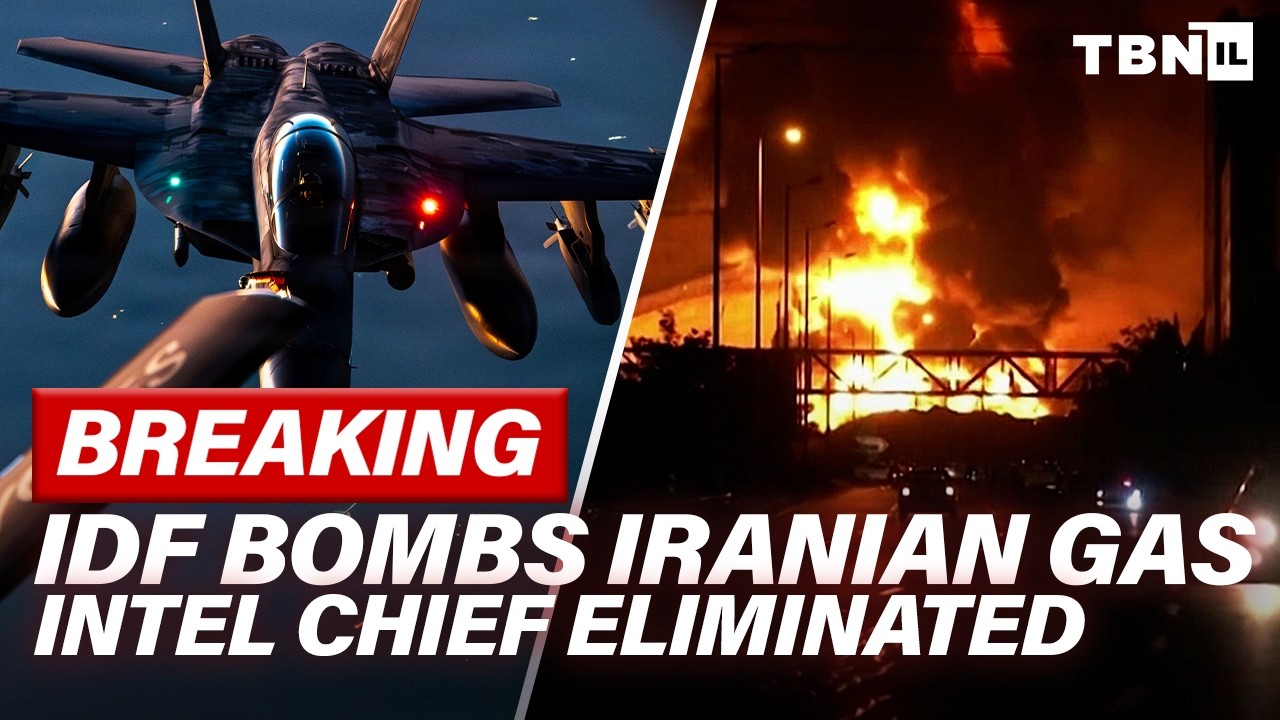
BREAKING: Israel BOMBS Major Iran Gas Site; Top Mullah ELIMINATED; Iran Vows VENGEACE | TBN Israel
"Israel and the United States have escalated their 'Roaring Lion War' against Iran, striking its largest gas facilities, eliminating key intelligence and military figures, and disrupting missile production, while Iran threatens a broader energy war in the Gulf."
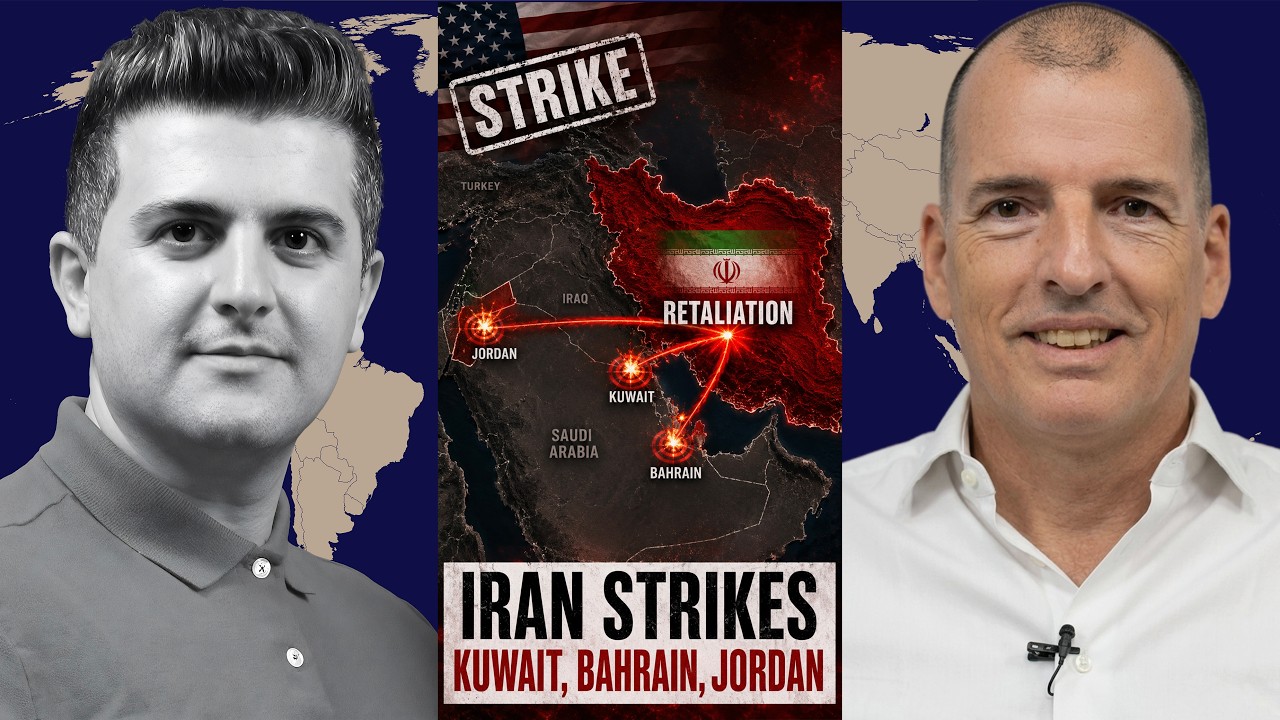
Alex Krainer: US STRIKES Iran – Iran RETALIATES Against Kuwait, Bahrain & Jordan!
"Amidst escalating US-Iran conflict and Iranian retaliation against regional US allies, this episode argues that US foreign policy is deeply controlled by an 'Anglo-Zionist conspiracy' led by the Rothschild banking dynasty, prioritizing Israeli interests over American ones."