
Mohammad Marandi: Iran Chooses New Supreme Leader — The War of Attrition Begins
YouTube · NyT2I4QqFOE
Quick Read
Summary
Takeaways
- ❖Iran's new Supreme Leader is a religious scholar with extensive policy experience, expected to maintain current national security policies.
- ❖The US and its allies are accused of 'barbaric and genocidal' attacks on Iranian civilian infrastructure, including hospitals and schools.
- ❖Millions of Iranians are demonstrating 'extraordinary steadfastness,' defying airstrikes to support their leadership and reject humiliation.
- ❖Iran has shut down the Strait of Hormuz and is actively striking targets in the Persian Gulf and occupied Palestine.
- ❖Iran's non-negotiable terms for ending the war include permanent security guarantees, removal of US regional military bases, and accountability for complicit Arab regimes.
- ❖The conflict is causing significant economic damage to the West, with 20 million barrels of oil missing daily and potential for global economic depression.
- ❖Iran is prepared for a long war, leveraging its 15 neighbors for trade and believing the US cannot sustain the high financial and political costs.
- ❖Regional actors like Iraqi Kurdistan and Azerbaijan are warned against assisting the US/Israel, facing severe repercussions if they do.
Insights
1New Iranian Leader Signals Policy Continuity Amidst Conflict
Iran's newly appointed Supreme Leader is a religious scholar fluent in Arabic and English, with 20 years of teaching experience and a low public profile. He worked extensively in his father's office, gaining deep knowledge of political and military affairs. Professor Marandi states that the new leader's ideas are similar to his father's, indicating a continuity of Iran's assertive foreign and defense policies, particularly in the ongoing conflict.
He is a religious scholar... he's taught high ranking religious students for 20 years... he's fluent in Arabic and in English... he worked in his office for many years... I would assume that we are going to have a continuity. His ideas are similar to his fathers.
2Iranian Public Defiance Amidst 'Genocidal' Bombings
Despite widespread bombings by the US and its allies targeting civilian infrastructure, including highways, schools, hospitals, and even the national radio and television, millions of Iranians are demonstrating 'extraordinary steadfastness.' Professor Marandi recounts witnessing massive rallies in Tehran where people remained defiant, chanting 'far away are we from humiliation,' even as heavy airstrikes occurred nearby. He condemns the intentional targeting of civilian sites as 'barbaric and genocidal' acts aimed at terrorizing the population.
They bombed highways in Thran... they've been bombing schools, they've been bombing hospitals... people every night in the many millions, tens of millions go out on the streets... no one moved. No one. Men, women, children... they all started chanting... 'far away are we from humiliation'.
3Iran's Non-Negotiable Terms for Ending the War and Strait of Hormuz Closure
Iran has definitively shut down the Strait of Hormuz and will not accept a ceasefire. The war must end on Iran's terms, which include ensuring Iran's long-term security, preventing the use of regional countries as military bases against Iran, and demanding that Arab dictatorships in the Persian Gulf either 'go or change completely' and compensate for their complicity. Iran aims for a 'strategic defeat' of the United States and the Israeli regime, fundamentally altering the regional power structure.
They've shut down the Straight of Hormos and they will not allow a drop of oil to leave until the war comes to an end. Not a ceasefire. Iran will not accept a ceasefire... The war must end on terms that are acceptable to Iran... The United States can no longer threaten Iran... The Arab dictatorships... either must go or they must change completely.
4Economic Warfare: Impact on Western Economies and Iran's Resilience
Iran's actions, particularly the closure of the Strait of Hormuz, are causing significant economic damage to the West. Professor Marandi estimates 20 million barrels of oil are missing from the market daily, leading to skyrocketing oil and gas prices. This impacts the US stock exchange, arms industry, and consumer spending. He asserts that the 'collapse of Western economies' is 'in the cards' if escalation continues. Conversely, Iran, with 15 neighbors, is prepared for a long war, capable of importing and exporting necessary supplies, and believes the US cannot sustain the estimated $2-3 billion daily cost of the conflict.
Every day 20 million barrels of oil is is is missing from the market... The arms industry is hurting, the stock exchange will hurt, the consumer... the ultimate hurt will be the the the collapse of Western economies... Iran has 15 neighbors. it it can import and e export what it needs from the north, from the west, and from the east... The US economy is in bad shape... the expenditure is probably at least two or three billion dollars a day.
Notable Moments
Professor Marandi describes witnessing millions of Iranians defying heavy airstrikes in Tehran, chanting 'far away are we from humiliation' (a quote from Imam Hussein) during a rally.
This moment illustrates the profound resilience and ideological conviction of the Iranian populace, directly countering Western narratives of discontent and highlighting the deep-seated cultural and religious motivations driving their steadfastness against perceived aggression.
Marandi details the systematic targeting of civilian infrastructure by US and allied forces, including 77 medical centers, schools, and even the national radio and television, which he labels 'barbaric and genocidal.'
This highlights the extreme nature of the conflict as perceived by Iran, framing the adversary's actions as war crimes and strengthening the resolve for a decisive, non-negotiated end to hostilities. It also serves as a critical point in the Iranian narrative of victimhood and resistance.
Quotes
"How is the United States ever going to defeat such a people? It's not possible."
"Iran will not accept a ceasefire. The war must end on terms that are acceptable to Iran and those terms must be as such that in future the United States can no longer threaten Iran."
"Negotiating with the United States, why should we even talk to them? They're liars. They break their promises. They're deceitful. There's nothing to you cannot negotiate with the Trump regime."
"The empire will fail. And whether people like me survive or not, Iran will remain. The Islamic Republic of Iran will remain and the axis of resistance will remain and the Israeli regime will be a diminished regime and the empire will be a diminished empire. I have no doubt about that."
Q&A
Recent Questions
Related Episodes

BREAKING: Iran Threatens To END Talks; U.S. Vows Retaliation; Hezbollah Collapsing? | TBN Israel
"Iran is leveraging Hezbollah and the Strait of Hormuz to manipulate US negotiations, while Israel asserts its right to dismantle Hezbollah's eroding but still dangerous infrastructure in Lebanon, independent of international talks."
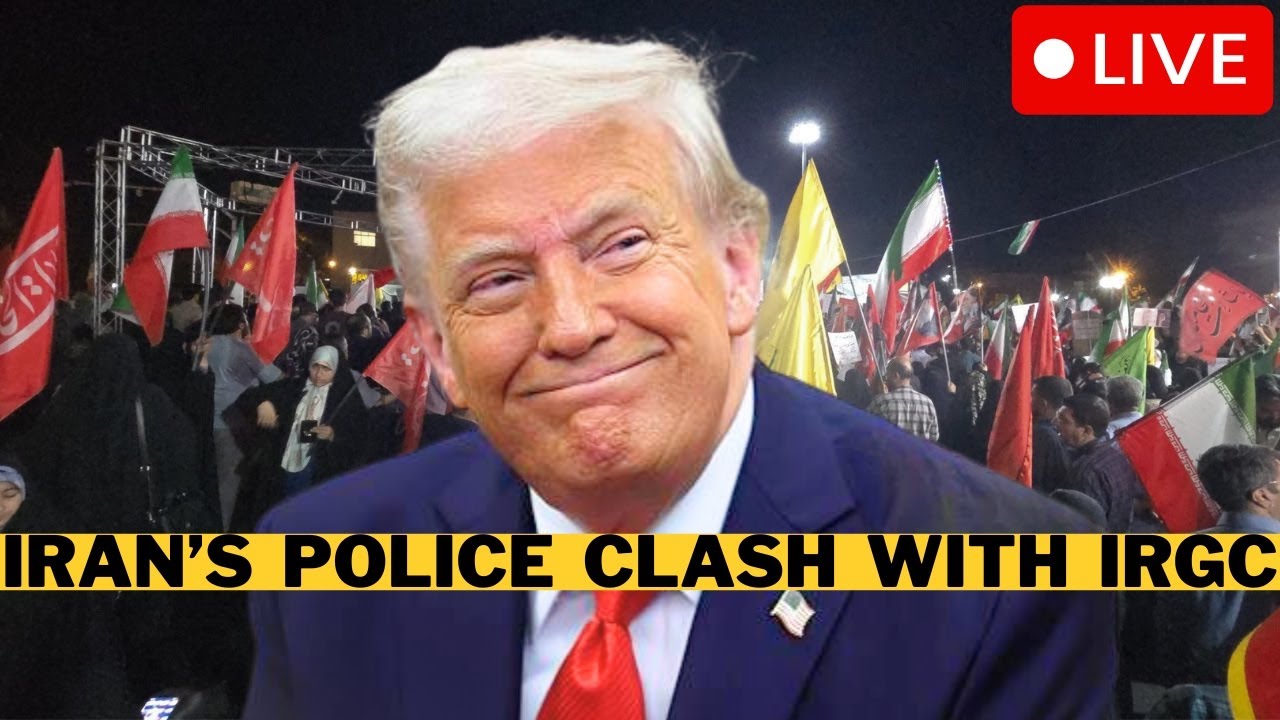
BREAKING: Protests ERUPT In Iran Over IRGC Surrendering To Trump - Infighting Clashes In Tehran
"Iran is experiencing severe internal infighting and protests as hardline IRGC elements clash with government figures over a perceived 'surrender' to the US, while mainstream Western media misrepresents the situation."

Larry Johnson: Iran Missiles Rain Down on Northern Israel – Massive Strikes!
"Geopolitical analyst Larry Johnson details how Israel's recent strike on an 'empty building' in Beirut triggered direct Iranian missile retaliation, escalating regional tensions and jeopardizing a US-Iran peace deal brokered by Pakistan."

Iran Update: Israel’s Newest Bombing Campaign, the Oncoming War With China and How to Avoid It
"Colonel Wilerson reveals how the US and Israel are actively bombing China's strategic infrastructure in Iran, escalating a covert economic war that Beijing intends to win without direct military conflict by dismantling the dollar's global dominance."