Marco Rubio BRILLIANTLY SHUTS DOWN Reporters Asking Silly Questions Over And Over Again!
YouTube · OGfrdIRoxYE
Quick Read
Summary
Takeaways
- ❖Marco Rubio effectively shut down reporters' questions regarding US military operations in Iran, emphasizing clear objectives and operational security.
- ❖The US operation in Iran was justified as a preemptive defensive strike to prevent Iran from developing advanced missile capabilities and to counter an imminent threat from potential Israeli actions.
- ❖The host believes Trump's foreign policy decisions, especially in a non-re-election term, are driven by long-term strategic thinking for US global dominance.
- ❖The host refutes the narrative that US actions in Iran are solely dictated by Israel, highlighting mutual geopolitical interests among the US, Israel, and Arab states.
- ❖The primary objective of the Iran mission is the destruction of their ballistic missile and naval capabilities, with regime change being a desired but secondary outcome.
- ❖Marco Rubio is presented as a strong contender for the 2028 GOP presidential nomination, praised for his political acumen and 'complete package' leadership.
Insights
1Preemptive Action Against Iran's Missile Capabilities
Marco Rubio explained that the US military operation in Iran was a necessary preemptive strike. The objective was to destroy Iran's ballistic missile capabilities and their ability to manufacture them, as well as their naval threat to global shipping. This action was taken to prevent Iran from reaching a 'line of immunity' within a year or year and a half, where their advanced missile and drone arsenal would make intervention impossible, allowing them to hold the world hostage.
Rubio stated, 'This operation needed to happen because Iran in about a year or a year and a half would cross the line of immunity. Meaning they would have so many short-range missiles, so many drones that no one could do anything about it because they could hold the whole world hostage.'
2Trump's Long-Term Foreign Policy Vision
The host argues that Donald Trump's foreign policy, particularly in a second term where he is not seeking re-election, is characterized by long-term strategic thinking aimed at re-establishing US global dominance. Decisions are framed as being made for America's long-term benefit and to deal decisively with threats, rather than being constrained by short-term political considerations or the system of checks and balances.
The host stated, 'He's not running for re-election, right? So, literally every decision that he's making is for the long term, right? It's a long-term decision. I don't believe that he makes this decision unless he truly feels like, hey, this is best for America long term, right? This is best for us to maintain global dominance to deal with a threat.'
3US Actions in Iran Driven by Mutual Interests, Not Solely Israel
Rubio clarified that while the US was aware of Israeli intentions to strike Iran and prepared for the consequences, the US operation 'had to happen no matter what' due to Iran's growing capabilities. The host further elaborates that the idea of Trump being 'controlled by Israel' is a misinterpretation. He asserts that the US, Israel, Arab states, and Europeans share mutual goals for regime change in Iran due to its role as an ally to Russia and China, its sponsorship of terrorism, and its pursuit of nuclear weapons.
Rubio stated, 'This operation needed to happen. That's the question of why now. But this operation needed to happen because Iran in about a year or a year and a half would cross the line of immunity.' The host added, 'A lot of people just cannot grasp that concept that maybe just maybe the United States and and Israel and also the Arab states as well to our Arab allies, right, and the Europeans, right? They all want regime change in Iran.'
4Congressional Notification for Military Action
Rubio addressed questions about notifying Congress, stating that the administration notified the 'gang of eight' and congressional leadership in advance, and complied with the law requiring notification 48 hours after hostilities begin. He emphasized that no presidential administration has ever accepted the War Powers Act as constitutional, but they still followed notification protocols.
Rubio said, 'We notified the gang of eight. We notified congressional leadership. There's no law that requires us to do that. The law says we have to notify them 48 hours after beginning hostilities. We've done that.'
Bottom Line
Trump's 'second term' decision-making is unburdened by re-election pressures, allowing for bolder, long-term strategic moves in foreign policy.
This perspective suggests that a president, when not facing re-election, can pursue more aggressive or foundational foreign policy shifts, potentially leading to outcomes that would be politically unfeasible otherwise. It implies a different calculus for executive action.
Analysts should consider the 'lame duck' or 'second term' effect on presidential decision-making, especially in high-stakes foreign policy, as a distinct phase with unique strategic characteristics.
The host interprets Marco Rubio's careful framing of the Iran operation as 'defensive' (due to anticipated Israeli action) as a political/PR maneuver, while simultaneously asserting that the US intended to attack Iran regardless.
This highlights the intricate balance politicians strike between public messaging (defensive posture) and underlying strategic intent (preemptive strike). It suggests that official statements may be tailored for public consumption and legal justification, even when a more aggressive stance is the true objective.
When analyzing political communication, look for discrepancies between stated justifications and implied strategic goals, especially in sensitive military operations, to understand the full scope of political maneuvering.
Key Concepts
Geopolitical Chess Board
This model frames international relations as a strategic game where countries make moves based on long-term interests and anticipated reactions from allies and adversaries, rather than short-term political pressures or isolated events.
Lessons
- Critically evaluate political narratives, especially those presented by the media, by seeking out the full context of statements rather than isolated clips.
- Consider the long-term strategic motivations behind foreign policy decisions, particularly from administrations not facing immediate re-election pressures.
- Recognize that geopolitical alliances can be driven by mutual interests against common adversaries, rather than one party 'controlling' another's actions.
Notable Moments
Marco Rubio's detailed explanation of the necessity of the Iran operation, emphasizing the prevention of Iran reaching a 'line of immunity' with advanced weaponry.
This moment provides the core justification for the military action, framing it as a critical preemptive measure rather than an unprovoked attack, and highlights the strategic threat assessment.
Rubio's response to questions about US responsibility for a power vacuum or regime change in Iran, stating the primary objective is military capability destruction, with regime change as a desired but secondary outcome.
This clarifies the stated priorities of the mission, attempting to manage expectations about post-conflict involvement and differentiate between military objectives and political aspirations.
Quotes
"This operation needed to happen because Iran in about a year or a year and a half would cross the line of immunity. Meaning they would have so many short-range missiles, so many drones that no one could do anything about it because they could hold the whole world hostage."
"We would not mind. We would not be heartbroken and we hope that the Iranian people can can overthrow this government and establish a new future for that country. We would love for that to be possible. But the objective of this mission is the destruction of their ballistic missile capabilities and of their naval capabilities."
"He's not running for re-election, right? So, literally every decision that he's making is for the long term, right? It's a long-term decision. I don't believe that he makes this decision unless unless he truly feels like, hey, this is best for America long term, right?"
"A lot of people just cannot grasp that concept that maybe just maybe the United States and and Israel and also the Arab states as well to our Arab allies, right, and the Europeans, right? They all want regime change in Iran."
Q&A
Recent Questions
Related Episodes

Patrick Henningsen: Hezbollah JUST Fired Back at Israel - Iran Vows to “Crush” All Attacks
"Patrick Henningsen argues that the US and Israel initiated an illegal war against Iran, driven by Trump's incompetence and Israeli influence, leading to an inevitable escalation with severe global economic repercussions."
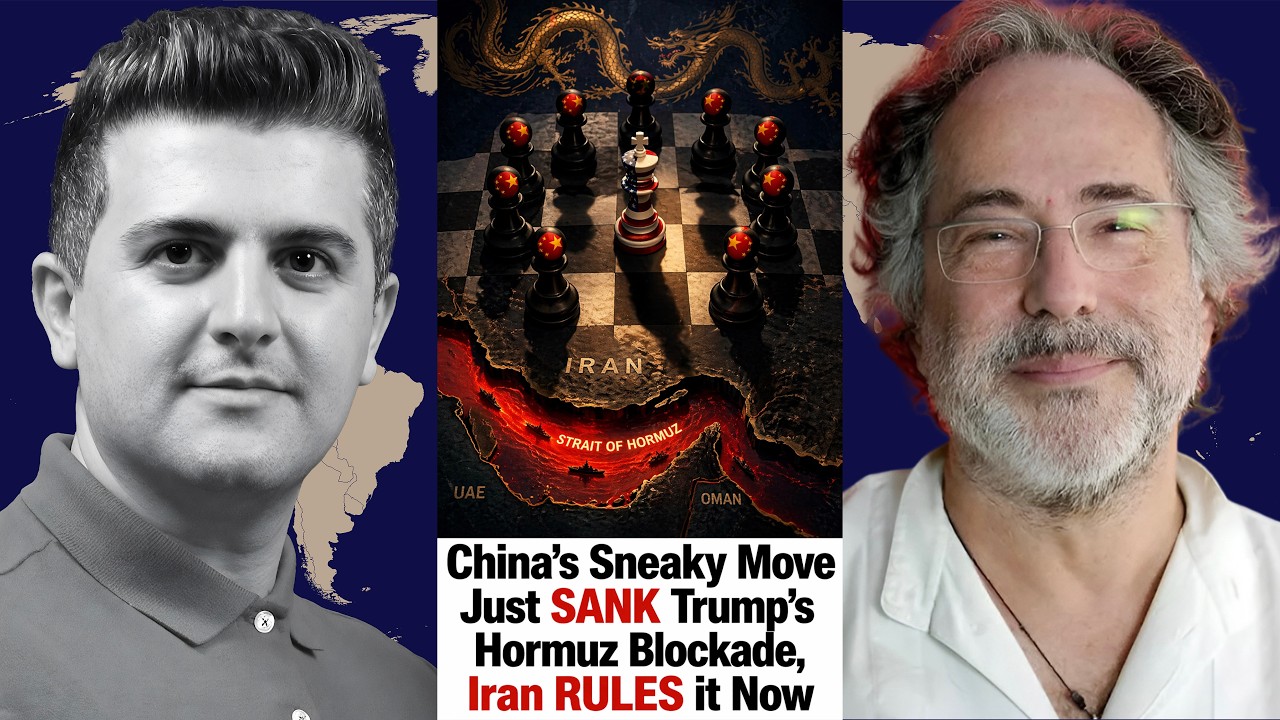
Pepe Escobar: “Total Failure”: Trump’s Blockade Just Backfired Disastrously
"Pepe Escobar argues that the US blockade against Iran, spearheaded by Donald Trump, has utterly failed and backfired, accelerating global economic chaos and challenging US geopolitical dominance."
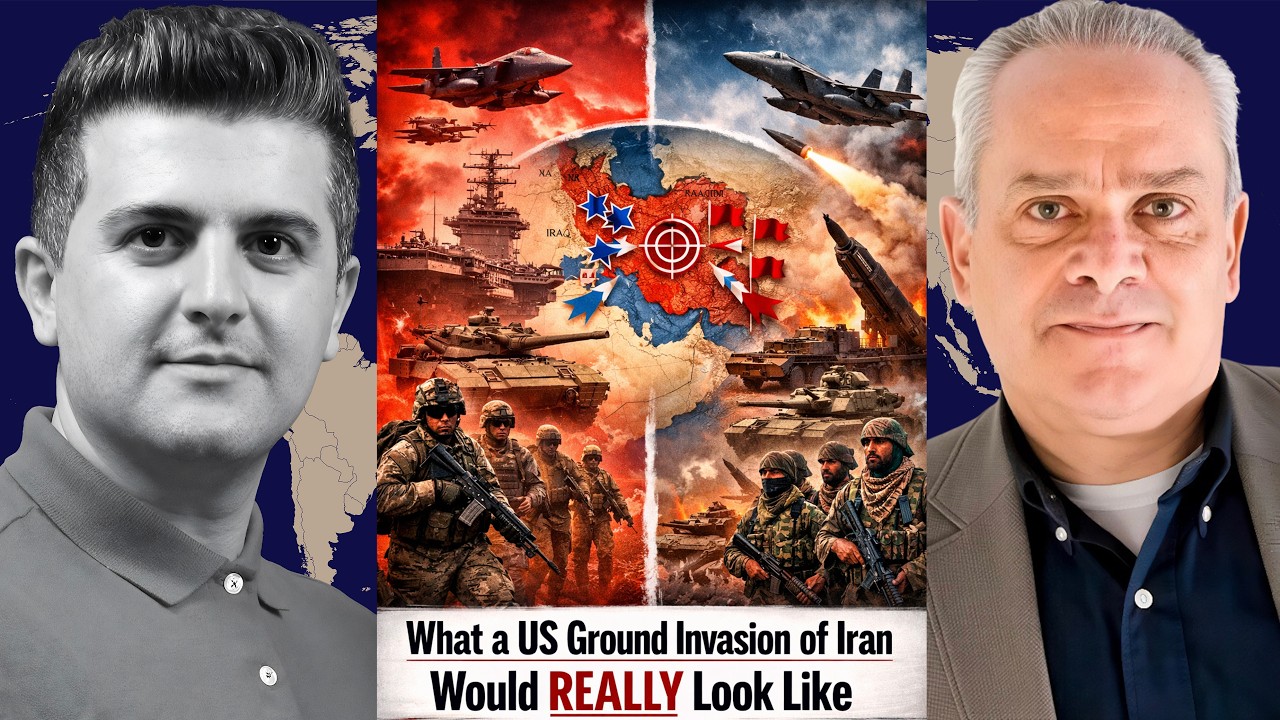
Col. Jacques Baud: What a US Ground Invasion of Iran Would REALLY Look Like
"Colonel Jacques Baud dissects the strategic futility of a US ground invasion of Iran, arguing that current troop levels are insufficient and such an action would backfire, exposing US allies and potentially leading to Iran's nuclearization."

Alex Krainer: US STRIKES Iran – Iran RETALIATES Against Kuwait, Bahrain & Jordan!
"Amidst escalating US-Iran conflict and Iranian retaliation against regional US allies, this episode argues that US foreign policy is deeply controlled by an 'Anglo-Zionist conspiracy' led by the Rothschild banking dynasty, prioritizing Israeli interests over American ones."