
John Helmer: Iran’s Unthinkable Move Triggers US & Israel – The Middle East Will Never Be the Same
YouTube · OVcXeOl-LSw
Quick Read
Summary
Takeaways
- ❖US presidential actions regarding conflicts in West Asia are primarily driven by the need to secure voter approval and manage disapproval levels, particularly concerning inflation and war.
- ❖The leaked Axios report of a Trump-Netanyahu call was an Israeli maneuver to show Trump's control over Netanyahu, aimed at influencing US voters.
- ❖US military operations must appear successful before budget reviews and elections, leading to escalation or a show of achieving war aims.
- ❖Russian President Putin's strategy in Ukraine is heavily influenced by upcoming parliamentary elections, requiring him to promise a 'short war' to maintain approval.
- ❖Economic recession in Russia has cut into Putin's approval, increasing pressure to demonstrate military success or a swift end to the conflict.
- ❖Internal conflicts exist within Russian leadership, with the General Staff pushing for escalation while some finance officials advocate for military spending cuts.
- ❖Iran's public opinion and government are largely skeptical of US negotiation sincerity, believing the US will not lift sanctions or release frozen assets.
- ❖Iran's strategy focuses on battlefield outcomes and responding to aggression, linking any potential 'pause' in conflict to Israeli actions in Lebanon and Gaza.
- ❖Iranian society, having endured 40 years of sanctions, has developed resilience and mechanisms to manage economic pressure, making them less prone to rush into deals.
- ❖The concept of 'permanent war' is a driving force, with Russia, China, and Iran increasingly viewing themselves as engaged in a long-term conflict against the United States.
Insights
1US Election Politics Drive Middle East Strategy
Donald Trump's actions and public statements regarding Israel and Iran are primarily designed to secure votes and manage his disapproval ratings among American voters. The reported expletive-laden phone call with Netanyahu, leaked by Israeli mouthpiece Axios, aimed to portray Trump as controlling Israel, a move calculated for domestic political consumption rather than a fundamental shift in US policy towards the region.
John Helmer states, 'Trump's problem... is not the Israelis, it's not the Iranians, it's American voters.' He adds that the Axios report 'means the Israelis want to show two things... that with expletives Trump can control Netanyahu... That's election politics in the US. It's not a fundamental change of or even a tactical change or even an operational change in US policy.'
2Russian Election and Budget Pressures Shape Ukraine War
President Putin's strategy in the Ukraine war is heavily influenced by Russia's upcoming parliamentary elections in September. Economic recession has eroded his approval, necessitating a public promise of a 'short war' to prevent the ruling party from losing its majority. This domestic political pressure drives military escalations and contradictory public statements from the Kremlin.
Helmer notes, 'President Putin goes to election on September 25... The effect of economic recession in the in Russia has been to substantially cut into President Putin's stable approval rate.' He adds, 'the president... has to promise a short war.'
3Iran's Resilience and Battlefield-Centric Strategy
Iranian public opinion and government leadership exhibit strong skepticism towards US negotiations, believing that the US will not genuinely lift sanctions or release frozen assets. Having endured over 40 years of sanctions, Iran has developed mechanisms to manage economic pressure, making its leadership less inclined to rush into deals. Their strategy prioritizes battlefield outcomes and direct responses to aggression, particularly linking any conflict resolution to Israeli actions in Lebanon and Gaza.
The host states, 'in Iranian public opinion... they don't believe that the United States would lift any sort of sanctions on Iran or... release the frozen Iranian assets.' He adds, 'We decide about the outcome of the war on the battlefield and we document the results of the battlefield on the paper. It's not going to be through negotiations.'
4US Budget Cycles Dictate Military Escalation
The US fall budget review, occurring between September and November, is a critical period where military operations must be shown to be successful to avoid budget cuts. This process creates an imperative for military escalation or the appearance of achieving war aims, directly impacting global conflicts before voters even cast their ballots.
Helmer explains, 'before the November 3 election, what's very important on a US presidential clock is the fall budget review... military operations have to be shown to be successful. Military operations that aren't successful have their budget cut.'
Bottom Line
The US political succession race, particularly the ideological split between the 'Chabad faction' (pro-Israel, interventionist) and the 'Catholic succession' (Vance/Rubio, 'just war' doctrine, American fortress), presents a strategic opportunity for Iran, Russia, and China to influence future US foreign policy.
Adversaries of the US could strategically exploit these internal divisions by tailoring their actions and diplomatic messaging to align with or undermine specific factions, potentially accelerating a US withdrawal from certain conflicts or shifting its geopolitical priorities.
For US adversaries, understanding and potentially influencing the Republican succession could be a non-kinetic 'front' in the 'permanent war,' aiming to foster a US leadership more amenable to de-escalation or disengagement from current conflicts.
Key Concepts
Election Battlefields
The concept that international conflicts and military strategies are increasingly fought on the 'election battlefields' of domestic politics, where leaders' decisions are primarily driven by the need to win elections and maintain voter approval, rather than purely geopolitical or strategic objectives.
Iron Law of Politics
The principle that presidents and political leaders, regardless of their stated foreign policy goals, will always prioritize actions that help them win the next election and protect themselves from domestic political defeat, influencing everything from military operations to budget allocations.
Permanent War
The understanding that major global powers, particularly the US, maintain a continuous state of conflict or adversarial posture against certain nations (e.g., Iran, Russia, China), making short-term agreements or ceasefires merely tactical pauses within an ongoing, long-term struggle.
Lessons
- Analyze geopolitical events through the lens of domestic election cycles and budget politics to better predict state actions and policy shifts.
- Recognize that public statements and military posturing by major powers can be performative, designed for internal voter consumption rather than genuine foreign policy changes.
- Monitor internal political factions and succession dynamics within major powers (e.g., US, Russia) as these can significantly alter long-term foreign policy trajectories and create strategic opportunities or risks.
Notable Moments
The host details the immediate geopolitical trigger: Israel's threat to attack Dahi in Beirut, Iran's counter-threat to hit northern Israel, and the subsequent reported phone call between Trump and Netanyahu.
This sets the stage for the core argument that these seemingly direct military and diplomatic exchanges are deeply intertwined with domestic political calculations in the US and Israel.
Discussion of Russian internal conflict: Lavrov and General Staff announce 'systemic and consistent' attacks, while Putin's spokesmen deny it and emphasize negotiations, reflecting a struggle between military escalation and political appeasement.
This highlights the internal pressures and contradictions within Russia's leadership, driven by the need to appear strong and decisive to the public while also managing the economic and political costs of war.
The host's observation that Iran's public opinion is not positive about negotiations with the US, and that Iran believes 'the outcome of the war' is decided 'on the battlefield' and then 'documented on paper.'
This provides a crucial insight into Iran's hardened stance, suggesting a long-term commitment to resistance and a lack of faith in diplomatic solutions with the current US administration, which directly impacts the potential for de-escalation.
Quotes
"Trump's problem, you can read, is not the Israelis, it's not the Iranians, it's American voters."
"These are wars now being fought on election battlefields in the US."
"Military operations must be escalated or must be shown to achieve war aims. Otherwise, before the voters vote, the budget process votes."
"The United States doesn't want Russia to be a superpower. That's why they try to continue this war."
"We decide about the outcome of the war on the battlefield and we document the results of the battlefield on the paper. It's not going to be through negotiations."
"If war is the extension of politics by other means, then the American presidential succession race is part of the war that Iran, Russia, and China must fight."
Q&A
Recent Questions
Related Episodes
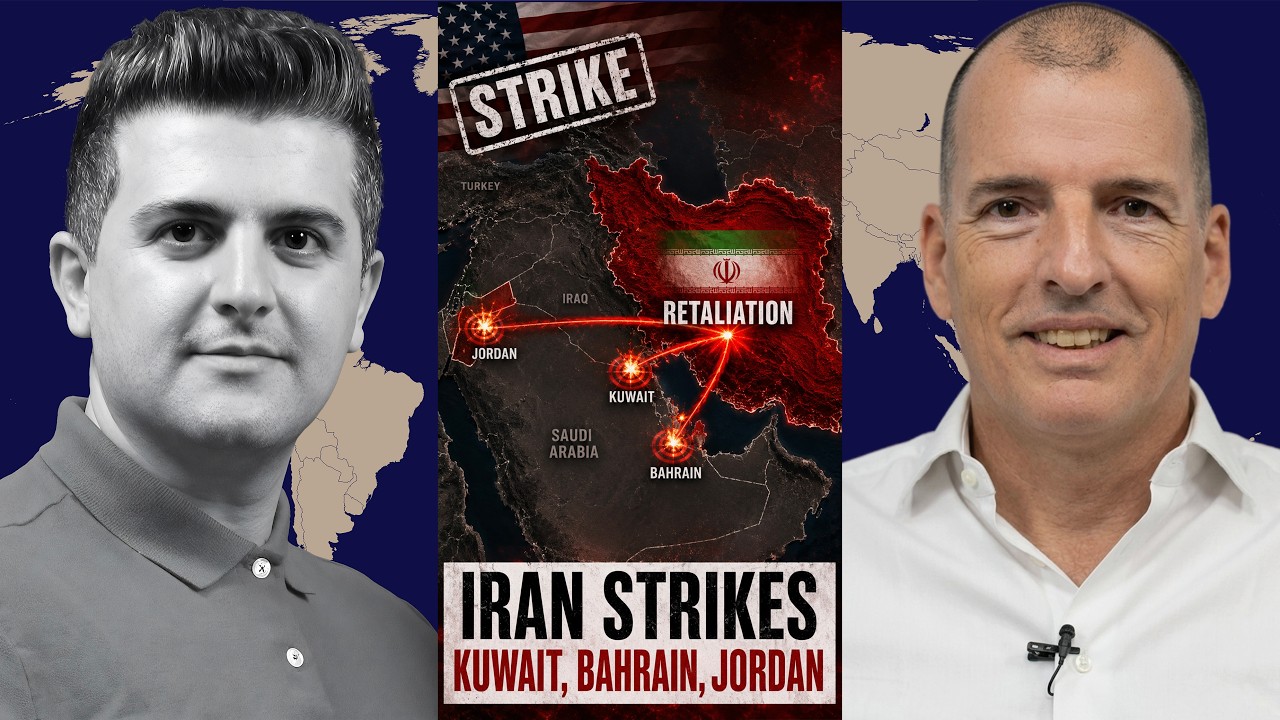
Alex Krainer: US STRIKES Iran – Iran RETALIATES Against Kuwait, Bahrain & Jordan!
"Amidst escalating US-Iran conflict and Iranian retaliation against regional US allies, this episode argues that US foreign policy is deeply controlled by an 'Anglo-Zionist conspiracy' led by the Rothschild banking dynasty, prioritizing Israeli interests over American ones."

Patrick Henningsen: Hezbollah JUST Fired Back at Israel - Iran Vows to “Crush” All Attacks
"Patrick Henningsen argues that the US and Israel initiated an illegal war against Iran, driven by Trump's incompetence and Israeli influence, leading to an inevitable escalation with severe global economic repercussions."
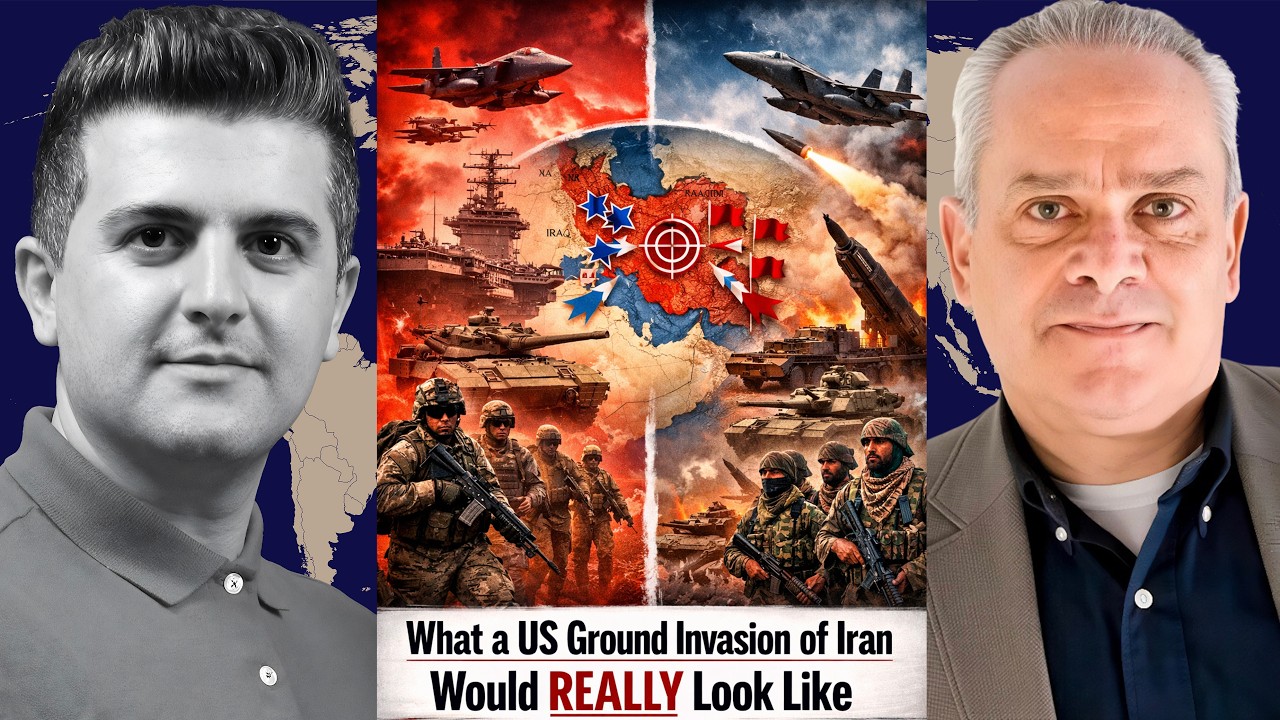
Col. Jacques Baud: What a US Ground Invasion of Iran Would REALLY Look Like
"Colonel Jacques Baud dissects the strategic futility of a US ground invasion of Iran, arguing that current troop levels are insufficient and such an action would backfire, exposing US allies and potentially leading to Iran's nuclearization."

LIVE: Trump HIDES FROM PUBLIC as US SOLDIER KILLED!!! 6/2/2026
"The host exposes alleged government cover-ups regarding military casualties, Trump's unexplained public absence, and questionable political appointments, arguing these reflect a 'regime of loser babies' and a failing foreign policy."