
Yanis Varoufakis: 'NOTHING CAN SAVE' Trump From Iran War Disaster
YouTube · OYspXXQbPko
Quick Read
Summary
Takeaways
- ❖Donald Trump's Iran war strategy is an 'abysmal' political and economic failure, trapping him in a conflict without an exit strategy.
- ❖US allies, including major European nations, Japan, and Australia, are refusing to send naval vessels to the Strait of Hormuz, an unprecedented rejection of US requests.
- ❖Despite refusing direct military aid, European governments are complicit by allowing US bases on their soil (e.g., Ramstein in Germany, Cyprus bases) to be used for attacks on Iran.
- ❖The ongoing conflict is 'killing' the business models of Gulf States and will lead to permanent global economic damage, unlike previous temporary market spasms.
- ❖Economic fallout includes soaring energy prices, which will stem energy-intensive AI investment, and rising interest rates globally, creating a 'perfect storm' of economic headwinds.
- ❖The current crisis is a symptom of the neoliberal economic order's breakdown since 2008, characterized by central bank liquidity for financiers and austerity for the populace, leading to asset inflation without productive investment.
- ❖The US dollar's hegemony is paradoxically supported by its enemies, like China, who hold trillions in dollar reserves and thus have an interest in its stability.
- ❖The Trump administration's actions against Cuba, including the embargo and alleged electrical grid collapse, constitute an 'abomination' and a crime against humanity.
Insights
1Trump's Iran Strategy: A Political and Economic Trap
Donald Trump initiated a war with Iran without a clear strategy for its conclusion, falling into what the guest describes as 'Netanyahu's trap.' This decision has politically damaged Trump, who was 'winning on all fronts' prior to this action, and has no clear path to de-escalation.
Trump was actually winning on all fronts up until he made that ridiculous decision essentially to fall into Netanyahu's trap of fighting Netanyahu's war. And from now on there is nothing can save Donald Trump politically.
2Unprecedented Allied Rejection of US Military Requests
Numerous US allies, including Japan, Australia, South Korea, the UK, Germany, and Greece, have explicitly refused to dispatch naval vessels to the Strait of Hormuz to assist the US, marking a significant departure from past cooperation.
Japan says it currently does not plan to dispatch naval vessels. Australia said it will not do so. South Korea says we will not do so. The United Kingdom said they will not be drawn into a war with Iran. The Germans explicitly say they will not participate. Italy and then of course Greece as well says it will not engage in military operations.
3European Complicity Despite Refusal of Direct Aid
While European leaders refuse to send ships, they remain complicit in US military actions by allowing American bases on their soil (e.g., Ramstein in Germany, British bases in Cyprus) to be used for illegal attacks on Iran, violating international law.
Chancellor Merz of Germany... allows Ramstein, the largest American military base in Germany, to be used in order to bombard a United Nations member state... The Brits are doing the same thing with their bases in Cyprus... My country Greece, our pathetic government sent a frigate and F-16s to Cyprus to protect the British sovereign ground of the accretter base which the United States has been using in order to attack Iran illegally.
4Permanent Economic Damage and a 'Perfect Storm'
The conflict with Iran is causing permanent, not temporary, economic damage. It has 'killed' the business model of Gulf States, will lead to sustained high energy prices, stem energy-intensive AI investment, and force central banks globally to raise interest rates, creating a 'perfect storm' for the world economy.
The Gulf States their business model is finished. That the United States and Israel have killed it. they've killed their economies... The war that he has unleashed against Iran, even if it ends today, is going to have long-term effects. The damage is permanent... AI is very energy intense... with energy going through the roof, the AI investment spree is severely circumscribed... interest rates going up... this is a perfect storm.
5US Dollar Hegemony Sustained by its Enemies
The US dollar's global dominance is paradoxically maintained by its geopolitical rivals, such as China. These nations hold vast dollar reserves, giving them a vested interest in the dollar's stability, thus preventing its dethronement despite US economic and political actions.
What is it that keeps the dollar hegemonic today? And the answer is its enemies. So, you know, China doesn't want to see the dollar being dethroned. Why? Because they have $4.5 trillion in savings.
Bottom Line
The refusal of US allies to participate in military operations in the Strait of Hormuz is not an act of defiance against US hegemony, but rather a pragmatic decision to avoid a 'suicide mission' that is bound to fail due to the asymmetrical nature of the conflict with Iran.
This suggests that while the US may perceive allied non-participation as a weakening of its influence, it could also be interpreted as allies making rational calculations about military effectiveness and risk, rather than a direct challenge to US leadership.
Policymakers should re-evaluate the efficacy and perception of US military interventions, considering whether traditional displays of force are still viable or if new diplomatic and economic strategies are needed to secure international cooperation.
The 'exorbitant privilege' of the US dollar is paradoxically maintained by the very nations considered US adversaries, such as China, due to their massive holdings of dollar-denominated assets.
This implies that efforts to 'de-dollarize' by these nations are slow and cautious, as a rapid collapse of the dollar would severely devalue their own reserves, creating a shared, albeit reluctant, interest in the dollar's stability for the time being.
Investors and businesses should monitor the gradual diversification of global reserves away from the dollar, as any significant shift, even if slow, will eventually impact global financial markets and trade dynamics, potentially creating new opportunities in alternative currencies or asset classes.
Key Concepts
Forever War
The concept that the United States has a long tradition of pursuing military engagements without clear exit strategies, often benefiting the military-industrial complex at the expense of the American people and global stability.
Exorbitant Privilege of the Dollar
The unique advantage the US dollar holds as the world's primary reserve currency, allowing the US to run large trade and budget deficits without suffering the typical economic consequences, and even increasing its hegemony despite economic depletion.
Breakdown of the Neoliberal Economic Order
The idea that the global economic system, particularly since the 2008 financial crisis, is unsustainable due to policies of austerity for the many combined with massive liquidity injections for financiers, leading to asset price inflation without real productive investment or widespread prosperity.
Lessons
- Monitor global energy prices and interest rate trends closely, as the ongoing geopolitical conflicts are creating a 'perfect storm' that will impact investment decisions, particularly in energy-intensive sectors like AI.
- Re-evaluate supply chain vulnerabilities, especially those reliant on passage through critical chokepoints like the Strait of Hormuz, and consider diversification strategies to mitigate risks from geopolitical instability.
- Understand the complex dynamics of international alliances; the refusal of allies to participate in military operations may not signify a complete break, but rather a strategic assessment of risk and effectiveness, which could inform future diplomatic and business engagements.
Notable Moments
The guest's sharp critique of European leaders, labeling them 'pathetic' for their complicity in US military actions despite refusing direct involvement in the Strait of Hormuz.
This highlights a perceived hypocrisy and lack of moral spine among European governments, suggesting a deeper erosion of independent foreign policy and a willingness to facilitate actions they publicly disavow.
The detailed breakdown of the 'perfect storm' of economic factors—rising energy prices, stalled AI investment, and increasing interest rates—all converging due to the Iran conflict.
This provides a comprehensive view of the interconnected economic consequences, emphasizing that the damage is systemic and long-lasting, affecting various sectors and global financial stability.
Quotes
"Our pathetic government sent a frigate and F-16s to Cyprus to do what? To protect the British sovereign ground of the accretter base which the United States has been using in order to attack Iran illegally."
"The Gulf States their business model is finished. That the United States and Israel have killed it. they've killed their economies."
"The war that he has unleashed against Iran, even if it ends today, is going to have long-term effects. The damage is permanent."
"What is it that keeps the dollar hegemonic today? And the answer is its enemies."
Q&A
Recent Questions
Related Episodes

Patrick Henningsen: Hezbollah JUST Fired Back at Israel - Iran Vows to “Crush” All Attacks
"Patrick Henningsen argues that the US and Israel initiated an illegal war against Iran, driven by Trump's incompetence and Israeli influence, leading to an inevitable escalation with severe global economic repercussions."

🚨 TOTAL F*CKING CHECKMATE 😂😂😂
"The host argues that Trump's 'ceasefire' with Iran was a calculated '5D chess' move to orchestrate a global energy market reshuffle, while simultaneously lambasting 'woke' domestic policies and the 'freefall' of anti-Trump conservative figures."

Bibi DEMANDS Ground Troops As Marines Rushed to Iran
"Benjamin Netanyahu is pushing for US ground troops in Iran, framing air strikes as insufficient, while the US rushes Marines to the region and struggles to secure the Strait of Hormuz against surprisingly capable Iranian defenses."
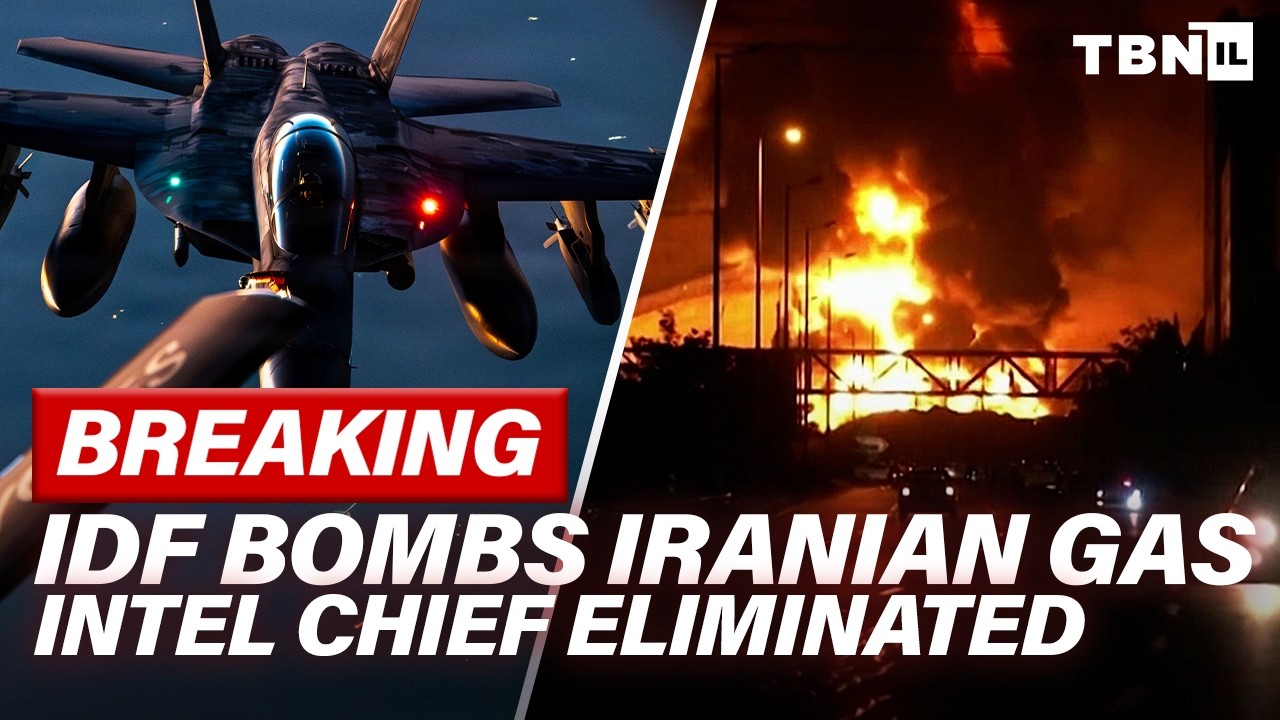
BREAKING: Israel BOMBS Major Iran Gas Site; Top Mullah ELIMINATED; Iran Vows VENGEACE | TBN Israel
"Israel and the United States have escalated their 'Roaring Lion War' against Iran, striking its largest gas facilities, eliminating key intelligence and military figures, and disrupting missile production, while Iran threatens a broader energy war in the Gulf."