
LIVE: GOP TERRIFIED after Election Stunt BACKFIRES!!
YouTube · P71m_emAnnM
Quick Read
Summary
Takeaways
- ❖Virginia's mid-decade redistricting referendum passed, likely netting Democrats several seats and countering Republican efforts.
- ❖Democrats are adopting a more aggressive, power-wielding strategy in response to Republican 'hardball' tactics, moving past traditional norms.
- ❖The Iran 'ceasefire' is a misnomer, with ongoing ship seizures, proxy attacks, and US casualties, indicating a continued state of conflict.
- ❖The Iran conflict is causing severe global supply chain disruptions, leading to inflation, fertilizer shortages, and a predicted starvation crisis in developing nations.
- ❖Trump's erratic statements and shifting stance on the Iran conflict reflect political pressure and a desire to disengage without a formal peace deal.
- ❖Republican politicians face a significant 'credibility gap' by being forced to defend Trump's false narratives, alienating voters who perceive a disconnect from reality.
- ❖The next US administration will likely inherit a 'technically still at war' situation with Iran, requiring long-term diplomatic and military commitment.
Insights
1Democratic Redistricting Strategy Pays Off
Democrats, particularly in Virginia and California, successfully implemented mid-decade redistricting plans, often through voter referendums, to counter Republican gerrymandering. This strategic shift, described as 'playing hardball,' is expected to net Democrats several congressional seats and marks a departure from their previous adherence to anti-gerrymandering norms when facing aggressive Republican tactics.
Virginia's statewide referendum passed, likely netting Democrats seats (). Governor Spanberger details Virginia's responsive and temporary plan (). Eric Ericson and Gerard Baker acknowledge Democratic advantage from redistricting started by Trump in Texas (, ).
2Iran 'Ceasefire' Masks Ongoing Conflict and Global Crisis
Despite Trump's declared 'ceasefire,' the situation with Iran remains highly volatile, characterized by mutual ship seizures, proxy attacks on US allies, and significant US military injuries and deaths. This ongoing low-intensity conflict is severely disrupting global supply chains, particularly for essential goods like petroleum and fertilizer, leading to rising costs, inflation, and a looming starvation crisis in vulnerable developing countries.
Trump extended a 'ceasefire' with Iran (). Iran fired on ships in the Strait of Hormuz; US commandeered a ship (). 400 US service members injured, 13 dead (). Global supply chain issues, fertilizer shortages, and a predicted starvation crisis are discussed (, ).
3Republican Credibility Gap Undermines Public Trust
Republican politicians and nominees, such as Fed pick Kevin Worsh, are increasingly perceived as lacking credibility when forced to defend Trump's false narratives (e.g., the 2020 election outcome, the Iran war's success). This perceived insincerity and disconnect from reality, even among loyal voters, is contributing to a significant 'credibility gap' that could cost Republicans seats in future elections.
Elizabeth Warren's exchange with Kevin Worsh, who evaded questions about the 2020 election (). Host discusses how pretending the 'emperor is fully dressed' hurts Republican credibility ().
4Next Administration to Inherit Prolonged Iran Conflict
The hosts predict that the Iran conflict will likely end 'with a whimper' rather than a formal peace agreement, leaving the next US president to inherit a situation where the US is 'technically still at war' with Iran. This unresolved state will necessitate continued military asset commitment to the region and perpetuate global economic uncertainty, similar to the unresolved Korean War.
Prediction that the ceasefire will remain in place without a peace agreement (). Comparison to the Korean War's unresolved status (). Discussion of military asset commitment ().
Bottom Line
The Iran conflict's impact on global commodity flows, particularly fertilizer, is creating a 'starvation crisis' in developing nations, far beyond direct military casualties.
This highlights a critical, often overlooked, humanitarian consequence of geopolitical instability, suggesting that the true cost of conflict extends to global food security and could trigger secondary conflicts or mass migrations.
International organizations and aid groups need to proactively address these supply chain vulnerabilities and food security risks, potentially by advocating for humanitarian corridors or alternative supply routes, even amidst conflict.
The US's actions in the Iran conflict are fostering deep resentment globally, irrespective of American domestic political views on Trump, potentially leading to long-term damage to international trust and alliances.
Future US administrations will face a monumental task of 'ingratiating' themselves back into the global community, requiring a 'humility' in foreign policy that contrasts with previous 'new era' pronouncements.
The next US administration should prioritize a 'modest' and 'prudent' diplomatic approach, focusing on small, tangible trust-building measures rather than grand declarations, to rebuild international relationships.
Key Concepts
Gunfight with a Fork
This model describes the perception that Democrats often enter political battles unprepared or too 'precious' about norms, akin to bringing a fork to a gunfight. The hosts argue that recent Democratic actions in redistricting show a departure from this, indicating a willingness to play hardball.
Credibility Gap
This refers to the disconnect between what politicians say and what the public perceives as reality. The hosts argue that Republican politicians, by consistently defending Trump's 'bonkers' narratives (e.g., stolen election, successful war), lose all credibility with everyday Americans who can discern the truth, even if they are loyal party members.
Lessons
- Recognize that political 'hardball' tactics, like mid-decade redistricting, are increasingly being adopted by both parties, requiring voters to understand the strategic implications beyond traditional norms.
- Stay informed about the broader global economic and humanitarian consequences of international conflicts, as these 'downstream' effects (e.g., inflation, food shortages) directly impact daily life.
- Critically evaluate the credibility of politicians and media narratives, especially when they appear to contradict observable reality, to avoid falling prey to 'credibility gaps' and cynical political maneuvering.
Notable Moments
Discussion of Democrats' 'hardball' strategy in redistricting, moving past traditional norms to counter Republican efforts.
This signifies a potential shift in Democratic political strategy, indicating a more aggressive approach to power-wielding in response to perceived existential threats to democracy, which could redefine future electoral contests.
Analysis of the Iran 'ceasefire' as a misnomer, with ongoing military actions and severe global economic repercussions.
This highlights the disconnect between political rhetoric and ground reality, revealing the complex and far-reaching humanitarian and economic costs of unresolved conflicts, impacting global stability and everyday citizens.
Elizabeth Warren's questioning of Fed nominee Kevin Worsh regarding the 2020 election, exposing a 'credibility gap' among Republican figures.
This illustrates the pressure on Republican officials to align with Trump's narratives, even when factually challenged, leading to a loss of public trust and potentially contributing to electoral defeats.
Dr. Adam Hamway's campaign slogan 'Healthcare not bombs' as an army surgeon running for Congress.
This slogan powerfully encapsulates a progressive platform that prioritizes domestic social spending over military expenditure, resonating with voters concerned about healthcare affordability and the human cost of war.
Quotes
"Republicans thought they were going to basically rig the elections to try and retain the house and that is not how it's going to go."
"This is an example where the Democrats were like, 'Okay, you're going to do this. Well, we're going to come down twice as hard on you and we're not going to be so precious that we, you know, are so caught up on the norms of, you know, our party has been the one that's over the last decade plus been against jury mandering that we saw past that and said, 'Oh, you're trying to pull a fast one on us and we're going to make it backfire on you.'"
"It's a huge risk to start a Jerry Mander war in a year when you're the underdog."
"We're going to have a starvation crisis and the World Food Program has said as much."
"I expect to be bombing because I think it's a better attitude to go with."
"This guy lost us a war we should have never been in in the first place."
Q&A
Recent Questions
Related Episodes

Iran Update: Israel’s Newest Bombing Campaign, the Oncoming War With China and How to Avoid It
"Colonel Wilerson reveals how the US and Israel are actively bombing China's strategic infrastructure in Iran, escalating a covert economic war that Beijing intends to win without direct military conflict by dismantling the dollar's global dominance."

🚨 TOTAL F*CKING CHECKMATE 😂😂😂
"The host argues that Trump's 'ceasefire' with Iran was a calculated '5D chess' move to orchestrate a global energy market reshuffle, while simultaneously lambasting 'woke' domestic policies and the 'freefall' of anti-Trump conservative figures."

🚨 THEY F*CKED AROUND FOR THE LAST TIME 😭😭😭
"This episode unleashes a torrent of highly opinionated commentary on the US-Iran deal, Israel's role, and a scathing critique of 'leftist' policies and immigration, particularly highlighting the UK grooming gang report as evidence of Western societal decay."
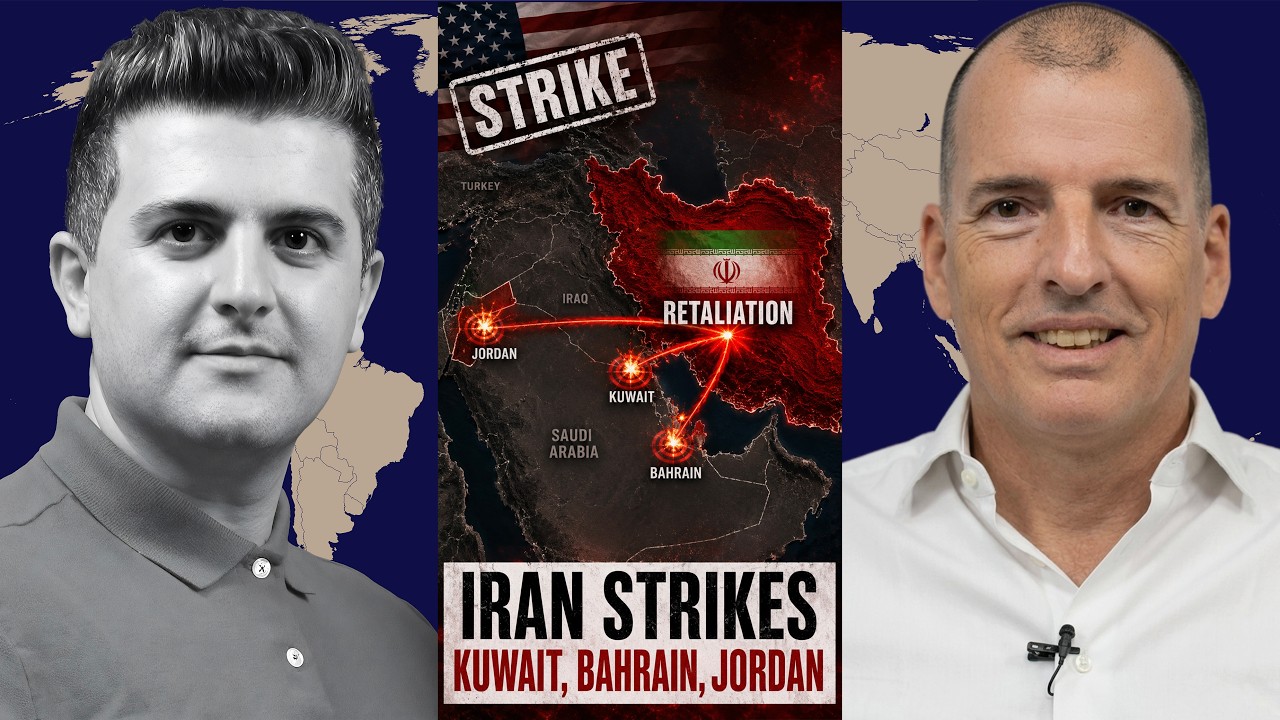
Alex Krainer: US STRIKES Iran – Iran RETALIATES Against Kuwait, Bahrain & Jordan!
"Amidst escalating US-Iran conflict and Iranian retaliation against regional US allies, this episode argues that US foreign policy is deeply controlled by an 'Anglo-Zionist conspiracy' led by the Rothschild banking dynasty, prioritizing Israeli interests over American ones."