
'Intelligence FAILURE!' Professor Jiang vs Andrew Bustamante On Iran War
YouTube · PJUxFvPhpBQ
Quick Read
Summary
Takeaways
- ❖The US entered the Iran war based on an intelligence failure, relying on Israel's flawed assessments without independent verification.
- ❖Professor Jang predicts the US will deploy ground troops in Iran by next March, citing strategic economic necessity to prevent Iranian control of the Middle East.
- ❖Andrew Bustamante believes Donald Trump initiated action in Iran for a 'short, quick political victory,' not strategic long-term goals.
- ❖Iran's control over the Strait of Hormuz provides significant leverage, impacting 20% of the world's energy flow.
- ❖The conflict has weakened US alliances, with GCC allies and European partners distancing themselves.
- ❖The 'Greater Israel Project' is presented as a potential underlying motivation for some radical elements within the Israeli government's actions.
- ❖The killing of heads of state and the disregard for proportionality in conflict signal a dangerous erosion of international norms.
Insights
1US Intelligence Failure in Iran Strategy
Andrew Bustamante, a former CIA officer, asserts that the US entered the Iran war based on a significant intelligence failure. The US lacked its own robust intelligence infrastructure to independently verify or identify flaws in Israel's assessments, leading it to follow Israel's guidance and targeting packages. This resulted in the US operating 'blind' and like a 'pitbull on the leash for somebody else,' leading to a quagmire when Israeli promises did not materialize.
The fact that the United States didn't have our own intelligence infrastructure to the point where we could see the holes in Israel's assessments and estimates, that's a major problem. It means that we went into Iran basically following Israel's guidance, following Israel's intelligence, following their targeting packages instead of our own independent intelligence assessment.
2Inevitable US Ground Troops in Iran
Professor Jang firmly believes that the United States will eventually be forced to deploy ground troops in Iran, potentially by next March. He argues that the US is 'stuck' because withdrawing would allow Iran to control the Middle East, forcing GCC countries to pay reparations and disrupting the recycling of US dollars, potentially leading to economic collapse. He notes that 660,000 American troops are already staged and ready, with the current MOU merely buying time for cooler weather suitable for a ground invasion.
I still believe that eventually the United States will be forced to use boots on the ground... I think the latest will be next March. Um it could be as early as December.
3Iran's Strategic Control of the Strait of Hormuz
Both guests acknowledge Iran's effective control over the Strait of Hormuz as a powerful deterrent, equivalent to a nuclear weapon. This control allows Iran to hold the world 'over a barrel' by regulating 20% of global energy flow. Andrew Bustamante highlights that Iran has leveraged this to inflict a significant blow against the United States, demonstrating that a smaller country can challenge and potentially defeat a superpower by simply surviving.
the Iranians quickly worked out that the control of the straight of Hormuse could just hold the entire world over a barrel quite literally because it would control the flow of 20% of the world's energy.
4US Strategy to Control Global Energy Markets
Professor Jang suggests that the Iran war was initiated to force the world to buy American energy. With Russia's capacity to export oil reduced by Ukrainian strikes and Qatar's LNG offline, the Western Hemisphere is presented as the only reliable energy source. Andrew Bustamante agrees this aligns with American strategy 101: controlling resources to establish premium pricing and global distribution, a model China is attempting to emulate.
people argue that this war was started in order to in order for America um to force the world to buy American energy because right now, if you look at the global map, the only reliable source of energy now is the Western Hemisphere
5The 'Greater Israel Project' as a Driver for Conflict
Professor Jang posits that radical elements within the Israeli government are pursuing the 'Greater Israel Project,' a biblical vision of land stretching from the Nile to the Euphrates, including parts of Turkey and Saudi Arabia. He argues that this expansionist agenda, rather than solely a response to October 7th, explains Israel's actions, including threats against Turkey and Egypt, and its involvement in conflicts on multiple fronts.
there are radical elements of the Israeli government uh who are intent on achieving the greater Israel project which is what they believe that God promised them in the Bible. And this land stretches from the Nile in Egypt all the way to the Euphrates in Iraq.
Bottom Line
The US and Israel's actions have normalized the targeting of heads of state and the disregard for traditional 'gentleman's laws' of conflict, potentially leading to a more unpredictable and violent global future.
This erosion of international norms could empower other nations and non-state actors to engage in similar aggressive tactics, destabilizing global security and increasing the risk of widespread, unrestrained violence.
International bodies and diplomatic efforts could focus on re-establishing and reinforcing international humanitarian law and norms of engagement to prevent further escalation and ensure future global stability.
The ongoing conflicts are driving a global dependence on Western Hemisphere resources, particularly energy, which could lead to a new economic order where resource control dictates global power.
Countries not aligned with the Western Hemisphere may face increased economic pressure and vulnerability, potentially leading to new alliances or conflicts over resource access. This also fuels the 'AI arms race' by controlling the energy needed for advanced computing.
Nations could invest heavily in diversified, localized renewable energy sources to reduce geopolitical dependencies and enhance national energy security, mitigating the leverage of resource-controlling powers.
Key Concepts
Intelligence Failure
A breakdown in the collection, analysis, or dissemination of intelligence that leads to flawed strategic decisions, as seen in the US reliance on Israeli assessments regarding Iran.
Strongman Leadership
A political system or style characterized by a single leader who wields significant power, often capitalizing on opportunities through violence, economic manipulation, and social repression, observed in multiple global powers.
Geopolitical Quagmire
A complex and intractable conflict or situation, often military, where progress is difficult and costly, and withdrawal is problematic, exemplified by the US involvement in Iran.
Lessons
- Monitor shifts in global energy supply chains and pricing, as ongoing conflicts in the Middle East and Ukraine are reshaping international energy dependencies.
- Assess the implications of eroding international norms in warfare, particularly the normalization of targeting heads of state and disregard for proportionality, for future global security and diplomatic engagements.
- Evaluate the long-term strategic goals of regional powers, such as the 'Greater Israel Project,' to better understand potential drivers of conflict beyond immediate retaliatory actions.
Notable Moments
Professor Jang's unwavering prediction that US ground forces will be committed to Iran by next March or December.
This prediction, based on economic and strategic analysis, directly contradicts the US's current stated policy and suggests a deeper, unavoidable entanglement in the region.
Andrew Bustamante's assertion that Donald Trump's initial move on Iran was motivated by a desire for a 'short, quick political victory' rather than a sound strategic plan.
This highlights how domestic political considerations can drive foreign policy decisions, potentially leading to unforeseen and detrimental international consequences.
The discussion of Israeli government members openly demanding 'genocide in Lebanon,' and the broader 'Greater Israel Project' as a driving force for Israeli actions.
This exposes extreme rhetoric and potential expansionist agendas that could significantly escalate regional conflicts and further alienate Israel from international opinion.
Quotes
"At the core of it, I see it as an intelligence failure. Whenever you're in a position like that, you're going in essentially blind and you're going in kind of like the pitbull on the leash for somebody else."
"I still believe that eventually the United States will be forced to use boots on the ground. In fact, you can argue that there's been a lot of preparation."
"Not only does the United States look like it's in the pocket of a much smaller, more kind of unpredictable country, Israel specifically, not only has this separated GCC allies from the United States..."
"If the Democrats were to take the house in November, Donald Trump would would be actually be under more pressure to use ground forces. Otherwise he could face impeachment. He would need a distraction."
"The United States has now shown that just being a world leader is no longer something that makes you a non-combatant. And that's what we've seen by the rendering of Maduro. That's what we saw by them killing the Ayatoll of Iran."
Q&A
Recent Questions
Related Episodes

Patrick Henningsen: Hezbollah JUST Fired Back at Israel - Iran Vows to “Crush” All Attacks
"Patrick Henningsen argues that the US and Israel initiated an illegal war against Iran, driven by Trump's incompetence and Israeli influence, leading to an inevitable escalation with severe global economic repercussions."
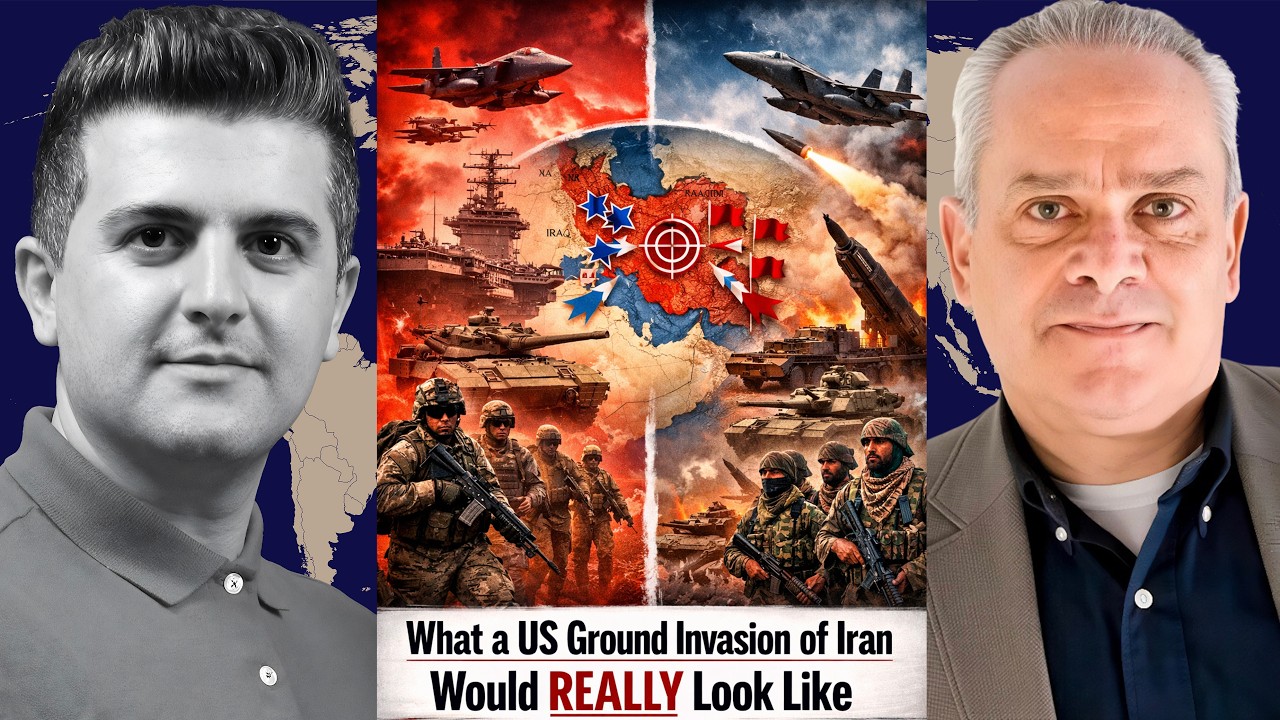
Col. Jacques Baud: What a US Ground Invasion of Iran Would REALLY Look Like
"Colonel Jacques Baud dissects the strategic futility of a US ground invasion of Iran, arguing that current troop levels are insufficient and such an action would backfire, exposing US allies and potentially leading to Iran's nuclearization."
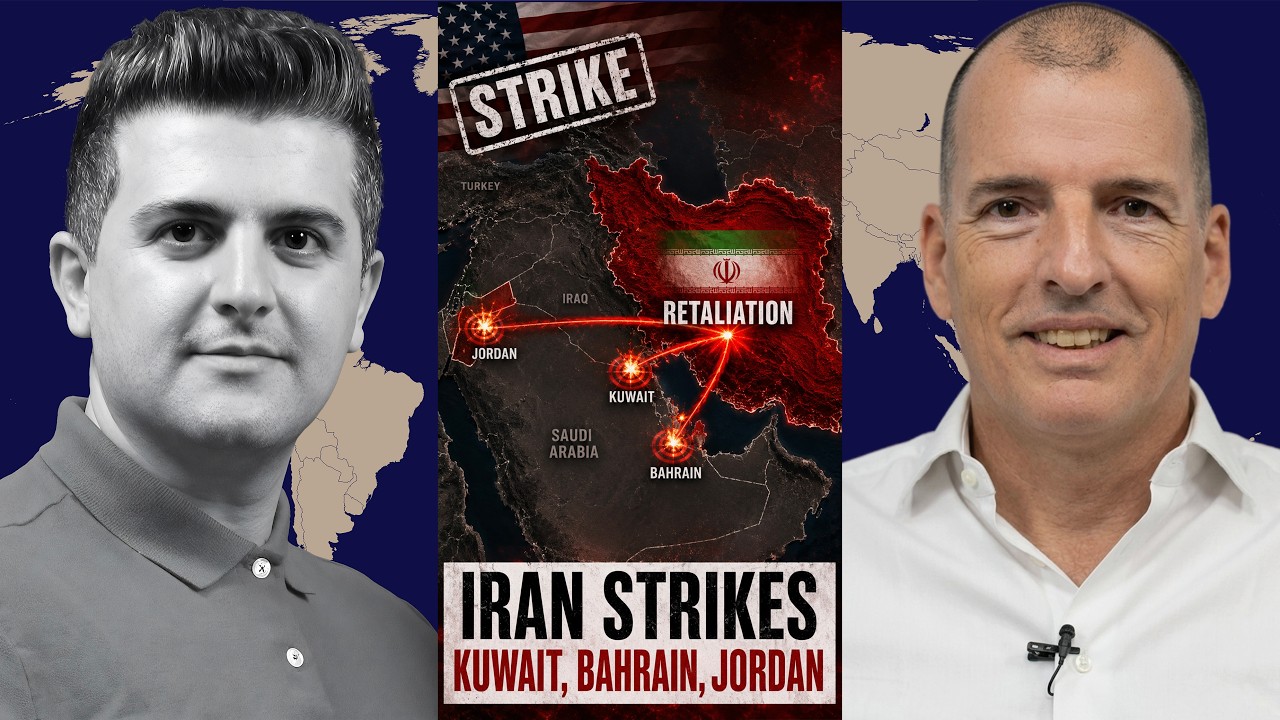
Alex Krainer: US STRIKES Iran – Iran RETALIATES Against Kuwait, Bahrain & Jordan!
"Amidst escalating US-Iran conflict and Iranian retaliation against regional US allies, this episode argues that US foreign policy is deeply controlled by an 'Anglo-Zionist conspiracy' led by the Rothschild banking dynasty, prioritizing Israeli interests over American ones."
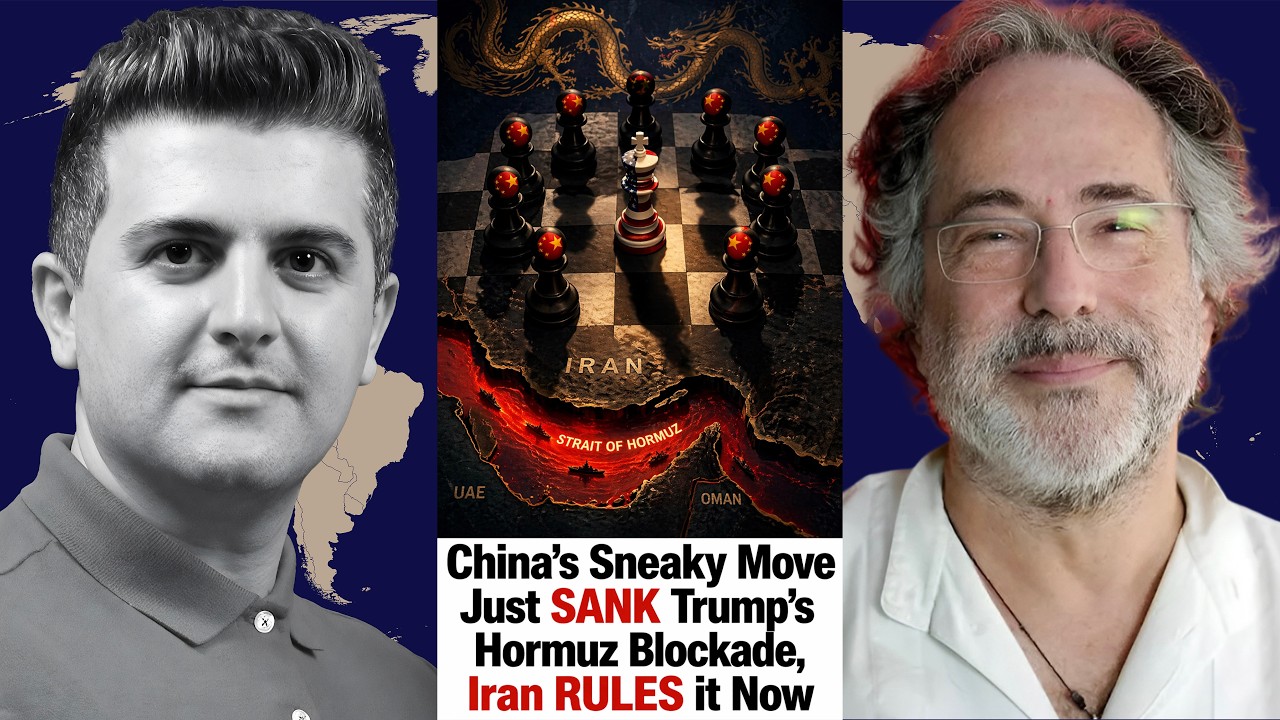
Pepe Escobar: “Total Failure”: Trump’s Blockade Just Backfired Disastrously
"Pepe Escobar argues that the US blockade against Iran, spearheaded by Donald Trump, has utterly failed and backfired, accelerating global economic chaos and challenging US geopolitical dominance."