BREAKING: Iran HUMILIATES U.S.; Trump Threatens Hormuz Seizure; Israel Won't Retreat | TBN Israel
YouTube · Pql2R2sg_8Y
Quick Read
Summary
Takeaways
- ❖Iran refuses to include its missile program in any agreement with the US, viewing it as crucial leverage.
- ❖Leaked quotes from Iranian officials reveal they believe they 'brought President Trump to his knees' and mock the 'stupid West's' negotiating beliefs.
- ❖Qatar is accused of providing economic and military assistance to Iran, helping it bypass international sanctions and empowering the Revolutionary Guards.
- ❖The US and Iran have conflicting narratives regarding the scope and terms of nuclear inspections and the Strait of Hormuz.
- ❖A US Senate resolution calling for reduced military involvement against Iran is seen as a political blow to Trump and a sign of weakness to Tehran.
- ❖A large fire in Beirut destroyed fiber optic cables, potentially crippling Hezbollah's fiber-guided drone program.
- ❖Israel is negotiating 'pilot zones' in southern Lebanon for a conditional withdrawal, requiring the Lebanese army to prove its ability to prevent Hezbollah's return.
- ❖US Secretary of State Marco Rubio is attempting to reassure Gulf States concerned about the US-Iran agreement's implications for regional stability and Iran's influence.
Insights
1Iran's Defiance and Deception in Negotiations
Iranian officials, including Ahmed Vahidi, were reportedly recorded mocking US negotiators, claiming they 'brought President Trump to his knees' and that the 'stupid West believes it is getting something from us in return, but something that they will never happen.' Iran also explicitly stated its missile program would 'never be part of the agreement with the United States' and denies agreeing to full nuclear inspections or restrictions on how it uses unfrozen funds.
Secret recordings of Ahmed Vahidi and other senior Revolutionary Guards officials; public statements from Iran's President denying missile program inclusion and IAEA access.
2Qatar's Dual Role as Mediator and Iranian Enabler
Qatar, acting as a mediator between the US and Iran, is simultaneously accused of providing significant economic and military assistance to Iran since 2018. This aid includes expanding maritime trade, energy cooperation, facilitating the release of frozen funds ($6 billion), and supplying dual-use materials like oils, hydrogen, aluminum rods, and piston engines, which can be used for rocket fuel, explosives, and UAVs. This support is seen as crucial for Iran to bypass sanctions and sustain its power.
Report by a foreign intelligence organization detailing Qatar's economic and military assistance to Iran, including specific materials and financial channels.
3Impact on Hezbollah's Drone Capabilities and Israeli Counter-Strategies
A large fire in Beirut at a state telecommunications facility destroyed millions of dollars worth of fiber optic cables. This is viewed as a significant operational blow to Hezbollah's fiber-guided drone program, which relies on these cables for unjammable, precise control. Concurrently, Israel is actively besieging dozens of Hezbollah terrorists in an underground tunnel complex in southern Lebanon, refusing calls for their safe exit and aiming to establish a model for demilitarizing entire areas.
Reports of a large fire in Beirut [], explanation of fiber-guided drone technology [], and details of IDF operations against Hezbollah tunnels in Tabnit [].
4US Diplomatic Challenges and Internal Divisions
The US administration faces a 'battle of narratives' with Iran over the terms of their agreement, particularly regarding nuclear inspections and the Strait of Hormuz. President Trump publicly denied Iran's claims, asserting full agreement to high-level supervision. However, a US Senate resolution calling for reduced military involvement against Iran passed 50-48, with some Republicans voting with Democrats, signaling internal debate and perceived weakness to Iran and US allies. Mediators reportedly warned Trump that his public threats could derail talks.
Trump's Truth Social posts [], Senate vote results [], and reports of Iranian delegation ending direct talks due to Trump's threats [].
Bottom Line
The 'jellyfish' drone formation observed by a downed American F-15 pilot, described as multiple large drones with smaller ones beneath, suggests a significant leap in Iran's networked drone capabilities, potentially creating a 'minefield of drones.'
This advanced drone networking capability, if confirmed, represents a new and highly dangerous technological threat, making traditional air defense and counter-drone measures more complex and less effective. It indicates Iran's continuous innovation in asymmetric warfare.
Develop new counter-swarm drone technologies, advanced electronic warfare systems capable of disrupting networked drone formations, and intelligence methods to detect and analyze such complex aerial threats.
The US is attempting to separate the 'Lebanon file' from the 'Iranian file' in negotiations, but Hezbollah explicitly links the end of the war in Lebanon to the end of the war against Iran, demonstrating Iran's successful strategy of tying regional conflicts to its broader geopolitical goals.
This linkage means that resolving the Lebanese conflict cannot be achieved in isolation and is directly dependent on the broader US-Iran relationship, complicating efforts for regional de-escalation and empowering Iran's proxies.
Any future diplomatic strategy must address the interconnectedness of Iran's proxy network and its core agenda, rather than attempting to compartmentalize regional issues. This requires a holistic approach to sanctions and security guarantees.
Lessons
- Advocate for greater transparency and accountability from mediators like Qatar in international negotiations, especially when their actions contradict their stated roles.
- Pressure policymakers to adopt a more assertive and clearly defined negotiation strategy with regimes like Iran, focusing on verifiable actions rather than verbal agreements.
- Investigate and expose the full extent of financial and material support enabling sanctioned entities, ensuring that international sanctions are not circumvented by third-party actors.
Quotes
"We brought President Trump to his knees. We got what we wanted as usual. The stupid West believes it is getting something from us in return, but something that they will never happen. Of course, it will never happen."
"We thank Iran, which did not agree to end the war that is being waged against it except together with the end of the war in Lebanon."
"His word is worth nothing. There's no point in believing them unless you see actions."
"The Israeli message is clear. Iran is not part of the solution in Lebanon. It is the problem. Iran's role is to get out of Lebanon."
Q&A
Recent Questions
Related Episodes

BREAKING: Iran Threatens To END Talks; U.S. Vows Retaliation; Hezbollah Collapsing? | TBN Israel
"Iran is leveraging Hezbollah and the Strait of Hormuz to manipulate US negotiations, while Israel asserts its right to dismantle Hezbollah's eroding but still dangerous infrastructure in Lebanon, independent of international talks."
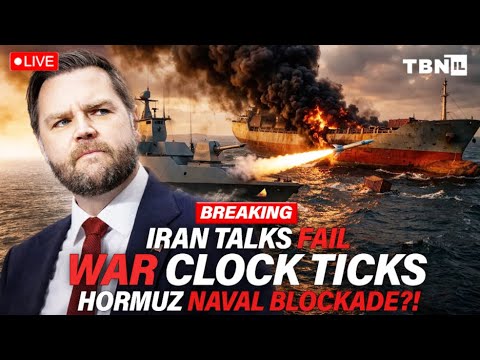
BREAKING: U.S.-Iran Talks COLLAPSE; Hormuz Standoff Deepens; Hezbollah Fire | TBN Israel
"US-Iran negotiations in Islamabad collapsed over the nuclear issue and control of the Strait of Hormuz, leading to heightened tensions and a potential US naval blockade strategy."
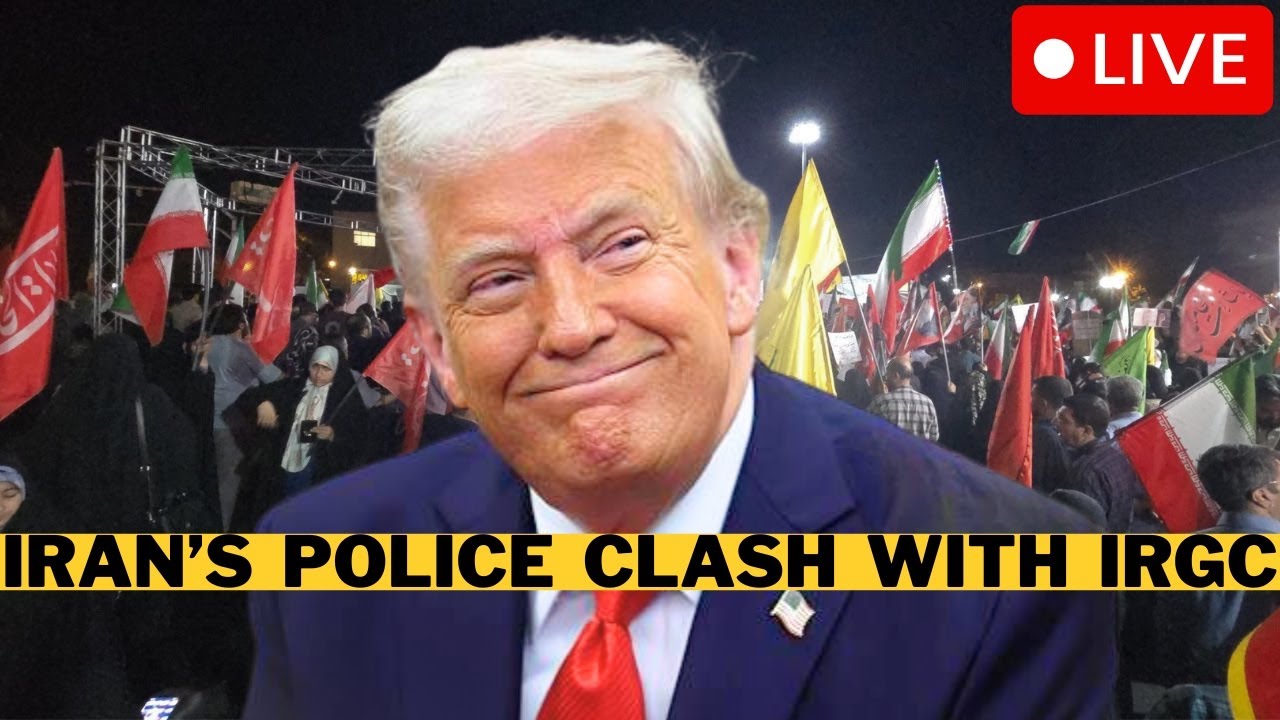
BREAKING: Protests ERUPT In Iran Over IRGC Surrendering To Trump - Infighting Clashes In Tehran
"Iran is experiencing severe internal infighting and protests as hardline IRGC elements clash with government figures over a perceived 'surrender' to the US, while mainstream Western media misrepresents the situation."
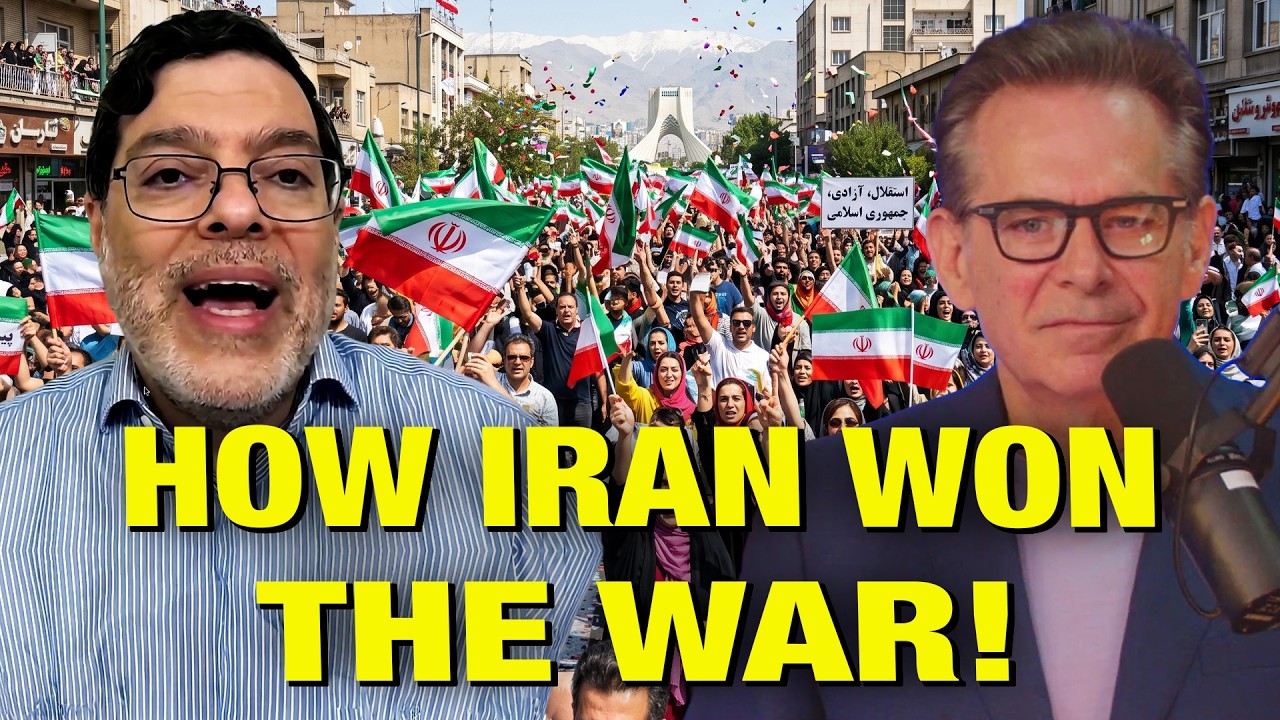
The REAL Story About The War From INSIDE IRAN! – Jimmy Interviews Prof. Marandi
"Professor Marandi, an Iranian academic, details how Iran emerged stronger from recent conflicts, now controlling the Strait of Hormuz and possessing a credible deterrent against its adversaries, despite facing economic siege and Western-backed regional proxies."