
“Powder KEG!” - Epstein, Iran, Inside Hezbollah & Israeli Settlements | RocaNews • 389
YouTube · Q3tpWK7GEVQ
Quick Read
Summary
Takeaways
- ❖Hezbollah's influence in Lebanon is visible through its social infrastructure, but its military presence is less overt and has been weakened.
- ❖Israeli public support for West Bank settlements significantly increased after October 7th, driven by a perception that withdrawal from Gaza led to attacks.
- ❖The Epstein files confirm deep elite involvement and intelligence connections, but separating substantiated criminal acts from speculative theories is crucial for effective prosecution.
- ❖US military action against Iran, while potentially desired by some US factions, risks a catastrophic and prolonged conflict, not a 'quick victory'.
Insights
1Hezbollah's Evolving Presence in Lebanon
Hezbollah is not solely a militant group but a 'country within a country,' operating grocery stores, banks, and a political party. Its visible military presence has decreased, and the Lebanese military is attempting to regain control of certain areas. While the organization is weakened, its territory remains dangerous for outsiders perceived as spies.
Guest's firsthand account of visiting 'Hezbollah land' in Balbeck, interviewing a Hezbollah member, and observing the dual nature of their operations. The incident of European journalists being shot for filming a bombed Hezbollah building. (, , , , )
2Israeli Precision Strikes and Civilian Impact in Lebanon
Israeli strikes in Lebanon are characterized by extreme precision, often targeting specific Hezbollah assets without widespread collateral damage to surrounding civilian areas. This contrasts with operations in Gaza and is interpreted by some Lebanese as an attempt to depopulate border regions.
Observation of a blown-out Hezbollah bank in Balbeck, where only one corner of a dense five-story building was destroyed, leaving surrounding areas untouched. Lebanese residents' claims that shelling happens frequently but rarely causes civilian casualties, leading to the belief Israel aims to displace them. (, )
3Shift in Israeli Public Opinion on West Bank Settlements Post-October 7th
Prior to October 7th, Israeli public opinion on West Bank settlements was split 50/50. After the attacks, support for settlements significantly increased, with many Israelis viewing the 2005 Gaza withdrawal and subsequent October 7th events as justification for maintaining or expanding control over the West Bank to prevent similar attacks.
Guest's conversations with Israelis, who explicitly linked the Gaza withdrawal to the October 7th attacks, leading to a strong sentiment against further withdrawals. (, )
4The Profound Societal Trauma of October 7th in Israel
The October 7th attacks inflicted a deep mental and societal scar on Israel, a collectivist society where family and community are central. The massacre of peace-advocating residents in kibbutzim near Gaza, who were often progressive and pro-two-state solution, fundamentally shifted the national psyche and led to a more aggressive defensive posture.
Visiting Kibbutz Nir Oz, where 25% of residents were killed or kidnapped, and observing the obliteration of the town. Conversations with survivors who felt 'abandoned' and expressed a profound shift in their worldview. (, )
5Epstein's Intelligence Ties and Elite Blackmail
Jeffrey Epstein was deeply associated with Israeli and American intelligence agencies, acting as a 'peddler' of intelligence and a 'fixer' for powerful individuals. The ongoing release of files, despite government attempts to suppress them, reveals a 'super government' of fixers operating beyond elected officials, using compromising information as leverage.
The host's assertion that Israeli and American intelligence involvement is 'crystal clear' (). The mention of 3 million files being 'locked away in violation of federal law' and the unredaction of some due to public pressure (). Tucker Carlson's 'super government' theory (). (, , )
6The Danger of Unsubstantiated Claims in the Epstein Case
While the Epstein case reveals undeniable depravity and elite corruption, the proliferation of unverified or 'crazy' theories (e.g., cannibalism, DiCaprio eating kids) risks discrediting legitimate efforts for accountability. Focusing on factual evidence is crucial to achieve real change and prevent the 'crazies' from derailing the discourse.
The guest's concern about 'crazy theories' gaining traction () and the host's emphasis on the need for 'high burden of proof' for 'major bold claims' (). The specific mention of the 'jerky' emails and the difficulty of drawing definitive conclusions without further evidence. (, )
Bottom Line
The Middle East is undergoing a rapid geopolitical realignment, shifting from a primary Sunni-Shia axis to a new 'secular vs. Islamist' divide, with Turkey and Egypt emerging as key regional players.
This shift could lead to new alliances and conflicts, potentially destabilizing existing power structures and creating unforeseen challenges for international diplomacy and security.
Analysts and policymakers need to update their frameworks for understanding regional dynamics, identifying emerging fault lines and potential partners in this evolving landscape.
The Iranian diaspora in the US, particularly in LA, exhibits strong anti-Islamic and pro-American sentiments, viewing the current Iranian regime as a state ideology rather than a true religious expression.
This challenges Western stereotypes of Middle Eastern immigrant communities and suggests a significant internal ideological divide within Iran that could be leveraged in future geopolitical strategies, though its representativeness of Iranians in Iran is debated.
Understanding these internal dynamics is crucial for developing more effective and nuanced foreign policy approaches to Iran, potentially supporting internal reform movements rather than solely focusing on external pressure.
Key Concepts
Generational Beef / Gang War
The Middle East conflict, particularly between Israelis and Palestinians, is framed as a deeply entrenched, generational feud where the origins of the conflict are often forgotten, and actions are driven by cycles of retaliation and historical grievances, similar to inner-city gang wars.
Frog in Boiling Water
This model describes how a gradual increase in adverse conditions (e.g., Hezbollah's taunting at the border) can lead to a lack of response or normalization of the threat, eventually resulting in a sudden, catastrophic event like October 7th.
Noble Lie
The idea that governments or institutions intentionally conceal or distort truth from the public for their perceived greater good or to maintain stability, often leading to public distrust when exposed, as seen in the handling of the Epstein files or COVID-19 information.
Room by Room Cleanup
A metaphor for addressing systemic corruption or complex problems by methodically identifying and targeting specific issues or individuals with concrete evidence, rather than attempting a wholesale, potentially destructive, 'burn it all down' approach.
Lessons
- Cultivate empathy by seeking out diverse, on-the-ground perspectives from all sides of a conflict before forming conclusions.
- Demand targeted accountability for implicated individuals in cases of elite corruption, focusing on verifiable evidence rather than broad, unsubstantiated claims.
- Recognize the potential for 'noble lies' and intentional distractions from governments and institutions, and critically evaluate information sources.
- Stay informed on emerging geopolitical realignments, such as the shift in the Middle East's primary axes of conflict, to anticipate future global challenges.
Notable Moments
The guest describes being caught in Israeli shelling near the Lebanese border, highlighting the constant, unreported reality of conflict for local residents.
Discussion about the 'I'm that guy' email from Jeffrey Epstein, where he recounts a conversation with a woman working on a sex trafficking movie who unknowingly described Epstein's island.
The revelation that former CIA officer John Kiriakou, known for his extensive knowledge, was left speechless by the details in the Epstein files.
Quotes
"We're glad you saw this. Now you see how we live."
"The violence has made everything worse for them and I don't think it's made them closer to get a Palestinian state. I I think I think it's done the opposite."
"I used to think Jeffrey Epstein worked for MSAD. I now wonder if MSAD worked for Jeffrey Epstein."
"If you want to guarantee that you don't have a two-state solution... then you must be okay with funding Hamas."
"It is my destiny to resist and if I die it is my fate."
"Burning everything down at once is not the answer because there are plenty of also people who might like if you want to use the sake of argument who might be really bad people... Dick Cheney is not in these files right now."
Q&A
Recent Questions
Related Episodes

Patrick Henningsen: Hezbollah JUST Fired Back at Israel - Iran Vows to “Crush” All Attacks
"Patrick Henningsen argues that the US and Israel initiated an illegal war against Iran, driven by Trump's incompetence and Israeli influence, leading to an inevitable escalation with severe global economic repercussions."
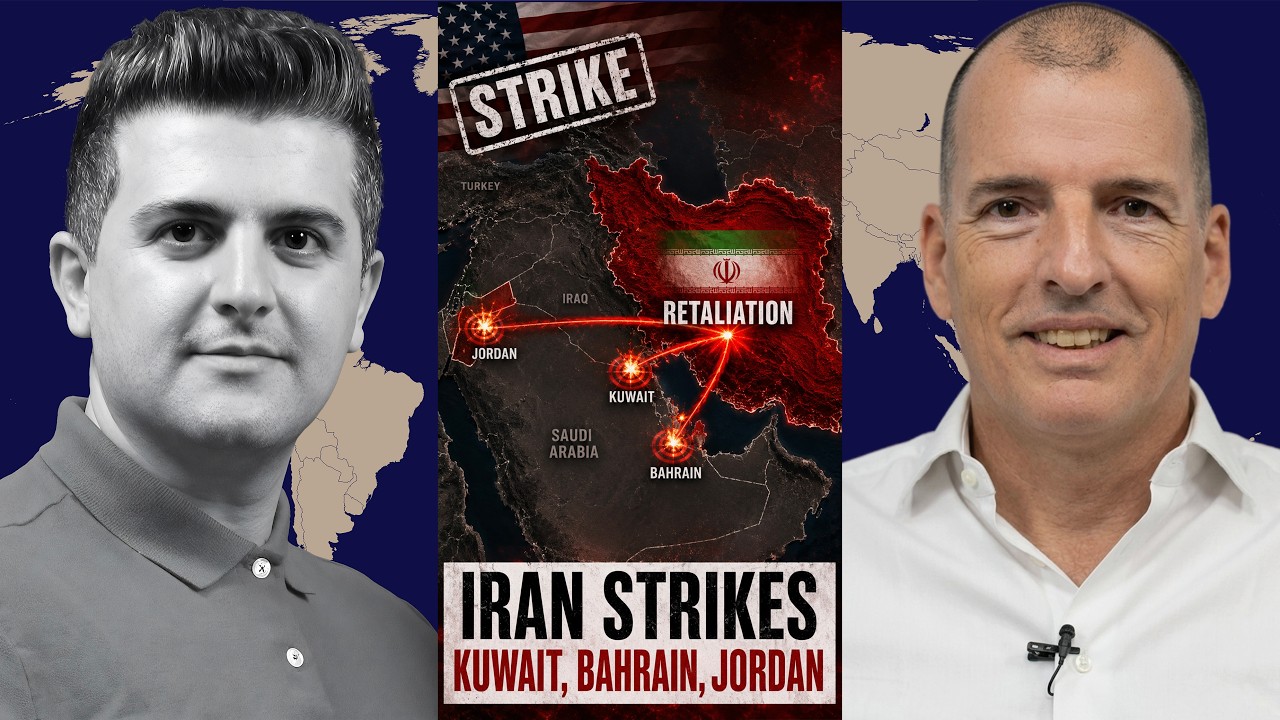
Alex Krainer: US STRIKES Iran – Iran RETALIATES Against Kuwait, Bahrain & Jordan!
"Amidst escalating US-Iran conflict and Iranian retaliation against regional US allies, this episode argues that US foreign policy is deeply controlled by an 'Anglo-Zionist conspiracy' led by the Rothschild banking dynasty, prioritizing Israeli interests over American ones."
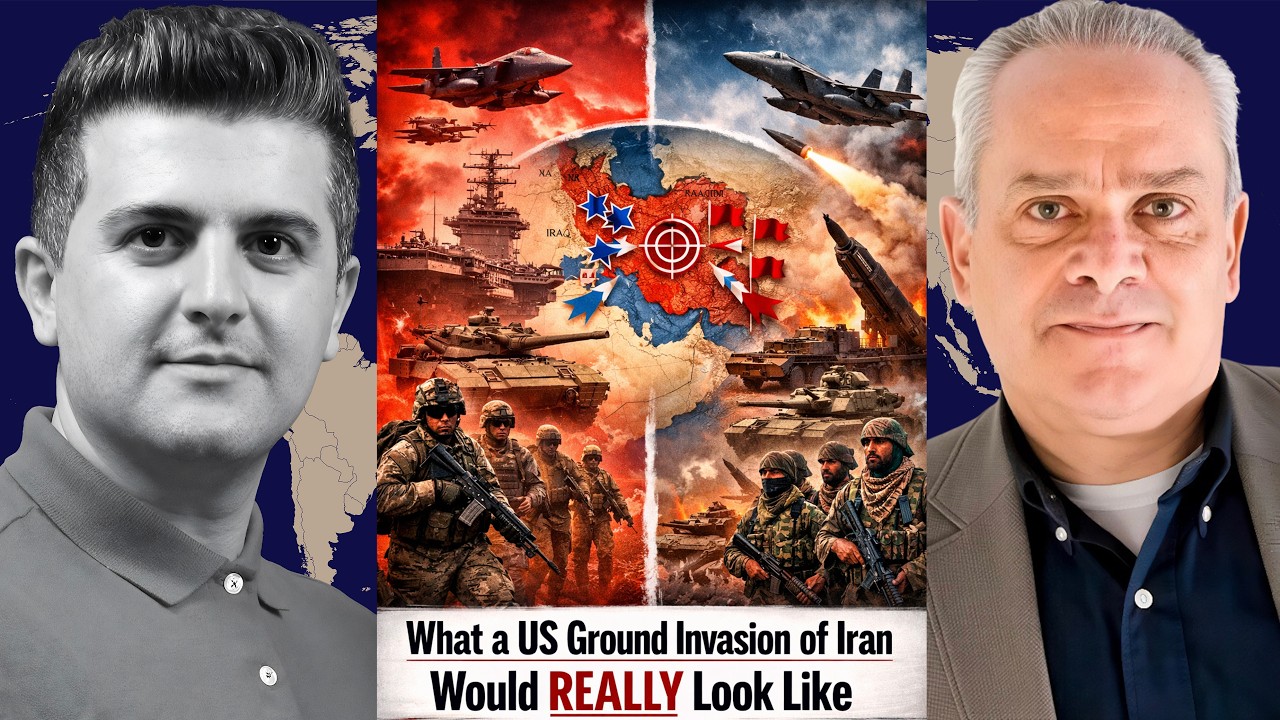
Col. Jacques Baud: What a US Ground Invasion of Iran Would REALLY Look Like
"Colonel Jacques Baud dissects the strategic futility of a US ground invasion of Iran, arguing that current troop levels are insufficient and such an action would backfire, exposing US allies and potentially leading to Iran's nuclearization."

Iran Update: Israel’s Newest Bombing Campaign, the Oncoming War With China and How to Avoid It
"Colonel Wilerson reveals how the US and Israel are actively bombing China's strategic infrastructure in Iran, escalating a covert economic war that Beijing intends to win without direct military conflict by dismantling the dollar's global dominance."