Everything to Lose | Full Episode
YouTube · QOSi7BVIbZI
Quick Read
Summary
Takeaways
- ❖Dana Cla Edwards was found murdered in her condo on January 2, 2009, initially misclassified as an accidental death.
- ❖Her ex-boyfriend, Thomas Ford, became an early suspect due to their recent breakup and his evasive behavior.
- ❖The investigation was severely hampered by lost physical evidence, including fingernail clippings and underwear, and crucial surveillance footage.
- ❖Dana's mother engaged in a controversial campaign of sending accusatory messages to Thomas Ford.
- ❖Prosecutors discovered previously unanalyzed cell phone records that contradicted Ford's alibi, placing his phone near Dana's condo and where her dog, Grit, was found dead.
- ❖Despite a strong defense highlighting investigative errors, the cell phone data was pivotal in convincing the jury of Ford's guilt.
- ❖Thomas Ford was convicted of murder and sentenced to 40 years in prison.
Insights
1Initial Investigative Failures and Lost Evidence
The initial police response misclassified Dana Cla's death as accidental, despite signs of foul play. This led to significant mishandling and loss of critical evidence, including fingernail clippings, underwear, and a second surveillance video. This negligence provided a strong basis for the defense to argue reasonable doubt, making the prosecution's job exceptionally difficult.
Police chief William McManis stated that police initially thought Dana Cla had fallen and hit her head (). Prosecutors Catherine Babbitt and Kirsta Melton detailed the lost evidence, including fingernail clippings, underwear, and a second surveillance tape (, ).
2Cell Phone Data as the Decisive Evidence
Years into the investigation, prosecutors discovered and meticulously analyzed Thomas Ford's cell phone records, which police had subpoenaed but not fully examined. This data, showing which cell towers Ford's phone connected to, placed him near Dana Cla's apartment at the time of the murder and later near where her dog's body was found. This directly contradicted Ford's alibi of being home asleep, becoming the most damning piece of evidence.
Kathy Cunningham realized the significance of Ford's cell phone records just before trial (). AT&T engineer Ken Dah testified that Ford's phone pinged off a tower serving Dana Cla's apartment at PM and again at AM, and later near the dam where Grit's body was found at AM (, , ).
3High-Stakes Defense Strategy Against Investigative Flaws
Defense attorney Dick Darren, a renowned Texas lawyer, focused his strategy on discrediting prosecution witnesses and relentlessly highlighting the police's numerous mistakes and lost evidence. He argued that the DNA found on a towel was inconclusive because Ford frequently visited the apartment and that cell phone tower data was 'voodoo' or 'junk science' due to its perceived unreliability in pinpointing exact locations.
Darren cross-examined Melissa Federill about inconsistencies in her statements () and Alan Tarver about not seeing Ford's car (). He questioned the police's initial classification of death and the loss of evidence () and called cell phone tower usage 'voodoo' and 'junk science' ().
Lessons
- Implement rigorous crime scene protocols to prevent loss or mishandling of evidence, as initial errors can severely compromise future prosecution.
- Thoroughly analyze all available digital data, such as cell phone records, early in an investigation, as it can provide crucial timelines and refute suspect alibis.
- Develop strong legal strategies to counter defense arguments based on investigative deficiencies, emphasizing the cumulative weight of circumstantial and digital evidence.
Notable Moments
Dana Cla's parents discovering her body in her condo.
This moment vividly portrays the immediate horror and grief of the family, setting the emotional tone for the entire narrative and underscoring the personal tragedy of the crime.
Dana's father bringing the ashes of Dana Cla and her dog, Grit, to court every day of the trial.
This act symbolizes the family's unwavering quest for justice and their deep connection to both Dana and her beloved pet, adding a poignant, human element to the legal proceedings.
The jury's request to review the cell phone evidence during deliberations.
This was a critical turning point, indicating that the complex digital evidence was pivotal in swaying undecided jurors and ultimately leading to a unanimous verdict, validating the prosecution's strategy.
Quotes
"There was no other motivation for this murder but to kill Dana Claire Edwards."
"A strangulation just seemed so deep and so personal. It had to have been someone who knew her very well."
"If they're that sloppy about what they lose, how sloppy are they about what they bring to the jury?"
"I had prayed for grace when I prayed for justice."
"Historical cell phone tower usage is voodoo. It's junk science."
"We make multi-billion dollar decisions based on what this tool tells us."
"I could feel all my daughter's good memories come back to me without Thomas and all of that. I felt like I had her back."
Q&A
Recent Questions
Related Episodes
The Root Beer Float Murder | Full Episode + Post Mortem
"A seemingly natural death of a husband is unmasked as a calculated poisoning plot by his wife and stepdaughter, revealed only after an unrelated burglary exposes a trail of incriminating text messages."

Widow Realizes Cops Know She Poisoned Her Husband
"A seemingly routine burglary unexpectedly unravels a year-old murder, exposing a mother-daughter poisoning plot and a chilling pattern of suspicious deaths."

Hell On Wheels: Mackenzie Shirilla's Double Murder Crash
"A seemingly accidental car crash that killed two young men in Strongsville, Ohio, was meticulously uncovered by investigators to be a deliberate act of double murder by the 17-year-old driver, Mackenzie Shirilla, amidst a tumultuous relationship and a shocking lack of remorse."
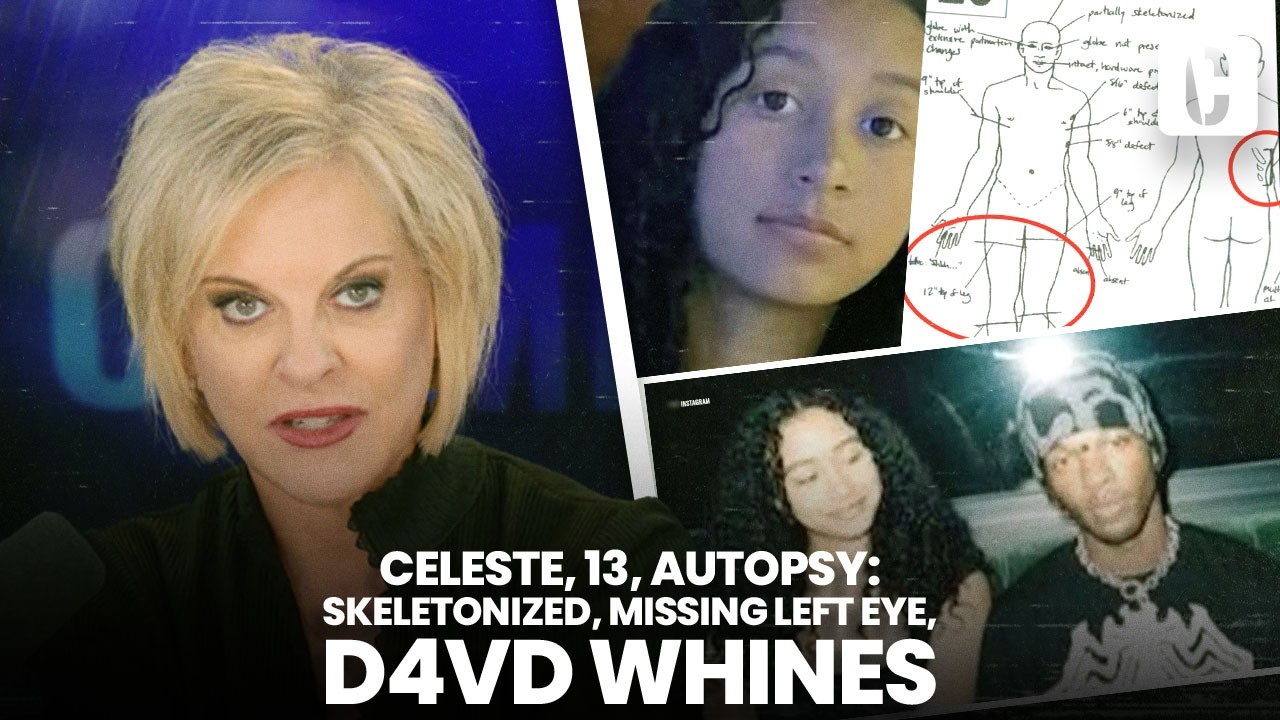
CELESTE, 13, AUTOPSY: SKELETONIZED, MISSING LEFT EYE, D4VD WHINES
"A 13-year-old girl, Celeste Rivas, was found partially skeletonized with a missing left eye, traces of meth and MDMA, and fatal stab wounds, while the accused musician David Anthony Burke (D4VD) complains about jail conditions."