BREAKING: U.S. Navigator RESCUED In Iran; Trump Ultimatum Ticks Down | TBN Israel
YouTube · QU7KsNMeRDM
Quick Read
Summary
Takeaways
- ❖A US F-15E navigator was rescued from Iranian territory after 36 hours, following a complex special forces operation under heavy fire.
- ❖President Trump's 48-hour ultimatum to Iran is expiring, with the US preparing 'wonder missiles' for potential infrastructure strikes.
- ❖Israel has already struck Iran's chemical industry, shutting down ballistic missile production lanes, and has plans to target oil and gas infrastructure.
Insights
1Dramatic US Navigator Rescue Operation in Iran
American special forces conducted a two-day, multi-faceted rescue of an F-15E navigator shot down over Iran. The operation involved hundreds of commandos, air support (including MQ9 Reaper drones), a CIA deception operation, and firefights. The navigator evaded capture for over 36 hours in mountainous terrain. During extraction, two C-130 transport aircraft became stuck in soft sand and were subsequently bombed by US forces to prevent them from falling into Iranian hands.
The host and guest detail the rescue operation, including the duration, the number of personnel, the use of C-130s, the pilot's evasion, and the destruction of stranded aircraft.
2Trump's Ultimatum and Shift to Economic Warfare
President Trump issued a 48-hour ultimatum to Iran, threatening 'all hell' if no deal is reached. This marks a strategic shift from solely targeting military assets to dismantling Iran's economic backbone. Israel has completed operational plans to deliver a crushing blow to Iran's oil and gas infrastructure, awaiting an American 'green light.' The US is also concentrating its stock of JASSM long-range stealth cruise missiles for potential broad infrastructure strikes.
Trump's repeated threats (, , ), Israel's strikes on chemical complexes (), and plans to target oil/gas (), and US preparation of JASSM missiles ().
3Iran's Underground Missile 'Cities' and External Support
Iran maintains resilience against sustained strikes due to its extensive network of underground missile 'cities,' such as the Aazad base buried 500 meters deep in granite mountains. These fortresses are designed to survive bunker-buster attacks. Additionally, intelligence assessments indicate China is supplying Iran with raw materials for missile fuel, enabling the regime to restore production lines despite attacks on its chemical plants and research centers.
Discussion of Yazad base (, ), Iran's ability to launch and rebuild (), and reports of China sending raw materials for missile fuel ().
4Escalation of Regional Attacks and New Geopolitical Alignments
Iran expanded its regional attacks, hitting government quarters, power plants, and oil sectors in Kuwait, Bahrain, and the UAE, demonstrating its capability to target the entire Gulf energy belt. In Lebanon, Hezbollah continues to launch rockets at Israel, employing an 'economy of munitions' to prolong the conflict. Israel is sending a clear message that a ceasefire in Iran will not stop fighting in Lebanon, demanding demilitarization of southern Lebanon. Assessments are growing that Lebanon's failure to control Hezbollah could lead to understandings between Israel and Syria, where Israel controls southern Lebanon and Syria acts against Hezbollah in the north.
Iranian attacks in Kuwait, Bahrain, UAE (), Hezbollah's rocket capabilities (, ), Israel's stance on Lebanon (, ), and the potential Israel-Syria understanding (, ).
Bottom Line
The failure of the Lebanese state to control Hezbollah is creating a potential opening for a new regional arrangement where Israel and Syria might coordinate to manage southern and northern Lebanon, respectively.
This suggests a significant geopolitical shift, potentially redrawing influence maps in the Levant and challenging traditional alliances or non-aggression pacts.
For regional powers, this could present an opportunity to stabilize or reshape the Lebanese political landscape, or for external actors to mediate new security frameworks.
The US is using counter-intelligence tactics, such as leaking false information about a rescue, to confuse and misdirect Iranian forces during active operations.
This highlights the sophisticated, multi-layered nature of modern warfare, where information and perception management are as critical as kinetic action.
Military and intelligence agencies can further invest in advanced deception and psychological operations capabilities to gain tactical advantages in complex environments.
Key Concepts
Economy of Munitions
Hezbollah is managing its weapon stockpiles by measuring, conserving, and dispersing munitions to prolong its war against Israel, rather than simply firing all remaining assets.
War of Perception
Beyond physical warfare, the conflict involves psychological operations, such as leaking false intelligence or creating uncertainty about advanced military capabilities (e.g., mysterious stealth aircraft silhouettes), to influence enemy morale and decision-making.
Lessons
- Monitor global energy markets closely, as potential US and Israeli strikes on Iran's oil and gas infrastructure could trigger significant price volatility.
- Analyze the evolving geopolitical landscape in the Middle East, particularly the potential for new alliances or understandings between Israel and Syria regarding Lebanon.
- Share information about the conflict to inform others about the strategic shifts and escalating tensions in the region.
Notable Moments
US special forces rescue an F-15E navigator who survived for over 36 hours alone in mountainous Iranian terrain after being shot down, involving a complex ground operation, air support, and the destruction of stranded US transport aircraft.
This highlights the extreme danger and complexity of operations deep within enemy territory, demonstrating advanced US special operations capabilities and the high stakes involved in retrieving personnel.
The US administration detains Qassem Soleimani's niece, Kamidak Soleimani, and revokes her permanent residency for promoting Ayatollah regime propaganda and celebrating attacks on American soldiers while living lavishly in Los Angeles.
This symbolic action demonstrates a broader pressure campaign by the US, extending beyond military strikes to target financial, propaganda, and influence networks associated with the Iranian regime, even within American borders.
Quotes
"If Iran's infrastructure is attacked then the gates of hell will open for the United States and Israel."
"This is no longer only a war of fire. It is a war over pipelines, rail lines, chemicals, electricity, intelligence, time, and nerves."
Q&A
Recent Questions
Related Episodes
BREAKING: U.S. Weighs INVADING Iran Oil Island; Gulf Energy Crisis Grows | TBN Israel
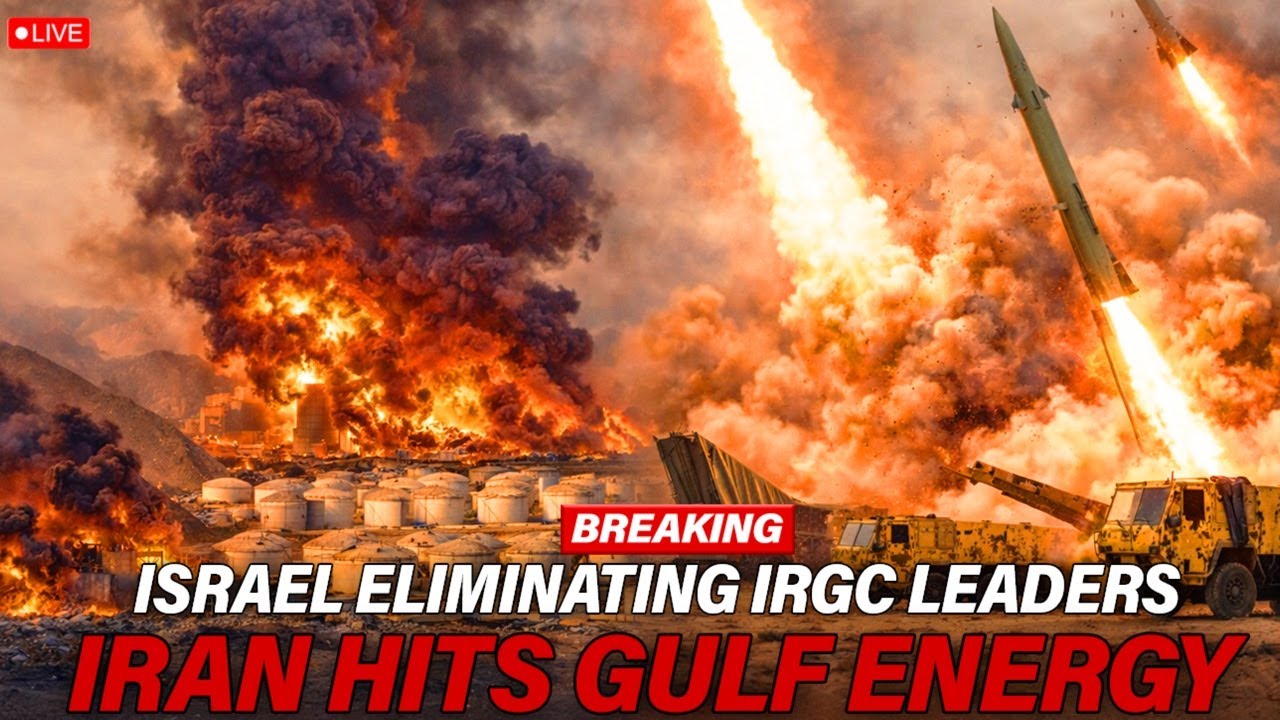
"As the US and Israel systematically dismantle Iran's military and leadership, the conflict escalates into an energy war, with the US considering ground invasion of Iran's critical Karag oil island to secure global oil routes."

BREAKING: Iran Threatens To END Talks; U.S. Vows Retaliation; Hezbollah Collapsing? | TBN Israel
"Iran is leveraging Hezbollah and the Strait of Hormuz to manipulate US negotiations, while Israel asserts its right to dismantle Hezbollah's eroding but still dangerous infrastructure in Lebanon, independent of international talks."

Patrick Henningsen: Hezbollah JUST Fired Back at Israel - Iran Vows to “Crush” All Attacks
"Patrick Henningsen argues that the US and Israel initiated an illegal war against Iran, driven by Trump's incompetence and Israeli influence, leading to an inevitable escalation with severe global economic repercussions."
BREAKING: Israel BOMBS Major Iran Gas Site; Top Mullah ELIMINATED; Iran Vows VENGEACE | TBN Israel
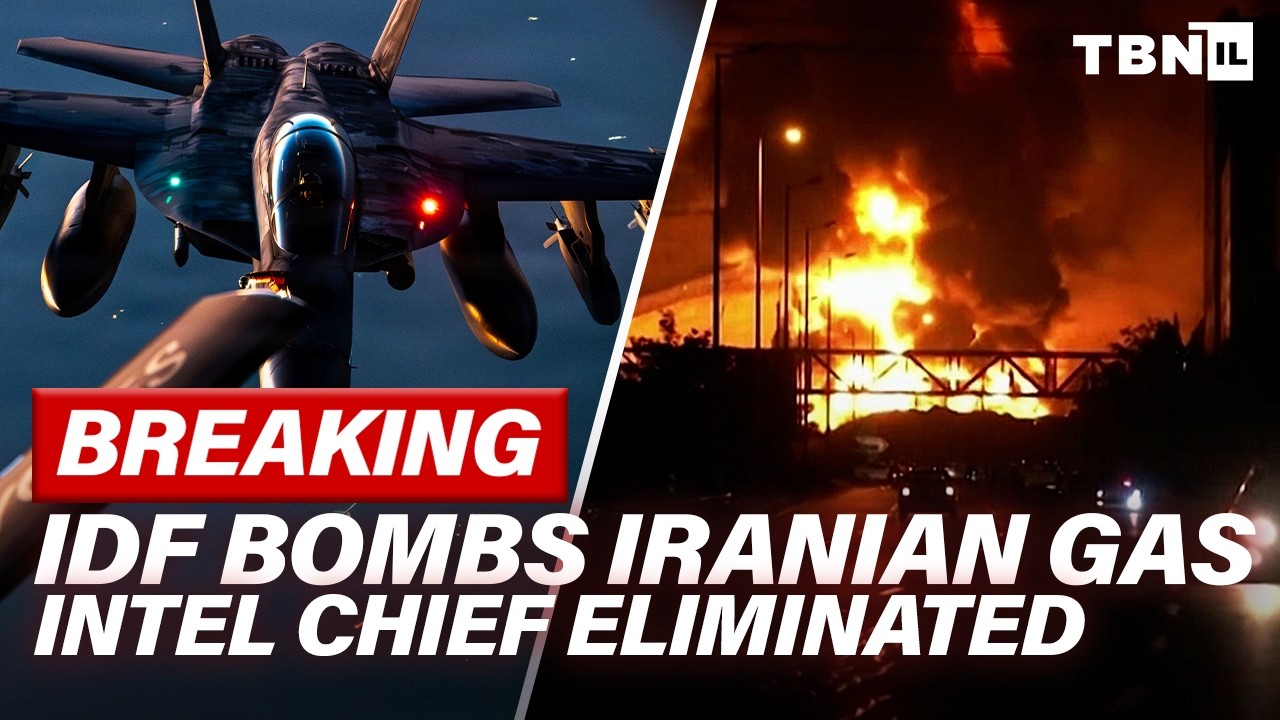
"Israel and the United States have escalated their 'Roaring Lion War' against Iran, striking its largest gas facilities, eliminating key intelligence and military figures, and disrupting missile production, while Iran threatens a broader energy war in the Gulf."