
Pepe Escobar: The New Axis of Power: How China & Russia Just Changed Iran’s War
YouTube · QmJEMv5XpDA
Quick Read
Summary
Takeaways
- ❖The US administration's decision to attack Iran is reportedly already made, with the method of attack (e.g., mini shock and awe, decapitation strike) being the current focus.
- ❖An attack on Iran is seen as a war against three BRICS nations (Iran, Russia, China) due to their strategic partnerships and Iran's critical role in Eurasian connectivity.
- ❖Blocking the Strait of Hormuz, a likely Iranian response, would cause a global economic collapse due to the quadrillions in derivatives linked to oil trade.
- ❖Iran exhibits high self-confidence and preparedness for any US strike, with strong backing from Russia and China.
- ❖Eurasian powers are actively building trade-focused connectivity corridors (like INSTC) as an alternative to the West's war-driven approach.
Insights
1US Decision to Attack Iran is Reportedly Finalized
The US administration, particularly President Trump, is described as having already decided to attack Iran, with the current focus being on the method of execution (e.g., 'mini shock and awe,' 'decapitation strike'). This decision is framed as being heavily influenced by the 'international Zionist Axis' and the military-industrial complex, despite potential negative consequences for Trump's political future and US national interests.
the decision to attack Iran... has already been made so now we are in the how stage... if he decides not to attack his donors, the people who gave him hundreds of millions of dollars for his re-election campaign, the international Zionist Axis... They're going to go for him.
2Iran's Strategic Partnerships with Russia and China Transform the Conflict Landscape
An attack on Iran is characterized as a war against three BRICS nations (Iran, Russia, China) simultaneously. China views Iran as a matter of national security due to its role as a top energy supplier and a key actor in the New Silk Roads and East-West connectivity corridors, with a 20-year strategic partnership valued at over $450 billion. Russia also has a serious strategic partnership with Iran, including military hardware and software exchange.
he would be launching a war against three bricks at the same time. Not only Iran but Russia and China linked to Iran by their own strategic partnerships... for China Iran is a matter of national security as one of China's top energy suppliers and a key actor in the new silk roads... in the case of Russia and Iran very serious because it includes uh exchange of uh military hardware and software
3Blocking the Strait of Hormuz Would Trigger Global Economic Collapse
If Iran responds to an attack by blocking the Strait of Hormuz, the global economy would 'implode.' This is due to the quadrillions of dollars in derivatives, far exceeding previous estimates, linked to global oil trade. Such an event would make the US president responsible for a worldwide economic collapse.
if the straight of hormones is blocked one way or another... this will ex implode the global economy especially because this pile of derivatives and the numbers are in the quadrillions... Donald Trump if he starts this war and if the straight of hormuz is blocked... he would be responsible for the collapse of the global economy
4Eurasian Powers Prioritize Connectivity Corridors Over Conflict
In contrast to the Western focus on potential war, Russia, Iran, and India are actively building the International North-South Transport Corridor (INSTC), a multi-modal network designed to facilitate trade across Eurasia. This initiative, alongside China's Belt and Road Initiative, represents a strategic shift towards economic integration and trade arteries, offering an alternative to a war-driven global order.
This is what Indians understand, Iranians understand, Russians understand, the Chinese understand... They are building trade arteries, connectivity corridors... the most important connectivity corridor in their modern history that they are building with the Russians and with the Indians, the international north south transportation corridor.
Bottom Line
The potential war, while tragic, is framed as an opportunity for Iran and the Axis of Resistance to inflict a 'definitive lesson on the Zionists,' potentially leading to a 'much larger correction later on' for their actions, including the 'genocide' they are perceived to be committing.
This perspective suggests that some actors view the conflict as a necessary, albeit painful, catalyst for a long-term geopolitical rebalancing and accountability.
For analysts, this highlights the deep-seated ideological drivers and long-term objectives of regional players, which extend beyond immediate military outcomes.
The US decision to attack Iran is presented as a self-inflicted wound, accelerating the 'end of an empire in accelerated motion provoked by the empire itself by the emperor himself.' This is driven by a need to divert domestic attention from economic ills and change the narrative.
This suggests that the US's foreign policy actions are not always rational or beneficial to its long-term interests, but rather driven by internal political and economic pressures.
For observers, this provides a framework for understanding how internal dynamics can lead to external overreach and decline, offering a predictive model for imperial collapse.
Opportunities
Eurasian Logistics & Infrastructure Development
Invest in or develop businesses supporting the International North-South Transport Corridor (INSTC) and other Eurasian connectivity projects. This includes rail, road, and port infrastructure, logistics services, customs facilitation, and digital platforms for cross-border trade between Russia, Iran, India, China, and Europe.
Regional Energy Security Solutions
Develop solutions for energy supply chain resilience and diversification for nations in the Global South, particularly those reliant on West Asian oil. This could involve investments in alternative energy sources, strategic reserves, or new pipeline/transport routes that bypass conflict zones like the Strait of Hormuz.
Key Concepts
Empire in Distress
The idea that a declining empire, facing internal economic and social issues, resorts to external conflict to divert attention and reconfigure the global chessboard, potentially accelerating its own decline.
Razor's Edge Decision
A critical moment where a single decision carries immense, potentially catastrophic, and irreversible consequences for global stability and the actors involved.
Connectivity Corridors vs. War
A contrasting geopolitical strategy where emerging powers focus on building trade, infrastructure, and economic integration as a path to power, as opposed to military intervention and conflict.
Lessons
- Monitor geopolitical developments in West Asia closely, particularly US-Iran relations and the status of the Strait of Hormuz, as these could trigger significant global economic disruption.
- Diversify supply chains and energy sources to mitigate risks associated with potential conflicts in critical choke points like the Persian Gulf.
- Analyze the long-term implications of emerging Eurasian connectivity corridors (e.g., INSTC, BRI) for global trade, logistics, and geopolitical power shifts, considering investment or strategic partnerships in these regions.
Iran's Geopolitical Resilience Playbook Against External Aggression
Maintain Unwavering Diplomatic Stance: Publicly declare openness to 'adult diplomatic discussion' while firmly rejecting negotiations on core national security elements like ballistic missile programs or support for the 'axis of resistance.'
Ensure Military Preparedness and Deterrence: Continuously prepare for 'any sort of war,' ensuring the military (IRGC) is ready for devastating counter-responses, including direct attacks on US bases, Israel, and potential blockade of strategic waterways.
Cultivate Strong Strategic Alliances: Deepen military and economic partnerships with major powers like Russia and China, leveraging these alliances to deter aggression and secure diplomatic, intelligence, and material support.
Leverage Economic Choke Points: Develop and communicate clear strategies for disrupting global trade routes, such as blocking the Strait of Hormuz, as a high-impact deterrent against external attack, understanding its potential for global economic implosion.
Promote Alternative Global Order: Actively participate in and champion multilateral initiatives like BRICS and the development of Eurasian connectivity corridors (e.g., INSTC) to foster a multipolar world order focused on trade and integration, contrasting with the aggressor's war-driven approach.
Notable Moments
Introduction of 'Make Connectivity Corridors, Not Wars' Documentary
Pepe Escobar introduces his documentary on the International North-South Transport Corridor (INSTC), framing it as the 'other side of the story' to the war narrative, showcasing Eurasia's focus on building trade arteries and integration. This moment highlights a fundamental ideological and strategic divergence between the 'empire of chaos' and the emerging multipolar world, emphasizing economic development and connectivity as a counter-narrative to conflict.
Quotes
"the decision to attack Iran... has already been made so now we are in the how stage"
"he would be launching a war against three bricks at the same time. Not only Iran but Russia and China linked to Iran by their own strategic partnerships."
"for China Iran is a matter of national security as one of China's top energy suppliers and a key actor in the new silk roads"
"Donald Trump if he starts this war and if the straight of hormuz is blocked... he would be responsible for the collapse of the global economy"
"Make connectivity corridors, not wars, which is in a sense the definition of Eurasia integration."
Q&A
Recent Questions
Related Episodes
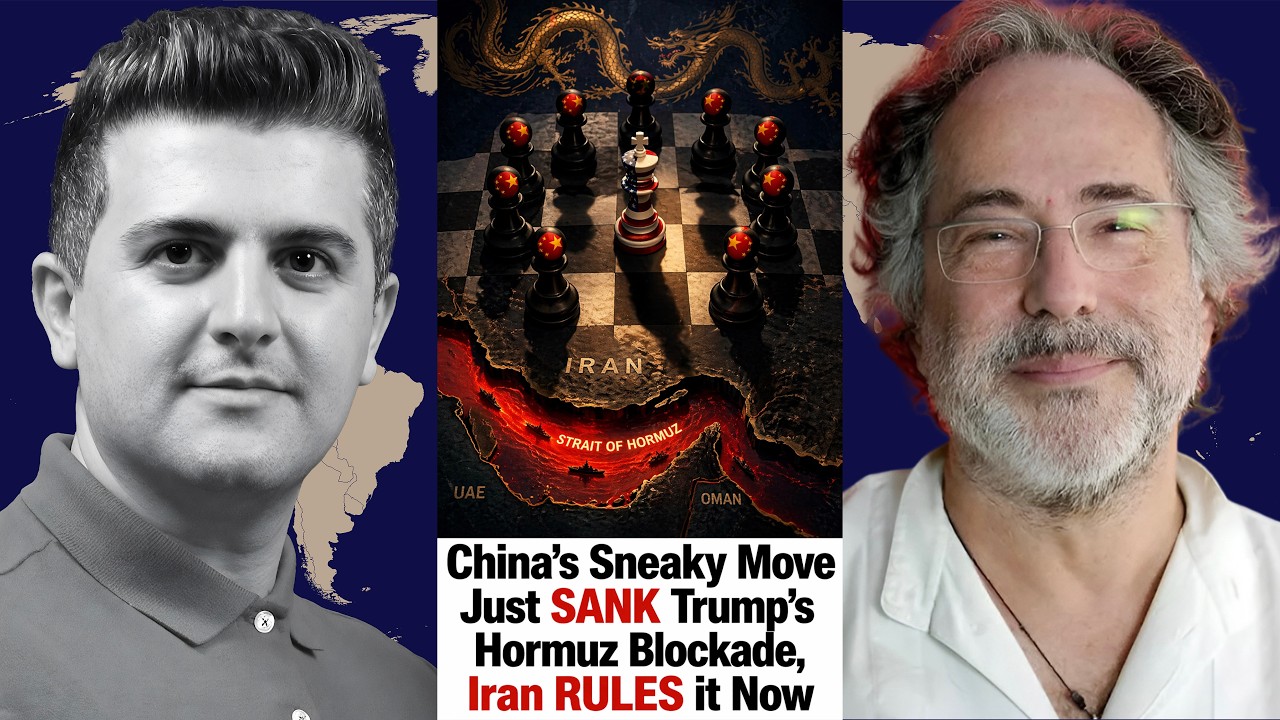
Pepe Escobar: “Total Failure”: Trump’s Blockade Just Backfired Disastrously
"Pepe Escobar argues that the US blockade against Iran, spearheaded by Donald Trump, has utterly failed and backfired, accelerating global economic chaos and challenging US geopolitical dominance."

BREAKING: Iran Threatens To END Talks; U.S. Vows Retaliation; Hezbollah Collapsing? | TBN Israel
"Iran is leveraging Hezbollah and the Strait of Hormuz to manipulate US negotiations, while Israel asserts its right to dismantle Hezbollah's eroding but still dangerous infrastructure in Lebanon, independent of international talks."

Iran Update: Israel’s Newest Bombing Campaign, the Oncoming War With China and How to Avoid It
"Colonel Wilerson reveals how the US and Israel are actively bombing China's strategic infrastructure in Iran, escalating a covert economic war that Beijing intends to win without direct military conflict by dismantling the dollar's global dominance."

Patrick Henningsen: Hezbollah JUST Fired Back at Israel - Iran Vows to “Crush” All Attacks
"Patrick Henningsen argues that the US and Israel initiated an illegal war against Iran, driven by Trump's incompetence and Israeli influence, leading to an inevitable escalation with severe global economic repercussions."