BREAKING: Trump Threatens To WIPE OUT Iran; ISIS Escapes As Clashes ERUPT In Syria | TBN Israel
YouTube · Rddy5MVz82U
Quick Read
Summary
Takeaways
- ❖The US is deploying aircraft carriers and fighter jets to the Middle East, signaling readiness for a powerful strike against Iran.
- ❖President Trump has threatened to 'wipe out' Iran if American interests are harmed, while Iran's regime has brutally suppressed internal protests, causing thousands of fatalities and detentions.
- ❖Israel is on high alert, preparing its multi-layered air defense systems and F-35 fleet for potential Iranian retaliation.
- ❖In Gaza, Hamas is under pressure after Trump's statement on a fallen hostage; Israel demands disarmament and demilitarization within two months.
- ❖Northern Syria's Kurdish forces have pulled back, raising fears of ISIS detainees escaping from the Al-Hol camp as a new Syrian regime takes control.
- ❖Turkey is actively shaping events in Syria, backing the new Syrian army and expanding its influence, which Israel views as a rising threat.
- ❖Israel maintains its buffer zones and high ground in Syria, refusing to trade terrain for promises given the evolving threats.
Insights
1US & Israel Prepare for 'Enormous Power' Strike on Iran
The United States is steadily tightening its military presence around Iran, with aircraft carriers (Abraham Lincoln, George Bush) nearing the Persian Gulf and fighter jets deployed to bases in Jordan. President Trump has issued direct threats, stating, 'We will wipe them off the face of the earth' if anything happens to him, following Iranian threats of assassination. This military buildup is described as enabling an attack with 'enormous power,' aimed at neutralizing strategic capabilities and choking rehabilitation.
US aircraft carriers Abraham Lincoln and George Bush are moving towards the Persian Gulf (, , ). US air forces moved fighter jets to bases in Jordan (). President Trump declared, 'we will wipe them off the face of the earth' () and 'if anything happens to him, the response will be absolute to the point of wiping out Iran' ().
2Iran's Regime Suppresses Protests Amidst External Pressure
Internally, Iran's revolutionary guards have brutally suppressed widespread protests, leading to a dramatic decline in street activity. Human rights organizations estimate nearly 20,000 fatalities and an even higher number of detainees subjected to torture. The regime is attempting to buy time and engage in dialogue with Washington to prevent military action, while the underlying problems that fueled the protests remain unresolved.
Dramatic decline in protests due to regime's brutal repression (, ). Security sources estimate fatalities close to 20,000 and high numbers of tortured detainees (, ). The regime is trying to buy time and create infrastructure for dialogue to prevent military moves ().
3Israel's Multi-Layered Air Campaign Strategy Against Iran
Israel is on heightened alert, increasing readiness in defense (Arrow, David Sling, Iron Dome) and offense (receiving new F-35 aircraft). A potential air campaign against Iran would be multi-layered, targeting nuclear facilities (Natanz, Fordow, Isfahan) to break engineering and logistical infrastructures, missile and drone arrays (production lines, component warehouses, launch sites), decapitation strikes on security leadership and control centers, and the energy system to deepen internal pressure.
Heightened alert in Israel with increased readiness in defense and offense (, ). Air Force received three new F-35 aircraft (). Multi-layer campaign targets: nuclear program (Natanz, Fordow, Isfahan) (), missile/drone arrays (), decapitation strikes on security top brass and control centers (, ), and energy system/economy ().
4Gaza Faces Ultimatum: Disarm or Renewed Military Action
President Trump's statement that the US knows the location of the fallen hostage Staff Sergeant Ran Gavelli has put Hamas in a difficult position, forcing them to deny information they previously claimed not to have. Senior Israeli officials believe the current ceasefire serves Hamas, allowing it to strengthen and rebuild capabilities. Israel is preparing to present Hamas with a two-month ultimatum to disarm and demilitarize, or the IDF will return to full-scale fighting in Gaza. Reports indicate some Hamas commanders are preparing for a safe exit to Turkey.
President Trump stated the US knows where the last foreign hostage Ran Gavelli is buried (, ). Hamas denied this and blamed Israel (, ). Senior officials in Jerusalem state moving to phase B (disarmament/demilitarization) is an Israeli interest (, ). An ultimatum of two months for Hamas to disarm and demilitarize is being considered (, ). Reports of Hamas commanders preparing to exit Gaza Strip to Turkey (, ).
5Northern Syria: ISIS Escape Risk and Turkish-Backed Power Shift
Following the US withdrawal, the new Syrian regime of Abu Muhammad al-Julani took control of the Kurdish province in northern Syria, leading to Kurdish forces pulling back from the Al-Hol camp area, which holds thousands of ISIS-linked families. This creates a significant risk of ISIS detainees escaping. The US is shifting its focus away from protecting the Kurdish-led SDF and is ready to let the new Syrian state 'own the ISIS file,' a gamble given the active threat. Turkey is actively shaping these events, backing the new Syrian army and expanding its influence, which is seen as creating a Sunni Islamist Syria pushing minorities into a weaker position.
US withdrawal led to new Syrian regime of Abu Muhammad al-Julani taking control of Kurdish province (, ). Kurdish forces pulled back from Al-Hol camp area, raising ISIS escape risk (, ). US is ready to let the new Syrian state own the ISIS file (). Turkey is shaping events, strengthening its position in Syria, and supporting the Syrian army against the Kurds (, ).
Bottom Line
The US's strategic shift away from direct ground commitment in Northern Syria and its readiness to let the new Syrian regime manage the ISIS threat is a calculated risk, potentially creating a vacuum that ISIS could exploit for resurgence.
This policy pivot, driven by a focus on Iran, could inadvertently destabilize a critical region and lead to a renewed global terror threat if the new Syrian regime fails to contain ISIS effectively.
For regional powers like Israel, this necessitates a re-evaluation of border security and potential pre-emptive measures against a resurgent ISIS, while also navigating the complex dynamics of Turkish influence and a new Syrian alignment.
Turkey is leveraging its relationship with President Trump and its political standing to expand its influence in Syria and Gaza, effectively building a new 'umbrella' of Sunni Islamist power in the region.
This coordinated trend positions Turkey as a significant, potentially adversarial, force in the Middle East, challenging existing power structures and creating new security concerns for Israel and other regional actors.
Understanding Turkey's strategic objectives and its backing of the new Syrian regime is crucial for anticipating future regional alignments and developing counter-strategies, especially regarding the protection of minority communities and border stability.
Lessons
- Monitor US military deployments and statements regarding Iran closely, as they indicate a high probability of significant military action and potential for regional escalation.
- Pay attention to the two-month deadline for Hamas's disarmament in Gaza, as its expiration will likely trigger a renewed and intense Israeli military campaign.
- Watch for developments in Northern Syria, particularly around the Al-Hol camp and other ISIS detention facilities, as any instability could lead to a resurgence of ISIS and increased regional violence.
- Observe Turkey's diplomatic and military actions in Syria and Gaza, as its expanding influence is a key factor in shaping the future geopolitical landscape and potential new threats to Israel.
- Understand that Israel's refusal to concede buffer zones in Syria is a critical strategic stance, reflecting a lesson learned about trading terrain for promises, and will be a non-negotiable point in any future regional deals.
Notable Moments
President Trump's direct threat to 'wipe out' Iran and his statement about knowing the location of a fallen hostage in Gaza.
These statements significantly escalate tensions, moving from diplomatic pressure to explicit military threats and exposing Hamas's ambiguity, forcing critical decisions in both theaters.
The US decision to let the new Syrian state 'own the ISIS file' after Kurdish forces pulled back from the Al-Hol camp.
This marks a significant shift in US policy, disengaging from direct counter-ISIS ground commitment in Syria and gambling on the new regime's ability to contain the threat, with high risks of ISIS resurgence.
Quotes
"If something happens to me, the entire country is going to explode."
"We will wipe them off the face of the earth."
"The message is not we decided, the message is we are capable and that is the heart of the deterrence."
"Israel learned the hard way on October 7th, 2023. What happens when you trade terrain and time for words?"
"Syria is reuniting by force. Turkey is backing the winners, and the ISIS file is the fuse that can blow the whole region wide open."
Q&A
Recent Questions
Related Episodes
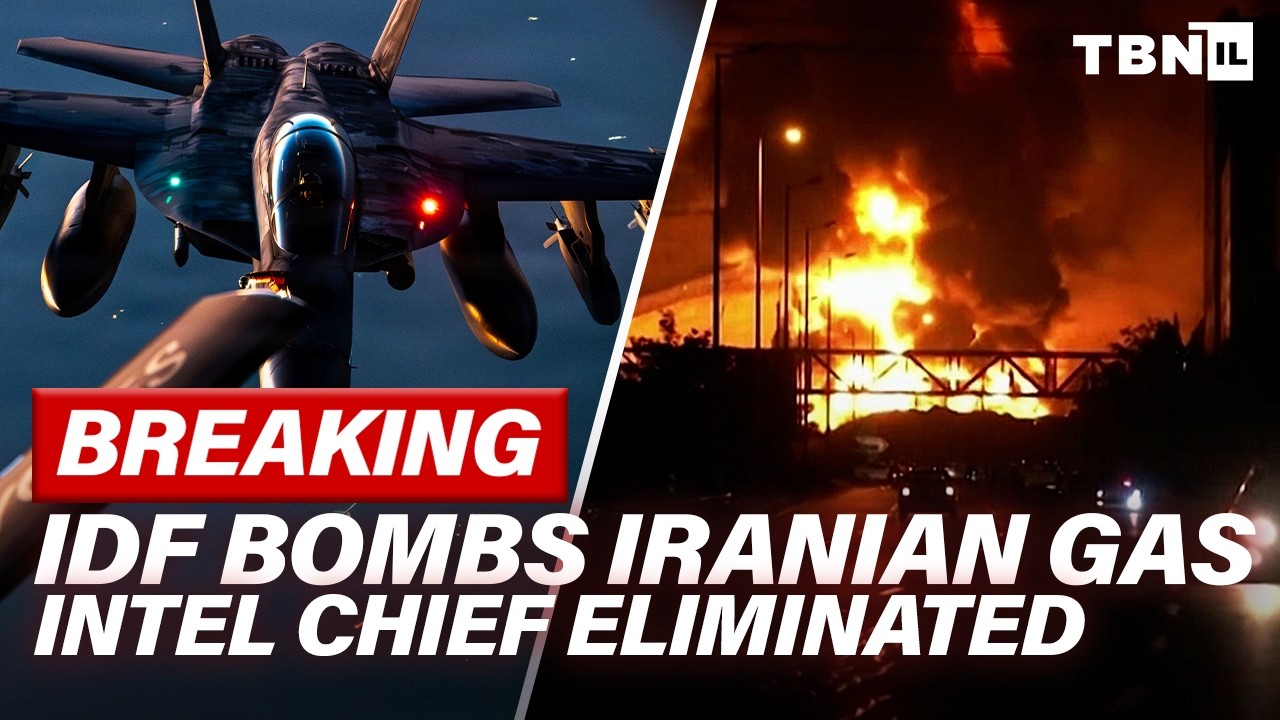
BREAKING: Israel BOMBS Major Iran Gas Site; Top Mullah ELIMINATED; Iran Vows VENGEACE | TBN Israel
"Israel and the United States have escalated their 'Roaring Lion War' against Iran, striking its largest gas facilities, eliminating key intelligence and military figures, and disrupting missile production, while Iran threatens a broader energy war in the Gulf."

Col. Jacques Baud: Middle East on Fire — Is This the Start of Something Bigger?
"Colonel Jacques Baud dissects the escalating conflict between the US, Israel, and Iran, arguing that Western misunderstanding of Iranian culture and strategic duplicity have forced Iran into a position of necessary escalation, ultimately degrading the West's own strategic posture."

Alex Krainer: US STRIKES Iran – Iran RETALIATES Against Kuwait, Bahrain & Jordan!
"Amidst escalating US-Iran conflict and Iranian retaliation against regional US allies, this episode argues that US foreign policy is deeply controlled by an 'Anglo-Zionist conspiracy' led by the Rothschild banking dynasty, prioritizing Israeli interests over American ones."
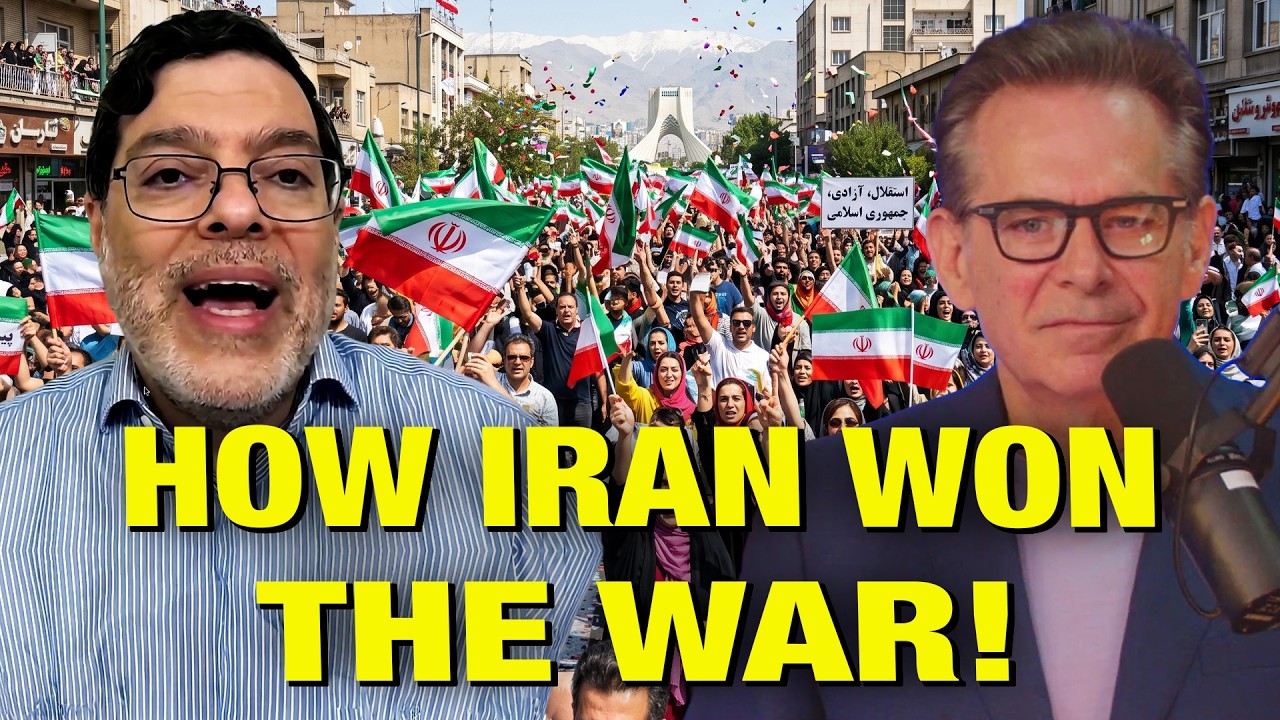
The REAL Story About The War From INSIDE IRAN! – Jimmy Interviews Prof. Marandi
"Professor Marandi, an Iranian academic, details how Iran emerged stronger from recent conflicts, now controlling the Strait of Hormuz and possessing a credible deterrent against its adversaries, despite facing economic siege and Western-backed regional proxies."