
Prof. David N. Gibbs: BREAKING: Trump & Iran Confirm the MoU Is Closer Than Ever
YouTube · S3wwzKwImwI
Quick Read
Summary
Takeaways
- ❖Donald Trump announced a Memorandum of Understanding (MoU) with Iran, which Iran's foreign minister confirmed is close to agreement.
- ❖Professor Gibbs is skeptical of the MoU's success, believing Iran has the upper hand and no reason to trust the US/Israel.
- ❖Iran's control over the Strait of Hormuz is considered its 'nuclear weapon' and a critical point of leverage for reconstruction funds.
- ❖The US has the option to cut financial, military, and diplomatic support to Israel, but has historically been unwilling to do so.
- ❖US public support for Israel is rapidly declining, especially among younger evangelicals, due to visible actions in Gaza.
- ❖Israel's attempts to merge its military with the US (e.g., Section 224 legislation) are seen as a sign of weakness and fear.
- ❖Israel's 'irrational policy' of perpetual war is causing a 'brain drain' of talented individuals and exhausting its defense forces.
- ❖Trump's decision to attack Iran was based on Israeli intelligence promising a 'quick capitulation' and regime change, similar to Venezuela.
- ❖China and Russia are strong backers of Iran, viewing it as a critical ally against US attempts to control energy markets and destabilize their borders.
- ❖The conflict is seen as a potential 'historic defeat' for the US, marking the end of American hegemony and humiliating Donald Trump.
Insights
1Iran's Strategic Upper Hand and Leverage
Iran maintains a significant military and strategic advantage in the current conflict, particularly through its control of the Strait of Hormuz. This control is viewed as Iran's 'nuclear weapon,' providing crucial leverage for generating funds to reconstruct its country and dictating terms in any potential agreement. The US and Israel are unlikely to dislodge Iran from this position.
Professor Gibbs states, 'Iran retains the upper hand here... It controls the straight of Hormuz which is a really critical point of leverage. Some have called it Iran's nuclear weapon.' He adds that Iran 'can't imagine would relinquish that leverage and relinquish control of the straight of woos. They also will have to control it for an extended period to generate enough funds to reconstruct their country.'
2Erosion of US Public Support for Israel
Public support for Israel in the United States is rapidly declining across political spectrums, including within the Democratic and Republican parties, and notably among younger evangelical Christians. This shift is attributed to increased public awareness, particularly through social media, of the consequences of Israeli military actions in the Middle East.
Gibbs notes, 'What's very interesting however is that support is rapidly eroding. Okay, public support in the US is definitely going down. Um and that's true both in the Democratic party and in increasingly also in the Republican party. A critically important development in my view is the decline of support for Israel among evangelical Christians.' He attributes this to younger evangelicals watching YouTube and seeing 'what Israel is doing in Gaza.'
3Israel's 'Irrational Policy' and Internal Weakness
Israel's continued pursuit of aggressive military policies, particularly in Lebanon and against Iran, is described as 'irrational.' This approach is leading to significant internal challenges, including a 'brain drain' of talented citizens seeking second passports and an overstretched, exhausted military. These actions are interpreted as signs of desperation rather than strength.
Gibbs states, 'I'm going to have to say I think Israel is pursuing what to me seems like an irrational policy. Uh there's no way Israel's better off from starting a war with Iran.' He later adds, 'One of the most widespread activities in Israel is acquiring a second passport... That talent is leaving.' He also mentions an Israeli general stating the 'Israeli defense forces is at the breaking point.'
4Trump's Miscalculation and the End of US Hegemony
Donald Trump was drawn into the war with Iran based on Israeli intelligence assurances of a swift, easy victory and regime change, similar to the US intervention in Venezuela. This miscalculation has resulted in a 'classic quagmire' from which Trump cannot easily withdraw without facing humiliation and potentially marking the end of American hegemony on a global scale.
Gibbs explains, 'he got himself into a war he cannot get out of uh because he was expecting quite clearly a quick capitulation.' He details how Israeli intelligence promised a plan 'to decapitate the leadership and if we decapitate the leadership the whole regime will fall like a house of cards.' He concludes, 'this could very well be a hinge point in which people will say that's the end of American hegemony and Trump will be that remember it is the president who ended American hegemony.'
Bottom Line
The US Constitution's 'supreme law of the land' clause for treaties means the attack on Iran, a violation of the UN charter, was also a violation of US domestic law, a fact often overlooked.
This highlights a profound legal and ethical inconsistency in US foreign policy, where international and domestic legal frameworks are disregarded for military aggression. It suggests a normalization of illegal acts in pursuit of geopolitical objectives, undermining the rule of law.
Advocacy groups and legal scholars could leverage this constitutional point to challenge future military interventions and hold policymakers accountable under domestic law, potentially shifting public and political discourse on war authorization.
The UAE's continued close relationship with Israel, despite regional shifts and the risk of Iranian retaliation (e.g., targeting desalination plants), appears strategically irrational.
This suggests either a deep-seated, non-publicized strategic alignment or a significant miscalculation of risk by the UAE. It could also indicate a desire to differentiate itself from other GCC countries or a reliance on external security guarantees that may prove insufficient.
Analysts should investigate the specific drivers of UAE-Israel ties beyond public narratives, considering covert security agreements, economic dependencies, or internal political motivations that outweigh apparent geopolitical risks. This could reveal hidden fault lines or alliances in the region.
Key Concepts
David vs. Goliath
This model is used to describe the perceived power dynamic between Iran (David) and the combined forces of Israel and the United States (Goliath). Despite the apparent military superiority of the latter, Iran's unexpected resilience and effectiveness in resisting attacks evoke sympathy and impress observers, challenging the conventional understanding of power.
Quagmire
This model describes a difficult or complex situation that is hard to escape, often used in the context of military conflicts. Trump's involvement in the Middle East war is framed as a 'classic quagmire' from which he cannot easily withdraw without facing significant political humiliation and admitting defeat, despite initial expectations of an easy victory.
Lessons
- Re-evaluate investment strategies in the Middle East, considering Iran's growing control over critical chokepoints like the Strait of Hormuz and the potential for prolonged instability.
- Monitor shifts in US public opinion on Israel, particularly among key demographic groups like evangelical Christians, as this could signal future changes in US foreign policy and aid allocations.
- Analyze the long-term implications of Israel's 'irrational' and aggressive policies on its own internal stability, economy (brain drain), and military readiness, rather than solely focusing on its external power projection.
Quotes
"Iran, based on the record of the United States and Israel, has no reason to trust anything that is said or agreed to."
"The United States provides crucial support to Israel in the form of annual subsidies... very difficult for Israel to engage in quite the degree of military aggression it has been engaging in if they didn't have the United States backstopping them with financial aid."
"A critically important development in my view is the decline of support for Israel among evangelical Christians."
"This could be the event that fundamentally changes America's attitude towards Israel. Could also be the event that ends American hegemony."
"The two most aggressive countries in the world are Israel and the United States. It's not an ally. It's not a it's not an accident. They're allies."
"Any way this war is settled... it'll be settled on the basis of terms that will favor Iran because Iran is the upper hand here."
"This is a brazen what the United States and Israel did was a brazen violation of the UN charter... this attack on Iran was a violation of US law as well."
"Trump would go down as uh a disastrous president. He knows that. And I think that's what he's trying to avoid here. But he has no way out."
Q&A
Recent Questions
Related Episodes

Patrick Henningsen: Hezbollah JUST Fired Back at Israel - Iran Vows to “Crush” All Attacks
"Patrick Henningsen argues that the US and Israel initiated an illegal war against Iran, driven by Trump's incompetence and Israeli influence, leading to an inevitable escalation with severe global economic repercussions."

Alex Krainer: US STRIKES Iran – Iran RETALIATES Against Kuwait, Bahrain & Jordan!
"Amidst escalating US-Iran conflict and Iranian retaliation against regional US allies, this episode argues that US foreign policy is deeply controlled by an 'Anglo-Zionist conspiracy' led by the Rothschild banking dynasty, prioritizing Israeli interests over American ones."

Bibi DEMANDS Ground Troops As Marines Rushed to Iran
"Benjamin Netanyahu is pushing for US ground troops in Iran, framing air strikes as insufficient, while the US rushes Marines to the region and struggles to secure the Strait of Hormuz against surprisingly capable Iranian defenses."
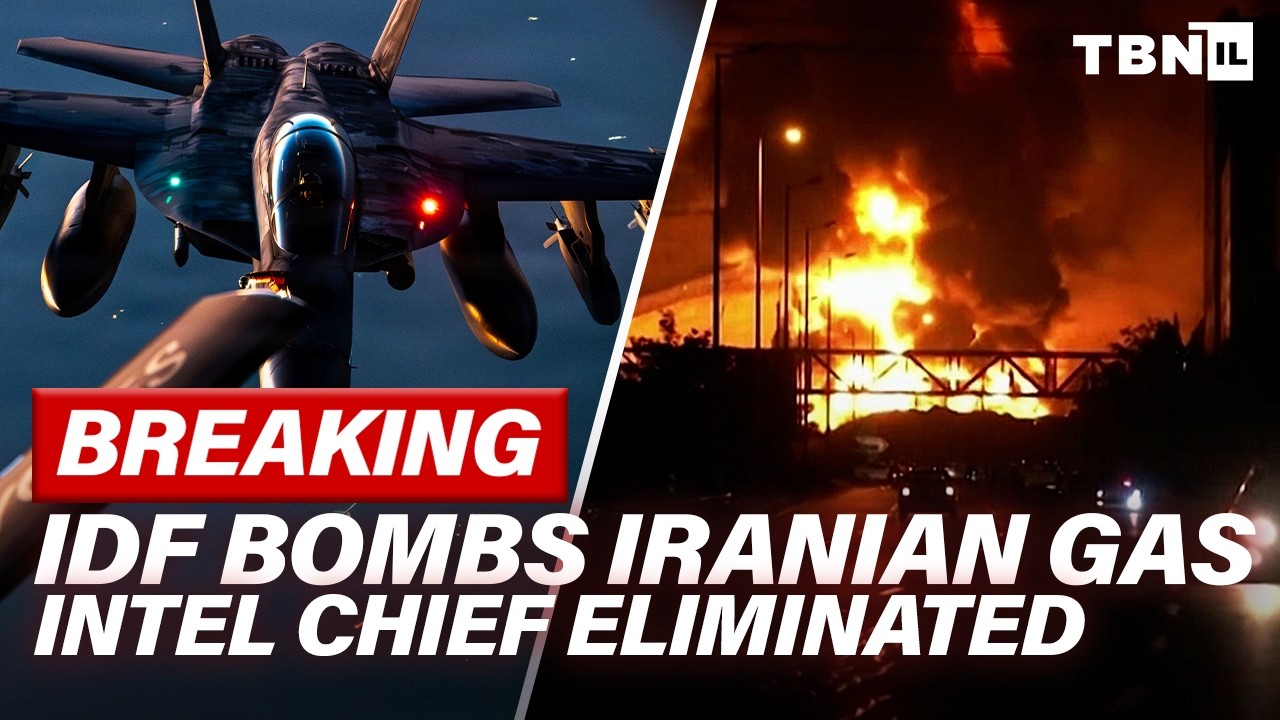
BREAKING: Israel BOMBS Major Iran Gas Site; Top Mullah ELIMINATED; Iran Vows VENGEACE | TBN Israel
"Israel and the United States have escalated their 'Roaring Lion War' against Iran, striking its largest gas facilities, eliminating key intelligence and military figures, and disrupting missile production, while Iran threatens a broader energy war in the Gulf."