MASS Resignations at DOJ as ICE Shooting UPENDS DOJ | It's Complicated
YouTube · S8jPQ9xUp30
Quick Read
Summary
Takeaways
- ❖Federal prosecutors in the District of Minnesota resigned after the Trump administration reportedly pressured them to investigate Renee Good's spouse instead of the ICE agent who shot her.
- ❖The ICE shooting investigation is being obstructed by the federal government, which controls key evidence (vehicle, weapon, autopsy report) and is not cooperating with state authorities.
- ❖Qualified immunity protects law enforcement from civil liability in certain contexts but does not grant absolute immunity from criminal prosecution.
- ❖The hosts' analysis of the shooting video suggests the officer made anticipatory movements and continued shooting after the threat passed, casting doubt on a self-defense claim.
- ❖The DOJ initiated an investigation into Federal Reserve Chairman Jerome Powell for alleged false statements to Congress about building renovations, a move seen as politically motivated and potentially destabilizing.
- ❖The investigation into Chairman Powell is viewed as an attempt by loyalists to 'curry favor' with Trump, despite concerns from within the Republican party about undermining the Federal Reserve's independence.
Insights
1DOJ Obstruction and Mass Resignations in ICE Shooting Case
The U.S. Attorney's Office in the District of Minnesota experienced mass resignations because the Trump administration reportedly pressured prosecutors to investigate Renee Good's spouse, rather than the ICE agent who fatally shot her. This directive contradicted the prosecutors' belief that the shooter should be investigated, leading to their departure.
A former colleague of Renato Mariotti, who was an acting US attorney, resigned over the red line of investigating the wife instead of the shooter. The federal government is withholding evidence (vehicle, weapon, autopsy report) from state investigators.
2Legal Standards for Officer-Involved Shootings
Federal officers do not have absolute immunity from criminal prosecution. While qualified immunity can protect them from civil liability if their actions didn't violate clearly established constitutional rights, it is not a defense against criminal charges like murder. To prove criminal liability, prosecutors must show the officer did not have a reasonable belief of imminent death or serious bodily injury when using deadly force.
Asha Rangappa clarifies that qualified immunity is a civil defense, not a criminal one. Renato Mariotti confirms federal agents are not immune from criminal prosecution for actions like murder. Both discuss the high bar for criminal prosecution, requiring proof beyond a reasonable doubt that the officer's belief of danger was unreasonable.
3Analysis of the ICE Shooting Incident
A detailed review of the shooting footage reveals the ICE officer made anticipatory movements before the vehicle moved towards him, such as switching his phone to his non-dominant hand and moving in front of the car. He also continued to shoot after the immediate threat passed and was heard yelling an expletive, suggesting anger rather than pure self-defense. These actions cast doubt on the claim that he genuinely felt threatened in a 'split-second' situation.
Asha Rangappa's Substack analysis, referenced by Mariotti, highlights the officer's anticipatory movements (), shooting after the threat passed (), and the expletive (). Mariotti notes the potential impact of the expletive on a jury's verdict.
4Politically Motivated Investigation into Federal Reserve Chairman Jerome Powell
The DOJ, under the Trump administration, launched an investigation into Federal Reserve Chairman Jerome Powell for alleged perjury regarding statements about building renovations. This move is seen as a politically motivated attempt by loyalists to 'curry favor' with Trump, using 'false statements' as a common pretext for investigations. This action risks undermining the perceived independence of the Federal Reserve, which is crucial for economic stability, and has drawn concern from Republican senators.
The hosts discuss 'crack prosecutor Janine Piro' investigating Powell (), the use of 'false statements' as an 'easy hook' for investigations (), and the idea of loyalists competing to 'curry favor' (). Mariotti highlights the potential economic and political risks of attacking the Federal Reserve's independence (), and Rangappa notes Republican senators' public concern ().
Bottom Line
The federal government's active obstruction of a state investigation into a federal agent's conduct, by withholding critical physical evidence, is unprecedented in the hosts' experience, suggesting a deliberate attempt to prevent accountability.
This sets a dangerous precedent where federal agencies can shield their personnel from state-level criminal investigations, creating a two-tiered justice system and eroding trust in both federal and state law enforcement cooperation.
State legal bodies could challenge this obstruction in court, potentially forcing the federal government to release evidence or risk public perception of a cover-up, which could galvanize public and political pressure for reform.
The investigation into Jerome Powell is not just a political attack but a potential 'shooting themselves in the foot' scenario for the Trump administration, as it risks destabilizing the US economy and alienating key Republican figures who value the Federal Reserve's independence.
This indicates a potential miscalculation by political actors, where the pursuit of short-term political loyalty tests could lead to significant long-term economic and political fallout, even within their own party.
The pushback from Republican senators and Powell's public video statement demonstrate that even within a highly politicized environment, there are 'red lines' that, when crossed, can provoke unified opposition and potentially limit the extent of executive overreach.
Lessons
- Recognize that 'qualified immunity' primarily protects law enforcement from civil lawsuits, not criminal prosecution, for actions that violate constitutional rights.
- Understand that political influence can lead to the weaponization of legal processes, where investigations are initiated for political gain rather than genuine legal merit.
- Be aware that the lack of cooperation between federal and state law enforcement in high-profile cases can indicate systemic issues or deliberate obstruction of justice.
Notable Moments
Discussion of mass resignations in the U.S. Attorney's Office in Minnesota due to pressure to investigate the victim's spouse instead of the ICE shooter.
This highlights internal dissent and ethical concerns within the DOJ regarding politically motivated directives, signaling a breakdown of traditional prosecutorial independence.
Detailed analysis of the ICE shooting video, pointing out the officer's anticipatory movements and continued shooting after the threat passed.
This provides specific evidence challenging the narrative of a 'split-second' self-defense scenario, crucial for assessing potential criminal liability.
The hosts describe the investigation into Federal Reserve Chairman Jerome Powell as an attempt by loyalists to 'curry favor' with Trump, using 'false statements' as a pretext.
This reveals a dynamic of political competition and opportunism within the administration, where legal processes are exploited for personal political advancement.
Renato Mariotti notes the public concern from Republican senators regarding the investigation into Chairman Powell.
This indicates that even within a highly partisan environment, certain actions (like attacking the Federal Reserve's independence) can generate bipartisan opposition, potentially limiting executive power.
Quotes
"The idea that federal agents or anyone else really has absolute immunity for their actions is incorrect."
"What they care most about is getting their narrative out, not really uncovering the facts that might lead to a particular conclusion."
"It's starting to feel like a cover up to me. I'm sorry. I don't mean to be like a conspiracy theorist, but like I've never seen the FBI or the Department of Justice like not like, you know, want to block the other people from trying to get evidence to to solve, you know, to to get move forward in an investigation. It doesn't make any sense."
"The co-opting of the loyalists has reached a point where they anticipate, you know, they're they're kind of now in competition to curry favor."
Q&A
Recent Questions
Related Episodes
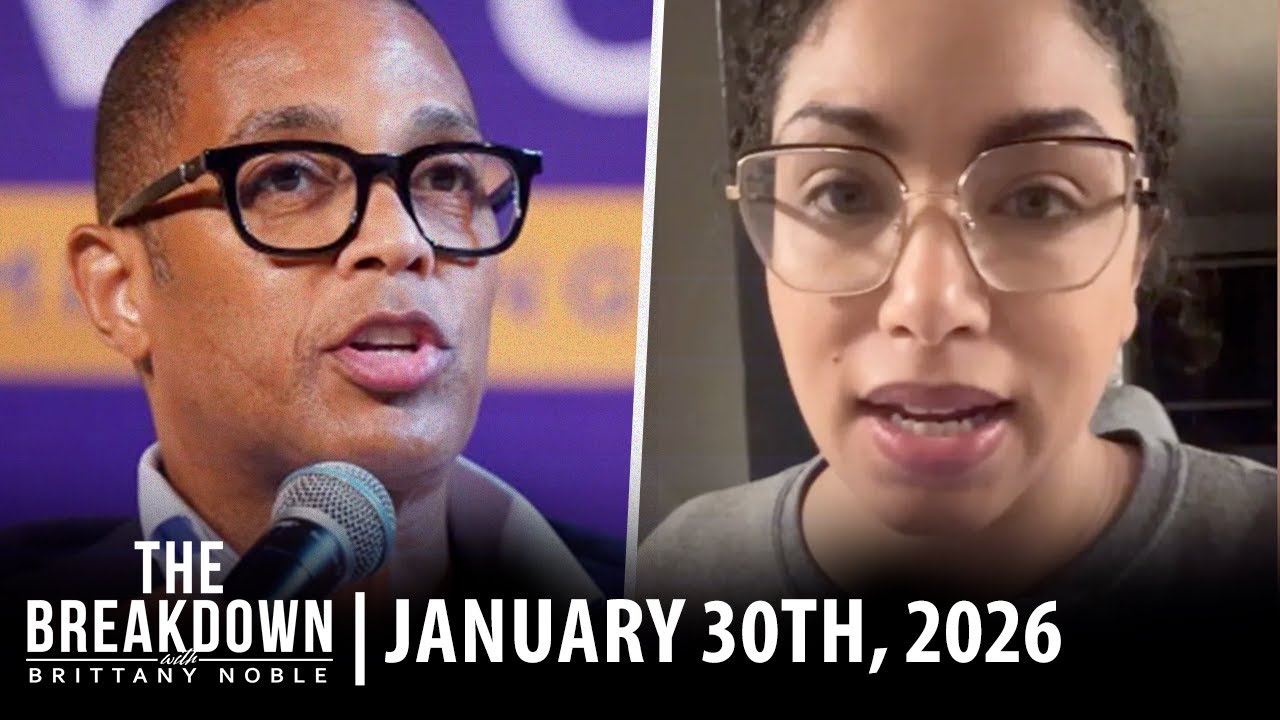
rump’s DOJ arrests journalists Don Lemon, Georgia Fort
"Federal agents arrested prominent journalists Don Lemon and Georgia Fort for covering a church protest, sparking widespread condemnation and raising critical questions about First Amendment rights and the weaponization of the Justice Department."

FBI Special Agent issues SHOCK TAKEDOWN of ICE
"Former FBI Special Agent Tony Box condemns ICE's actions in Minnesota, labeling the killings of Renee Good and Alex Prey as murder and criticizing the agency's inadequate training and leadership."
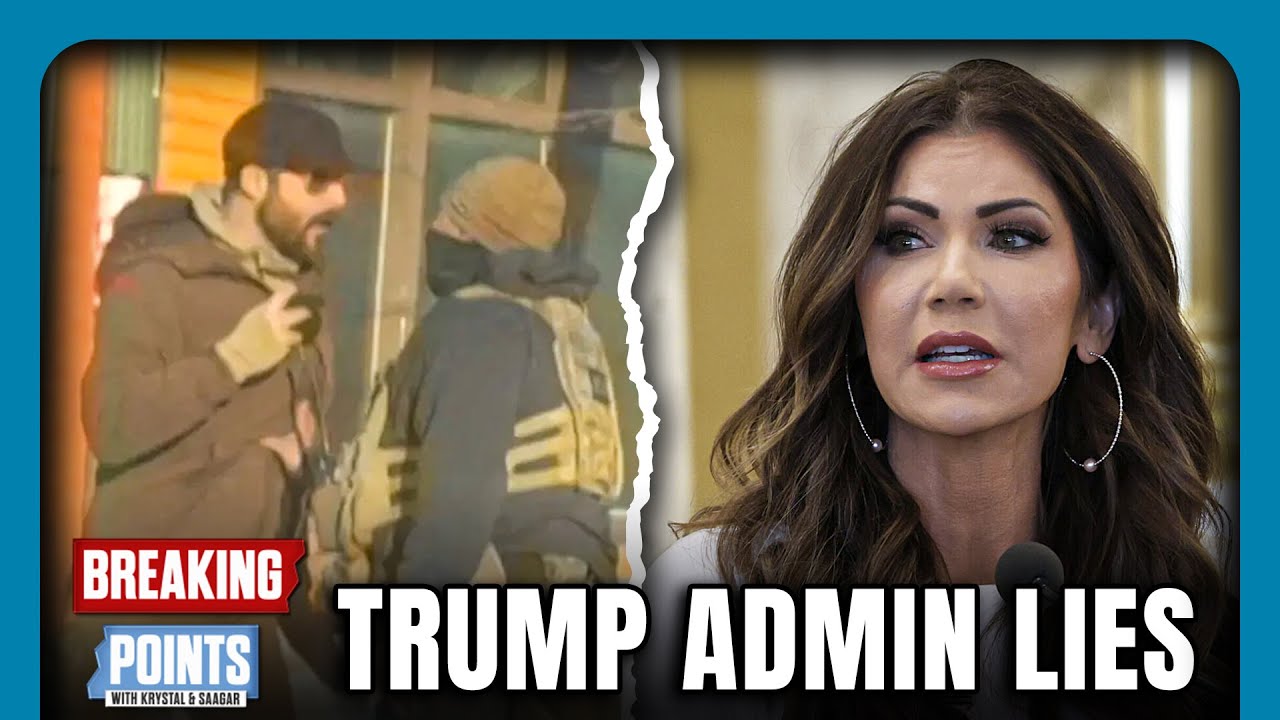
ROUNDUP: ALL Trump Admin LIES About MN Shooting
"This episode exposes the Trump administration's alleged lies and misrepresentations surrounding the fatal shooting of Alex Petti by federal agents in Minnesota, arguing it represents a severe erosion of civil liberties and public trust."

Jeanine Pirro suffers ULTIMATE HUMILIATION in court
"Former Fox News host Jeanine Pirro, now US Attorney for DC, faced significant embarrassment after a jury delivered a 35-minute 'not guilty' verdict in a felony case involving a homeless man and a cat toy laser pointer."