
Her dating history created dozens of suspects
YouTube · SJlECJIhNlA
Quick Read
Summary
Takeaways
- ❖Diane Zeleleski, 54, was found murdered in her New Jersey home in November 2010.
- ❖The killer used fire extinguisher powder and toilet cleaner to destroy evidence at the scene and on Diane's body.
- ❖Diane's wallet and TV remote were found soaking in soapy water in the kitchen sink, indicating an attempt to remove fingerprints/DNA.
- ❖A small amount of male blood found at the scene did not match Diane's DNA, becoming a key piece of evidence.
- ❖Investigators initially focused on Diane's online dating contacts and ex-boyfriends, collecting over 80 DNA samples from over 100 suspects.
- ❖The killer, Arnell Yearwood, was Diane's neighbor's son, who was overlooked because detectives mistook his 11-year-old nephew for him during initial interviews.
- ❖Arnell confessed to killing Diane after she rejected his sexual advances, then stayed at the house for hours, cleaning, showering, eating, watching TV, and ordering items online with Diane's credit cards.
- ❖Arnell Yearwood was arrested in April 2012, nearly a year and a half after the murder, and sentenced to 30 years in prison.
Insights
1Elaborate Crime Scene Contamination and Cleanup
The killer went to extreme lengths to obscure evidence, including spraying fire extinguisher powder throughout the foyer, submerging Diane's wallet and TV remote in soapy water, and dousing her body with toilet cleaner. This meticulous effort suggested the killer was comfortable lingering at the scene for an extended period.
Forensic teams found fire extinguisher powder in the foyer, Diane's wallet and TV remote in the kitchen sink filled with soapy water, and a bottle of toilet cleaner near Diane's body in the basement, which emitted a harsh chemical smell.
2Initial Investigative Focus on Diane's Dating History
Given Diane's active online dating life and the lack of forced entry, detectives initially suspected the killer was someone she knew, likely a romantic partner or ex. This led to a wide-ranging investigation into her numerous online contacts.
Diane's parents informed police of her frequent dating, mostly online. Digital forensics later accessed her laptop, revealing dozens of online dating contacts. Detectives interviewed over 100 men and collected over 80 DNA samples from her dating history and email contacts.
3Critical Misidentification and Overlooked Suspect
A crucial error occurred during the initial neighborhood canvas. When interviewing Mrs. Yearwood, Diane's neighbor, about her son who did chores for Diane, detectives mistakenly spoke to Mrs. Yearwood's 11-year-old grandson, assuming he was the son. This led them to dismiss the 'son' as a person of interest, completely overlooking the actual killer, Arnell Yearwood, who was Mrs. Yearwood's 26-year-old son.
An 11-year-old boy was presented as 'Mrs. Yearwood's son' who did chores for Diane. Detectives later learned this was her grandson, and her actual son, Arnell Yearwood, 26, was the killer.
4Killer's Post-Murder Actions and Confession
After the murder, Arnell Yearwood remained in Diane's house for hours. He cleaned the scene, took a shower, watched TV, cooked pasta, and used Diane's laptop to view pornography and attempt to purchase electronics with her credit cards. He eventually confessed to the murder after his online friend reported his disturbing message to the police.
Arnell's confession detailed his actions: dragging the body, cleaning it with chemicals, doing laundry, showering, watching TV, cooking, and online shopping. Digital forensics confirmed browsing history and credit card attempts from Diane's laptop after her death. His online confession to a friend led to his arrest.
Lessons
- Always verify identities thoroughly, especially when relying on third-party introductions, to avoid critical misinterpretations in investigations.
- Maintain a broad scope in initial suspect identification; do not prematurely rule out individuals based on assumptions or superficial appearances.
- Recognize that extensive cleanup efforts by a killer often indicate a comfort level with the crime scene, suggesting a known perpetrator rather than a random intruder.
Q&A
Recent Questions
Related Episodes

TEEN'S DNA REVEALED IN ANNA KEPNER'S R*** KIT
"The investigation into Anna Keaptainner's death on a cruise ship reveals shocking DNA evidence, a previously unknown male minor, and critical questions about evidence handling and family dynamics."

Amanda Knox and John Ramsey - Megyn Kelly's "Double Feature" of Fascinating Interviews
"This episode features two individuals, Amanda Knox and John Ramsey, whose lives were irrevocably altered by tragic crimes and subsequent wrongful accusations, revealing systemic failures in justice and media manipulation."

The Lindbergh Conspiracies | Post Mortem
"Explore the enduring mystery of the 1932 Lindbergh kidnapping, from the compromised investigation and Bruno Hauptmann's unfair trial to Charles Lindbergh's controversial character and the modern resurgence of conspiracy theories."
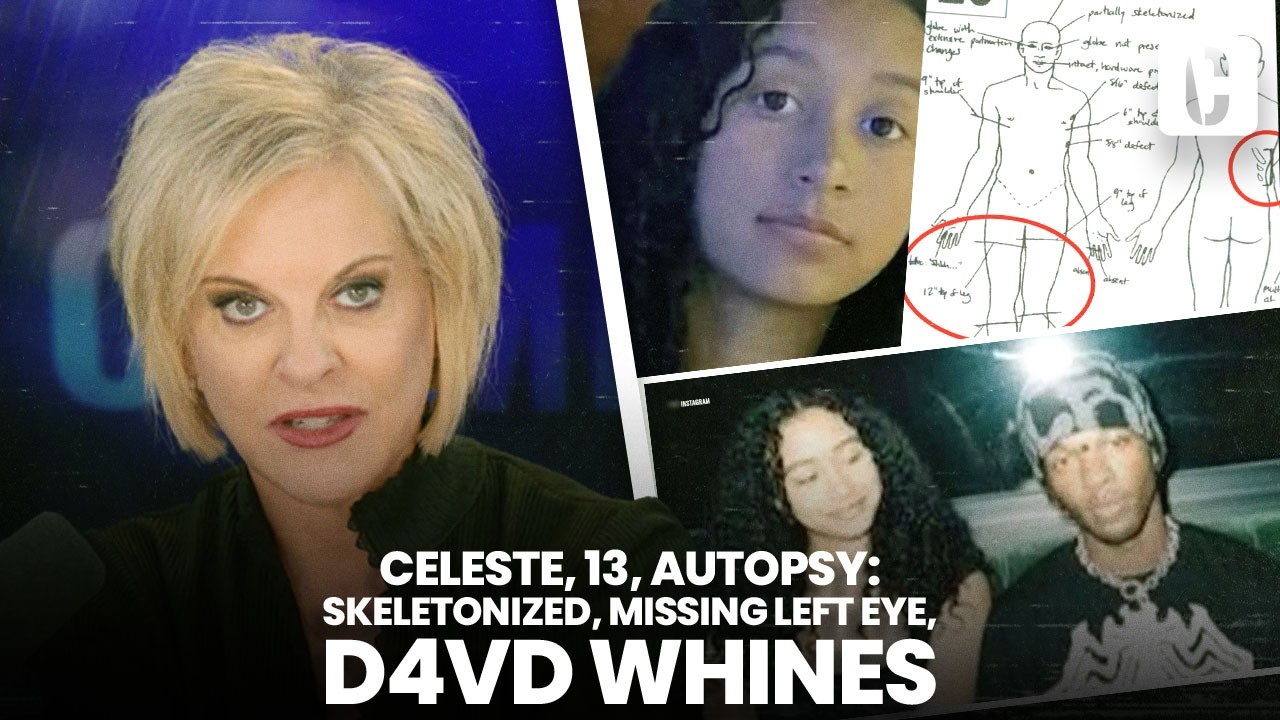
CELESTE, 13, AUTOPSY: SKELETONIZED, MISSING LEFT EYE, D4VD WHINES
"A 13-year-old girl, Celeste Rivas, was found partially skeletonized with a missing left eye, traces of meth and MDMA, and fatal stab wounds, while the accused musician David Anthony Burke (D4VD) complains about jail conditions."