
John Helmer: PUTIN'S CRISIS OF CONFIDENCE?
YouTube · SVN6F-3rZlM
Quick Read
Summary
Takeaways
- ❖Russian public opinion supports escalating the war and finishing it quickly, but Putin's responses, like the 'Archnik' missile strike, are perceived as minimized and focused on testing rather than decisive action.
- ❖Putin's deployment of oligarchs such as Roman Abramovich and Kirill Dmitriev for negotiations is viewed with distrust by the Russian public and military, as these figures are seen as acting in their own financial interests and failing to achieve state objectives.
- ❖The 'Anchorage Formula,' an alleged US security guarantee for Russia proposed by Trump, lacks credibility among Russian military and intelligence, as US actions in Armenia and Iran contradict any notion of de-escalation.
- ❖A significant internal split exists within the Russian government: a 'pro-business, anti-war' faction (Finance Ministry, Central Bank, oligarchs) advocates for fiscal conservatism, while a 'pro-escalation' faction (Foreign Ministry, military, intelligence) pushes for decisive military victory.
- ❖Putin's leadership style of balancing opposing factions through half-measures is interpreted by NATO and adversaries as indecisiveness and weakness, encouraging further escalation against Russia.
- ❖Russia's war aims of demilitarization and denazification are becoming increasingly difficult to achieve, as Western powers expand Ukraine's military capabilities (e.g., drone warfare) and 'fascist ideology' is perceived to be spreading across Europe and the US.
Insights
1Putin's Disconnect from Public and Military Opinion
Helmer reports that Russian public opinion, particularly after events like the Starobelsk attack, strongly favors escalating military action against Ukraine. However, Putin's public statements and actions, such as minimizing the 'Archnik' missile strike as a 'test' rather than a decisive retaliation, demonstrate a disconnect from this sentiment. This creates a perception of indecisiveness.
Public opinion polls by Lvada Center show increasing support for escalating against the Ukrainian regime. Putin minimized the 'Archnik' strike, stating it was for 'mathematical precision' testing rather than targeting decision-making centers. (, )
2Ineffective and Distrusted Oligarch Negotiations
Despite widespread public distrust and hatred for oligarchs, Putin has repeatedly used figures like Roman Abramovich and Kirill Dmitriev for sensitive negotiations with Ukraine and the US. These efforts are seen as failures, undermining Putin's credibility and suggesting the oligarchs prioritize their own financial interests over national objectives.
Public opinion 'hates the oligarchs.' Abramovich's negotiations with Zelensky were rejected and turned into an 'attack on President Putin.' Dmitriev's calls with Witkoff and Kushner have 'achieved nothing,' and his political analysis is 'completely misguided.' (, , , )
3The Failure of the 'Anchorage Formula' and US Credibility
Putin has publicly referenced the 'Anchorage Formula,' believing Trump offered a US guarantee for Russian security in Europe. However, Helmer's sources indicate no significant Russian governmental or military entity trusts Trump to deliver on such a promise, especially given continued US actions perceived as escalatory (e.g., in Armenia and Iran).
Putin believes Trump offered a US guarantee for Russian security in Europe since 'Anchorage.' However, no Russian intelligence, military, or government planner believes the US has acted credibly on this, citing Trump's escalation in Armenia and intentions for Iran. Lavrov explicitly stated US partners 'have not shown any interest' in the Alaska agreement. (, , )
4Internal Factionalism Driving Putin's Indecision
The Russian government is divided into two main factions: a 'pro-business, anti-war' group (Finance Ministry, Central Bank, oligarchs) advocating for fiscal cuts and an end to the war, and a 'pro-escalation' group (Foreign Ministry, military intelligence, general staff) pushing for decisive military victory. Putin's characteristic leadership style involves compromising between these opposing views, leading to half-measures that are ineffective in wartime.
Finance Minister Anton Siluanov and Central Bank Governor Elvira Nabiullina advocate for cutting the budget deficit and controlling inflation, indirectly pushing to end the war. Foreign Minister Lavrov and military intelligence (Admiral Kostikov, General Staff) represent the opposing faction demanding decisive action. Putin's style is to 'compromise and balance' these 'entirely opposed factions.' (, , , )
5Unachievable War Aims Amidst Western Escalation
Russia's stated war aims of demilitarization and denazification in Ukraine are becoming increasingly difficult to achieve. Demilitarization is complicated by the globalized nature of Western support (drone manufacturing across Europe), while denazification is challenged by the perceived rise of 'fascist ideology' across Europe and even in the US.
Demilitarization is harder when drone warfare is dispersed across Ukraine, Germany, Netherlands, Britain, Belgium. Denazification is challenged by 'increasingly fascist' regimes in Berlin, the UK, Finland, Sweden, Poland, and even 'Washington.' (, , )
Lessons
- Analysts should scrutinize Putin's decisions for signs of internal compromise between opposing factions (e.g., economic vs. military priorities) rather than assuming a unified strategic vision.
- When evaluating Russian foreign policy and negotiation attempts, consider the influence and self-interest of oligarchs involved, as their mandates may not align with state objectives or public trust.
- Recognize that Russia's war aims (demilitarization, denazification) are evolving in definition and scope due to Western counter-strategies and perceived ideological shifts, making traditional military solutions insufficient.
Quotes
"Abramovich has been a failure in negotiating on behalf of the Russian state. It's clear that Abramovich has been negotiating for himself to protect himself and his assets in the United States from sanctions."
"What Putin's style is all his political life is to try to compromise and balance equilibriate between two entirely opposed factions. So he takes half measures, one half one side, one half another side."
"President Putin's indecisiveness is not indecisiveness, is picking conflicting conflicting choices and trying to balance them during this election campaign."
"Demilitarization of the Ukraine now means demilitarization of its fighting capacities outside Ukraine."
"How can you denazify on the Ukraine battlefield if you have increasing rearmament and fascist fascist ideology fighting Russia forever ideology in Germany in the UK in Finland in Sweden in Poland the list is unlimited."
Q&A
Recent Questions
Related Episodes
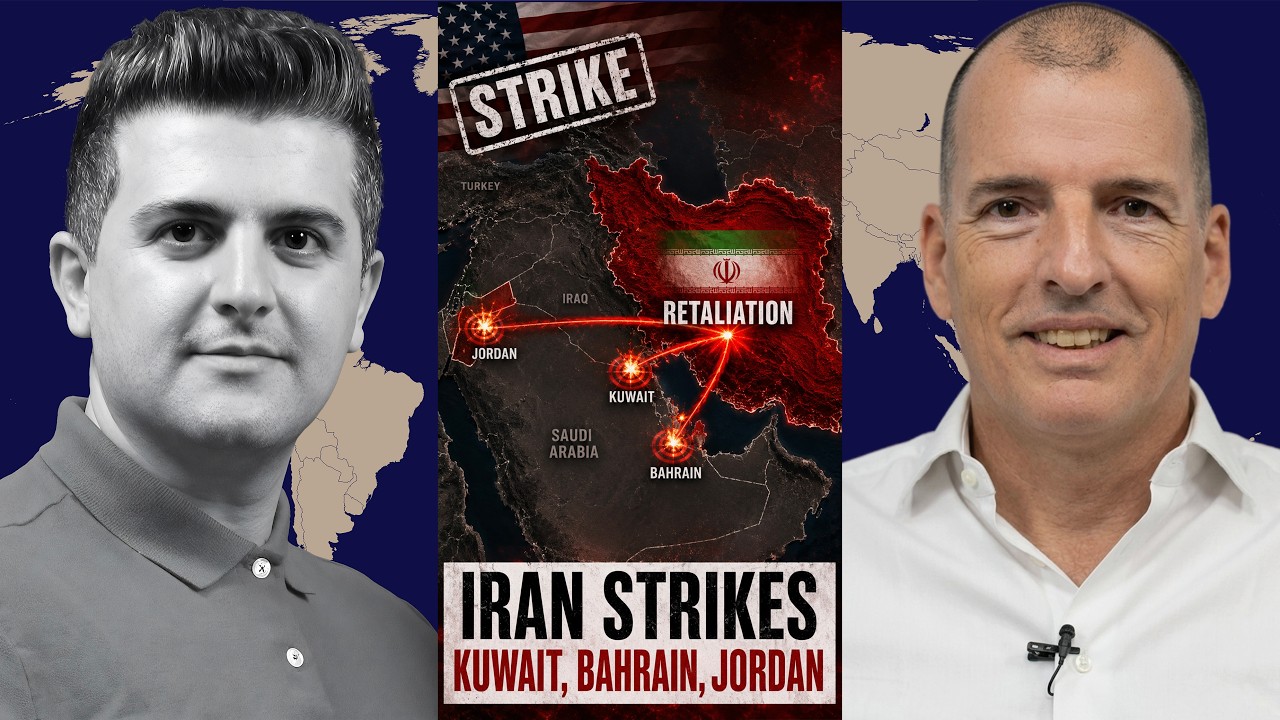
Alex Krainer: US STRIKES Iran – Iran RETALIATES Against Kuwait, Bahrain & Jordan!
"Amidst escalating US-Iran conflict and Iranian retaliation against regional US allies, this episode argues that US foreign policy is deeply controlled by an 'Anglo-Zionist conspiracy' led by the Rothschild banking dynasty, prioritizing Israeli interests over American ones."

Patrick Henningsen: Hezbollah JUST Fired Back at Israel - Iran Vows to “Crush” All Attacks
"Patrick Henningsen argues that the US and Israel initiated an illegal war against Iran, driven by Trump's incompetence and Israeli influence, leading to an inevitable escalation with severe global economic repercussions."

Bibi DEMANDS Ground Troops As Marines Rushed to Iran
"Benjamin Netanyahu is pushing for US ground troops in Iran, framing air strikes as insufficient, while the US rushes Marines to the region and struggles to secure the Strait of Hormuz against surprisingly capable Iranian defenses."
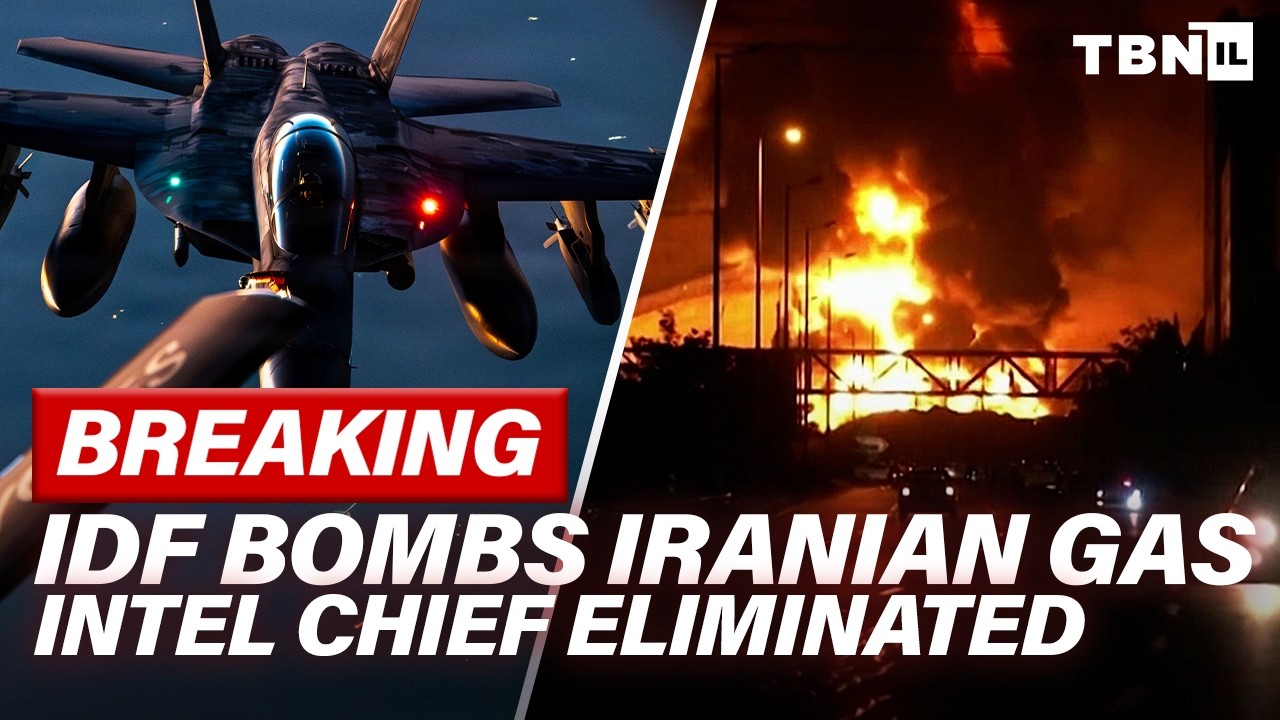
BREAKING: Israel BOMBS Major Iran Gas Site; Top Mullah ELIMINATED; Iran Vows VENGEACE | TBN Israel
"Israel and the United States have escalated their 'Roaring Lion War' against Iran, striking its largest gas facilities, eliminating key intelligence and military figures, and disrupting missile production, while Iran threatens a broader energy war in the Gulf."