
Air Force Major’s Wife Vanishes After Husband Uncovers Dark Secret
YouTube · SWP_I6uCwLQ
Quick Read
Summary
Takeaways
- ❖Andreine McDonald, a 28-year-old entrepreneur, ran a multi-million dollar home health business in San Antonio.
- ❖Andre McDonald, an Air Force Major in cyber security, discovered his wife had opened a separate business he was unaware of, leading to a heated argument.
- ❖Andre purchased an axe, log splitter, industrial trash bags, and gas cans, paying for the more damning items with cash, shortly after his wife's disappearance.
- ❖Investigators found blood on a light switch in the master bathroom and a burn pile with a burned zipper in the backyard of the McDonald home.
- ❖Andre's phone records showed searches for 'how long does it take bones to turn to dust?' and 'can you try a case without a body?'.
- ❖Andreine's body was found 133 days after her disappearance, mostly bones, partially burned, and covered with a log and cow bones on private property.
- ❖Days before his trial, Andre confessed to his mother-in-law and sister-in-law that he stomped Andreine in front of their 8-year-old autistic daughter.
- ❖The medical examiner could not determine the exact cause of death due to the state of the remains, which became a key defense point.
- ❖Andre McDonald was found guilty of manslaughter and sentenced to the maximum 20 years in prison.
Insights
1Financial Dispute and Secret Business as Catalyst
Andreine McDonald, a highly successful entrepreneur, had established a multi-million dollar home health business. Her husband, Andre, provided startup funds and was a 50/50 partner. The conflict escalated when Andre discovered Andreine had opened a separate business without his knowledge, leading him to believe she was trying to cut him out financially.
Andreine had created several home health businesses. Andre provided startup money and they were 50/50 partners. During tax preparation, Andre discovered a separate business opened by Andreine, making him 'very angry' and believing she was trying to 'scheme to cut him out'.
2Suspicious Purchases and Digital Footprint
Immediately following Andreine's disappearance, Andre McDonald made several unusual purchases, including an axe, log splitter, industrial trash bags, and gasoline, paying for the more incriminating items with cash. His subsequent internet search history revealed attempts to understand body decomposition and legal implications of a 'no body' case.
Andre purchased an axe, a log splitter, industrial trash bags, and two gas cans, paying with cash for the axe. His phone contained 'hundreds of searches' for 'how long does it take bones to turn to dust?', 'do maggots eat cooked meat?', and 'can you try a case without a body?'.
3The 'No Body, No Murder' Challenge
For months, without Andreine's body, prosecutors faced significant hurdles in bringing a murder charge, initially only able to charge Andre with tampering with evidence. Even after the discovery of her remains, the decomposed state made it impossible for the medical examiner to determine a specific cause of death, weakening the prosecution's ability to prove intent for murder.
Prosecutors initially only charged Andre with tampering with evidence because 'without a body, it's really hard when you don't know what actually was the cause of death.' The medical examiner stated, 'Since we don't have organs, we don't have soft tissue. I can't tell you what other trauma may have been present.'
4Late Confession and Daughter's Witness
Days before the trial, Andre McDonald unexpectedly confessed to his mother-in-law and sister-in-law, detailing the violent altercation. He admitted to stomping Andreine in the bathroom in front of their 8-year-old autistic daughter, Elena, and then finding her dead after putting Elena to bed.
Andre called his mother-in-law and sister-in-law and 'essentially made some type of confession.' He told them he 'stomped on Andreine in front of their 8-year-old autistic daughter' and left her 'wheezing in the throws of death.' He returned to find her dead.
5Defense Strategy: Self-Defense and Manslaughter
The defense leveraged Andre's confession and the lack of a specific cause of death to argue against a murder conviction. They framed Andre's actions as self-defense against an enraged Andreine, or at most, manslaughter, emphasizing that his intent was not to kill but to incapacitate.
The defense stated, 'This is not a murder case. It's about responsibility... But it's simply not murder.' They argued Andreine 'spits in his face... an assault,' and Andre 'has the right to use proportionate force. He uses her forward momentum against her. Trips on the force. She's charging. Kicks her twice as she goes to the ground.'
6Familial Pattern of Violence and Cover-Up
Prosecutors uncovered a disturbing pattern in Andre's family background, noting that his father had been accused of killing two of his wives, with one instance involving setting a car on fire. This mirrored Andre's use of fire to dispose of Andreine's body, suggesting a learned behavior, though this evidence was deemed too prejudicial for trial.
Andre's father 'has been accused of killing his first wife as well as his third wife.' He was 'accused of like setting her car on fire,' and Andre 'also used fire in an attempt to cover up his crime.' This was described as 'like father like son.'
Lessons
- Recognize the critical role of digital forensics: Internet search history and phone data can provide powerful insights into a suspect's mindset and actions, even in the absence of direct physical evidence.
- Understand the legal distinctions: The difference between murder and manslaughter often hinges on proving intent and the specific cause of death, which can be challenging in cases involving body disposal.
- Support victims of domestic violence: The case highlights the hidden issues of intimate partner violence, even in seemingly 'picture-perfect' relationships, and the importance of intervention and support systems.
Notable Moments
Andre's abrupt departure from the hospital
After Andreine's friends and family reported her missing and found blood, Andre went to a hospital to 'check' for her. When told a 'McDonald' was there (a different woman), he abruptly left, indicating he knew his wife was not there and was likely feigning concern.
Andre's lack of empathy during testimony
During cross-examination, Andre expressed no remorse for his wife's death, blaming her for the 'circumstance' and focusing on how the situation affected him. His cold, detached responses, including not knowing why he stripped her body, highlighted a disturbing lack of emotion.
The jury's deadlock and subsequent manslaughter verdict
The jury was deadlocked for a period, indicating significant debate over the murder charge. Their eventual verdict of manslaughter, rather than murder, underscored the difficulty in proving intent to kill when the exact cause of death could not be determined, despite Andre's confession and horrific actions.
Andreine's father's forgiveness and daughter's letter
During sentencing, Andreine's father offered forgiveness to Andre, a powerful moment of grace. This was starkly contrasted by a letter from Andreine and Andre's daughter, Elena, read aloud, expressing her profound hurt and demanding punishment, highlighting the devastating, long-term impact of the crime on the family.
Quotes
"He's a highly intelligent person and I know I think he knows exactly what he's doing and I think that that quite frankly he he probably thinks he's smarter than anybody in law enforcement."
"She was done. She was done with the relationship and she wanted it to be finished."
"We believe that the Andre McDonald is no longer living."
"He stomped on Andre in front of their 8-year-old autistic daughter in the main bathroom of the house."
"My plan was to hit the person that would that basically, in my opinion, caused this whole circumstance. And I was pretty upset with that person at that time."
"You hurt my mother. You took away my life. And you broke my heart. And you hurt my feelings. And you will pay for what you did. And you will be punished forever."
Q&A
Recent Questions
Related Episodes

The Root Beer Float Murder | Full Episode + Post Mortem
"A seemingly natural death of a husband is unmasked as a calculated poisoning plot by his wife and stepdaughter, revealed only after an unrelated burglary exposes a trail of incriminating text messages."
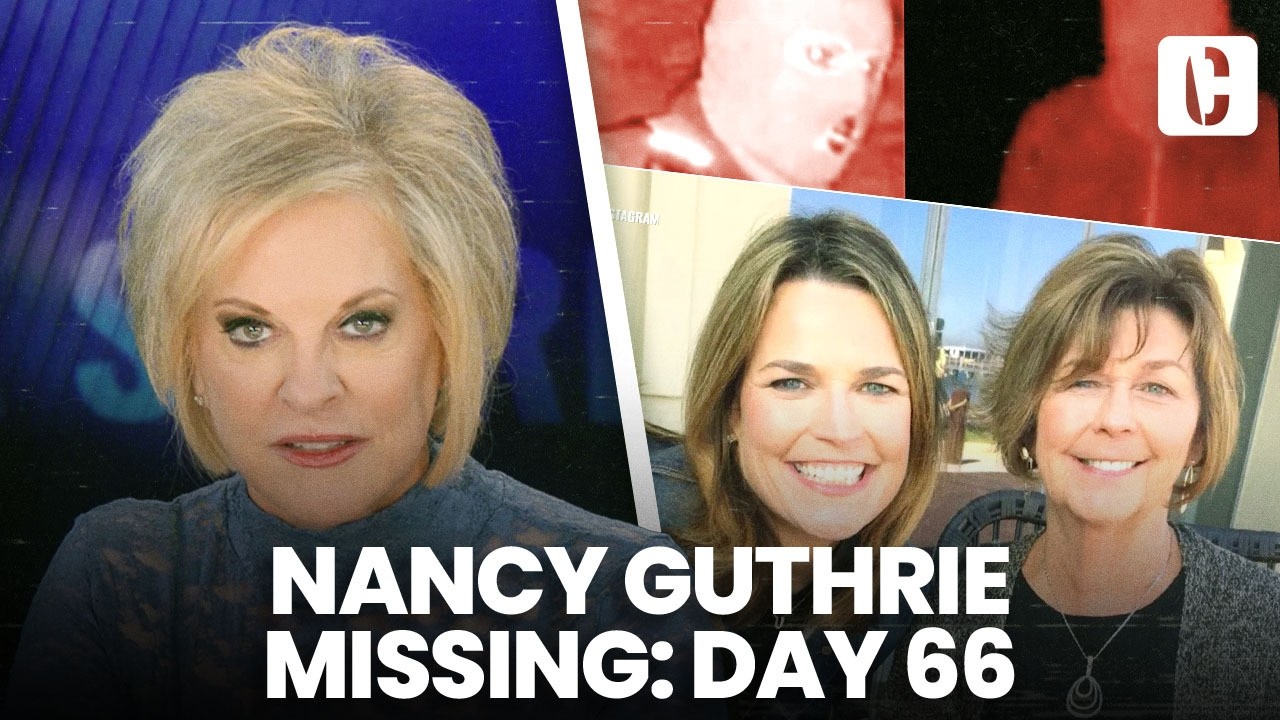
SAVANNAH GUTHRIE'S MOM MISSING: DAY 66
"On day 66 of Nancy Guthrie's disappearance, investigators grapple with two distinct sets of Bitcoin ransom notes, digital tracing challenges, and potential physical evidence like shoe coverings, as new, dubious claims emerge from a 'hyena' seeking payment for information."

True-crime cases with recent developments | 48 Hours Full Episodes
"This episode reconstructs four complex true-crime cases, detailing the harrowing searches for missing persons, the challenges of prosecuting murders without bodies, and the enduring quest for justice in cold cases spanning decades."
Cops Find Dead Body In Her Crawlspace After Anonymous Tip
"An anonymous Facebook tip leads police to a shocking discovery: a missing man's body encased in concrete within a crawl space, unraveling a tale of murder, domestic violence, and a coerced cover-up."