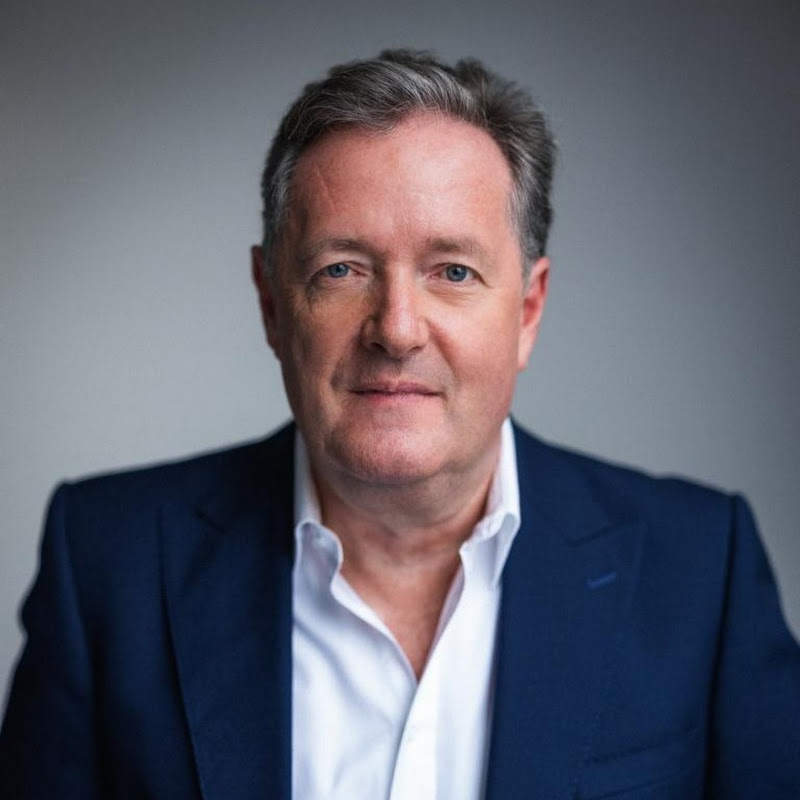
“I’m Gonna Roast YOU!” Dave Smith vs Adam Sosnick Reunite In Comedy Battle
YouTube · St3JxdjjUBA
Quick Read
Summary
Takeaways
- ❖The Netflix Roast of Kevin Hart, featuring jokes about George Floyd and Charlie Kirk, signifies a shift away from 'woke' comedy restrictions.
- ❖Comedian Dave Smith argues that 'wokeism' is fundamentally incompatible with humor, leading to its decline in mainstream comedy.
- ❖Adam Sosnick believes the market should determine comedy's boundaries, not censorship or cancel culture.
- ❖Emily Wilson and Jay Dyier point out a double standard where jokes targeting conservatives are often more tolerated than those aimed at liberals or certain minority groups.
- ❖The intention of a joke is to make people laugh, not to incite violence or outrage, according to Dave Smith.
- ❖Piers Morgan highlights the intellectual dishonesty when people demand censorship for jokes they dislike, despite previously criticizing 'woke' cancel culture.
- ❖Late-night comedy has become overly partisan, alienating half the audience, a departure from the more universally appealing humor of past hosts like Johnny Carson or Jay Leno.
Insights
1The Market's Rejection of 'Woke' Comedy
Dave Smith asserts that the rise and fall of 'wokeism' in comedy was a direct result of market forces. Platforms like Netflix and shows like Saturday Night Live realized that 'woke' content, characterized by lectures and political points, was not funny and failed to attract audiences. The return of comedians like Shane Gillis, who was previously fired for controversial remarks but now sells out stadiums, demonstrates that audience demand for edgy, unrestricted humor ultimately drove the industry's pivot.
Dave Smith's observation that Comedy Central produced 'nothing' during the era of wokeism compared to its golden age, and Netflix's decision to air the Kevin Hart roast despite its 'inappropriate, outrageous, shocking' content. The example of Shane Gillis being fired from SNL then brought back to host due to his popularity. ( - )
2The Principle of No Comedic Exceptions
Piers Morgan recounts a conversation with British comic Bernard Manning, who believed that the moment a comedian makes an exception for any group, giving them a 'comedic pass' from being offended, the process of self-censorship becomes endless. Manning argued that true comedic equality means making all subjects fair game, preventing the creation of double standards.
Piers Morgan's anecdote about Bernard Manning's philosophy: 'I took a view... that I wasn't going to make an exception for anybody. Because the moment you make an exception... you never stop.' ( - )
3Hypocrisy in Outrage: Political Alignment Dictates Offense
Multiple panelists highlight the hypocrisy where outrage over offensive jokes is often selective, depending on the political alignment of the target. Jokes about figures like George Floyd might provoke different reactions than jokes about Charlie Kirk, revealing an underlying political bias in what is deemed 'too far.' This suggests that the 'line' in comedy is not universally drawn but is often subjective and politically motivated.
Dave Smith states, 'the people who are outraged about the George George Floyd joke aren't outraged about the Charlie Kirk joke and vice versa.' Emily Wilson notes, 'when it's aimed at a conservative all of a sudden the rules go out the window.' ( - , - )
4Comedy as a Coping Mechanism for Life's Tragedies
Dave Smith argues that comedy, especially edgy humor, often serves as a coping mechanism for the difficulties and tragedies of life. People who have experienced hardship tend to be less sensitive to certain jokes, while 'white liberals' often become offended on behalf of others. This perspective suggests that humor can be a way to process trauma and find levity in dark situations.
Dave Smith's observation that 'people who have been through some up tend to laugh at some up jokes' and his grandfather, a Holocaust survivor, 'loved Holocaust jokes.' ( - )
Bottom Line
The 'death of woke' in comedy is not a complete eradication but a market-driven pivot by major platforms to reclaim audiences alienated by overly sensitive content, indicating a potential pendulum swing back to edgier, less restricted humor.
This shift could lead to a more diverse range of comedic expression, but also risks alienating segments of the audience who prefer more 'inclusive' or less offensive content, creating a fragmented comedy market.
Content creators and platforms can capitalize on this shift by producing bold, unapologetic comedy that resonates with audiences tired of perceived censorship, while carefully navigating the still-present cultural sensitivities to avoid backlash.
The perceived double standard in comedic offense (e.g., jokes about conservatives vs. liberals) reveals a deeper political polarization influencing cultural consumption and media tolerance.
This polarization means that 'free speech' in comedy is often selectively applied, depending on the political leanings of both the comedian and the target. It highlights that the 'line' is not objective but a fluid construct influenced by ideological battles.
Media companies and comedians can either lean into this polarization to target specific political demographics or attempt to bridge divides by crafting humor that transcends partisan lines, which could be a significant challenge but also a unifying force.
Key Concepts
The Market Speaks
This model suggests that the ultimate arbiter of success or failure in creative industries, including comedy, is audience demand and commercial viability. If 'woke' content fails to attract an audience, and 'edgy' content sells out stadiums, the market will naturally shift to support what is profitable, regardless of ideological preferences.
Equal Opportunity Offender
This comedic principle posits that humor is not truly 'offensive' if it targets all groups and subjects indiscriminately. The argument is that by making fun of everyone, a comedian avoids accusations of bias or prejudice, treating all potential targets equally within the comedic context.
Lessons
- Prioritize audience reception over ideological purity: For content creators, understand that market demand for entertainment often favors humor that is unrestricted and genuinely funny, even if it's edgy.
- Challenge your own comedic 'lines': Reflect on whether your personal boundaries for humor are consistent across all subjects or if they are influenced by political or social biases.
- Support platforms and creators who champion free expression: If you value uncensored comedy, actively support the artists and media outlets that are willing to push boundaries, as their success reinforces market demand for such content.
Notable Moments
Adam Sosnick's initial 'roast' of Piers Morgan, questioning his comedy credentials based on a failed stand-up career.
This exchange sets the tone for the panel's direct and often confrontational style, immediately establishing the 'roast' theme and highlighting the subjective nature of judging comedy.
Dave Smith's only genuinely offensive joke experience involved Barack Obama's 'predator drones' joke.
This provides a specific, personal example of where a comedian, who advocates for no lines, drew his own boundary, illustrating that even proponents of absolute free speech in comedy can have limits, especially when the joke involves real-world violence by a powerful figure.
Piers Morgan's observation about the lack of diversity among late-night hosts (all middle-aged white liberal Trump haters).
This moment critiques the perceived hypocrisy of an industry that preaches diversity, equity, and inclusion (DEI) but often exhibits a lack of ideological and demographic diversity in its top talent, especially in politically charged comedy.
Quotes
"By the very fundamental nature of what wokeism is, it cannot be funny. It's impossible to be woke."
"The moment you make an exception, the moment you give one section of society a comedic pass from being offended by a joke, you never stop."
"I don't think there's any line you can cross. The market will speak."
"The black community is so proud of you to Kevin Hart. Right now George Floyd is looking up at us all laughing so hard he can't breathe."
"People who have been through some up tend to laugh at some up jokes. And people who haven't been through that are are like, 'What are you doing? I'm offended on behalf of these people.'"
"A roast is supposed to be goddamn hardhitting, relentless jokes with no consequence. It's the concept of a roast. You go hard or you go home. No emotion, no feelings, man."
"It's not racist if you make fun of everybody. If you're just like, you know what? The only people I hate are Mexicans.' It's like, 'All right, now you're just a racist.' But if you if you're an equal opportunity employer and you're judging comedy baron based on merit, there's no racism."
Q&A
Recent Questions
Related Episodes
Stavvy's World #181 - Jaboukie Young-White | Full Episode
"Stavros Halkias and Jaboukie Young-White dive into chaotic family histories, modern relationship dilemmas, and the absurdities of celebrity culture, offering unfiltered comedic takes and unconventional advice to callers."

STILL SIPPIN W/ POUR MINDS, KARLOUS MILLER & MONEYBAG MAFIA | 85 SOUTH SHOW
"The 85 South Show hosts and guests Poor Minds and Moneybag Mafia engage in a hilariously unfiltered discussion covering relationship dynamics, unexpected business ventures, and the pervasive influence of TikTok, all while sharing their unique perspectives on life's absurdities."

DAPHNIQUE SPRINGS | ENGLISH MAJORS | SEASON 3 | EP 10
"Comedian Daphnique Springs joins the hosts for a freewheeling discussion on everything from her childhood fish-selling hustle and the 'Florida Man' phenomenon to deep-sea conspiracies, the future of AI, and parenting advice for children with ADHD."
MARTIN (1994) 3x22, 3x23 & 3x24 Reaction! | First Time Watch | Martin Lawrence w/ Jaby Koay
"This episode dissects Martin's disastrous restaurant venture, a fake friend's exposure, and a budget vacation gone wrong, revealing universal truths about financial literacy, authentic relationships, and the value of companionship over luxury."