BREAKING: IDF Hits Iran Satellites, Khamenei Jet; Iran UNLEASHES Cluster Bomb Missiles | TBN Israel
YouTube · TAG_bEfpuKU
Quick Read
Summary
Takeaways
- ❖Israel launched strikes against Iran's military satellite center and Supreme Leader Khamenei's plane, targeting military procurement and coordination capabilities.
- ❖Iran is increasingly using cluster warhead missiles against Israel, which are illegal under international law and designed for wide-area civilian impact.
- ❖The US is forming an international coalition to open the Strait of Hormuz, considering seizing Iran's Karag Island oil terminal, and potentially obtaining enriched uranium stockpiles.
- ❖Saudi Arabia is using its East-West pipeline to bypass the Strait of Hormuz, neutralizing Iran's economic leverage.
- ❖Psychological warfare is a key component, with Mossad directly addressing Iranian citizens and US intelligence spreading rumors about Iran's leadership.
- ❖Iran's regime is facing internal pressure, deploying checkpoints, restricting internet access, and fearing widespread protests.
Insights
1Israel Strikes Iran's Military Satellite Center and Khamenei's Plane
The IDF launched strikes on a military satellite center in Iran, which was used to develop anti-satellite attack capabilities and posed a threat to Israeli and other nations' space assets. Additionally, Supreme Leader Ayatollah Ali Khamenei's plane was destroyed at Meabad airport, identified as a tool for military procurement and coordination with Iranian axis countries. These actions are part of a systematic effort to damage the regime's capabilities for force buildup and coordination.
IDF announcement regarding the destruction of the military satellite center and Khamenei's aircraft, which was also used for military procurement and ties with countries in the Iranian axis.
2Iran Escalates with Illegal Cluster Missiles
Iran is increasing its use of ballistic missiles with cluster warheads, which are illegal under international law. These missiles disperse numerous small bombs over a wide area, aiming to cause widespread damage, fear, and disrupt daily life without distinction, often leaving unexploded munitions that act as contact-activated mines. This shift indicates Iran's eroding ability to launch large volumes of conventional missiles, compensating by increasing the threat radius of each launch.
Reports of Iran launching small numbers of ballistic missiles, triggering alerts across Israel, and increasing fire of cluster missiles, described as rockets turning into small, harder-to-intercept munitions that disperse bomb belts over a 10km radius.
3US Forms Coalition to Open Strait of Hormuz; Considers Seizing Karag Island
The US, under Donald Trump, is actively working to establish an international coalition to open the Strait of Hormuz to commercial shipping, pressing NATO and Asian countries to contribute ships and assets. This move aims to counter Iran's leverage over global energy markets. Trump is also considering dramatic options, including taking control of Karag Island, Iran's main oil terminal, or a special operation to obtain Iran's enriched uranium stockpile.
Reports of Trump planning an international coalition to open the Strait of Hormuz, pressing NATO countries, and considering taking control of Karag Island or a special operation for enriched uranium.
4Saudi Arabia Activates Strategic Oil Bypass
Saudi Arabia is employing its 'quiet weapon,' the East-West pipeline (Petroline), a 1,200 km pipeline connecting its eastern oil fields to the Red Sea port of Yanbu. This pipeline, with a capacity of 5 million barrels per day, allows Saudi Arabia to bypass the Strait of Hormuz, ensuring continuous oil supply to customers and neutralizing Iran's primary objective of choking Gulf oil exports.
Description of Saudi Arabia's East-West pipeline, its length, capacity, and its role in diverting shipping to Yanbu to bypass the Strait of Hormuz.
5Psychological Warfare and Internal Iranian Dissent
Both sides are engaged in psychological warfare. Mossad issued a direct message in Persian to the Iranian people, hinting at an impending 'final battle' and urging citizens to stay away from Basij personnel. Concurrently, US intelligence is reportedly spreading rumors about the new Iranian Supreme Leader's fitness to rule, aiming to delegitimize him and force him out of hiding. Internally, the Iranian regime is expanding checkpoints, policing, and internet restrictions, moving positions into tunnels and under bridges, indicating fear of IDF drone attacks and potential widespread protests.
Mossad's message to Iranian citizens, US intelligence reports about Iran's new leader, and reports of increased checkpoints, policing, and internet shutdowns in Iranian cities.
Bottom Line
The expansion of warfare into the space domain, with both offensive (anti-satellite capabilities) and defensive (preserving observation satellites) actions, signifies a new frontier in geopolitical conflict.
Future conflicts will increasingly involve disrupting or protecting space-based assets crucial for intelligence, surveillance, and communication, making space dominance a critical military advantage.
Investment in resilient satellite networks, advanced anti-satellite defense systems, and space-based intelligence gathering will become paramount for national security and commercial entities reliant on space infrastructure.
The use of psychological warfare, including spreading rumors about leadership and direct appeals to civilian populations, is a sophisticated tactic to destabilize enemy regimes from within.
Information warfare and counter-intelligence operations are as critical as kinetic strikes in modern conflict, shaping public opinion and internal cohesion.
Developing advanced capabilities in information operations, including deepfake detection, narrative shaping, and secure internal communications, will be essential for both state and corporate actors in contested information environments.
Lessons
- Stay informed about the evolving geopolitical landscape in the Middle East, particularly regarding the Strait of Hormuz and its impact on global energy markets.
- Recognize the multi-faceted nature of modern warfare, encompassing kinetic strikes, economic pressure, psychological operations, and even space-based capabilities.
- Support organizations providing humanitarian aid to civilians affected by conflicts, as war impacts not only front lines but also daily life and basic needs.
Notable Moments
Israel's systematic dismantling of Iran's war machine, including space assets and leadership planes, on day 17 of the conflict.
This indicates a strategic shift towards comprehensive degradation of Iran's capabilities, not just reactive strikes, expanding the conflict into new domains like space.
Iran's increased reliance on illegal cluster missiles, signaling a weakening conventional missile arsenal and a shift towards indiscriminate, terror-inducing tactics.
This highlights Iran's desperation and its disregard for international law, posing a severe threat to civilian populations and complicating defensive measures.
The US's initiative to form an international coalition to secure the Strait of Hormuz and Saudi Arabia's activation of its bypass pipeline.
These actions directly counter Iran's economic leverage and demonstrate a coordinated international effort to maintain global energy security, potentially isolating Iran further.
Quotes
"The head of the snake in Thran must be cut off."
"Your final battle will begin very soon. We are with you."
"We might be at the point where we're going to be sending escorts to carry these ships, the oil tankers through the Straits of Homus to guarantee their pay, their safe passage."
"The effort is to preserve the IDF's freedom of action in the space domain in order to continue operating observation satellite and provide critical intelligence for warning and target identification in all the combat arenas."
Q&A
Recent Questions
Related Episodes
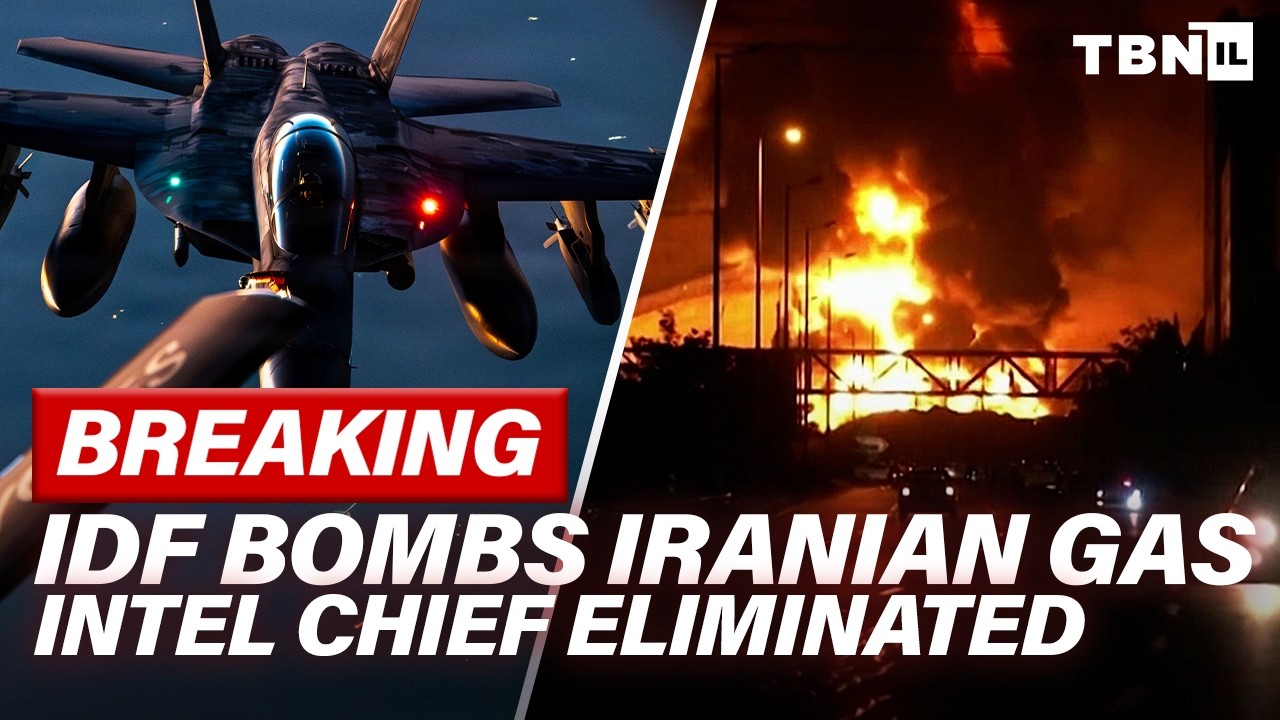
BREAKING: Israel BOMBS Major Iran Gas Site; Top Mullah ELIMINATED; Iran Vows VENGEACE | TBN Israel
"Israel and the United States have escalated their 'Roaring Lion War' against Iran, striking its largest gas facilities, eliminating key intelligence and military figures, and disrupting missile production, while Iran threatens a broader energy war in the Gulf."

BREAKING: Iran Threatens To END Talks; U.S. Vows Retaliation; Hezbollah Collapsing? | TBN Israel
"Iran is leveraging Hezbollah and the Strait of Hormuz to manipulate US negotiations, while Israel asserts its right to dismantle Hezbollah's eroding but still dangerous infrastructure in Lebanon, independent of international talks."

Patrick Henningsen: Hezbollah JUST Fired Back at Israel - Iran Vows to “Crush” All Attacks
"Patrick Henningsen argues that the US and Israel initiated an illegal war against Iran, driven by Trump's incompetence and Israeli influence, leading to an inevitable escalation with severe global economic repercussions."

Bibi DEMANDS Ground Troops As Marines Rushed to Iran
"Benjamin Netanyahu is pushing for US ground troops in Iran, framing air strikes as insufficient, while the US rushes Marines to the region and struggles to secure the Strait of Hormuz against surprisingly capable Iranian defenses."